
The Strait of Hormuz: The Jugular Vein of Global Trade and Agriculture
The Strait of Hormuz, one of the most sensitive points of global geopolitical balances, is of vital importance not only for oil and natural gas shipments but also for the continuity of world agricultural production. Located between Oman and Iran, this narrow waterway is a corridor through which approximately 20% of the world's oil trade passes. However, the strategic importance of the Strait of Hormuz has become a factor that directly determines the cost and accessibility of the food on our tables, going far beyond energy shipments. The escalation of tensions between the United States, Israel, and Iran and the closure of the strait have the potential to trigger a massive domino effect, from the production of fertilizer, which is the most basic input of modern agriculture, to the transportation of products to global markets.
Agricultural production is a sector that is inherently dependent on energy and chemical inputs. The most critical link in this chain of dependence is nitrogen fertilizers. The price of natural gas, which is the main raw material for nitrogen fertilizers, is directly affected by any disruption in the Strait of Hormuz. In this article, we will discuss the multi-dimensional effects of closing the Strait of Hormuz on the agricultural sector from a wide perspective, ranging from the fertilizer crisis to food inflation, from logistics costs to global famine risks.
The Direct Link Between the Energy Crisis and Agricultural Inputs
In the event of the closure of the Strait of Hormuz, it is inevitable that oil and natural gas prices worldwide will rise to unpredictable levels. This increase in energy prices hits agricultural production in two main ways: direct costs and indirect input costs. For farmers, tractor fuel, the electricity cost of irrigation pumps, and post-harvest transportation expenses are directly indexed to energy prices. However, even more critical is the energy intensity in the production phase of agricultural pesticides and especially fertilizers.
Direct Effects of Energy Costs on Agriculture:
- Rising prices of diesel (motor oil) used for tractors and construction machinery.
- Increase in the operating costs of electric or diesel irrigation pumps used to draw groundwater.
- Heating and air conditioning expenses in greenhouse cultivation reaching unsustainable levels.
- Doubling of logistics costs in transporting products from fields to warehouses and from warehouses to ports.
At this point, the importance of technological solutions to maintain productivity in agriculture is increasing. For example, the use of smart irrigation systems to optimize energy costs can alleviate this heavy burden on the farmer by providing water and energy savings. However, at a crisis point like the Strait of Hormuz, no matter how efficient the system is, the global increase in input costs will affect all producers.
The Fertilizer Crisis: The Danger Extending from Natural Gas to the Table
Fertilizer is an indispensable part of modern agriculture, and approximately half of the global food supply is provided thanks to synthetic fertilizers. The closure of the Strait of Hormuz could paralyze the production of nitrogen fertilizers (Urea, Ammonium Nitrate, Ammonium Sulfate) in particular. The hydrogen required for synthesizing ammonia, the main raw material in nitrogen fertilizer production, is largely obtained from natural gas. A jump in natural gas prices causes fertilizer factories to stop production or increase product prices at exorbitant rates.
Fertilizer Types and Energy Dependence:
The increase in fertilizer prices leads the farmer to use less fertilizer or to stop fertilization altogether. This means that the yield per unit area (harvest) will drop dramatically in the next harvest period. Especially the loss of yield in basic food items such as wheat, corn, and rice is the biggest element threatening global food security. For more detailed information about fertilizer management, you can check our Ammonium Nitrate Fertilizer Guide page.
Haber-Bosch Process in Nitrogen Fertilizer Production
The basic method used in the production of nitrogen fertilizers is the Haber-Bosch process. In this process, nitrogen from the atmosphere is combined with hydrogen obtained from natural gas under high pressure and temperature to be converted into ammonia. The closure of the Strait of Hormuz will create a huge gap in the global ammonia supply as it will block the shipment routes of giant natural gas producers like Qatar. This situation not only increases fertilizer prices but also causes disruptions in fertilizer tracking systems and distribution networks. For information on monitoring fertilizer movement, you can examine our Fertilizer Tracking System (GTS) article.
Logistics and Supply Chain Disruptions
The Strait of Hormuz is not only an energy gateway but also a route frequently used by global commercial ships. The closure of the strait causes ships to divert their routes to the Cape of Good Hope. This leads to shipping times being extended by weeks and freight rates (ship transport fees) rising to astronomical levels. Agricultural products, especially fresh fruits and vegetables, are extremely sensitive to such delays due to their perishable nature.
Agricultural Consequences of the Logistics Crisis:
- Inputs such as seeds, pesticides, and fertilizers not reaching the planting period due to supply chain delays.
- Quality losses and increased wastage rates as a result of export products waiting at ports.
- Increase in final product prices due to the rise in ship insurance premiums (war risk insurance).
- Triggering of the container crisis and difficulty in finding empty containers.
Global food trade is based on the just-in-time production model. The slightest deviation in this model can cause shelves to empty and food hoarding to begin. According to Food and Agriculture Organization of the United Nations (FAO) data, every 10% increase in logistics costs is directly reflected in food prices between 2% and 5%.
Global Food Security and Price Fluctuations
The ultimate result of the Strait of Hormuz crisis is a wave of global food inflation. Food prices will rise rapidly due to both increasing production costs (fertilizer, diesel) and the disrupted supply-demand balance. This situation carries the potential for a humanitarian crisis, especially for underdeveloped and developing countries that are dependent on food imports. World Bank (World Bank) reports have repeatedly shown that extreme increases in food prices trigger social unrest and waves of migration.
Scenarios Threatening Food Security:
- Depletion of Strategic Stocks: Rapid depletion of countries' emergency food stocks.
- Export Bans: Producing countries stopping food exports to protect their own domestic markets (e.g., India's rice, Russia's wheat export restrictions).
- Malnutrition: Protein and vitamin deficiencies appearing in low-income populations as access to basic food becomes difficult.
- Contraction of the Livestock Sector: Meat and milk producers being forced to close their businesses as feed costs (corn, soy) increase.
To understand how livestock activities will be affected by this crisis, you can examine our livestock activities content. In fodder crop production, the cost of fertilizer can reach up to 40% of the total cost.
Risks and Opportunities for Turkey's Agriculture
Turkey will be affected in two ways by the Strait of Hormuz crisis because it is both an agricultural country and an energy importer. On one hand, increasing energy costs challenge domestic producers, while on the other hand, the global supply gap could increase Turkey's agricultural export potential (if costs can be managed). However, Turkey's external dependence on raw materials for fertilizer production constitutes the weakest point of this crisis.
Possible Effects for Turkey:
- Cost increase of domestic fertilizer factories as a result of the increase in natural gas prices reflecting on electricity and industrial gas prices.
- Risk of fresh fruit and vegetable exports in the Mediterranean and Aegean regions losing competitiveness due to logistics costs.
- Increasing importance of alternative routes such as the grain corridor.
- The need for domestic and national agricultural technologies becoming more evident.
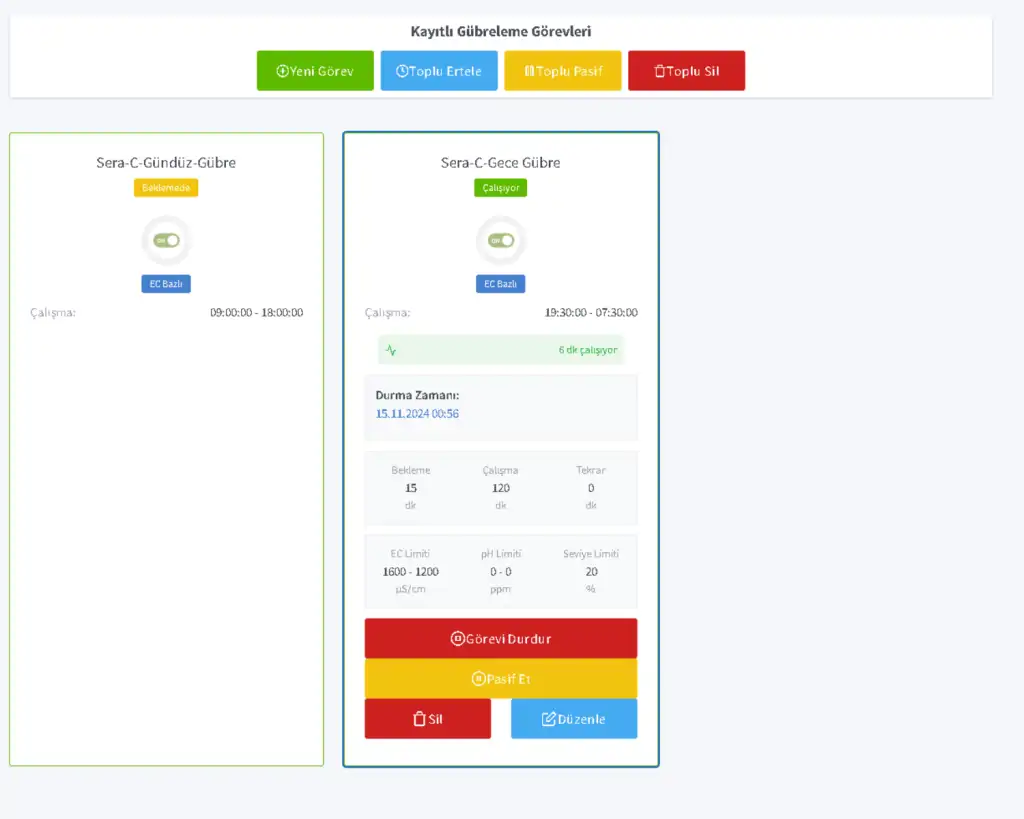
In such crisis periods, obtaining maximum yield from a unit area and preventing waste is of vital importance. Technologies such as Automatic Liquid Fertilization Systems ensure that fertilizer is given to the plant exactly when and in the amount it needs, ensuring the most efficient use of the increasingly expensive raw material. This both reduces the farmer's cost and contributes to the continuity of food supply.
Crisis Management for Farmers: What Can Be Done?
There are some measures that individual producers can take in the face of macro-scale crises such as the closure of the Strait of Hormuz. These measures should focus on reducing production costs and increasing productivity. Transitioning from traditional agricultural methods to modern and precision agricultural practices is the key to survival in times of crisis.
Crisis Period Recommendations:
- Precision Fertilization: Use only the amount of fertilizer the soil needs by having a soil analysis done. Unnecessary fertilization both increases costs and damages the soil.
- Water Management: Optimize irrigation timing by using a soil moisture sensor against water scarcity and energy costs.
- Alternative Energy Sources: If possible, reduce energy dependence by investing in solar-powered irrigation systems.
- Cooperativization: Act through cooperatives in input purchases and logistics processes to benefit from economies of scale.
- Digital Tracking: Minimize losses by tracking your agricultural business with digital tools.
According to International Fertilizer Association (IFA) data, businesses using precision agricultural technologies save up to 20% in fertilizer use while increasing yield by 15%. This is a critical rate to offset the cost increase that the Hormuz crisis will bring.
Conclusion: Technology and Strategy for Food Security
The scenario of closing the Strait of Hormuz is not just a geopolitical conflict, but also a global agricultural and food crisis. The increase in energy prices hitting fertilizer production, the rupture of logistics lines, and food prices spiraling out of control could leave millions of people worldwide facing the risk of hunger. Modern agricultural systems must reduce this umbilical dependence on energy and become more resilient.
The agriculture of the future should be built not just on producing more, but on using existing resources more wisely. The way to alleviate the pressure of fragile points like the Strait of Hormuz on global food security is through supporting local production, disseminating agricultural technologies, and prioritizing productivity-oriented policies. As Esular, we continue to stand by our farmers in these challenging processes, reducing production costs with the most advanced agricultural technologies and contributing to global food security.
Take Action: Prepare Your Agriculture for the Future
Meet the smart solutions offered by Esular to minimize the effects of global crises on your agricultural business and increase your productivity. You can contact our professional team to reduce your input costs and create a sustainable production model.
For More Information:
- Smart Irrigation Solutions: Comprehensive Guide
- Contact Us: Contact Form
- About Us: Esular Vision
Sıkça Sorulan Sorular
How does the closure of the Strait of Hormuz affect global food prices?
The closure of the Strait of Hormuz leads to a major disruption in the world's oil and natural gas supply, causing energy costs to climb rapidly. This increase in the prices of diesel, electricity, and fertilizer, which are the basic inputs of agricultural production, is directly reflected in food inflation and creates a serious food security crisis by making access to basic food items difficult on a global scale.
What is the link between the natural gas crisis and nitrogen fertilizer production?
Ammonia, the main raw material for nitrogen fertilizers (Urea, Ammonium Nitrate, etc.), is produced using hydrogen obtained from natural gas through the Haber-Bosch process. The cessation of natural gas shipments through the Strait of Hormuz increases raw material costs at exorbitant rates, causing fertilizer factories to stop production and agricultural productivity to decrease.
How does the blockage of logistics lines affect agricultural exports?
In the event of the closure of the strait, ships are forced to divert their routes to the Cape of Good Hope, which extends shipping times by weeks and multiplies freight costs. While major quality losses and wastage rates occur in the export of perishable products, especially fresh fruits and vegetables, increased ship insurance premiums push final consumer prices up.
How could the Strait of Hormuz crisis affect Turkish agriculture?
Since Turkey is dependent on foreign sources for energy and fertilizer raw materials, it is directly affected by rising global prices; this can increase the producer's production costs and cause domestic food prices to rise. However, if production costs can be managed by applying smart agricultural technologies and productivity-oriented strategies, Turkey can gain a strategic advantage in filling the global supply gap.
What measures can farmers take against increasing input costs?
Producers should optimize fertilizer and water use by investing in precision agricultural technologies. Solutions such as soil moisture sensors and automatic liquid fertilization systems offer savings of up to 20% by ensuring that expensive inputs are used only as much as the plant needs and protect business profitability during crisis periods.
Why is the Strait of Hormuz critical for global food security?
The Strait of Hormuz is not only an energy corridor but also a strategic transit point at the center of the global agricultural supply chain. A disruption here has the potential to trigger famine risk and social unrest, especially in countries dependent on food imports, by affecting all links from fertilizer production to product shipment.