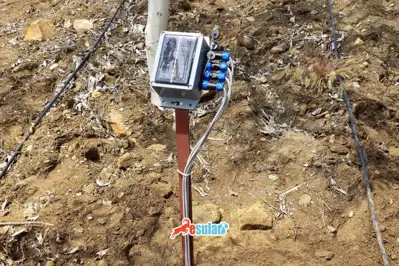
What is Agricultural Frost? Why is it More Critical in the 2026 Farming Season?
One of the biggest natural risks affecting productivity in agricultural production, agricultural frost, is the situation where water in plant tissues freezes, rupturing cell membranes and leading to plant death or yield loss. Entering the year 2026, irregular weather events brought by global climate change have shifted traditional frost dates and reduced predictability for farmers. In this context, the use of modern technologies for the sustainability of agricultural activities has become a necessity, not a luxury.
Agricultural frost events are basically examined in two main categories: Radiation frost and Advection (convection) frost. Radiation frost occurs on cloudless and windless nights when the soil rapidly releases its heat into the sky; advection frost occurs when cold air masses flock to a region. In both cases, protecting the crop depends on knowing in advance when and with what intensity the frost will arrive. The new generation solutions we offer as Esular analyze your field's microclimate to provide you with the most accurate data.

Agricultural Frost Risk Map 2026: Regional Changes and Expectations
Projections prepared for the year 2026 show that the frequency of especially late spring frosts and early autumn frosts will increase. Central Anatolia, Eastern Anatolia, and the inner parts of the Aegean are among the regions with the highest risk across Turkey. However, microclimate areas may differ from general weather forecasts. At this point, agricultural decision support systems come into play, narrowing down general maps to the specific condition of your field.
Main Product Groups Under Risk in 2026:
- Pome fruits (Apple, Pear)
- Stone fruits (Apricot, Cherry, Peach)
- Vineyards (Grape clusters are very sensitive to frost risk)
- Open-field vegetable cultivation (Tomato, Pepper, Eggplant)
- Ornamental plants and landscape areas
Critical temperature thresholds are different for each of these product groups. For example, an apricot tree in the flowering period can suffer serious damage at -2 degrees, while a vine in the dormant period can withstand much lower temperatures. To maintain this delicate balance, the use of agricultural meteorology stations is of vital importance.
The Importance of Microclimate and Local Data
General weather reports are usually based on data received from stations in residential centers. However, an agricultural land may be 3-5 degrees colder than its surroundings because it remains in a hollow or is in a location that does not receive wind. This difference is the line between completely losing the crop and saving it. When a climate station is installed in the middle of your field, it provides you with specific, not general, data.
Climate Station: The Digital Eye of Your Field
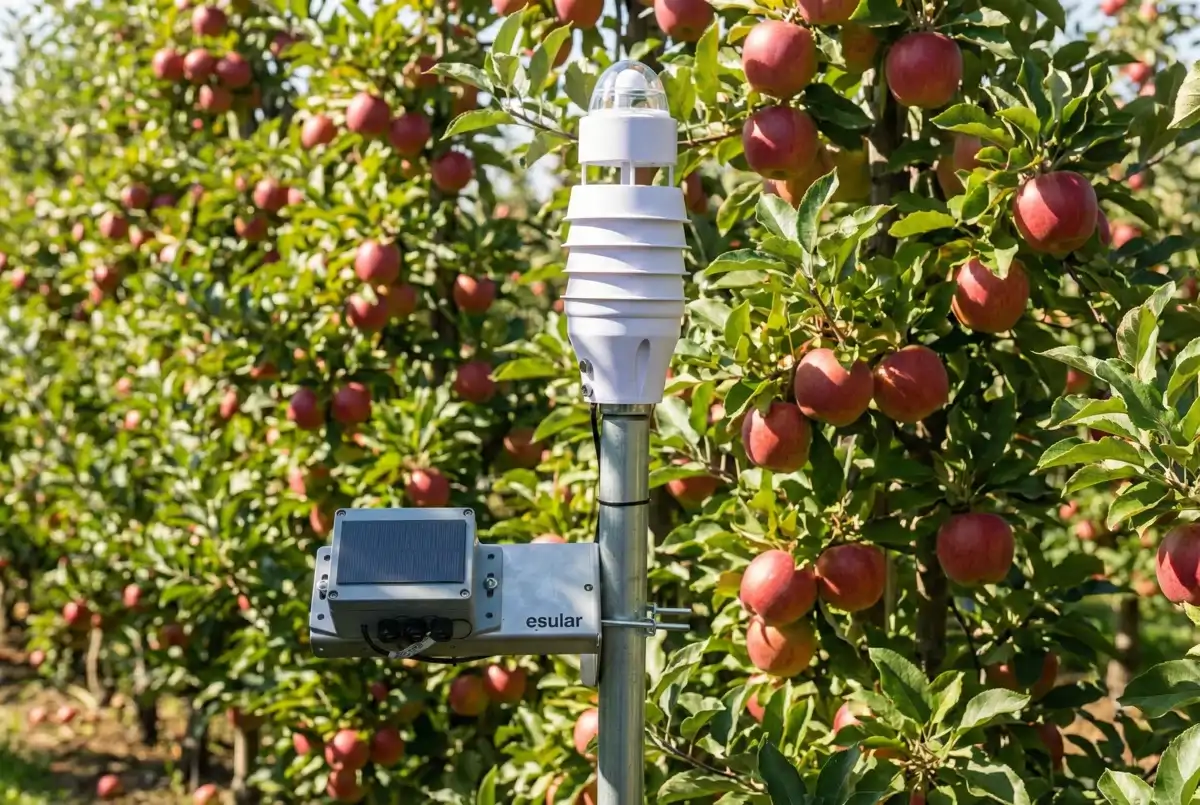
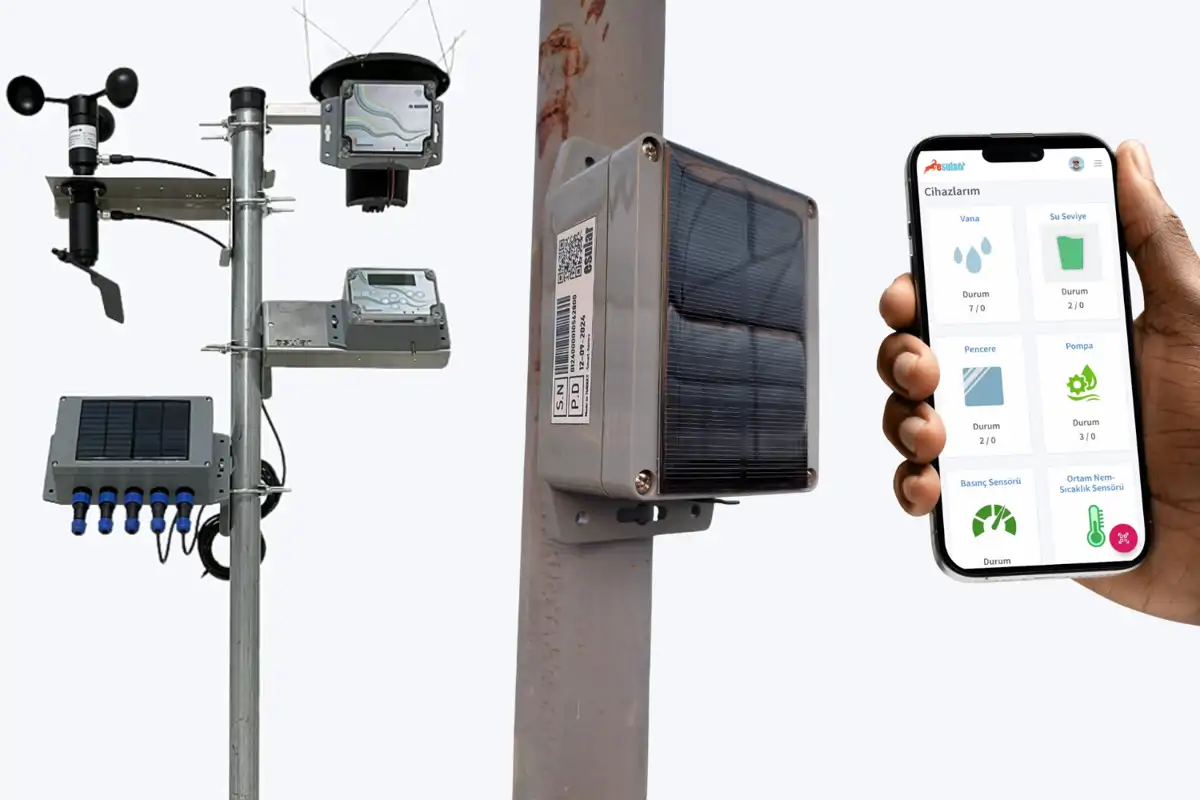
A modern climate station is not just a simple thermometer that measures temperature. A range of complex sensor data is needed to calculate agricultural frost risk. The Agricultural Climate Station solutions developed by Esular track the following parameters instantaneously:
- Wind speed and direction
- Ambient humidity and temperature
- Amount of precipitation
- Solar radiation
- Atmospheric pressure
- ETo calculation, dew point
This data is transmitted to the esular cloud platform and processed with advanced algorithms. The system does not just tell you the current temperature; it calculates at what rate the temperature will drop in the coming hours and sends you an "early warning."
Wet Bulb and Dry Bulb Temperature
One of the most critical technical details in agricultural frost prediction is the wet bulb temperature. As moisture on plant leaves evaporates, it loses heat. Therefore, even if the air temperature is 2 degrees, the leaf surface may drop below 0 degrees due to evaporation. A professional climate station reveals the real frost risk by calculating this difference. For more technical information, you can visit our Esular Maxi Installation Guide page.
Agricultural Decision Support Systems and Artificial Intelligence Integration
In the 2026 agricultural vision, it is emphasized that data alone is not enough, and this data must turn into meaningful actions. Agricultural decision support systems combine the data coming from the climate station with the phenological stage of the plant (budding, flowering, fruit set, etc.). If the plant is in its most sensitive period, warning thresholds are automatically pulled up.
Advantages of the Esular Decision Support System:
- Personalized Threshold Values: You can define different frost warning limits for each crop.
- Prediction Algorithms: You receive warnings 12-24 hours in advance with past years' data and instant trend analysis.
- Integrated Control: When frost risk is detected, you can automatically operate the irrigation system or wind machines.
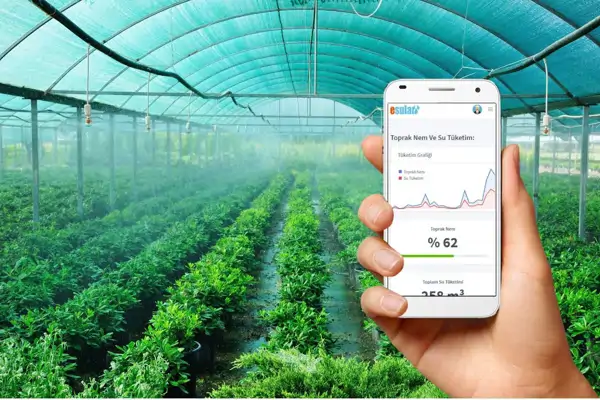
- Mobile Access: Even if you are not in your field, you receive instant notifications from anywhere in the world.
These systems eliminate the farmer's obligation to keep watch in the field all night, providing both labor savings and minimizing the margin of error. You can examine our artificial intelligence-supported solutions on the subject.
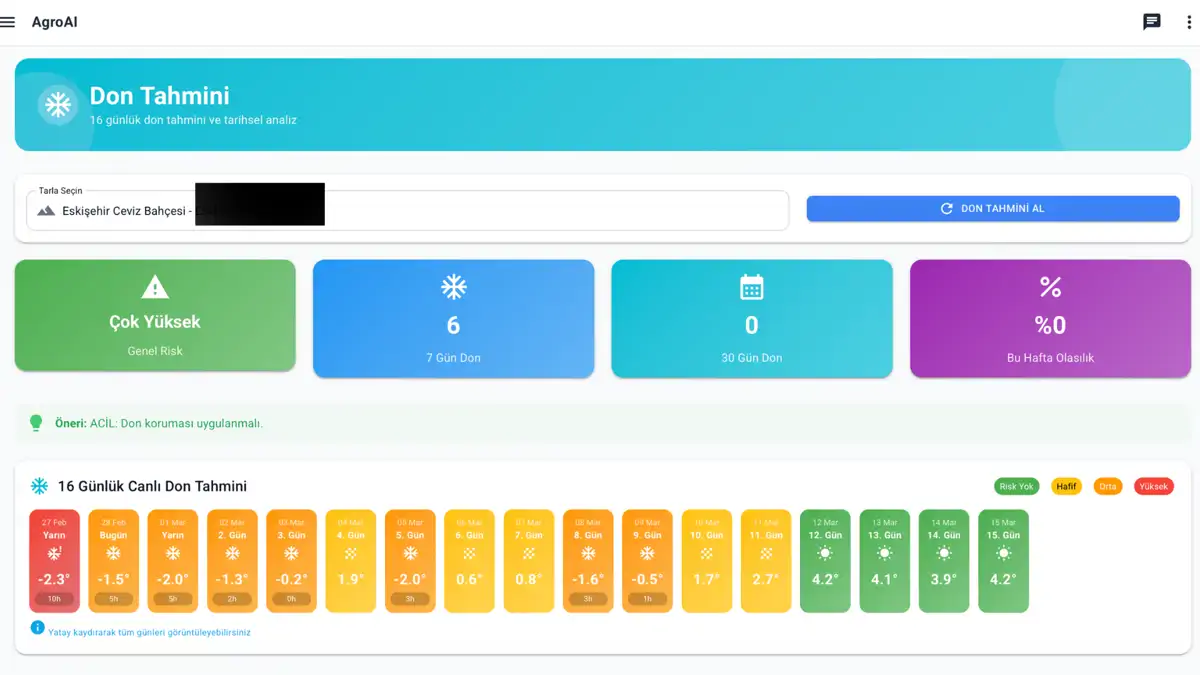
How Does the Agricultural Frost Early Warning System Work?
The success of an early warning system is built on speed and accuracy. The process works as follows:
- Data Collection: Wireless sensors in the field send data every 5-15 minutes.
- Analysis: Esular servers analyze the temperature drop speed (lapse rate).
- Threshold Control: The system is triggered when the temperature approaches the critical level determined by the user (e.g., +2°C).
- Notification: A warning is sent to the farmer via SMS, mobile app notification, or voice call.
- Automatic Action: If a wireless valve control unit is defined in the system, irrigation for frost protection purposes is started automatically.
Early warning systems are life-saving, especially in temperatures that drop suddenly after midnight. Many farmers lose the chance to intervene because they are asleep during the hours the frost hits. Esular works like a digital watchman keeping guard in your field 24/7.
Methods of Combating Agricultural Frost: Which One is More Effective?
There are various passive and active protection methods you can apply when you receive a frost warning. 2026 technologies increase the efficiency of these methods.
1. Protection with Sprinkler Irrigation
One of the most effective methods against frost risk is overhead sprinkler irrigation. It is based on the principle of water giving heat to the environment while freezing (latent heat). The thin ice layer formed on the plant tissues prevents the temperature in the inner parts from falling below 0 degrees. For this method to be successful, irrigation must start just before the frost begins and continue until the ice melts. This precise timing can only be provided with a climate station and an automation system.
2. Fogging and Heating
Radiation loss can be reduced by using fogging systems inside greenhouses or in small gardens. Additionally, frost stoves or heaters lit on nights with frost risk can increase the air temperature. However, the costs of these methods are high. Our strategies for reducing greenhouse heating costs can guide you in this process.
3. Wind Machines
In the event of inversion (temperature reversal), wind machines that pump the warm air from above downwards can be effective. When to operate these machines should be determined according to the temperature difference between the ground level and 10 meters height.
4. Mulching and Covering Systems
Mulches used to protect the soil's heat or fibers spread over the plants provide passive protection. This method is quite economical, especially for low-growing plants.
Frost Risk in Greenhouses and Smart Automation
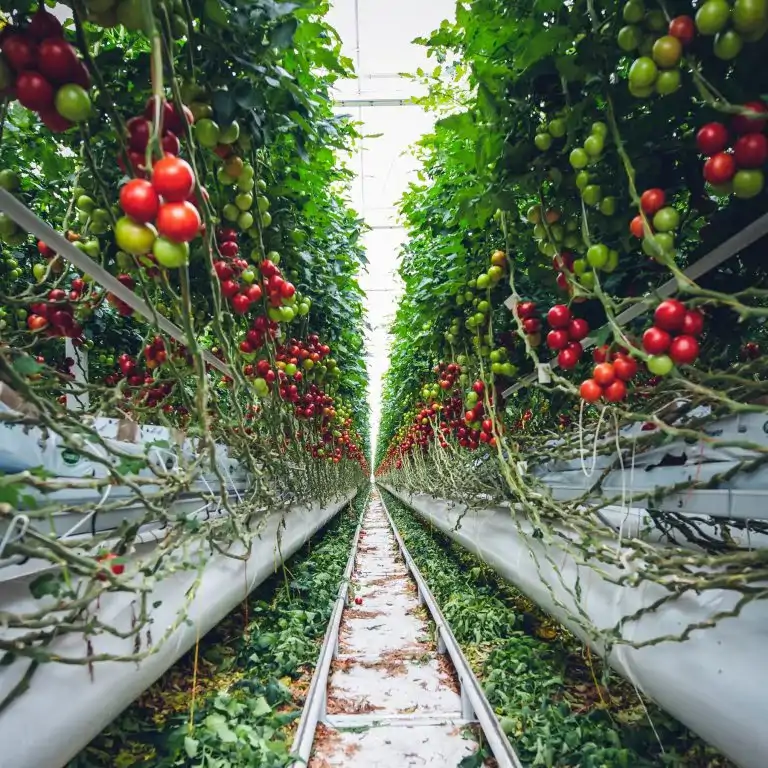
Although greenhouses are more sheltered compared to the external environment, the internal temperature can drop rapidly in extreme colds. Esular greenhouse automation systems close windows, pull thermal curtains, and activate the heating system if necessary according to the data coming from the climate station. You can modernize your facility by getting more detailed information about greenhouse automation.
Winter Maintenance of Solenoid Valves
Frost events can damage not only the plants but also the irrigation infrastructure. When the water remaining inside the pipes freezes, it expands and can burst the valves and pipes. Therefore, solenoid valve winter maintenance should not be neglected. Esular systems support scenarios that will drain the water in the pipes when frost risk is detected.
Advanced Technologies Used in Agricultural Frost Prediction
Mathematical models used to make frost predictions are based on atmospheric physics. The most common models used in 2026 are:
- Dew Point Analysis: The temperature at which the moisture in the air condenses. The lower the dew point, the more severe the frost can be.
- Stefan-Boltzmann Law: Calculation of the amount of radiation emitted from the earth's surface.
- Artificial Neural Networks: Models trained with historical data coming from thousands of different fields can make predictions with an accuracy of over 95%.
All of these complex calculations take place within seconds in the background of agricultural decision support systems, and only simple directives like "Be prepared" or "Start the system" come to you.
Economic Impacts of Agricultural Frost: 2026 Projection in Figures
Research conducted shows that a single frost night in an unprotected orchard can create a loss of up to 80% of the annual income. According to FAO (Food and Agriculture Organization) data, globally, frost damage is the second meteorological event that leads to the most economic loss after drought.
Return on Investment Analysis (ROI):
- Climate Station Cost: One-time investment.
- Potential Loss: Annual turnover risk between approximately 2-5 million TL in a 100-decare apple orchard.
- Protection Cost: Water and energy used only on nights with frost risk.
- Result: The system usually pays for itself by saving the crop during the first serious frost warning.
In light of this data, investment in esular technologies should be seen as an insurance policy, not a cost. To get information about agricultural loans and incentives, you can browse our Ziraat Bank smart irrigation support page.
Why Esular Climate Station and Early Warning System?
Although there are many meteorological stations on the market, esular solutions are customized directly according to agricultural needs. Here are the features that set us apart:
- Local Software and Hardware: Full compliance with Turkey's climate conditions and farmer habits.
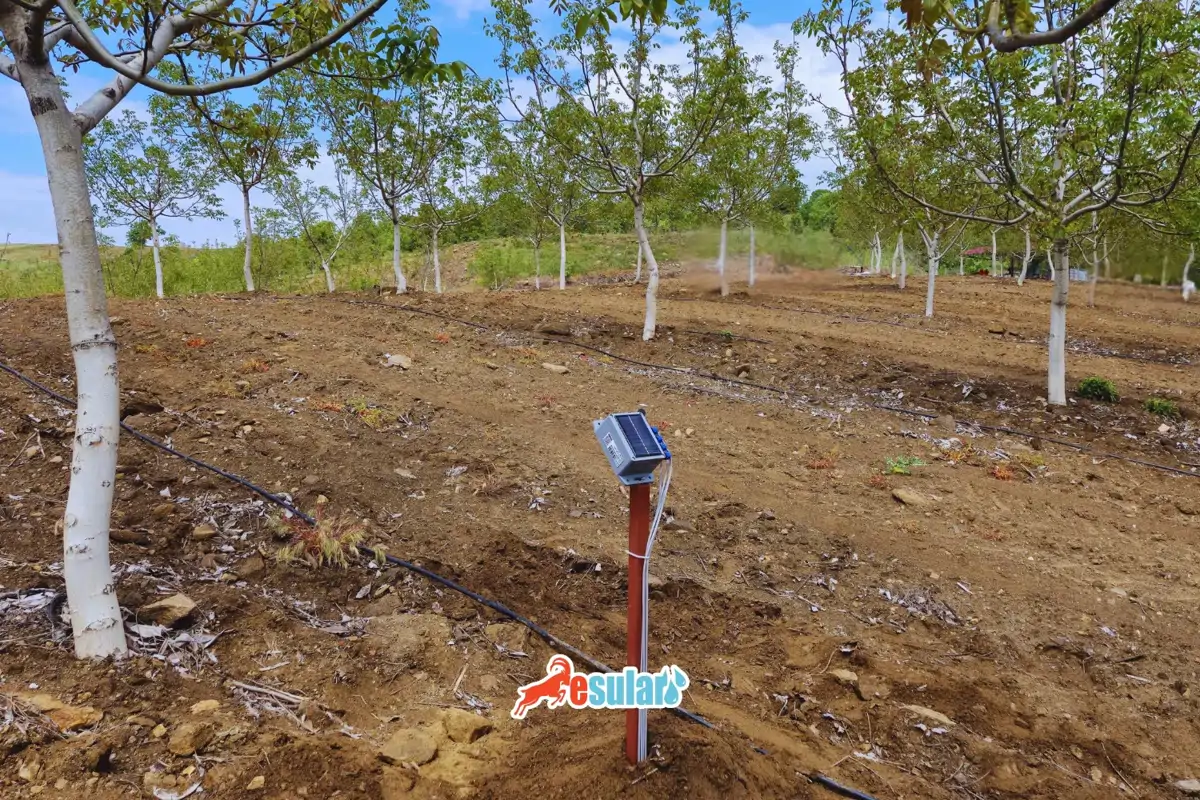
- Low Energy Consumption: Wireless units that work with solar energy and require no maintenance.
- Wide Sensor Network: Fully integrated structure from soil moisture to wind direction, not just temperature.
- Flexible Scenarios: The possibility to manage frost protection irrigation, heaters, or fogging machines from a single platform.
- Expert Support: A technical team that is by your side at every stage from installation to data analysis.
For more information, you can examine our Smart Meteorology Guide.
Are You Ready for the Agriculture of the Future?
2026 and beyond will be a period where not just those who work hard, but those who manage data by using technology win. Agricultural frost is no longer a fate, but a manageable risk. A climate station you will install in your field will not only give you a frost warning but will also guide you on irrigation timing, fertilization efficiency, and disease management.
As Esular, we continue to offer the most advanced IoT and artificial intelligence solutions so that the Turkish farmer can produce at world standards. If you want to guarantee the future of your field and stay on the safe side of the 2026 agricultural frost risk map, contact our professional team.
Take Action Now
Take your precautions before the agricultural frost risk knocks on your door. To meet Esular's smart solutions and have a project specifically designed for your field, you can follow the steps below:
- Examine our products: Climate Station Product Page
- Read other technical articles on our blog: Agricultural Meteorology Stations
- Contact us: Esular Contact Form
Remember, the most expensive input in agriculture is the lost crop. It is in your hands to reduce this loss to zero with the power of technology.
Frequently Asked Questions
How far in advance does the agricultural frost warning come?Our system sends critical warnings usually 6 to 12 hours in advance by analyzing air currents and the rate of temperature drop. However, these warnings are updated every 15 minutes with instantaneous data from the field.
Is the climate station installation difficult?No, Esular climate stations are designed with a "plug-and-play" logic. Thanks to its wireless structure, it can be installed in even the most remote point of the field within minutes. Our technical team provides remote or on-site support.
Is it used only for frost warnings?Absolutely not. Our climate station is used in many areas such as irrigation management (evapotranspiration calculation), plant disease prediction (fungal risk, etc.), and planning of working hours (suitable wind speed for spraying).
In Conclusion
In 2026, the fight against agricultural frost has gone beyond traditional methods. The integration of climate station and agricultural decision support systems is the cornerstone of modern agriculture. Keep every degree in your field under control with Esular, protect your labor and your earnings.
For more information and free consultancy, you can contact us by clicking here. The agricultural technologies of the future are in your field today with Esular!