Automatic Irrigation with Soil Moisture Sensor: How Does Precision Irrigation Work?
In modern agriculture, the keywords for efficiency are "data" and "automation." Traditional irrigation methods usually leave "when" and "how much" to irrigate to the farmer's experience or a fixed timer. However, this "time-scheduled" approach ignores the actual needs of the soil or the plant. As a result, either resources (water, energy, fertilizer) are wasted by using more water than necessary, or yield loss occurs due to plant stress caused by insufficient irrigation.
Smart irrigation systems, on the other hand, radically change this paradigm. Instead of "time-scheduled" irrigation, it switches to "need-based" irrigation. At the center of this revolution are soil moisture sensors that speak the language of the soil and instantaneously measure its actual water needs.
So, how does a soil moisture sensor automatically trigger the irrigation valve? How does this precision automation process work?
The Difference Between a Traditional Timer and a Smart Sensor
To understand the difference, let's compare two scenarios:
- Traditional System (Time-Scheduled): Your irrigation valve is set to run for 2 hours every morning at 05:00. However, if an unexpected rain fell that night, the system does not know this. At 05:00, the valves open and the already wet soil is unnecessarily irrigated again. This is a waste of water, energy, and fertilizer (if fertigation is being practiced).
- Smart System (Sensor-Scheduled): The soil moisture sensor measures that the soil moisture level is at 80% (field capacity) due to the rain. Since it does not fall below the "irrigation start threshold" (e.g., 40%) you set, the system automatically skips irrigation that day. Irrigation starts only when the soil dries out and truly needs it.
Automatic Irrigation Triggering Process: Step by Step
Modern digital agriculture platforms like Esular manage this process with a "Set and Forget" logic. Here are the technical steps of this automation cycle:
Step 1: Measurement (Sensor Technology)
Everything starts with measurement. There are two main sensor technologies on the market: TDR (Time-Domain Reflectometry) and Capacitive (FDR). Esular prefers Capacitive (FDR) sensors due to their low energy consumption, fast response time, and high accuracy.
A capacitive sensor uses the soil as if it were between two plates of a capacitor. The dielectric constant of the soil is directly related to the amount of water it contains (Water = ~80, Air = 1). The sensor measures the dielectric constant of the soil and converts this directly into a volumetric moisture content (e.g., 35%).
Step 2: Data Transmission (Wireless Technology)
The sensor must transmit this 35% moisture data it measured to the central control unit (Gateway). Esular uses LoRaWAN technology for this process. Thanks to this technology, sensors can send data up to a distance of 5-10 km with low power consumption (5+ years battery life).
Step 3: Decision Making (Software and Setpoint Setting)
The data reaches the Esular cloud platform or the central control unit. This is where the "triggering" decision is made.
The user (farmer) determines critical moisture thresholds (setpoints) for their plant via the mobile application:
- Wilting Point (Lower Threshold): e.g., 25%. If moisture falls to this level, irrigation STARTS.
- Field Capacity (Upper Threshold): e.g., 45%. If moisture rises to this level, irrigation STOPS.
The platform compares the instantaneous data from the sensor (35%) with this rule. (Example: 35% is not below 25%. No need for irrigation yet.)
Step 4: Triggering (Automatic Valve Control)
A few days later, the sensor sends a new measurement: 24%.
The software receives this data and runs the decision mechanism: "Incoming data (24%) is lower than the determined lower threshold (25%). Irrigation should be triggered."
The system sends this command to the relevant Esular Wireless Smart Valve Control Unit in the field. The valve unit, with the command it receives, sends an electrical signal to the 9V Latch solenoid valve to open the valve and irrigation begins.
Step 5: Completing the Cycle (Stopping)
While irrigation continues, the sensor continues to take measurements. After a while, the moisture level reaches 45% (the determined upper threshold). The software receives this data: "Incoming data (45%) has reached the upper threshold. Irrigation should be stopped."
The system sends a "CLOSE" command to the valve control unit and irrigation stops automatically.
As a result, the soil receives exactly as much water as it needs. Waste and plant stress are prevented.
Esular Ecosystem: Full Automation from Sensor to Valve
The success of this precision irrigation cycle depends on all components working perfectly with each other. Esular offers this ecosystem in a single platform:
1. Esular Wireless Soil Moisture Sensor
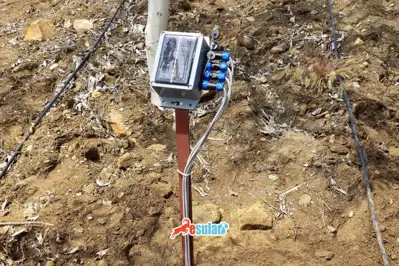
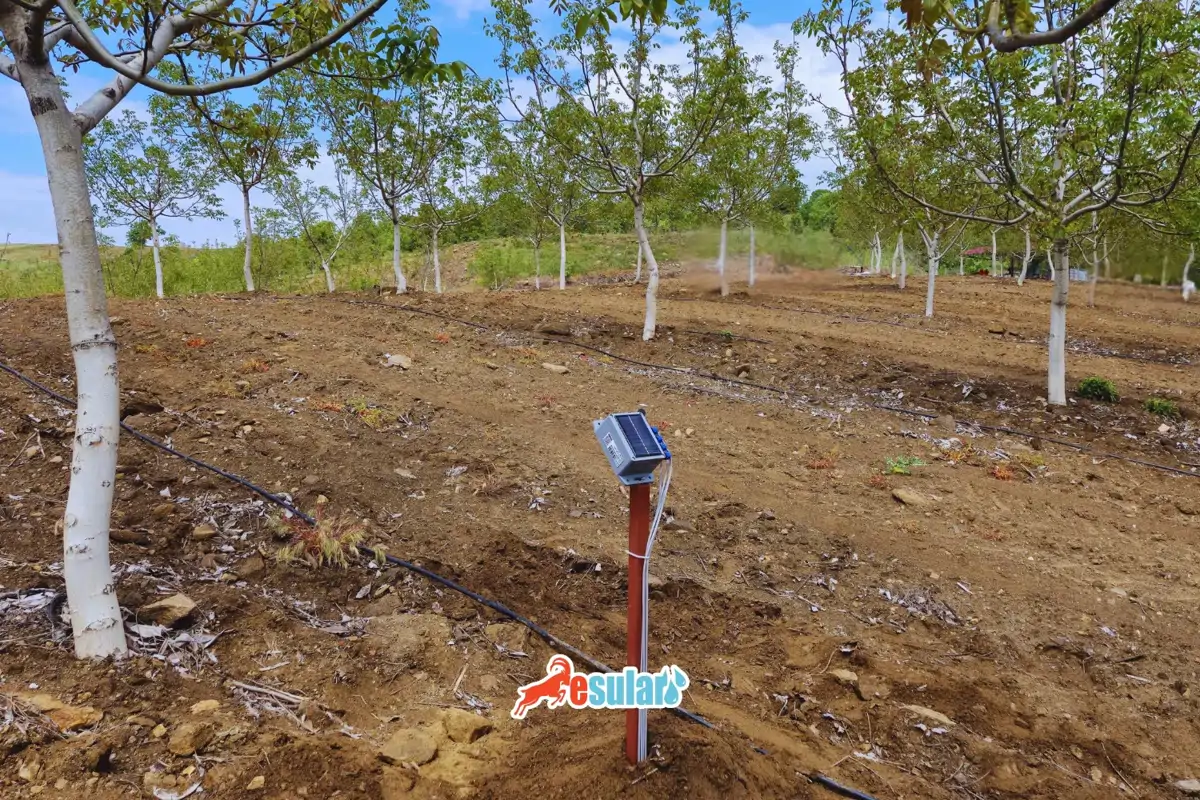
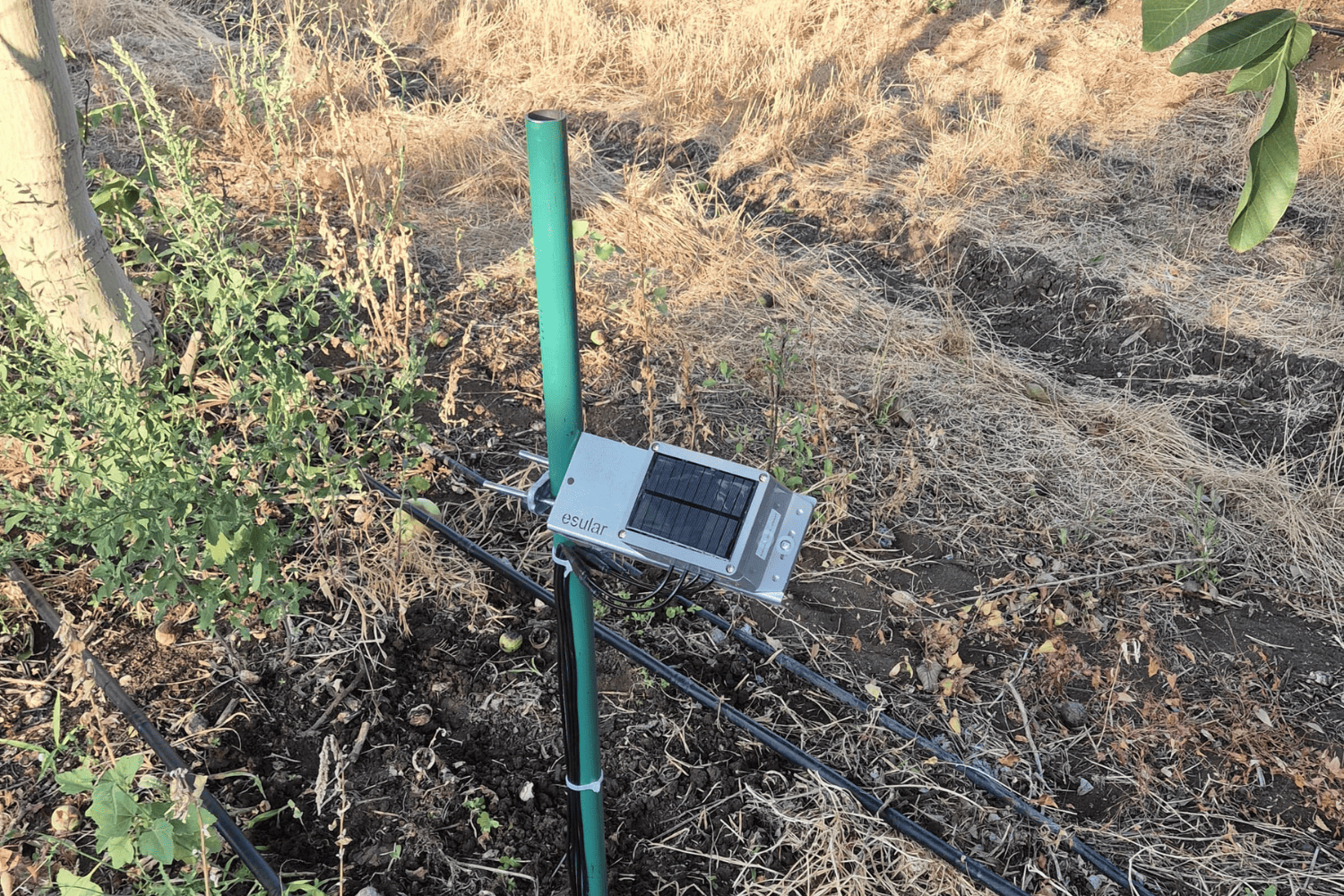
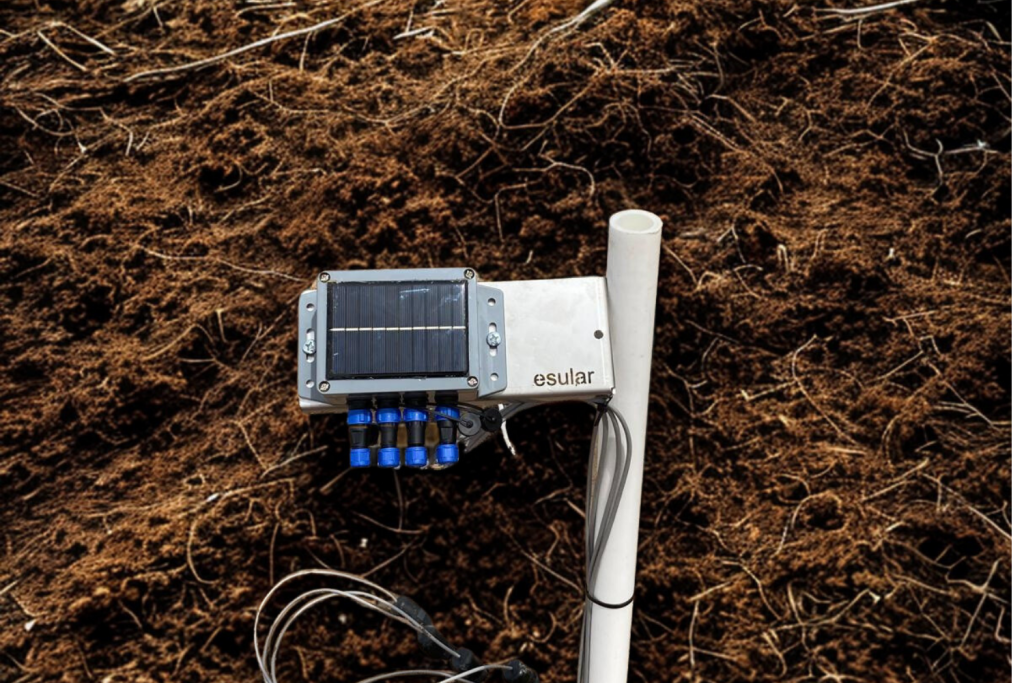
These are the "eyes" of automation. Models are available that can measure at different depths (1, 2, 3, or 4 levels). This way, you can monitor not just the surface, but also the plant's active root zone. It also offers optional EC (salinity) and temperature measurement.
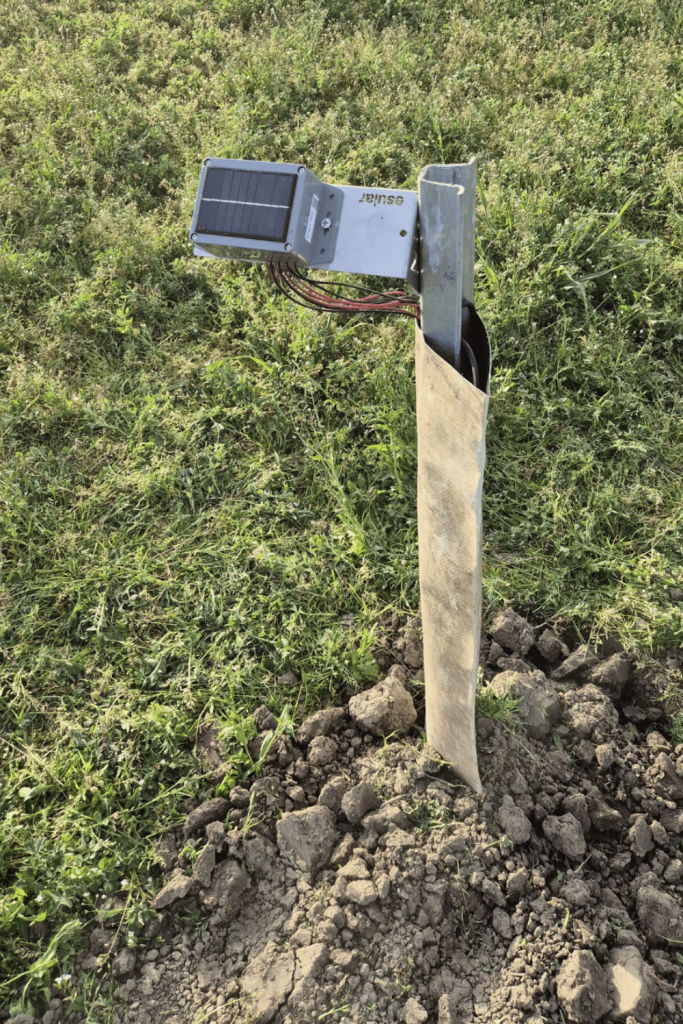
Esular's wireless soil moisture sensors offering different level options.
2. Esular Smart Valve Control Unit
These are the "hands" of automation. It opens or closes the valve according to the decision from the sensor. Since these units are also wireless and solar-powered/battery-powered, there is no need for electricity infrastructure in the field. You can review them on the store page.
3. Esular Mobile/Web Platform
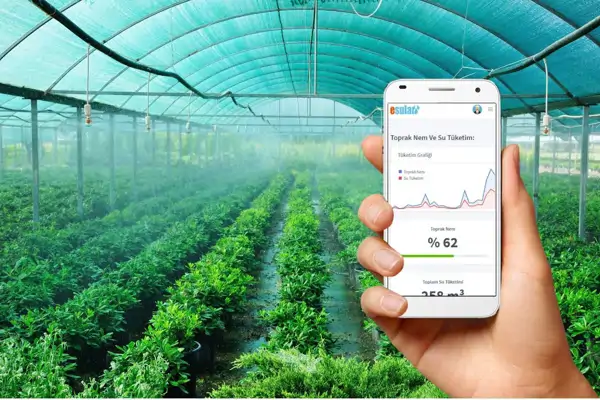
This is the "brain" of automation. It is where all rules (setpoints) are set, and data is analyzed and reported. The farmer manages this entire complex process through a simple interface on their phone.
Conclusion: Data-Driven Irrigation is a Necessity, Not a Luxury
Automatic irrigation with a soil moisture sensor is a technology that turns the "maybe I should irrigate" guess into "irrigation is required" knowledge. Thanks to this precision control, your plants never experience water stress, the risk of root rot is eliminated, and most importantly, you do not waste your valuable resources such as water, energy, and fertilizer.
The wireless and integrated ecosystem offered by Esular makes this technology accessible for farmers of all scales. In the age of digital agriculture, those who listen to their soil win.
For More Information
Do you have more questions about soil moisture sensors and automatic irrigation? You can read our Frequently Asked Questions blog post or contact our expert team to request a free discovery for your land.
Trust Esular to carry your agriculture into the future.
Contact
📞 Switchboard: 0850 303 49 91
📱 WhatsApp: 0541 247 45 05
✉️ E-mail: [email protected]
🌐 Web: www.esular.com
⚠️ Price Warning: Prices are subject to change. The prices of products mentioned in this content are the list prices prior to the date of publication. For current campaigns and prices, please visit store.esular.com.