Water Efficiency Strategy Document in the Framework of Adaptation to the Changing Climate R.T. Ministry of Agriculture and Forestry (2023 – 2033) and Action Plan
Water Efficiency Strategy Document in the Framework of Adaptation to the Changing Climate R.T. Ministry of Agriculture and Forestry (2023 – 2033) and Action Plan
Water is a vital need and an indispensable resource for all living beings. Accessible freshwater resources, which are less than 1.2 percent of the world's total water existence, face many threats such as pollution, drought, climate change, population growth, water losses, and unsustainable overconsumption.
On the other hand, Türkiye is located in a high-risk region in terms of risks related to climate change. The mentioned risks affect the availability of water resources and lead to negativities in water quality. As a result of climate impact assessments conducted for the current century, it is predicted that the water potential in Türkiye will decrease compared to the reference period due to increasing temperatures and changing precipitation patterns.
Scope
Within the scope of this study, the current situation regarding water efficiency in Türkiye, national and international legislation; plans, programs, and documents in force; institutions and organizations that will take direct responsibility and cooperate in the implementation of practices, as well as forward-looking goals, strategies, and actions regarding water efficiency have been determined.
The Strategy Document and Action Plan were developed over the main axes given below:
Urban Water Use Efficiency
Agricultural Water Use Efficiency
Industrial Water Use Efficiency
Water Use Efficiency Affecting All Sectors
Aims, Goals, and Strategies Regarding Urban Water Efficiency
AIM: Increasing Urban Water Efficiency
Goal 1: Reducing the water loss rate to 25% by 2033 and to 10% by 2040 in all municipalities by increasing water efficiency in local governments.
Strategies:
Completion of legal, administrative, and technical studies to increase the effectiveness of municipalities and water and sewerage administrations.
Establishing the necessary technological infrastructure and expanding the use of automation/remote sensing systems for the detection and prevention of physical and administrative losses in drinking water systems and losses in sewerage systems.
Expanding applications such as creating isolated sub-zones, pressure management, hydraulic modeling, etc., aimed at reducing losses in drinking-utility water supply and distribution systems.
Goal 2: Providing water recovery at rates up to 40% by increasing water use efficiency in the tourism sector
Strategies:
Developing social and economic supports and incentives (practices encouraging the public, grants supporting the producer and industry, incentives, R&D supports, etc.) that will increase and expand water efficiency in the tourism sector.
Conducting labeling studies showing the water use level for devices, equipment, and apparatuses used in tourism facilities and expanding the use of TSE-certified and water-saving products.
Aims, Goals, and Strategies Regarding Agricultural Water Efficiency
AIM: Increasing Efficiency in Agricultural Water Use
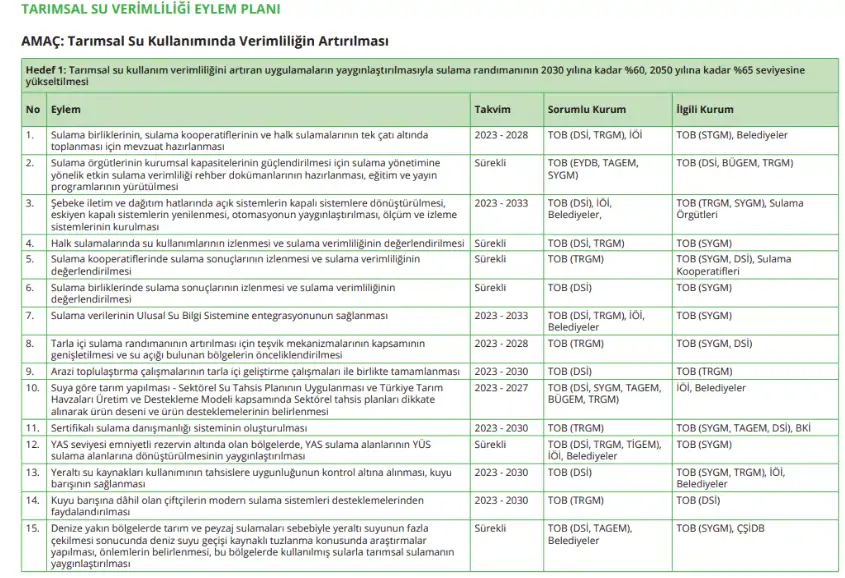
Goal 1: Increasing the irrigation efficiency level to 60% by 2030 and 65% by 2050 through the expansion of practices that increase agricultural water use efficiency. Strategies:
Completion of legal, administrative, and technical studies to increase the effectiveness of agricultural irrigation organizations.
Strengthening the institutional capacities of water user organizations (irrigation cooperatives, irrigation unions, etc.) to increase participation in irrigation management.
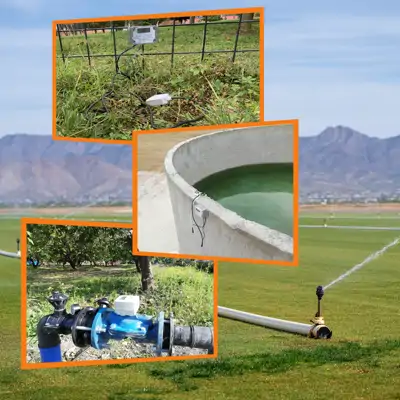
Carrying out regular measurement and monitoring in irrigation systems, expanding automation and the use of high technology.
Carrying out irrigation measurements on a parcel basis and determining plant water needs in real-time.
Expanding renewable energy sources such as solar, wind, geothermal, etc., in meeting the energy needs required in modern irrigation systems
Increasing Efficiency in Industrial Water Use
Goal 1: Providing water recovery at rates up to 50% by implementing clean production techniques and water efficiency measures in industry.
Increasing awareness within the scope of water efficiency practices in industry, expanding good practices, and ensuring cooperation between public institutions, universities, NGOs related to the industrial sector, and the private sector.
Developing measurement and monitoring systems and creating up-to-date inventories.
Developing the institutional connection and cooperation structure for the audit of efficient water use between the institutional structure of basin water management and organized industrial zone managements, chambers of industry, and industrial non-governmental organizations.
You can access the entire Water Efficiency Strategy Document and Action Plan document in the Framework of Adaptation to the Changing Climate via the link below.