Digital Transformation in Agriculture with Esular Climate Stations
Modern agriculture is now managed not only with soil and water, but also with the power of data. In this period where we feel the effects of global climate change more and more every day, the biggest helpers of farmers are accurate and instantaneous meteorological data. The climate stations we have developed as Esular serve as the 'digital eye' of agricultural lands. These systems use next-generation sensor technologies to monitor, record, and analyze the physical state of the atmosphere to the finest detail.
Knowing the micro-climate conditions in an agricultural land does not only mean predicting tomorrow's weather; it also means foreseeing when the plant will want water, which day it will face the danger of frost, or when a disease will start to spread. Esular climate stations transform these complex data into understandable, applicable, and profitable strategies. These solutions we offer within the framework of smart farming systems are indispensable for a sustainable future.
What is a Climate-Meteorology Station and Why is it Important?
A climate-meteorology station is an integrated system that continuously measures the physical parameters of the atmosphere and transmits this data to the user. Unlike traditional meteorology stations, agricultural climate stations focus directly on factors affecting plant development. These devices measure parameters such as temperature, pressure, wind speed, wind direction, humidity, precipitation type, and intensity with high precision.
Critical Importance in Agricultural Production:
- Accurate Planning: Allows you to determine planting and harvest times by following real weather data instead of the calendar.
- Resource Optimization: Reduces costs by adjusting water and fertilizer use according to the real needs of the plant.
- Disease and Pest Management: Detects disease risks in advance through humidity and temperature data.
- Frost Prediction: Helps take proactive measures by setting automatic alarms for critical temperature drops.
You can visit our Climate Station-Agricultural page for more technical details and product varieties.
Technical Features of Esular Climate Stations
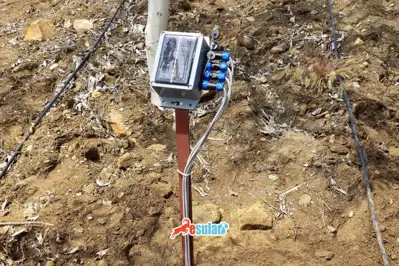
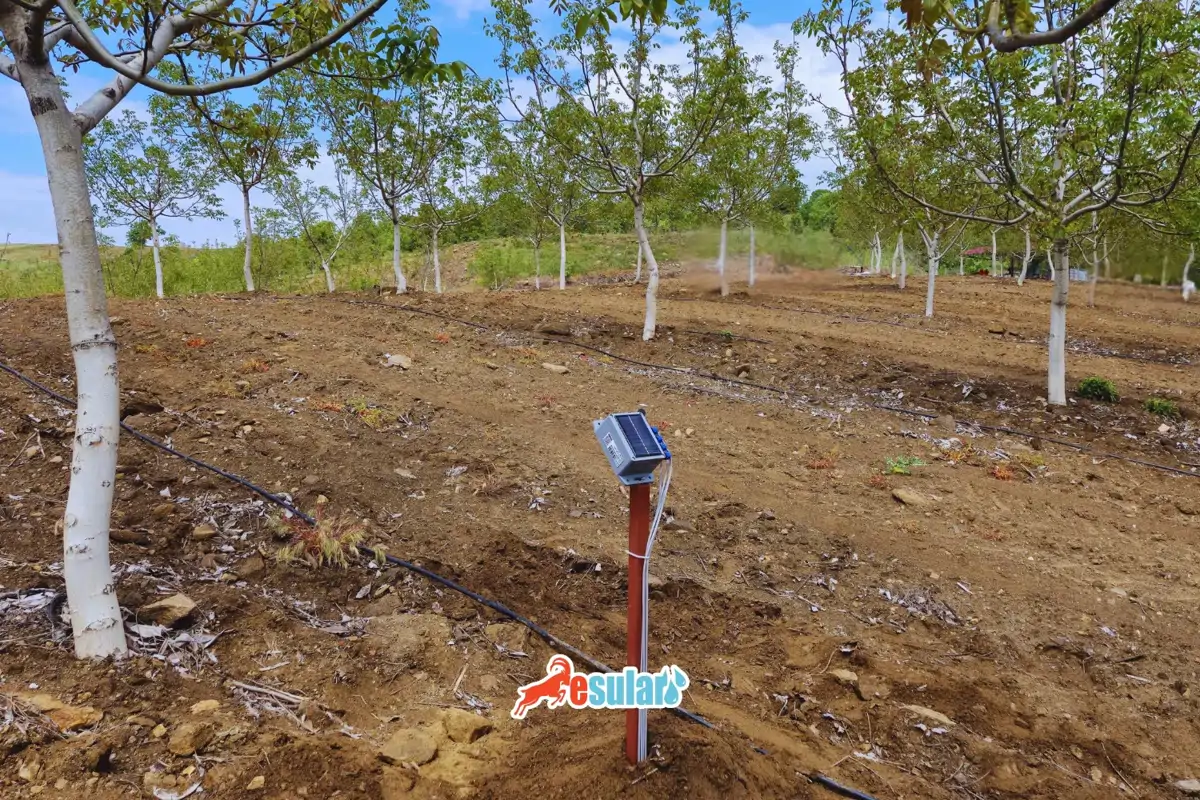
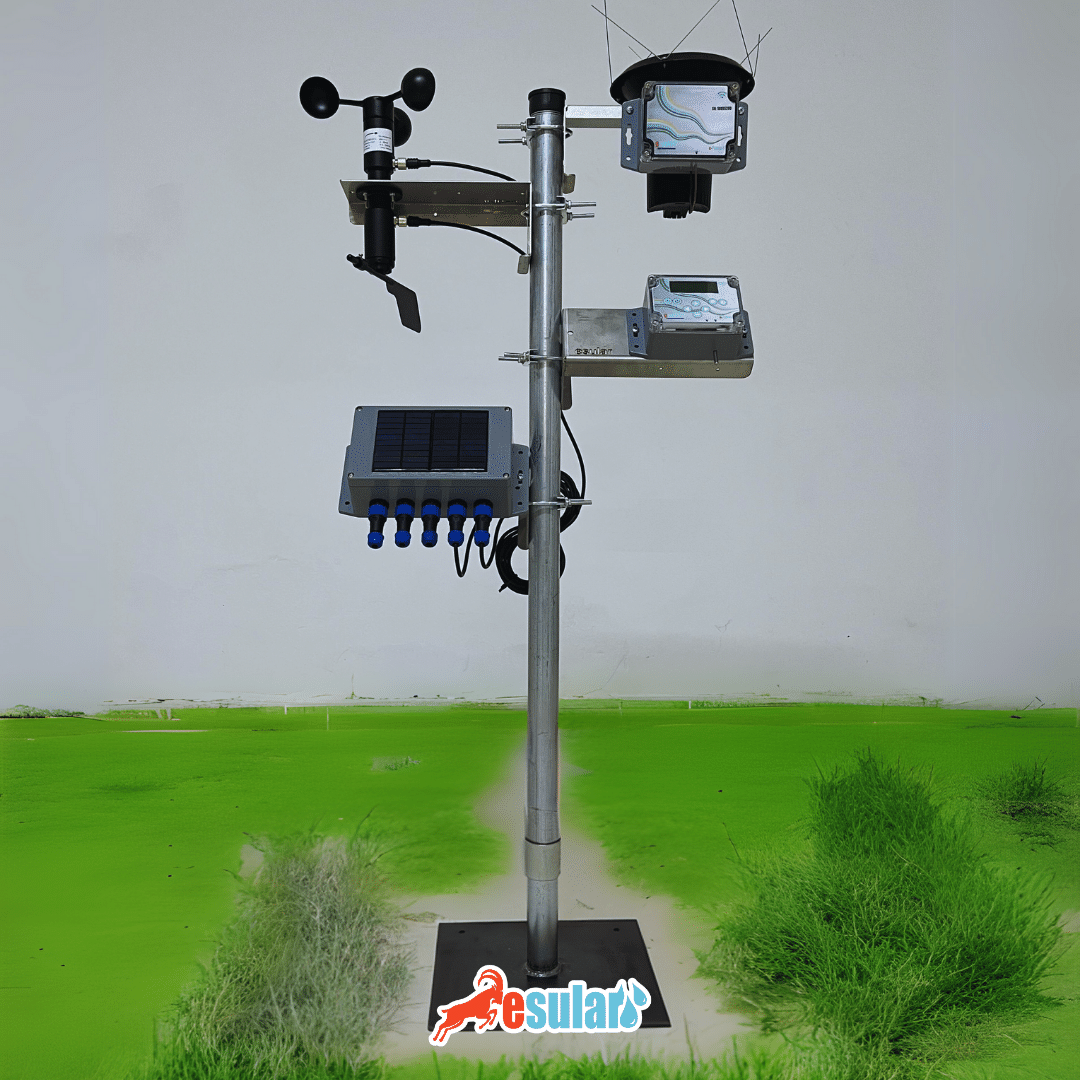
Esular climate stations are designed to operate uninterruptedly even in the most challenging field conditions. The freedom brought by wireless technology, when combined with solar energy, results in a maintenance-free system accessible from anywhere. Our devices have IP65 waterproofing standards and are not affected by dust and heavy rain.
Wireless Communication: LoRaWAN Technology
Our devices work with LoRa (Long Range) modulation and the LoRaWAN protocol. This technology, using the EU-868 MHz frequency band, can transmit data to base stations kilometers away with very low energy consumption. In this way, you can set up your station at any point you want within minutes without dealing with complex cabling operations in your field. Data security is at the highest level, and no data loss occurs in case the device is turned off and on.
Energy Independence: Solar Panel and Battery Power
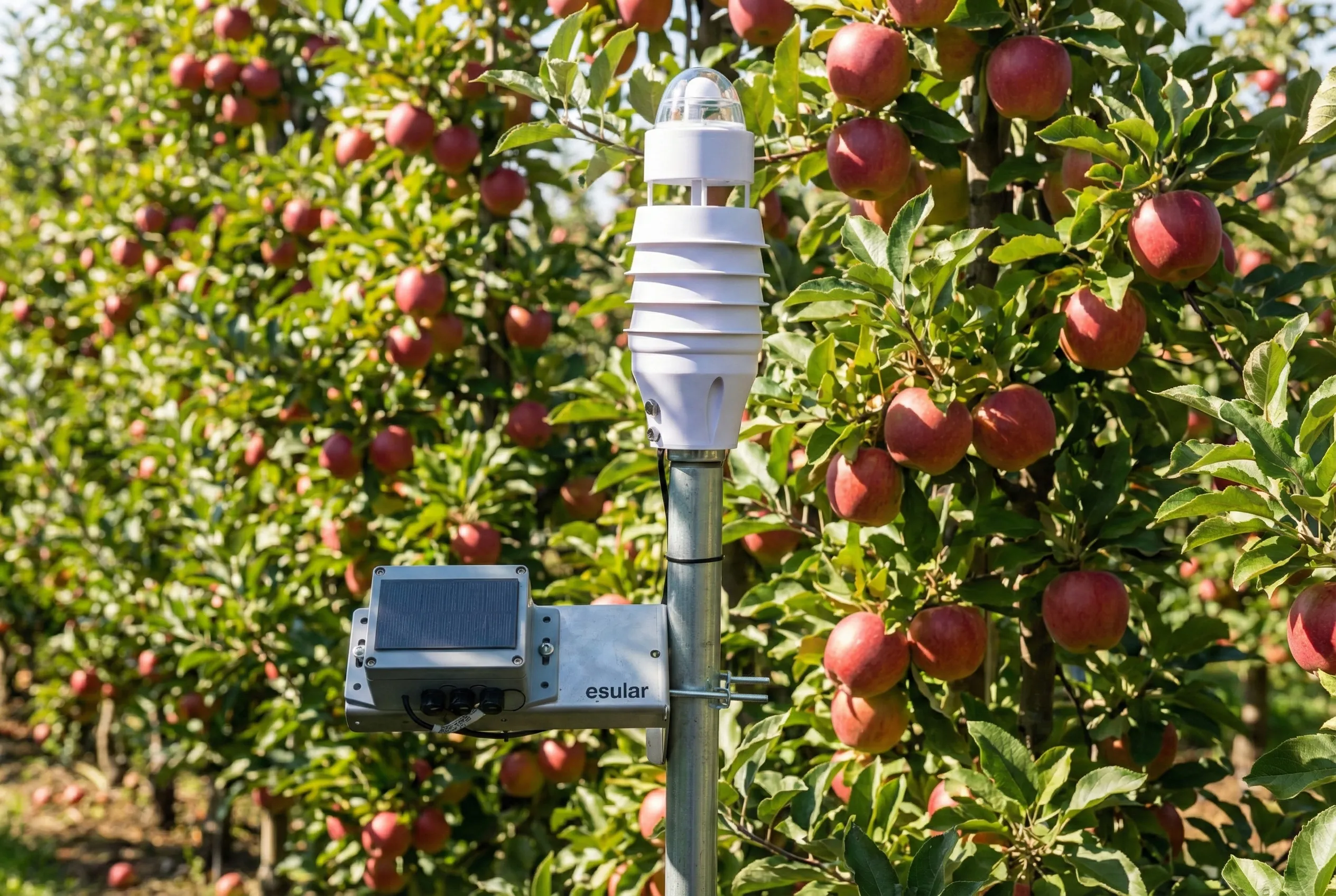
Esular climate stations have a self-solar-paneled structure. Thanks to its internal 5000 mAh rechargeable lithium-ion battery, it can continue to operate for 1 year even in overcast weather where there is no sunlight. This energy independence provides uninterrupted data flow in remote fields without electricity infrastructure. Energy management is a critical element for agricultural activities not to be interrupted.
Integrated Sensors and Measurement Precision
The quality of a climate station is determined by the precision of the sensors it carries. As Esular, we have integrated professional sensor groups capable of collecting data at an academic level into our system. These sensors continuously measure data vital for plant development and water management day and night.
Outdoor Humidity and Temperature Sensor
This sensor, which measures the temperature and humidity of the air, also calculates the 'dew point' value, which is the temperature at which the humidity in the air begins to condense. Protected by a thermal radiation shield, these sensors prevent incorrect measurements caused by sunlight.
Sensor Features:
- Temperature Measurement Range: Between -40 and +125°C.
- Temperature Accuracy: ±0.2°C (Typical).
- Humidity Measurement Range: 0% – 100% RH.
- Humidity Sensitivity: ±2% Relative Humidity.
Solar Radiation Sensor (Pyranometer)
Radiation values (W/m²) from the sun are critical for plants to perform photosynthesis. Our pyranometer sensor provides basic data for plant development and evaporation (ETo) calculations by measuring radiation from the sun. This sensor, compliant with ISO standards, has an annual stability rate of ≤±3%.
Precipitation Amount and Intensity Sensor
The precipitation sensor, working with a calibrated tipping bucket system, counts every drop falling on your field. This data, measured in mm, is used in optimizing irrigation schedules. For example, if more precipitation than you expected fell at night, your smart system can automatically cancel the morning irrigation.
Technical Details:
- Measurement Range: Up to 600 mm per hour.
- Sensitivity: 0.1 mm, 0.2 mm options.
- Rain Detection Area: 200 cm².
- Accuracy: Less than 1% error at rates below 100 mm/hour.
Wind Speed and Direction Sensors
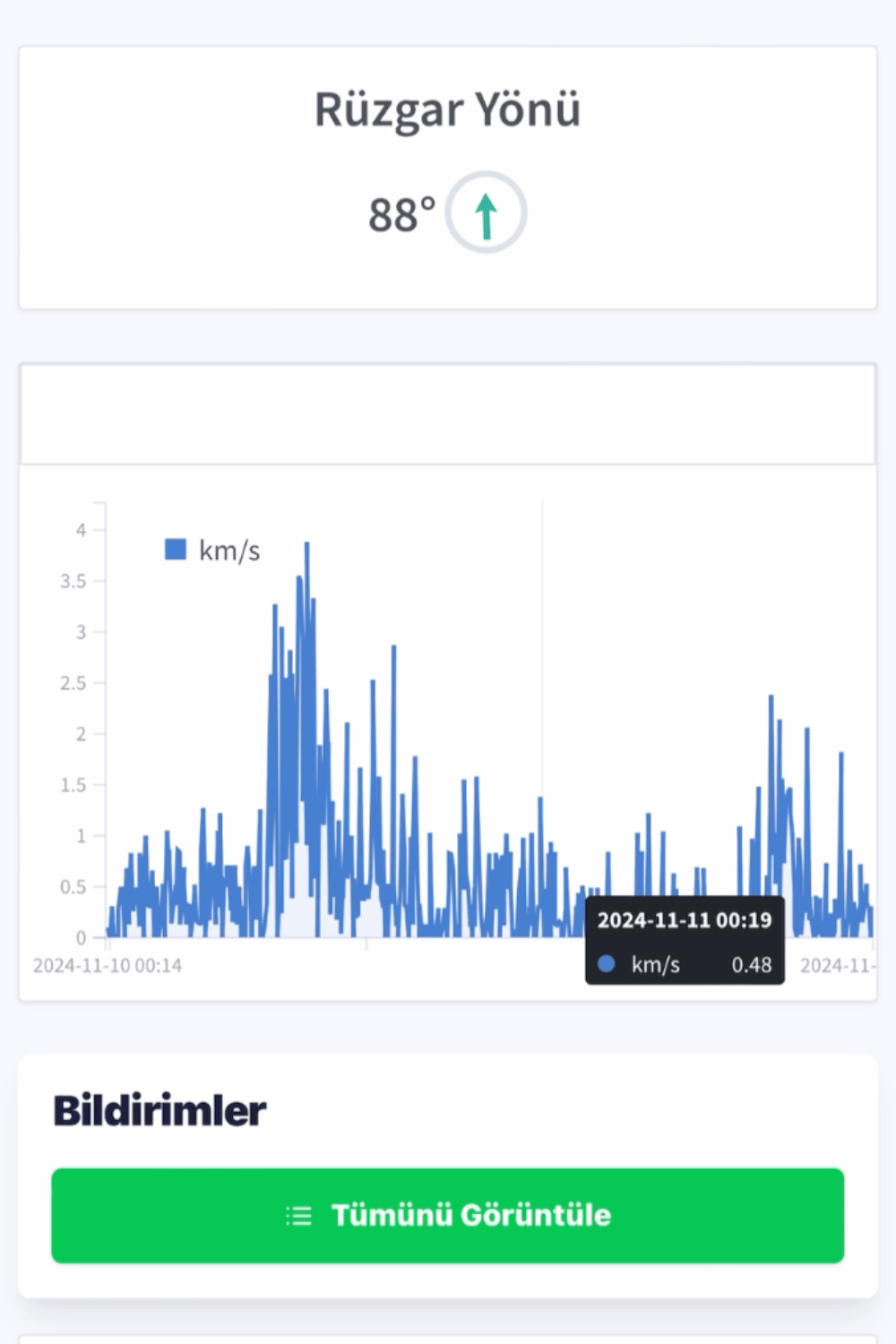
Wind data is of vital importance for spraying activities. Spraying performed when the wind speed exceeds 5 m/s both remains ineffective and harms the environment. Esular wind sensors can measure horizontal wind in a 360° direction and up to a speed of 55 m/s.
For more sensor information, you can check our how to use wind sensors guide.
Agricultural Water Management and ETo (Evapotranspiration)
One of the most advanced features of Esular climate stations is their ability to calculate ETo (Evaporation) using meteorological data. ETo is the sum of water evaporated from the soil and released from the plant through transpiration. This value is used to determine how much water the plant consumed that day.
Irrigation Schedule Creation Process:
- The climate station collects temperature, humidity, wind, and radiation data.
- Our cloud-based software calculates the daily ETo value using the Penman-Monteith formula with this data.
- This information is combined with soil moisture sensor data.
- Water need is determined according to the phenological stage of the plant and an automatic irrigation schedule is created.
This integrated approach provides water savings of up to 40% compared to traditional methods. For more information about water savings, you can read our 40% water savings article.
Application Areas: Where is it Used?
Esular climate stations are suitable not only for large agricultural lands but for all kinds of outdoor activities requiring precise measurement. Thanks to its flexible structure and wide sensor support, it offers solutions in different sectors.
Basic Application Areas:
- Orchards and Viticulture: Frost prediction and fruit quality optimization.
- Professional Greenhouse Cultivation: Control of ideal climate conditions and energy saving.
- Field Crops: Harvest planning in products such as corn, wheat, and sunflower.
- Landscaping and Golf Courses: Professional green area management and smart irrigation.
- Academic Research: Reliable meteorological data collection for agricultural R&D projects.
For more information about greenhouse applications, you can look at our What is Greenhouse Automation? content.
Experience-Oriented Benefits: Why Esular?
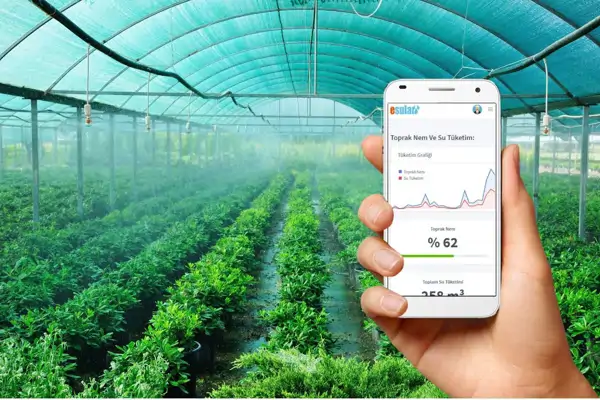
The peace of mind given by looking at the Esular mobile application on your mobile phone when you wake up in the morning as a farmer and seeing the humidity rate in your field, the amount of precipitation that fell in the last 24 hours, and today's expected evaporation value is priceless. When you start using Esular climate stations, you get the following advantages:
Data-Driven Decision Making
You act with real data, not with predictions. Instead of saying 'The weather looks hot today, let me increase irrigation', you say 'According to station data, the plant consumed 5.2 mm of water today, I should give back exactly this amount'. This both protects plant health and prevents the waste of groundwater. FAO Precision Agriculture principles also support this data-driven approach.
Proactive Approach in Combating Diseases
Many fungal diseases spread when a certain temperature and humidity threshold is exceeded. The Esular climate station sends you a notification when these critical thresholds are approached. Thus, before the disease spreads to your field, you save on pesticide costs by spraying only in risky areas or exactly on time. Working integrated with Republic of Türkiye Ministry of Agriculture and Forestry data for plant protection strategies will multiply your yield.
Frost and Storm Warnings
Especially for citrus and stone fruit producers, the risk of frost is a big nightmare. Our climate station warns you instantly when the temperature drops to a critical level. In this way, you can activate your frost prevention systems (wind machines, fogging, etc.) exactly on time. We have presented detailed strategies on this subject in our agricultural frost threat guide.
Installation and Integration Process
The installation of the Esular climate station is simple enough not to require any technical expertise. The device is ready to work as soon as it comes out of its box. Thanks to its wireless structure, all you need to do is mount the device on a suitable pole and make sure the solar panel receives light.
Installation Steps:
- Prepare the mounting apparatus of the device.
- Place the station in an open spot where there are no trees or buildings that will block wind or precipitation around it.
- Turn on the device and pair it with your LoRaWAN gateway.
- Name your sensors and set your alarms via the Esular cloud platform.
The system can also be integrated into your existing SCADA systems thanks to RS485 and Modbus communication features. You can examine our Industrial Smart Water Management article about the solutions we offer for industrial facilities.
The Role of Climate Data in the Future of Agriculture
In the future, agriculture will be performed with the full integration of artificial intelligence and IoT devices. As Esular, we are building this future starting from today. Data coming from our climate stations is processed with our machine learning algorithms to offer you 'smart recommendations'. Our infrastructure, compliant with LoRa Alliance standards, is fully compatible with technological developments worldwide.
Precision agriculture applications are a necessity not only for large farms but for businesses of all scales that want to increase their efficiency. This digital network established in the triangle of climate data, soil moisture, and plant physiology is the cornerstone of sustainable food production. As emphasized by the World Meteorological Organization (WMO), meteorological data collected at the local level is the most valuable part of global climate strategies.
Conclusion
Esular climate stations were designed so that you do not leave your agricultural production to chance. With its solar-powered structure, wireless LoRaWAN communication, and professional sensor group, it combines your field conditions with the digital world. Everything you need to provide water savings, increase yield, and minimize risks is available in this compact system. By meeting Esular solutions that combine technology with the abundance of the soil, you too can step into a new era in agriculture.
Carry Your Agriculture to the Future with Esular!
Contact us to get more information about our climate stations, reach technical documents, or get a special price quote for your land. Our expert team is waiting ready to determine the most suitable solution for your agricultural needs.
Explore Now: