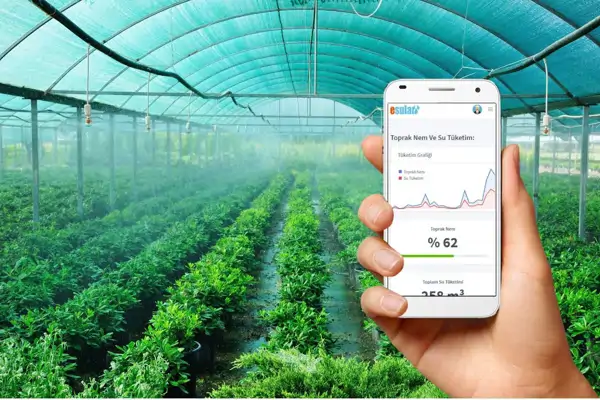
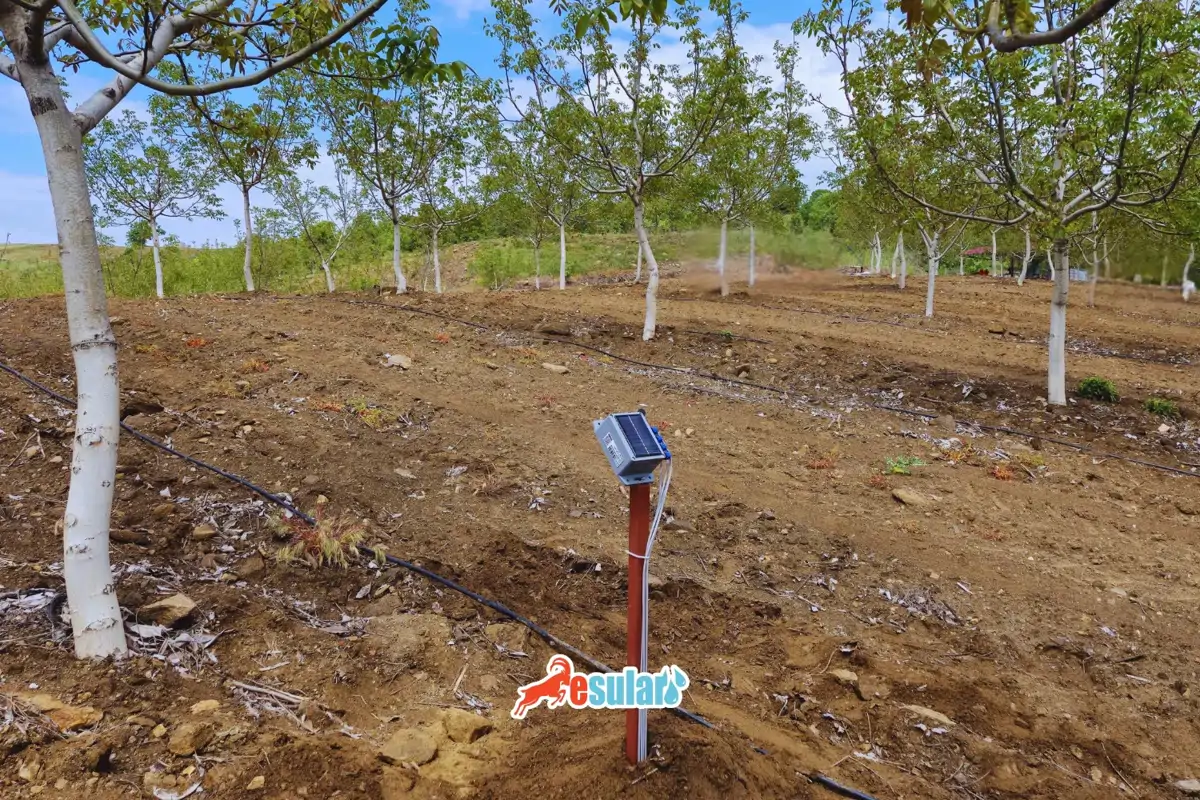
A soil moisture sensor is a device used for measuring moisture levels in the soil and tracking these measured values. These sensors monitor moisture levels within the soil precisely and continuously. In this way, they ensure that irrigation is carried out according to the water needs of the plants. When the soil dries out, they minimize water consumption by automatically activating the irrigation system, thereby providing water savings. Ensuring correct moisture levels improves plant health and supports root health. At the same time, it increases yield. Soil moisture sensors help optimize irrigation schedules by recording and analyzing measured data. In this way, they ensure more efficient use of water resources in plant growing processes and increase agricultural productivity.
What are the Benefits of a Soil Moisture Sensor?
Soil moisture sensors have become an important tool for increasing agricultural productivity. Some benefits of these sensors are:
Optimizes Water Use: Soil moisture sensors optimize irrigation processes by determining the amount of water plants need. Therefore, they ensure the efficient use of water.
Improves Plant Health: Correct irrigation reduces plant stress and supports growth by ensuring plants remain at ideal moisture levels.
Increases Yield: By helping plants grow in optimal conditions, they increase crop yield.
Provides Time Savings: When integrated with automatic irrigation systems, soil moisture sensors continuously monitor the soil condition and manage the irrigation process automatically.
Data Collection and Analysis: The obtained data helps farmers develop future irrigation strategies by performing historical analysis.
Reduces Environmental Impacts: Unnecessary irrigation can cause soil erosion and waste of water resources. Soil moisture sensors reduce environmental impacts by ensuring that only as much water as needed is given.
How Does a Soil Moisture Sensor Work?
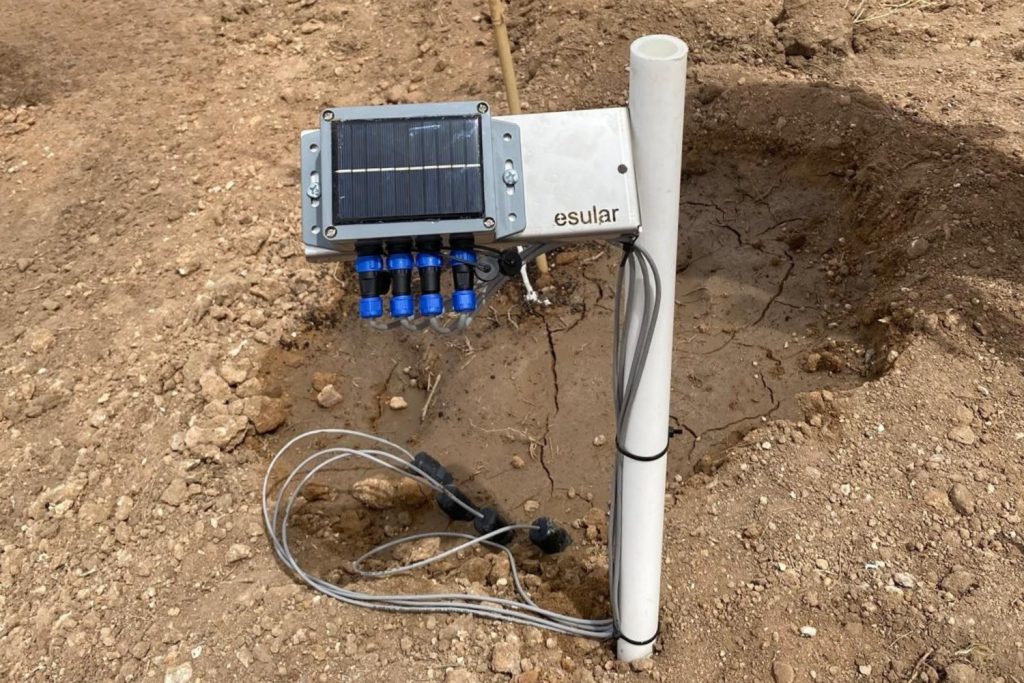
The wireless battery-powered Soil Moisture Sensor operates with a 3.6V lithium-ion battery. No external energy or wiring is required for the sensor to operate. Its battery life is quite long thanks to its low power consumption structure and sleep modes. The sensor interacts with the soil through a probe system that is buried in the soil and in contact with it. The values measured at certain intervals via the probes are transmitted to the server. Thus, soil moisture levels can be monitored and necessary irrigation or fertilization processes can be planned.
These sensors generally have the following main components:
Soil Moisture Sensor: This sensor is used to measure the moisture level of the soil. It detects the moisture level through probes placed in the soil. It determines the moisture level by utilizing electrical conductivity.
Microcontroller or Data Processing Unit: There is a microcontroller or a similar data processing unit that processes and analyzes the collected data. This unit receives the data from the soil moisture sensor, processes it, and prepares it for wireless communication.
Wireless Communication Module: This module uses a communication protocol that can transmit the data collected from the sensor wirelessly. Protocols such as Wi-Fi, Bluetooth, LoRa are frequently used. In this way, the obtained moisture level data is transmitted to a remote receiver or data collection center.
Battery or Power Source: A power source is required for the sensor to operate. In these devices, a lithium battery is used as the power source. Battery life determines the continuous operability of the sensor.
How to Use a Soil Moisture Sensor in Turf Fields?
Placing soil moisture sensors in the correct position in turf fields is very important to increase irrigation efficiency and ensure that plants are watered in the correct amount. Positioning is generally done by paying attention to the following points:
The sensor should be placed as close as possible to the root zone of the grass. A position close to the root zone allows for more precise measurement of moisture levels in the soil.
The probes connected to the sensor should be placed in a homogeneous area of the turf field. Probes placed in areas with different soil types or water retention characteristics may provide non-homogeneous data.
Sensors should be placed in a position close to the irrigation system. This makes it easier to integrate the sensors into the irrigation system and control the irrigation system based on soil moisture.
It is important to place the probes at the correct depth. They are usually placed at a level appropriate to the depth of the soil in the root zone (for example, 15 to 20 cm deep).
How to Use a Soil Moisture Sensor in Orchards?
When placing soil moisture sensors in orchards, it is primarily important to choose the correct location. At this point, areas where tree roots are common can be suitable areas for placing the sensors.
If trees are planted densely in your orchard, make sure the sensors are distributed evenly. It is important that the areas where the sensors will be placed are distributed balanced to each tree so that the irrigation needs of each tree can be determined correctly.
If your orchard is large, using more than one sensor can be more effective. To better understand soil moisture at different depths, the use of two-probe or three-probe sensors can help you determine the irrigation needs of the trees more precisely.
Soil Moisture Sensor Application Areas
Automatic irrigation
Automatic garden irrigation
Garden Irrigation
Landscape areas
Remote irrigation automation
Smart irrigation
Greenhouse automation
Drip irrigation automation
Pump Control
Turf irrigation
Rooting automation
Germination automation
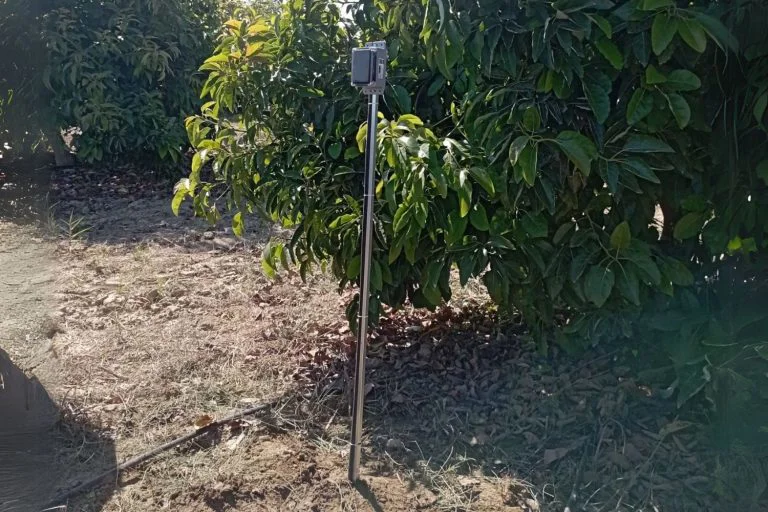
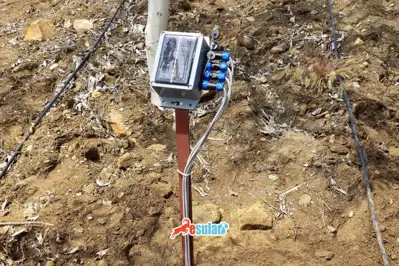
In the project we carried out in our orchard in Mersin, we completed the installation of soil moisture sensors. These sensors can operate uninterrupted for many years by charging their own batteries thanks to the solar panels on them. Thanks to their wireless and easy installation, the assembly and transportation of the sensors are very practical. This innovative technology provides energy efficiency and supports plant health by optimizing irrigation management. You can contact us for detailed information.