The walnut tree is an important agricultural product that requires care when its cultivation and maintenance are considered. Especially irrigation plays a vital role for the healthy growth and productive yield of the walnut tree. Irrigation periods of the walnut tree should be planned by taking into account before and after planting. Especially in dry periods and in the first years after planting, there is a need for regular irrigation. Before planting, appropriate soil preparation and an irrigation plan are important for the root systems of the saplings to strengthen. After planting, a specific irrigation program should be followed for the sapling to adapt to the soil and for the roots to solidify. Irrigation periods of the walnut tree may vary depending on climate conditions, soil structure, and the growth stage of the tree. Generally, in regions with a risk of drought and during summer months, irrigation at frequent intervals is recommended. The amount of irrigation should be adjusted according to the moisture level of the soil and the water need of the tree.
In this article, detailed information on the irrigation needs and importance of the walnut tree will be presented. Practical information about irrigation techniques and correct irrigation timing in walnut cultivation, along with the steps to be followed for the healthy development of the walnut tree, will be discussed.
Walnut Tree Water Requirement
Since walnut trees generally have deep roots, it is important for irrigation water to penetrate to depths where it can reach the roots under the soil. For healthy root growth, deeper irrigation with less frequency is preferred instead of frequent superficial irrigation.
How Often Should a Walnut Tree Be Watered?
The irrigation frequency of the walnut tree depends on several factors:
Soil and Climate Conditions: In arid and hot climates, the walnut tree may require more frequent irrigation. High temperatures cause water to evaporate faster, which can increase the water loss of the tree.
Age and Growth Stage: Since young walnut trees are in the stage of developing their root systems, they may require more frequent irrigation. It is recommended to irrigate once or twice a week during the first few years after planting. Older trees with solidified roots can be irrigated less frequently.
Seasonal Rains: During a rainy period, the natural water need of the walnut tree may decrease. In this case, the amount and frequency of irrigation can be adjusted.
Furthermore, in our application, we offer an informative section to determine the water requirements of plants grown in various regions and to optimize irrigation planning. Thanks to this feature, by specifying which city, how many decares of area, and which plant you are growing, you can learn how much irrigation you should perform in which periods throughout the year.
As you can see in the sample images, thanks to our user-friendly interface, you can easily access all this information and perform your irrigation planning instantly. Irrigation calendars are supported by regional and seasonal data and are customized according to plant species. In this way, by knowing in advance how much water you will need in which period, you can practice more efficient and sustainable agriculture. You can contact us for more detailed information about technological solutions and smart, sustainable agriculture and to digitalize your systems.
When is the Last Irrigation of the Walnut Tree Done?
The last irrigation of the walnut tree is usually performed before autumn. This period coincides with the time before leaf fall and is an important irrigation period before the tree enters winter dormancy. In the later times of autumn, irrigation is necessary for trees to store water and for roots to remain healthy during the winter months. In the winter season, trees enter a resting period and their water needs decrease. Therefore, irrigation performed before autumn supports walnut trees to spend a healthy winter and prepares them for the next growing season. The amount and frequency of irrigation should be adjusted by taking into account local climate conditions, soil moisture level, and the general health of the tree.
How to Water a Walnut Tree?
Irrigation is a critical factor for the healthy growth of the tree and for it to yield productive fruit. Regular and deep irrigation is important for walnut trees, which generally have deep roots. Especially for newly planted saplings, the irrigation process is of great importance in the first months, because in this period, the roots must settle firmly into the soil.
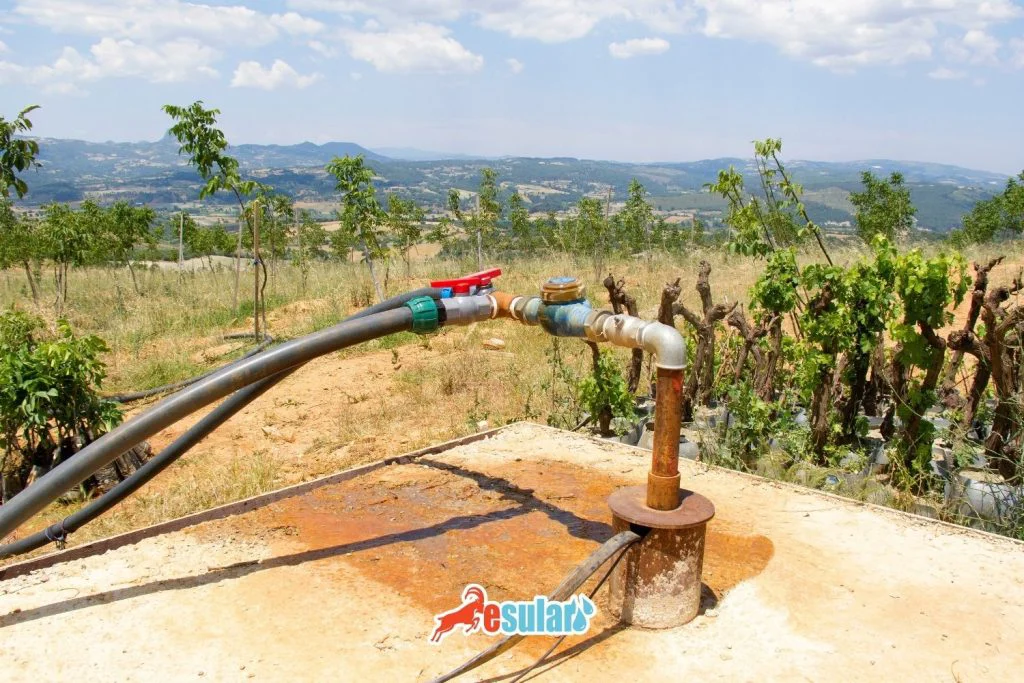
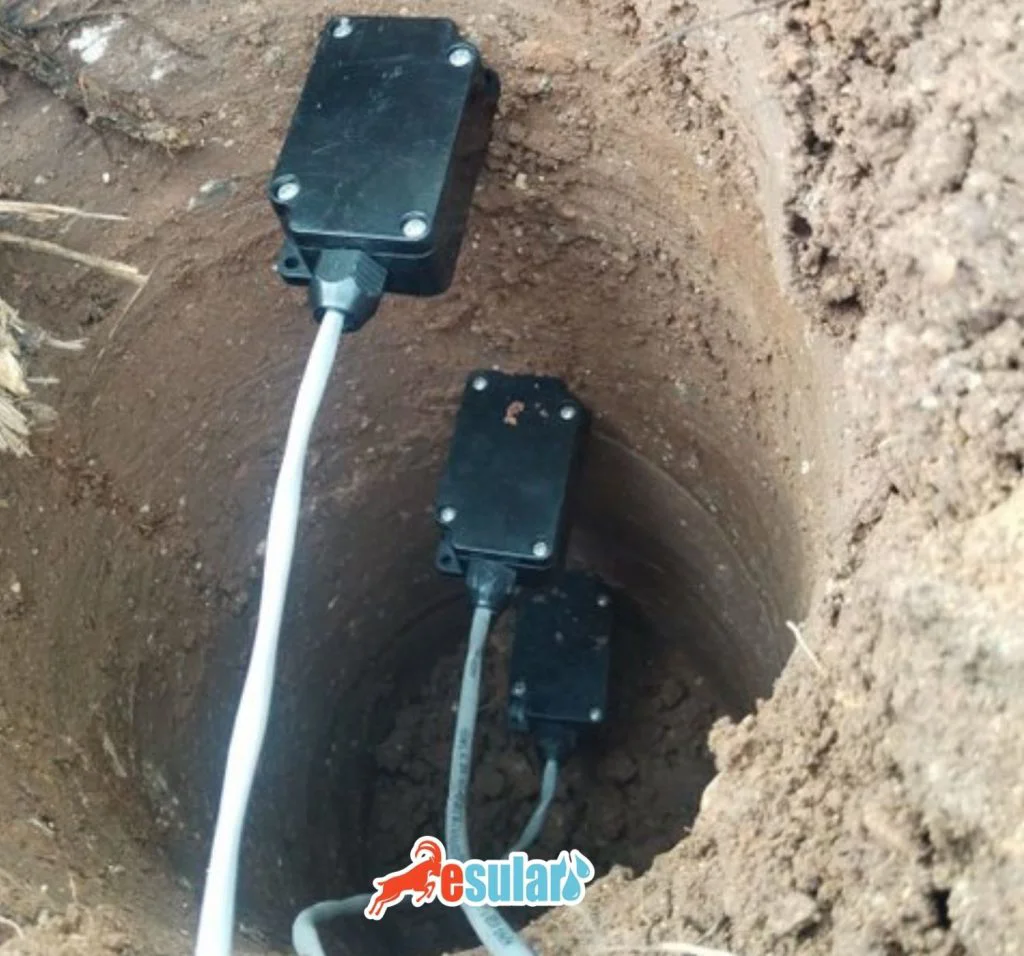
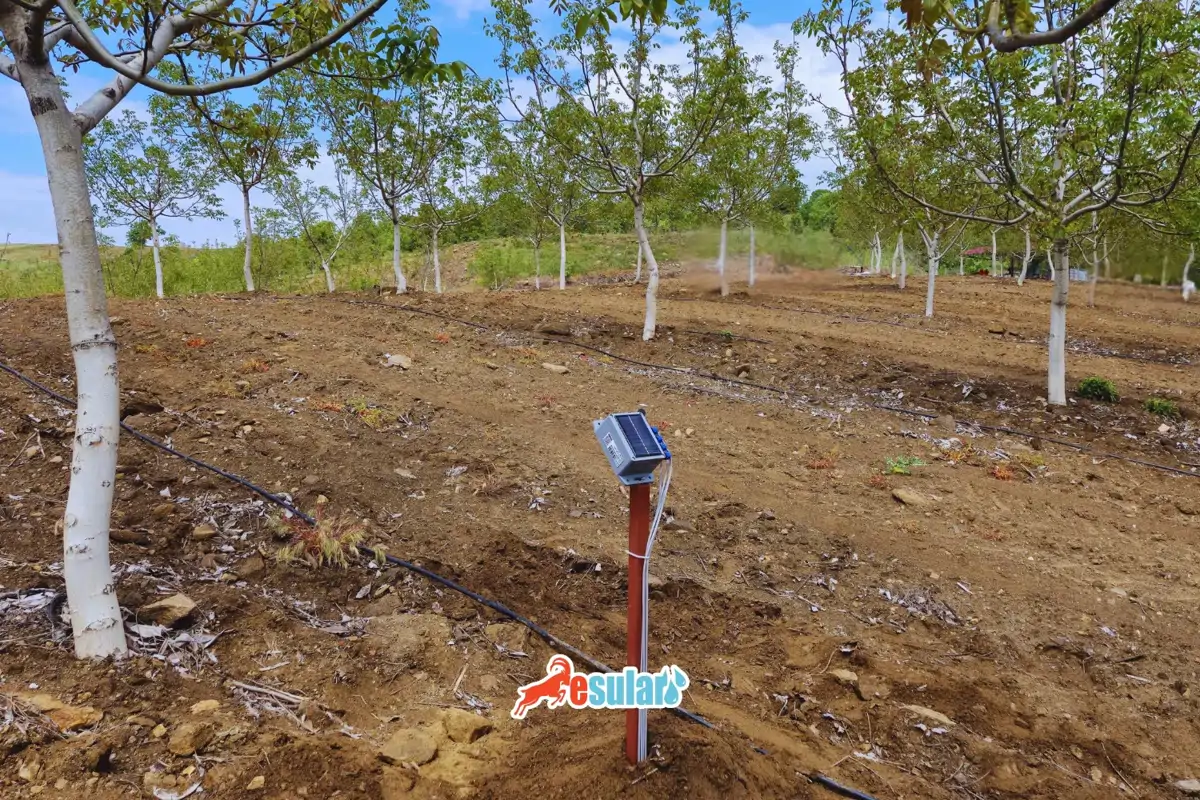
In a project we carried out as Esular, we established a system equipped with modern irrigation technologies in a walnut orchard. In this system, we use advanced technologies such as pond fullness and level, soil moisture sensors, pressure status in the line, pump, and valve control. Our customer can continuously monitor the soil moisture at different depths through soil moisture sensors placed at depths of 30-60 and 90 cm and can make irrigation planning based on these data. Additionally, thanks to remote access opportunity and the mobile application, our customer can manage all irrigation processes in the walnut orchard from their location. Thanks to this system, without having to go to the field, they can intervene by being instantly informed via SMS when any negative situation is encountered (for example, water deficiency or excessive moisture).
Esular's smart irrigation system offers a simple and effective installation with the smart valve control unit used to control solenoid valves. This technology allows garden owners to easily manage irrigation valves remotely.
The soil moisture probes shown in the image below provide more efficient irrigation by measuring the moisture status instantly at depths of 30, 60, and 90 cm. This technology, included in Esular's smart irrigation system, offers the user the opportunity to continuously monitor moisture levels at different depths. In this way, precise irrigation programs can be created according to the water requirements of the plants.
As Esular, our goal is to facilitate the work of farmers and increase their productivity by using modern agricultural technologies. Our smart irrigation system provides time and cost savings to garden owners while using water resources effectively. This both supports environmental sustainability and ensures a profitable agricultural business management.