In greenhouse environments, keeping humidity at the correct level is very important for plants to grow healthily and yield products efficiently. Humidity rate directly affects plants' water intake, photosynthesis processes, and general health status. However, managing humidity in a greenhouse environment is not as simple as it seems. High humidity levels lead to fungal diseases and rot, while insufficient humidity can cause plants to become stressed.
Modern technology and correct methods must be used to control greenhouse humidity accurately. Controlling greenhouse humidity not only improves the health of the plants but also makes your business more sustainable by increasing energy efficiency. Now, let's examine in more detail how you can control greenhouse humidity and what an important role the esular Humidity and Temperature Sensor plays in this process.
What is the Importance of Humidity in Greenhouses?
Photosynthesis and Transpiration Processes: Adequate humidity keeps the plants' stomata open, ensuring the intake of carbon dioxide and the expulsion of water vapor. Carbon dioxide, which is necessary for photosynthesis, enters the plants' leaves through stomata, and nutrient production is carried out here with light energy. At the same time, thanks to transpiration, plants evaporate the water they take from their roots, providing water balance and performing the cooling process.
Cell Turgor and Structural Integrity: Adequate humidity level maintains the internal pressure of the cells, ensuring that plants stand upright and maintain their structural integrity.
Nutrient Intake and Growth: Humidity increases the uptake of nutrients by plants from their roots. Additionally, having humidity at a sufficient level helps maintain the structure of the soil, allowing roots to take up water and nutrients more easily.
Combating Diseases and Pests: Especially hot and humid environments facilitate the reproduction of fungal spores, while very low humidity levels cause stress, making plants vulnerable to pests.
Photosynthesis and Plant Growth: Humidity rate directly affects the photosynthesis capacity of plants. Having the humidity level in the correct range facilitates the intake of carbon dioxide by plants through stomata (pores) and thus photosynthesis. Adequate humidity encourages fast and healthy growth of plants.
Energy Efficiency: Regulating the humidity level helps balance the temperature and airflow in the greenhouse environment. This increases the general energy efficiency within the greenhouse and reduces operating costs.
Differences According to Plant Species: Each plant's humidity need is different. Tropical plants love high humidity conditions, while desert plants prefer drier environments. Which plants will be grown in the greenhouse directly affects how the humidity balance should be established.
What Should the Ideal Greenhouse Humidity Be?
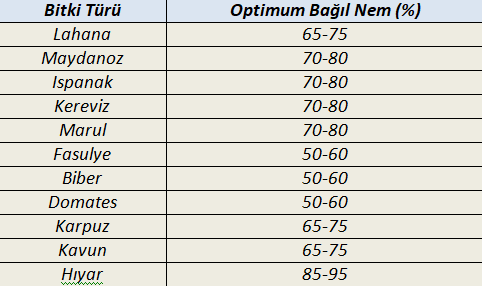
Optimum relative humidity values vary depending on the plant species grown, greenhouse temperature, and lighting intensity. Recommended relative humidity values for some plant species are as follows.
How is Humidity Lowered in Greenhouses?
Before solving a problem related to humidity, it is very important to understand the root cause of this problem. And the main source of humidity levels in greenhouses is usually the transpiration (transpiration) process of plants. When the humidity rate increases, transpiration decreases and the humidity rate is automatically taken under control. However, if transpiration is severely inhibited in cases where the humidity rate is very high, this actually indicates a major problem. Reaching these levels to control humidity in the greenhouse is actually part of the problem.
So, how can we reduce humidity?
Ventilation: The most effective way to lower the humidity level is to increase ventilation. Therefore, it is very important to create a structure that will facilitate airflow by correctly planning the greenhouse layout.
Perform Temperature Control: Temperature directly affects the humidity level. As the temperature increases, air holds more moisture. Therefore, another way to take the humidity rate under control is to perform temperature management.
Humidity Measurement and Monitoring: To manage the humidity rate correctly, it is very important to perform continuous humidity measurement.
As a result, lowering humidity levels in the greenhouse is possible by directly increasing airflow, providing control over temperature, and making accurate measurements. These steps will help keep humidity under control and ensure the healthy growth of plants.
How to Increase Greenhouse Humidity?
The main methods used for humidification in greenhouses are as follows:
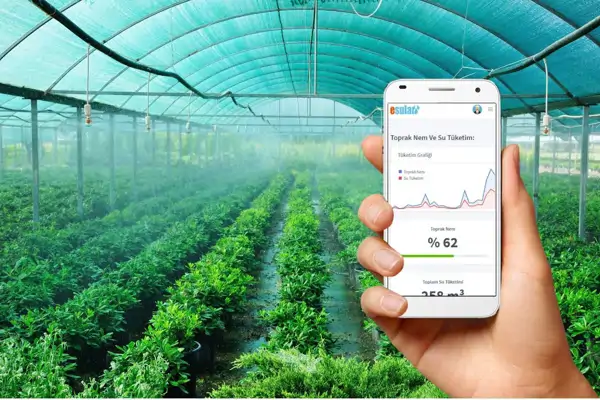
Fogging and Spraying Systems: Fogging or spraying systems lower the temperature of the environment and increase the humidity rate through evaporation by spraying water into the air in fine droplets. This method is especially effective in summer months when temperatures are high.
Drip Irrigation Systems: Drip irrigation ensures that water is given directly to the roots of the plants. With this system, the moisture content of the soil is kept high and the humidity in the air also increases indirectly.
Evaporators: Evaporators increase the humidity rate in the greenhouse by turning water into vapor and mixing it with air. This method is generally preferred for plants that want humid environments.
Humidifier Devices: Humidifiers are used to regularly increase the humidity level of the environment in greenhouses. It keeps the humidity rate constant by spraying water vapor into the air in fine particles. Humidifiers are important for controlling the temperature and humidity balance in large greenhouses.
Water Pools and Cisterns: Water pools or water cisterns help increase the humidity of the environment by natural evaporation of water.
Use of organic mulch: organic mulch (straw, leaf litter, etc.) increases soil moisture by preventing the evaporation of water.
Humidity and Temperature Sensor
Manage Your Greenhouse Smartly with esular Wireless Humidity and Temperature Sensor!
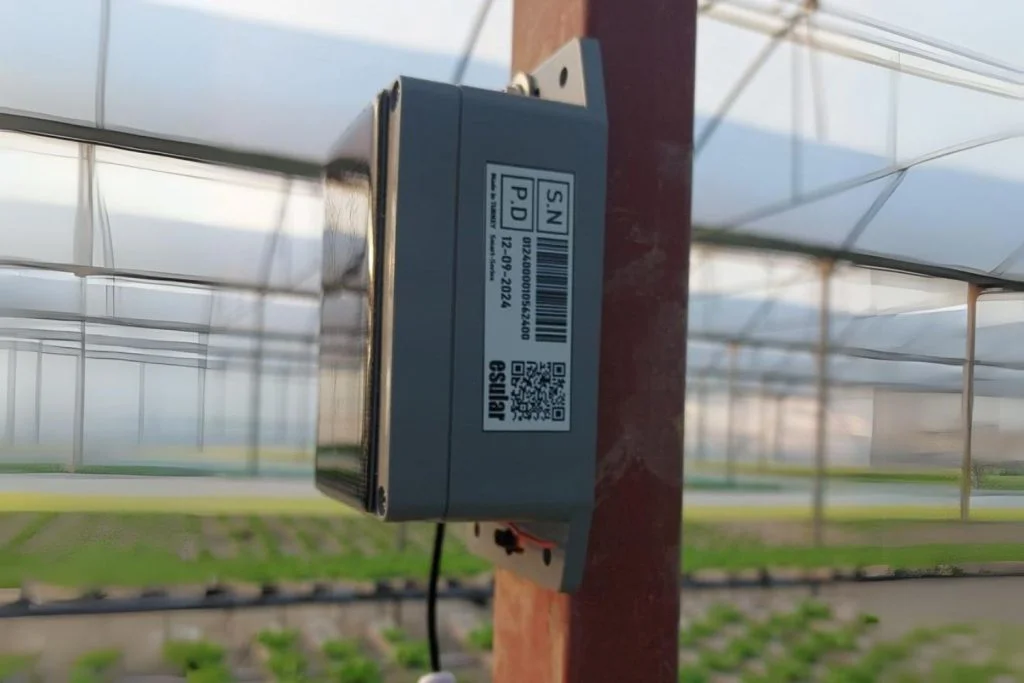
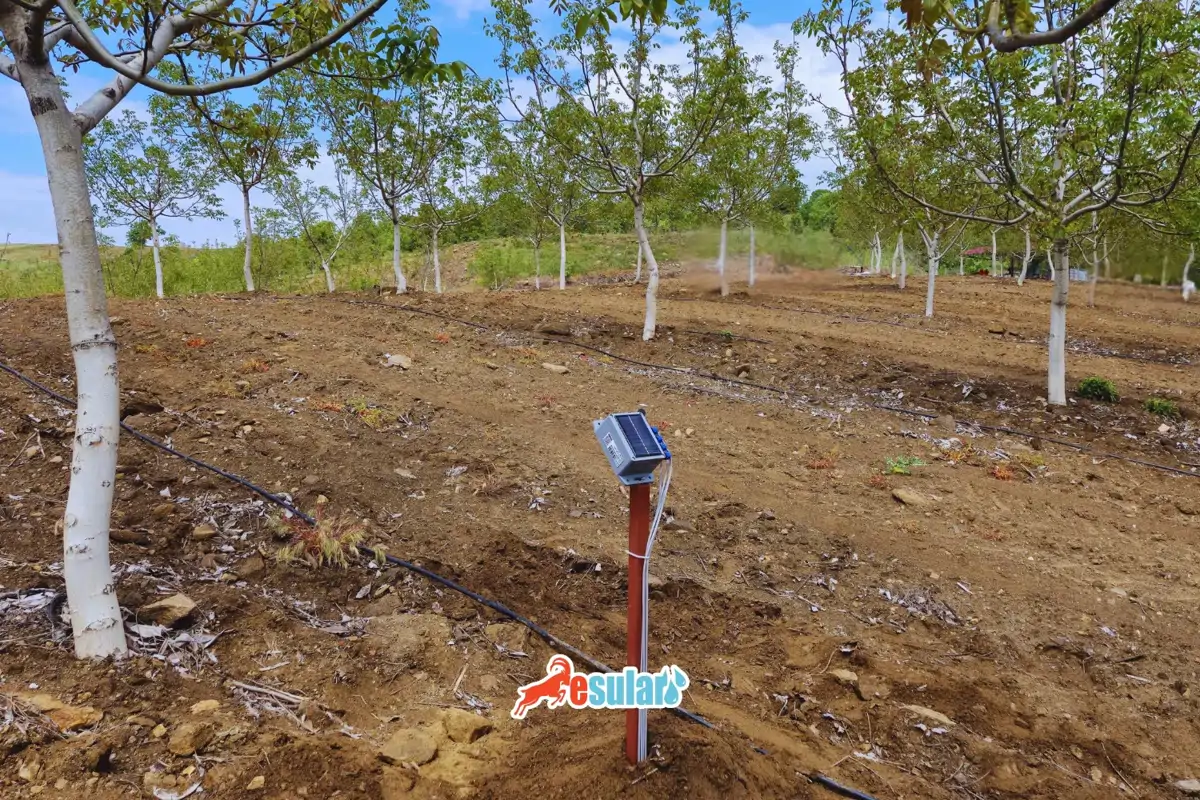
esular’s wireless battery-powered humidity and temperature sensor allows you to instantly measure and monitor the humidity and temperature levels in your greenhouse. This sensor, which works with a 3.6V lithium-ion battery, offers long-term use without the need for an external energy source. Thanks to its easy installation and practical use, you can control the climate conditions of your greenhouse at any moment.
Wireless communication technology with the sensor that transmits data, transmits measured humidity and temperature information to the server, giving you remote access. In this way, you can intervene immediately to provide optimum growth conditions for your plants and easily take precautions such as irrigation or ventilation. Additionally, if you want to manage your ventilation system remotely and automatically, you can take a look at this article.
💧With esular, you can increase the efficiency of your greenhouse, raise product quality and reduce your energy costs. You can always reach us to get information about our solutions!