Tüm Yazılar



How to Fertilize with Drip Irrigation?
The drip irrigation fertilization method (fertigation) is an advanced practice aimed at meeting water and nutrient needs most effectively in modern agriculture. This system, based on the direct delivery of water and fertilizer to the plant in agricultural lands, provides a great advantage to farmers. Fertilization with drip irrigation prevents unnecessary losses by providing only the amount of water and nutrients needed for nutrition. Looking at how this system works;
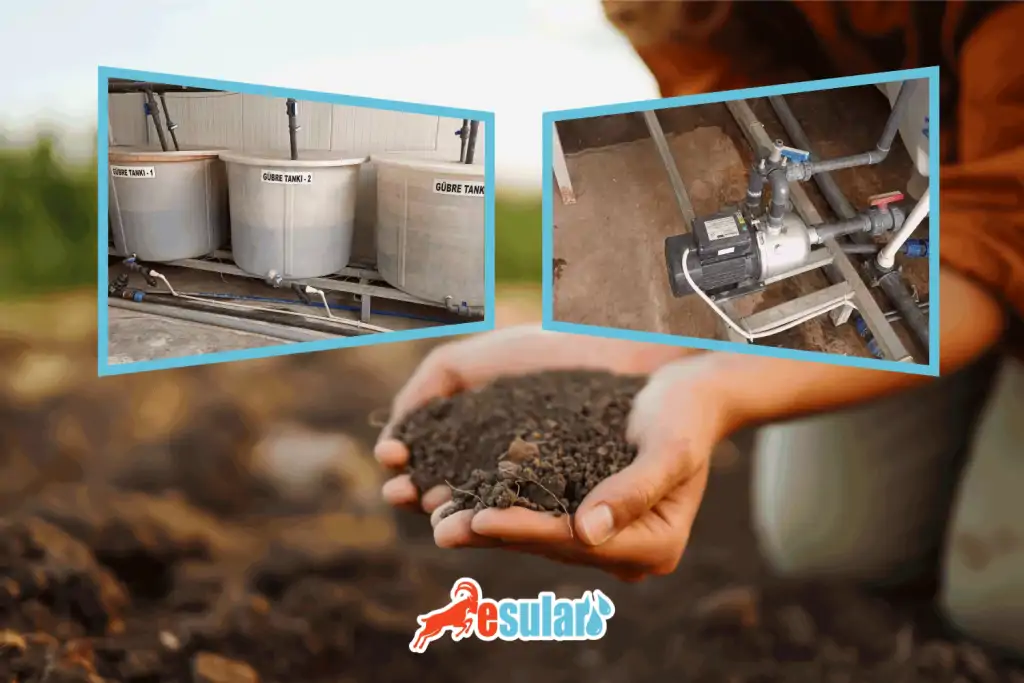
This method is carried out by using a special fertilization system integrated into the irrigation line. The fertilizer is transmitted together with the irrigation water, and the fertilizer solution in a separate tank is delivered through a combination system connected to the irrigation line. The fertilization system ensures the distribution of nutrients in the water in the desired amount and homogeneously. During this process, water and fertilizer solution are collected in the irrigation system in a controlled manner and delivered directly to the primary root point via drippers. In this way, fertilizer waste is minimized, healthy development is supported, productivity increases, and the fertilization process becomes more economical.
What Should Be Considered When Fertilizing with Drip Irrigation?
It is extremely important to act in accordance with the information given below for the effective and correct application of fertilizers and other chemicals in the fertilization method.
- Fertilizers that do not dissolve completely in water (e.g., urea and ammonium sulfate) are harmful to drip irrigation systems.
- Before adding fertilizer to the irrigation system, only water should be given until the operating pressure is reached.
- Although some plant nutrients dissolve completely in water, they may form precipitates by reacting with other nutrients in the system or with high amounts of ions such as calcium or magnesium in the irrigation water. Therefore, knowing the quality of the irrigation water and the mixing properties of the fertilizers is extremely important for success in practice.
- If the irrigation water is limey, phosphorus fertilizer should be applied to the soil as a base fertilizer.
- Fertilizers containing phosphate and fertilizers containing calcium should not be used together.
- After fertilization is completed, the drip irrigation system should be operated with only water for 10-15 minutes.
- The pH level of the irrigation water used in fertigation should be between 5.5 and 6.5. Acids such as phosphoric acid, nitric acid, sulfuric acid, or hydrochloric acid can be used to provide this range.
- When using acid, acid should be added to water, but water should not be added to acid.
- Acid or acidic fertilizer should never be mixed with chlorine. Acid and chlorine should not be stored in the same room.
- A concentrated fertilizer solution should not be mixed with another concentrated fertilizer solution.
- A compound containing calcium should not be mixed with a compound containing sulfate. This is because an insoluble gypsum mixture will form as a result.
- At the end of the irrigation season, the irrigation system should be cleaned by operating it with 0.3% Nitric Acid.
- High concentrations of some fertilizer compounds can cause crystallization and clogging of the pipes.
⚠️Concentrations causing crystallization
Calcium nitrate + ammonium sulfate = calcium sulfate
Calcium nitrate + potassium sulfate = calcium sulfate
MKP + calcium phosphate = calcium phosphate
MAP + calcium nitrate = calcium phosphate
Phosphoric acid + calcium nitrate = calcium phosphate
What are the advantages of fertilization with drip irrigation?
- Since fertilizer is given together with water to the root area of the plant, no additional fertilizer is given to places where root development does not occur.
- Since less fertilizer and water are applied through fertilization, both production costs and groundwater pollution are reduced.
- It provides energy and labor savings.
- Product efficiency and quality increase.
- The effect of the applied chemical on the applicators decreases.
- It allows fertilizing the soil without applying machinery when necessary.
- It increases fertilizer efficiency by increasing the availability of saline nutrients.
- It reduces the negative effects of wastewater.
- Fertilizer losses due to leaching are minimized.
- Since the upper parts of the plants do not get wet, it becomes easier to fight diseases.
- If desired, suitable agricultural pesticides and other chemicals can be applied simultaneously.
- It is suitable for automation.
It's Very Easy with Esular!
Meet our 3+1 design that makes your fertilization processes revolutionary easy! Our system allows you to easily manage a total of 4 tanks, including 3 fertilizer and 1 acid tank.
Thanks to remote access, you can perform fertilization and irrigation operations in either automatic or manual mode. After preparing your fertilizer tanks, determine how much fertilizer you want to give from which tank through our application. You can start the fertilization process with one click at the same time or at different times. You can also instantly monitor the EC-pH values of your fertilizer solution and intervene in the system remotely if necessary. You can check this article to get information about EC and pH values.
🔗esular EC-pH sensor
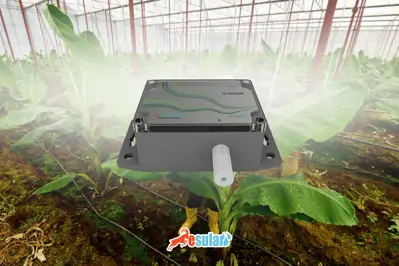
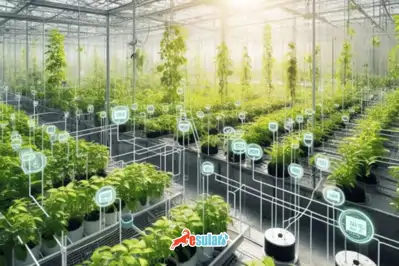
In addition, with the sensors you add to the system, you can achieve more sustainable production with maximum efficiency and minimum resource use.
You can take a look at this article to learn more about fertilization automation. If you want to get detailed information about our products, you can always contact us.☎️📩
Kategoriler