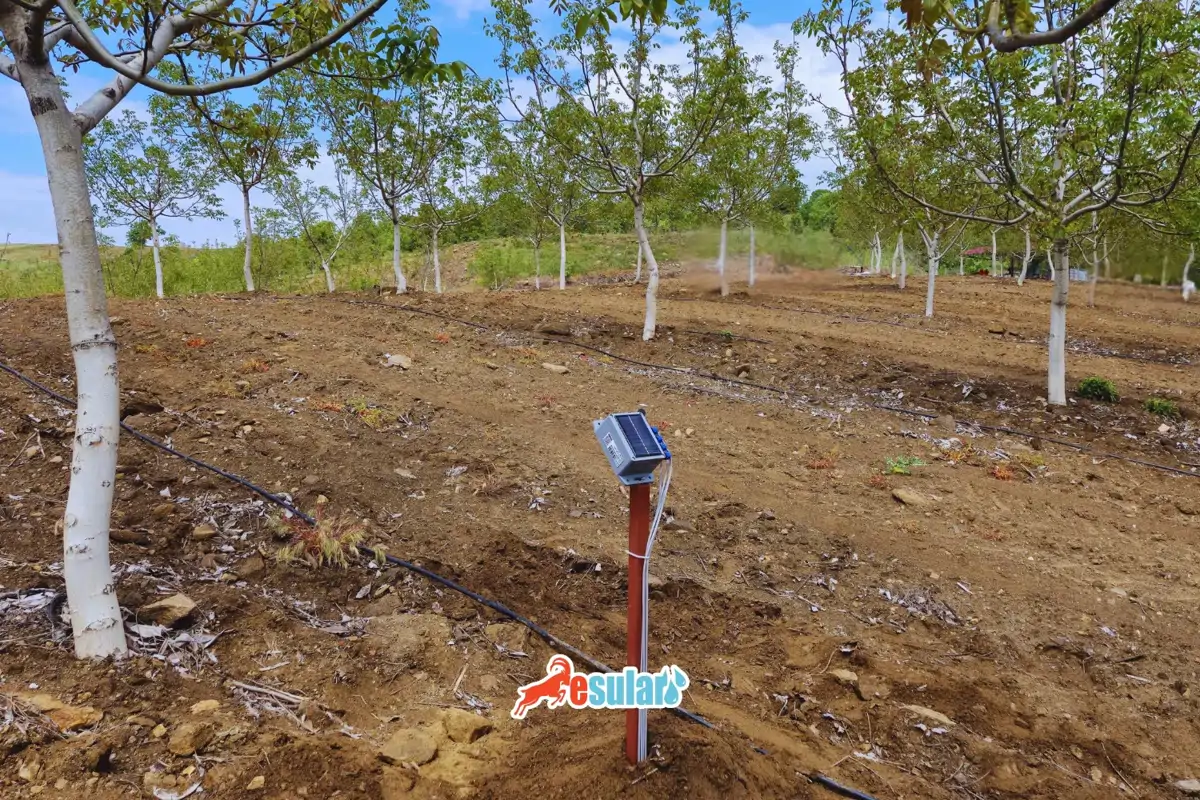
Over-irrigation is not just water waste, it is much more than that. For most crops, growers want to avoid drought stress during the growing season because it can rapidly reduce yield and lead to misshapen, small-sized, and early-ripened crops. Applying “a little extra” is seen as easy insurance against these problems and is logical, as it can also provide a time buffer when the next irrigation needs to be delayed due to a breakdown or a suddenly required chemical application.
Irrigation becomes “too much” when it raises soil moisture in the active root zone above field capacity. Soil can store water for crop use, and field capacity is the upper limit of this storage. Any additional water applied beyond this limit immediately begins to flow out of the root zone with gravity, is lost for crop use, and leaches valuable nitrogen.
Soil Type Plays an Important Role
If the soil is well-drained, this happens quickly, and the main losses are water and nutrients. In slow-draining soils, excess moisture can cause low oxygen and even saturated conditions. Depending on how severe the waterlogging becomes and how long it lasts, water and nutrient uptake by the roots slows down, and the canopy's yield decreases. More than two days of waterlogging during the growing season will kill at least part of the roots completely.
Consequences of Over-irrigation
Excessive soil moisture also promotes root diseases such as armillaria root rot and phytophthora root and crown rot. These diseases are present in almost all orchard soils and can seriously shorten the productive life of trees.
Other losses caused by over-irrigation include:
Water loss due to leakage
Nitrogen lost to leaching and / or nitrification
Increased pumping costs
Low yield
Reduced tree vigor and lifespan due to diseases
Increased weed pressure
Prevention of Over-irrigation
To prevent these losses, you need to know the plant's available water storage in your active root zone, which is approximately the top two feet in established orchards. In annual crops, the depth of the active root zone starts shallow and usually deepens as the season progresses. By combining the available water storage in the root zone with your irrigation system's water application rate, you can determine the maximum irrigation set length before leaching begins. In most cases, more frequent but shorter-duration irrigation will be necessary to prevent over-irrigation.
Making Frequent, Short Irrigation Sets Possible
While the risks of under-irrigation are generally greater than the risks of over-irrigation for profitable crop production, there are many benefits to avoiding excessively wet conditions in the root zone. This is especially true for tree and vine crops.
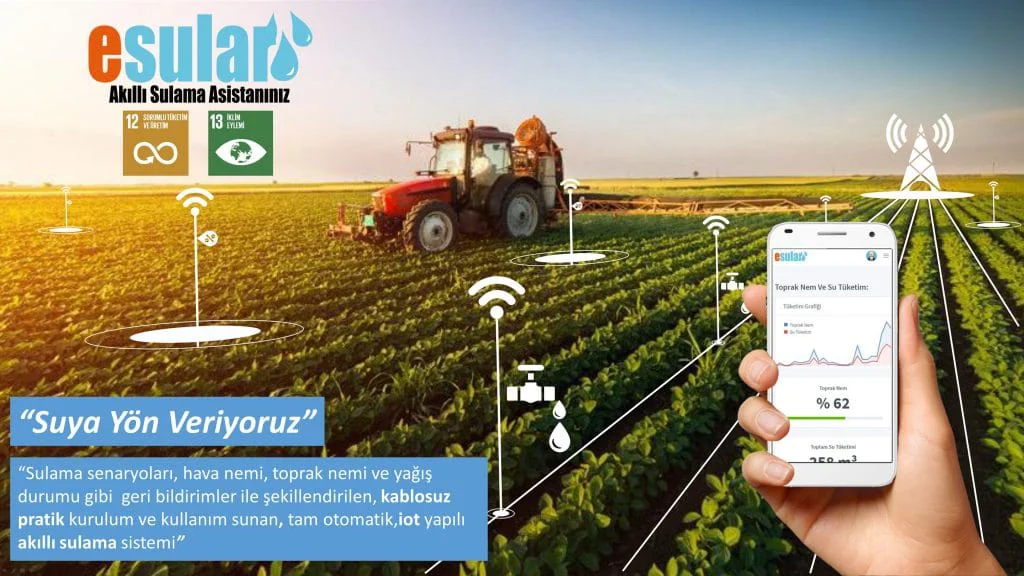
But is it logistically possible for most producers to have frequent, short irrigation sets? Due to the labor required to turn valves off and on, the answer was no. But now, Internet of Things (IoT) technology applications in agriculture have made this not only possible but also simple.
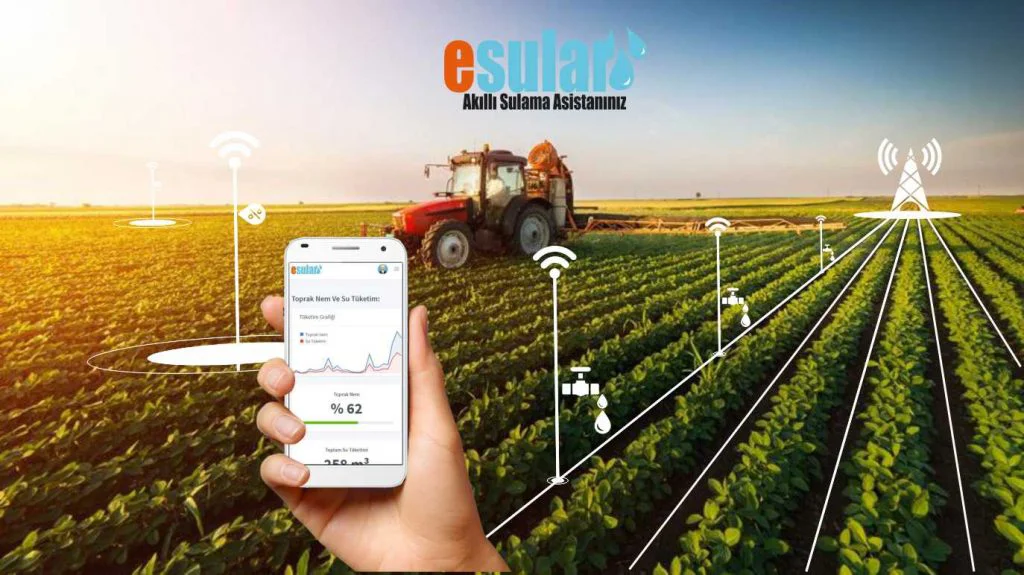
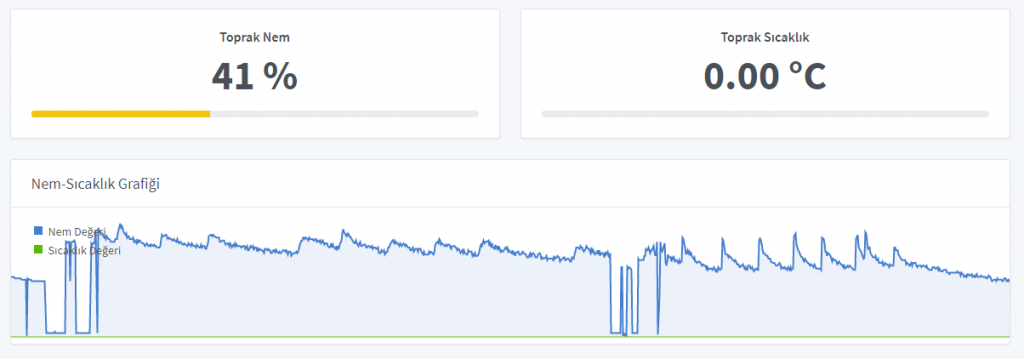
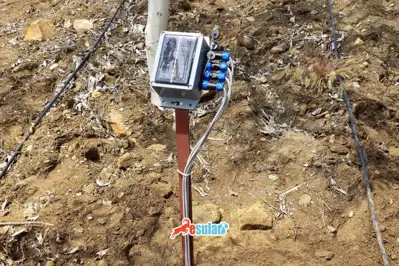
esular offers remote control of precision irrigation with its automatic irrigation solution. Using soil moisture monitors to closely track current conditions, growers or vineyard managers can create irrigation schedules at any time of day or frequency. The convenient irrigation control provided by esular makes it easy to prevent both drought stress and over-irrigation for your crops.
esular, Cloud-based automatic irrigation system
Automatic irrigation system Take a look at our article we have prepared for more information about the automatic irrigation system.
Our Fields of Activity
esular smart automatic irrigation system application areas
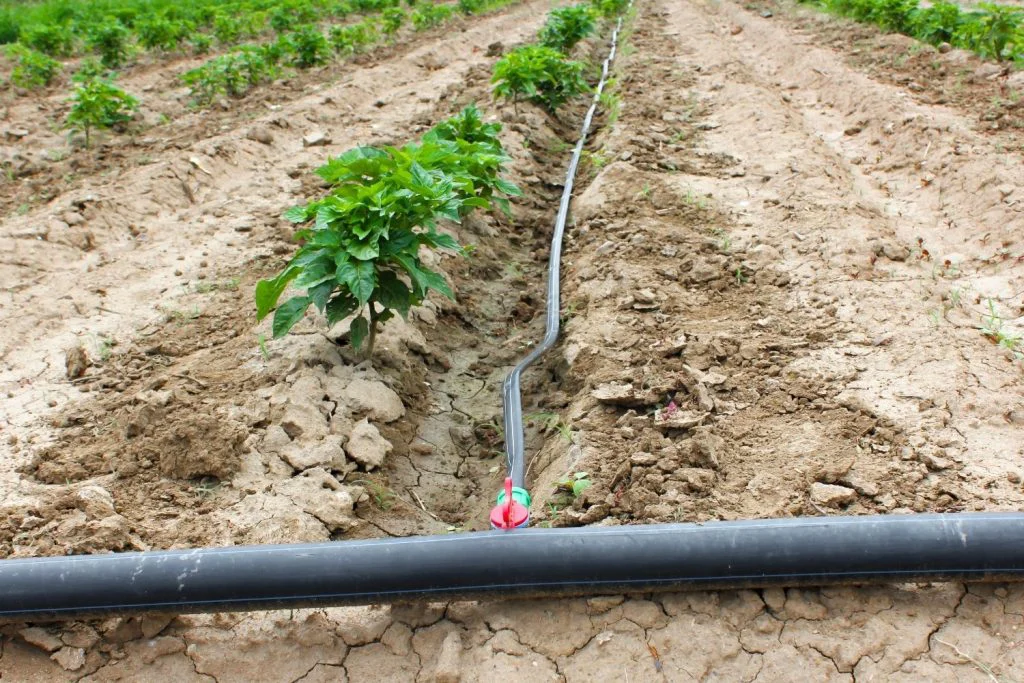
In places where water resources are scarce, we reduce your costs with drip irrigation automation. Thanks to wirelessly controllable hydraulic valves, equal water distribution is ensured to every point of the field, and all are controlled from a single point.
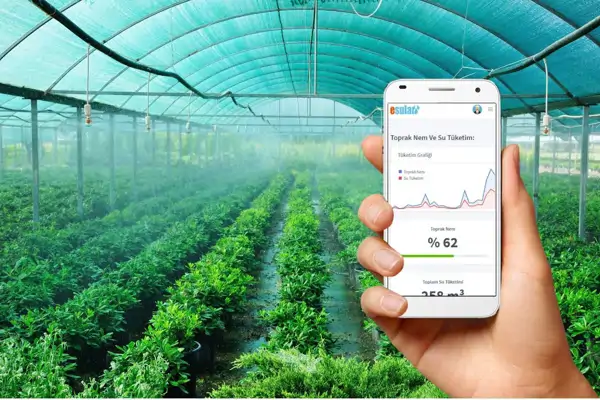
We make irrigation management in modern greenhouses fully automatic to keep greenhouse production at the desired level, improve product quality, and keep pH balance under control.
We enable you to use and manage the world's most valuable resource in the most efficient way in all your agricultural lands without the need for cabling and an external power source. Whether you determine your irrigation scenario or perform fully automatic irrigation.
We provide more efficient and effective irrigation by making valves smart in landscape irrigation. With remotely controllable valves and remotely updated scenarios, all control is in your hands.
Homogeneous irrigation is ensured by controlling flow and pressure values on golf and football fields. All valves and pumps can be controlled remotely without pulling cables.
Smart Cities
In smart city applications, we ensure that irrigation zones are irrigated on time and as desired with sensors that are wireless and can operate with internal batteries for over 10+ years. No more sprinklers that irrigate when it rains.