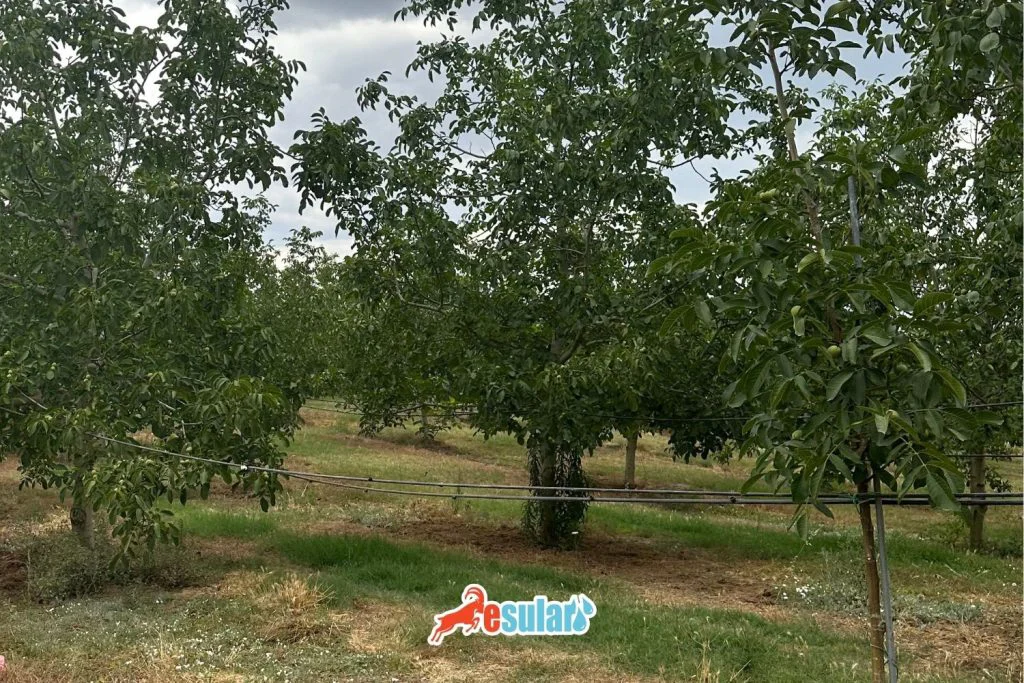
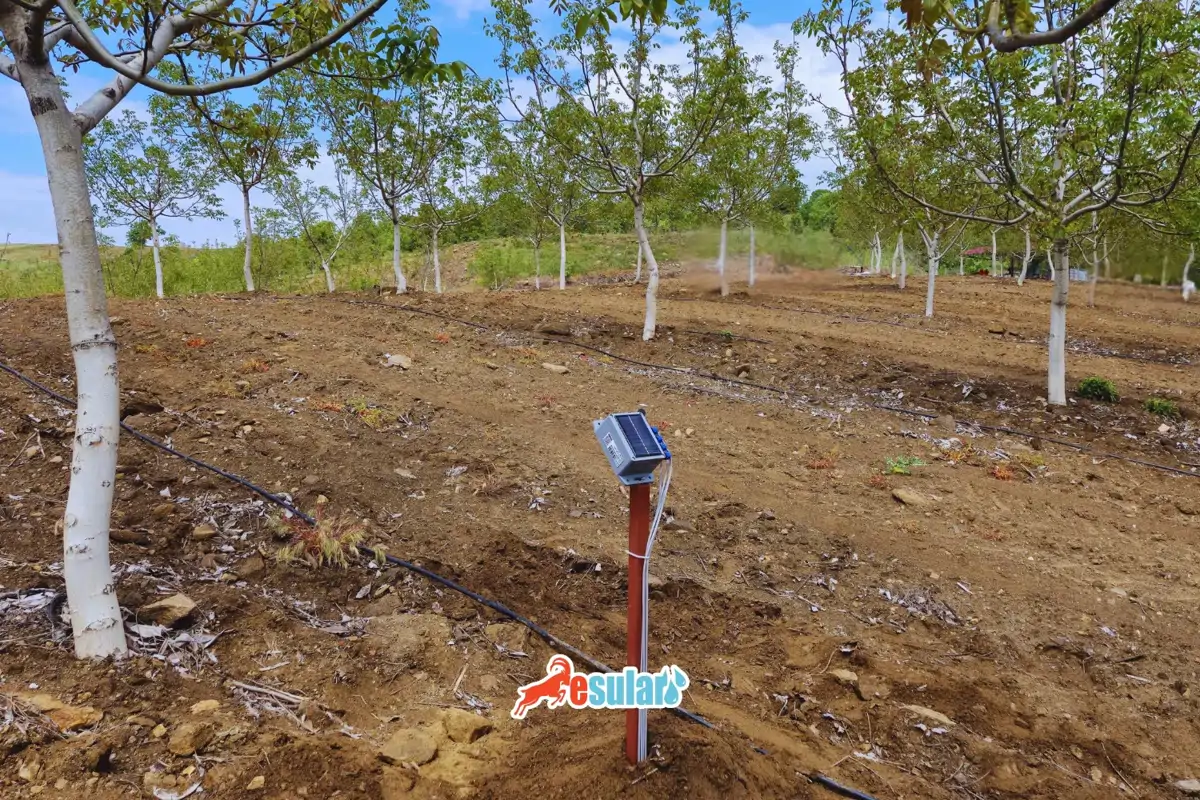
Smart irrigation systems in walnut production stand out as an important component of modern agriculture. These systems provide significant advantages over traditional irrigation methods, increasing the productivity of walnut growers. Smart irrigation systems enable the effective and efficient use of water resources by ensuring that water is used at the right time and in the right amount. In addition, thanks to sensors and data analytics, they can continuously monitor the water needs of plants and create optimized irrigation programs based on this data. This technology facilitates business processes with remote access and automatic control features, while providing time and cost savings to farmers. The use of smart irrigation systems in walnut cultivation not only increases productivity but also plays an important role in terms of environmental sustainability and the protection of resources.
Advantages of Smart Irrigation Systems in Walnut Cultivation
Water Saving and Effective Water Use: Smart irrigation systems ensure the efficient use of water by precisely determining the amount of water the plants need. In this way, unnecessary water consumption is prevented and water resources are protected.
Increase in Productivity: Regular irrigation and feeding plants with an optimum irrigation algorithm ensure healthier growth of walnut trees and higher yields.
Operational Ease and Cost Savings: Automatic irrigation and remote management features provide farmers with savings in time and labor. Additionally, it reduces operating costs compared to manual irrigation processes.
Plant Health and Quality: Smart irrigation systems increase plant health and product quality by meeting the water and nutrient needs of plants at an optimum level.
Reducing Environmental Impacts: It contributes to environmental sustainability principles by providing water and energy savings. With reduced chemical use, negative impacts on the environment are also minimized.
These advantages show the reasons why smart irrigation systems are preferred in walnut cultivation and the benefits they provide.
How Do Smart Irrigation Systems Work?
Smart irrigation systems use advanced technologies to determine the irrigation needs of plants and optimize the irrigation process. Esular’s role in these systems can be explained as follows:
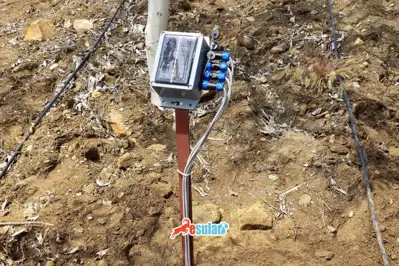
Data Collection and Analysis: Esular continuously monitors the moisture levels in the plant root zone through sensors and analyzes the data it collects.
Monitoring Weather Conditions: Smart systems follow meteorological data and take into account factors such as precipitation amount, humidity rate, and temperature. Esular uses this data to optimize irrigation programs.
Irrigation according to plant needs: Irrigation needs may change depending on the type, age, and growth stage of the plants. Esular determines the ideal irrigation amount for plants based on this data and automatically manages the irrigation systems.
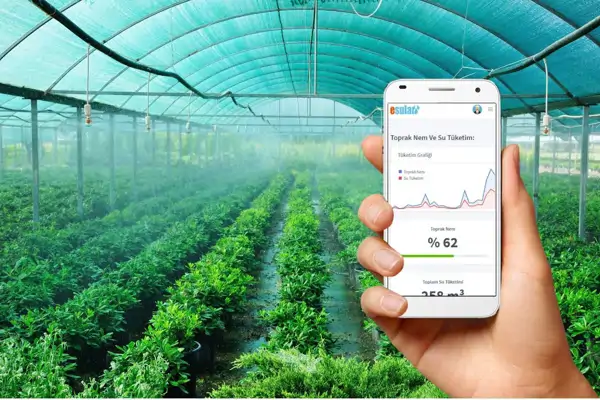
Remote Monitoring and Control: The smart irrigation systems provided by Esular offer remote access possibilities. In this way, farmers can monitor and control the systems at any time and from anywhere via a mobile application or web interface.
Efficiency and Savings: Esular’s smart irrigation solutions offer cost advantages to farmers by providing water and energy savings. Along with the increase in efficiency, plant health and product quality also increase.
As shown in the video, thanks to the smart solutions we offer as Esular, we digitize your lands without requiring extra cabling. In this way, you can manage your land at any time from anywhere through our mobile application, and optimize irrigation and other agricultural processes. This convenience and increase in efficiency we provide to our customers is a result of Esular’s technology-oriented approach. We are here to take your agricultural business further, ready to offer you the most suitable solutions.
Walnut Water Need
Walnut trees require regular and correct irrigation for healthy growth and productive yielding. They generally prefer well-drained and moist soils, but soils without water accumulation are the most suitable. Especially during the growth period, walnut trees must receive sufficient water. This amount can usually be met with 800-1200 mm of precipitation per year, but if precipitation is insufficient, irrigation may be required.
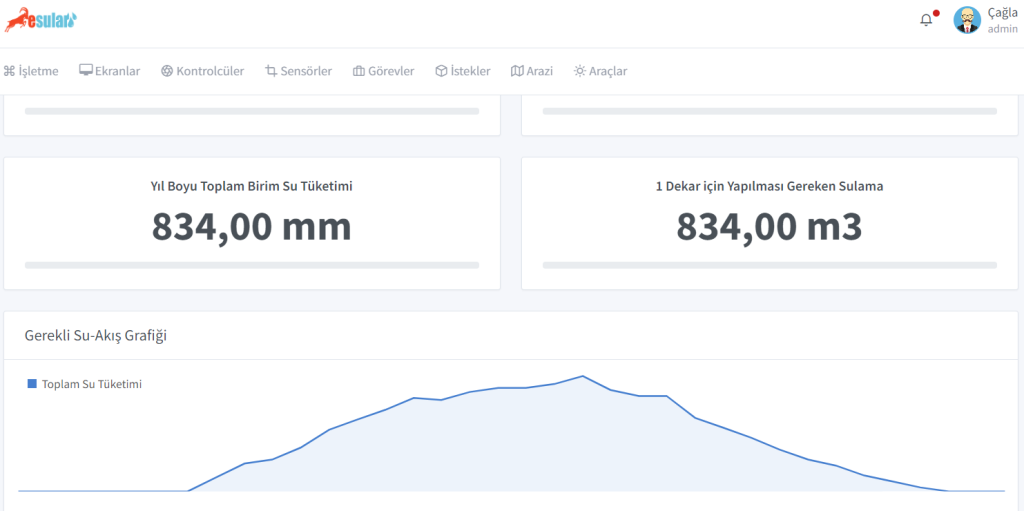
Additionally, in our application, we offer an informative section to determine the water needs of plants growing in various regions and to optimize irrigation planning. Thanks to this feature, by specifying in which city, on how many decares of land, and which plant you are growing, you can learn how much irrigation you should do in which periods throughout the year.
As you can see in the example images, thanks to our user-friendly interface, you can easily access all this information and make your irrigation planning instantly. Irrigation calendars are supported by regional and seasonal data and are customized according to plant types. In this way, you can perform more efficient and sustainable agriculture by knowing in advance how much water you will need in which period. You can contact us to get more detailed information about technological solutions and smart, sustainable agriculture and to digitize your systems.
By following Esular on Instagram and YouTube, you can get information about the smart agricultural solutions we offer. Follow us to get more information about our innovative irrigation technologies and customer experiences. Discover our current content regarding the solutions we offer on the way to digitizing agriculture and learn about our special solutions for you by contacting us.