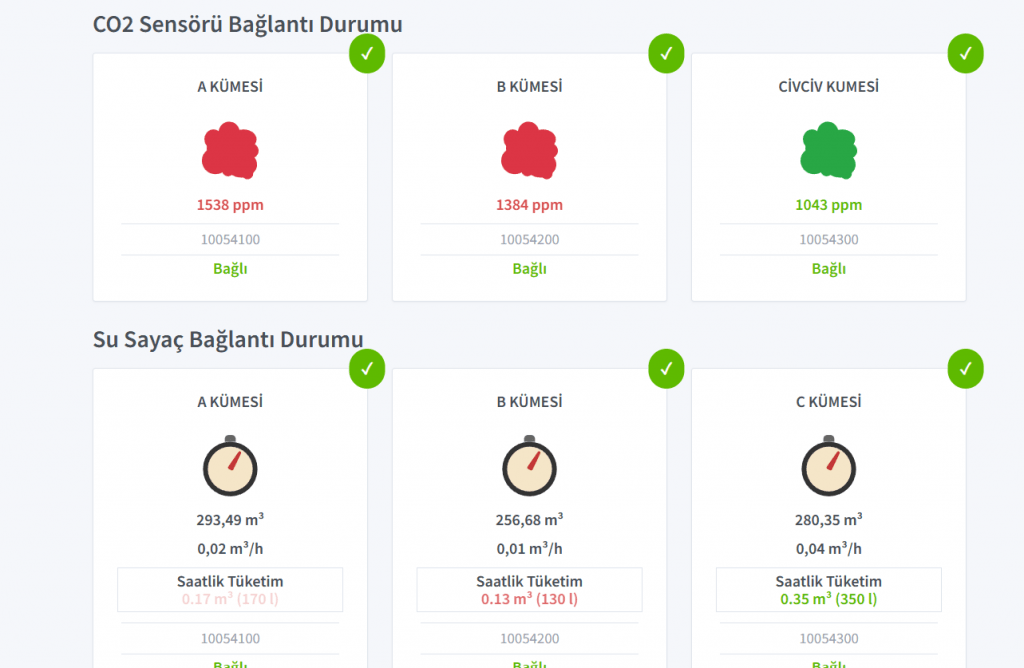
Carbon dioxide (CO2) sensors in agriculture are devices used in agricultural applications to monitor and control carbon dioxide levels in greenhouses and other growing environments. These sensors are essential for optimizing plant cultivation conditions, monitoring plant growth, and controlling environmental factors.
What are the Features of a Carbon Dioxide Sensor?
The main features of carbon dioxide (CO2) sensors used in agriculture are as follows;
Accurate Measurement: CO2 sensors used for agricultural applications can accurately measure CO2 levels from low to high concentrations. This is essential for optimizing plant growth.
Fast response time: They must be able to react quickly to changes in CO2 levels. This allows for rapid correction by automation systems.
High Accuracy: CO2 sensors used for agricultural applications must provide accurate measurement results, as inaccurate data can negatively affect plant growth.
Durability: The agricultural environment can be harsh, so CO2 sensors must be resistant to dust, moisture, and other environmental factors.
Easy Installation: Sensors should be easy to install and use so that they can be easily operated by farmers or agronomists.
Data transmission: Some CO2 sensors can transmit measured data wirelessly or via wires, enabling remote monitoring and control.
What are the Usage Areas of a Carbon Dioxide Sensor?
Greenhouse Control: Greenhouse farming allows for the cultivation of plants in a controlled environment. Monitoring CO2 levels inside the greenhouse is essential for promoting plant growth and increasing yield. Carbon dioxide sensors measure CO2 levels inside the greenhouse and provide feedback to automation systems.
Poultry CO2 control: In poultry houses, carbon dioxide (CO2) sensors are used to monitor and control air quality in environments where chickens, turkeys, ducks, and other birds live and are raised. These sensors are essential for monitoring, controlling, and optimizing indoor CO2 levels.
Hydroponic (Soilless) Farming: Hydroponic farming involves growing plants in water-based growing media instead of soil. Carbon dioxide sensors are used to monitor and regulate CO2 levels in hydroponic systems.
Climate Control: In agricultural practices, controlling CO2 levels along with temperature, humidity, and lighting allows for optimizing plant growth. Carbon dioxide sensors are integrated into such climate control systems.
Indoor Plant Cultivation: In indoor plant cultivation applications, carbon dioxide sensors are used to monitor indoor plant cultivation systems and automatically adjust CO2 levels.
CO2 enrichment: In some agricultural practices, CO2 levels are enriched to stimulate plant growth and increase yield. Carbon dioxide sensors manage such enrichment systems.
Carbon dioxide sensors play a vital role in ensuring the CO2 levels required for plant development, saving energy, and improving automation. These sensors are used in many agricultural applications where plants grow efficiently and develop healthily.