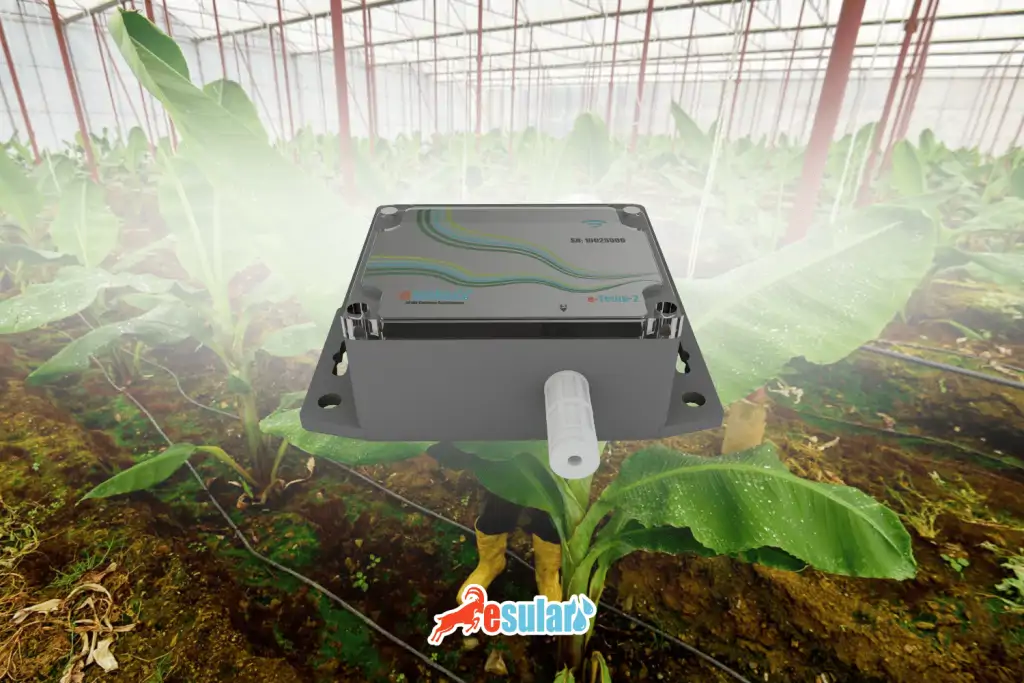
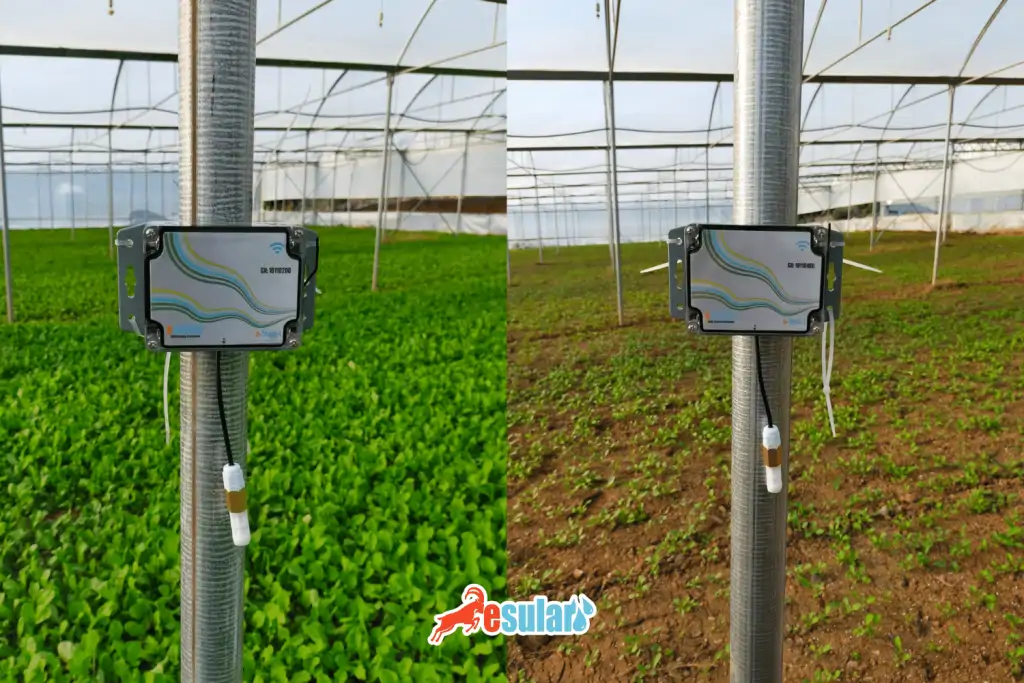
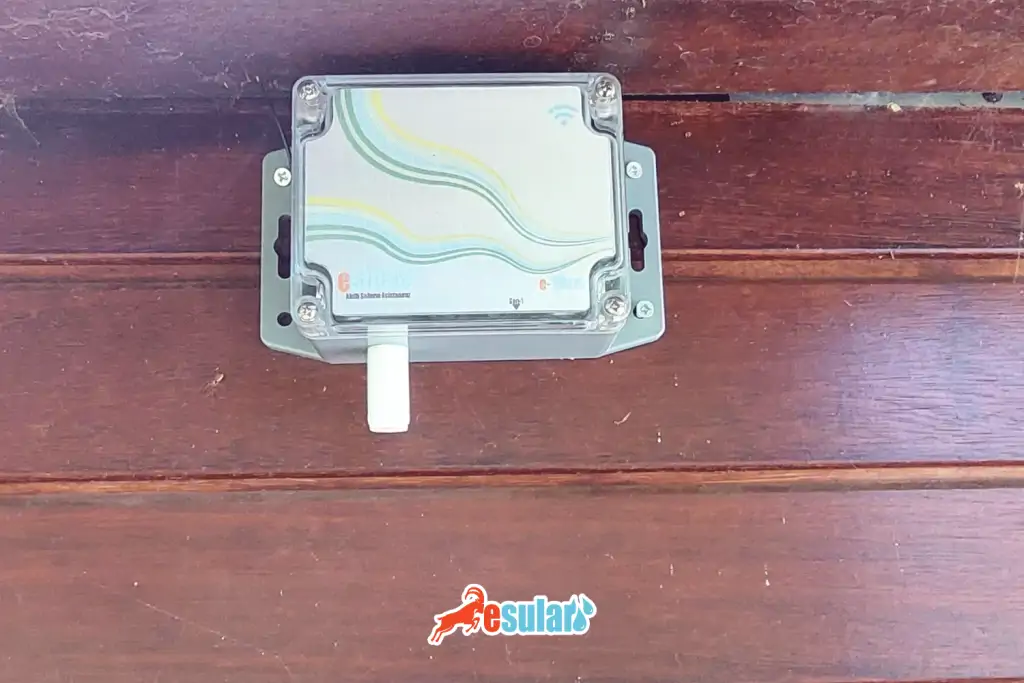
A wireless battery-operated humidity temperature sensor is a device designed to determine the humidity level and temperature of the environment. It is generally used in plant cultivation environments such as greenhouses. This sensor is equipped with a 3.6V lithium-ion battery and does not require an external power source, which makes installation and use easy. The sensor has a single input and regularly measures environmental humidity and temperature levels through this input. Measured data is transmitted to the server using wireless communication technology. In this way, users can monitor the current state of the environment by providing remote access and intervene when necessary. The data provided by the sensor facilitates the management of the area where it is applied. For example, it becomes possible to take measures such as irrigation or ventilation when necessary to control humidity and temperature levels and provide optimal growth conditions for plants. This makes the plant cultivation process more efficient and improves product quality.
What are the Advantages of a Humidity Temperature Sensor?
Some advantages of the wireless battery-operated humidity temperature sensor are as follows;
Wireless Design: Thanks to its wireless nature, it is easy to install and there are no additional cable costs. Low Maintenance Requirements: This sensor does not require external power and offers low maintenance requirements.
Remote Monitoring and Control: Wireless transmission of data to the server allows users to monitor and control remotely. Thus, the humidity and temperature of greenhouses or other environments can be easily tracked. Energy Efficiency: Operating with a 3.6V lithium-ion battery ensures energy efficiency and offers a long battery life. Automatic Measurement: It automatically measures environmental humidity and temperature regularly and thus provides constantly updated data.
These advantages show that the wireless battery-operated humidity temperature sensor is a practical, user-friendly, and efficient solution.
Why is the measurement of humidity and temperature important for plants?
Plants need certain humidity and temperature levels for healthy growth and development. These values affect basic physiological processes of plants such as photosynthesis, water intake, and nutrient absorption.
Adverse environmental conditions such as high temperature or low humidity can stress plants and hinder growth. Measuring humidity and temperature helps detect such stress factors and take measures against them.
Humidity and temperature levels can affect the spread of disease and harmful organisms in plants. For example, high humidity environments can promote the spread of fungal diseases. Therefore, maintaining appropriate humidity and temperature levels is important for combating diseases and pests.
Providing optimal humidity and temperature conditions can increase plant productivity and improve product quality. This means achieving higher yields and better quality products.
Monitoring precise humidity and temperature levels promotes environmentally and economically sustainable agricultural practices by optimizing water and energy use.
For these reasons, the measurement of humidity and temperature in plant cultivation is essential for a healthy and efficient production process.
What are the Features of a Humidity Temperature Sensor?
Measures ambient humidity and temperature and produces a wired or wireless output signal.
The sensor has an integrated humidity sensor to measure the environmental humidity level. This sensor measures humidity levels expressed in percentages.
-40~+85℃ operating temperature.
Wireless reading and updating of parameters via Lora-Lorawan.
Long-term operation possibility with 6V 110mA Li-SOCl2 battery.
Has 1 dry contact signal output.
Has RS485 output and MODBUS communication feature.
Works in LoraWan APP mode.
External power input feature.
Automatic operating modes.
IP65 waterproof.
Allows air to enter while preventing water and dust from entering with a special air inlet. In this way, it is long-lasting.
Offers more than 3 years of battery life with humidity and temperature measurement and a transmission interval every 5 minutes.
Optionally, a version with an external cable IP65 sensor probe is offered.
Some features of the product are optional. All features may not be available in one product at the same time.
What are the Application Areas of a Humidity Temperature Sensor?