Plants need light at a certain wavelength to photosynthesize. This is where the PAR sensor, by measuring exactly this wavelength – that is, photosynthetically active radiation between 400 and 700 nanometers – provides the producer with clear data about light. Knowing how much light plants receive is a factor that directly affects product yield and quality.
Used in many areas from greenhouses to hydroponic systems, from open-field farming to research stations, these sensors allow the determining of the actual amount of light plants need, making processes such as irrigation, fertilization, or shading more efficient accordingly.
In this article, we will examine what a PAR sensor is, how it works, where it is used, and its contributions to smart farming systems; we will also touch upon the fundamental differences between PAR sensors and solar radiation sensors (pyranometers).
For anyone wanting to increase efficiency in agriculture and use resources more consciously, PAR sensors are truly a noteworthy technology. If you are ready, let's take a look at the details together.
How Does a PAR Sensor Work?
Light Detection: Inside PAR sensors, there are usually silicon photodiodes or quantum sensors. These sensors are designed to detect light only in the photosynthetically active radiation (PAR) range. That is, they do not measure all light visible to the human eye, but only the part that plants use for photosynthesis.
Conversion of Light into an Electrical Signal: The detected light is converted into an electrical signal by the photodiode inside the sensor. As light intensity increases, the generated electrical signal also strengthens. This signal is usually output as voltage (mV) or current (mA).
Calibration: Sensors must be calibrated to work correctly. Calibration ensures that the electrical output provided by the sensor is converted into measured light intensity (μmol/m²/s). Thus, the user can see the PAR level reaching the plants in a specific area with numerical data.
Data Collection and Monitoring: Most PAR sensors work with a data logger or a control unit integrated into smart farming systems. This allows the amount of light coming at different times of the day or different times of the year to be monitored, and agricultural practices can be optimized with this information.
Usage Areas of PAR Sensors
Greenhouse Farming: Used to determine when artificial lighting systems should be activated by measuring the amount of light plants need.
Hydroponic and Vertical Farming Systems: The homogeneous distribution and adequacy of light are controlled in indoor environments. In this way, plant development is optimized.
Open Field Farming: By measuring light intensities in different regions, it can be determined which product is more suitable for where.
Research and Education: Used in agricultural research centers to examine plant light responses.
Climate and Environmental Monitoring: Plays a role in tracking light intensity data that affects ecological balance.
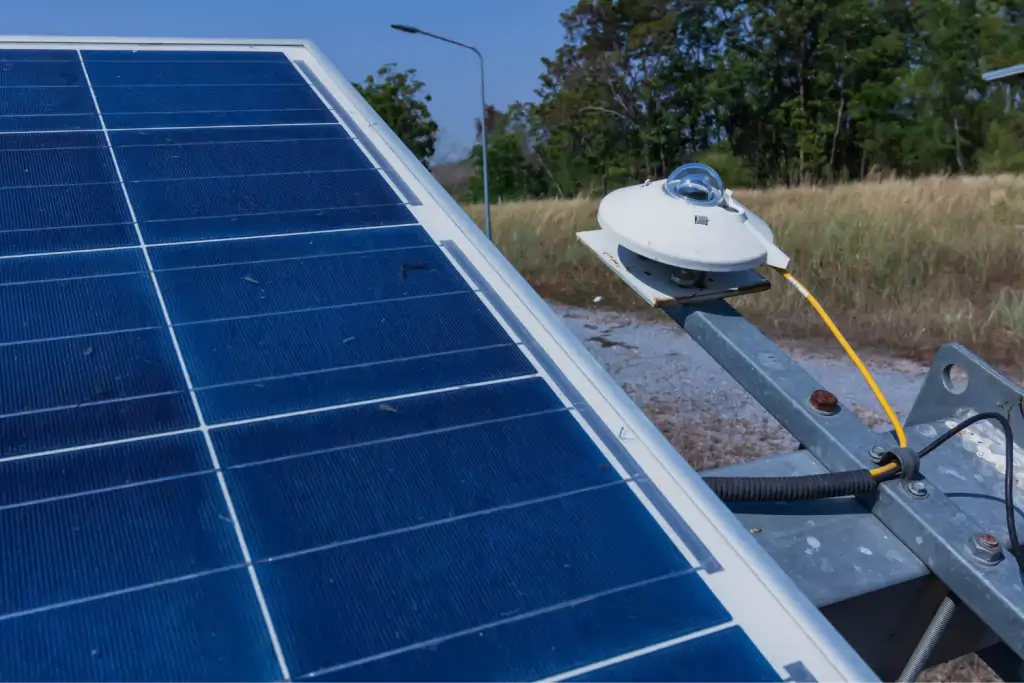
Difference Between PAR Sensor and Solar Radiation Sensor (Pyranometer)
Feature
PAR Sensor
Solar Radiation Sensor (Pyranometer)
Measured Spectrum
400-700 nm (Photosynthetically active region)
285-3000 nm (Broad spectrum)
Purpose of Use
Light measurement suitable for plant photosynthesis
General solar radiation measurement
Field of Use
Agriculture, greenhouse, plant research
Meteorology, energy systems, climate observations
Measurement Unit
µmol/m²/s
W/m²
Focus Point
Supporting plant growth
Total radiation analysis
To put it more simply, PAR sensors are more suitable for agriculture, while pyranometers are more suitable for general environmental and meteorological measurements. For smart farming applications, a PAR sensor should be preferred.
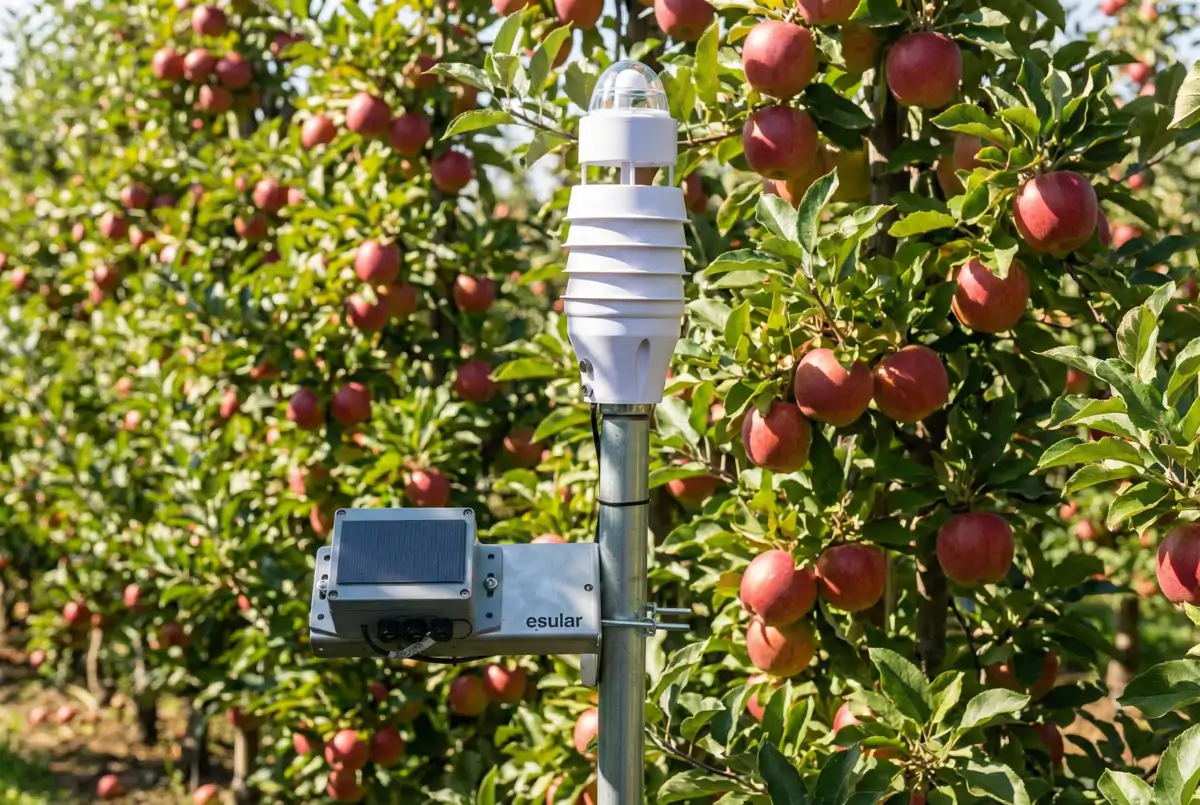
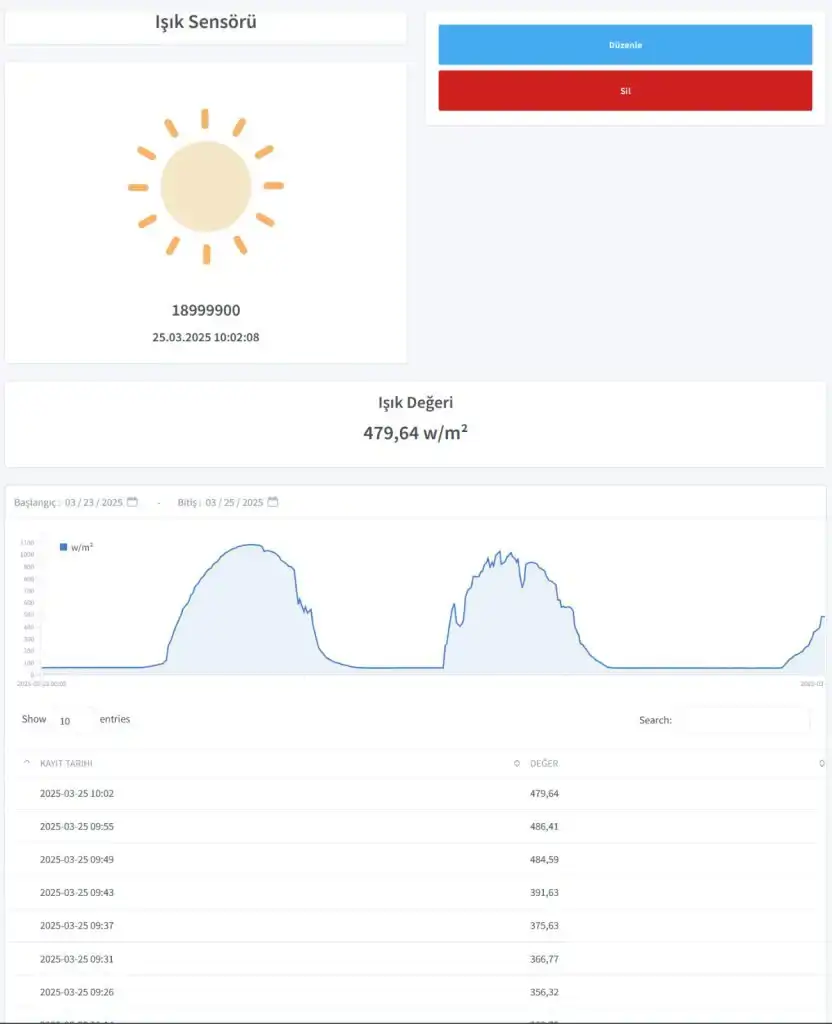
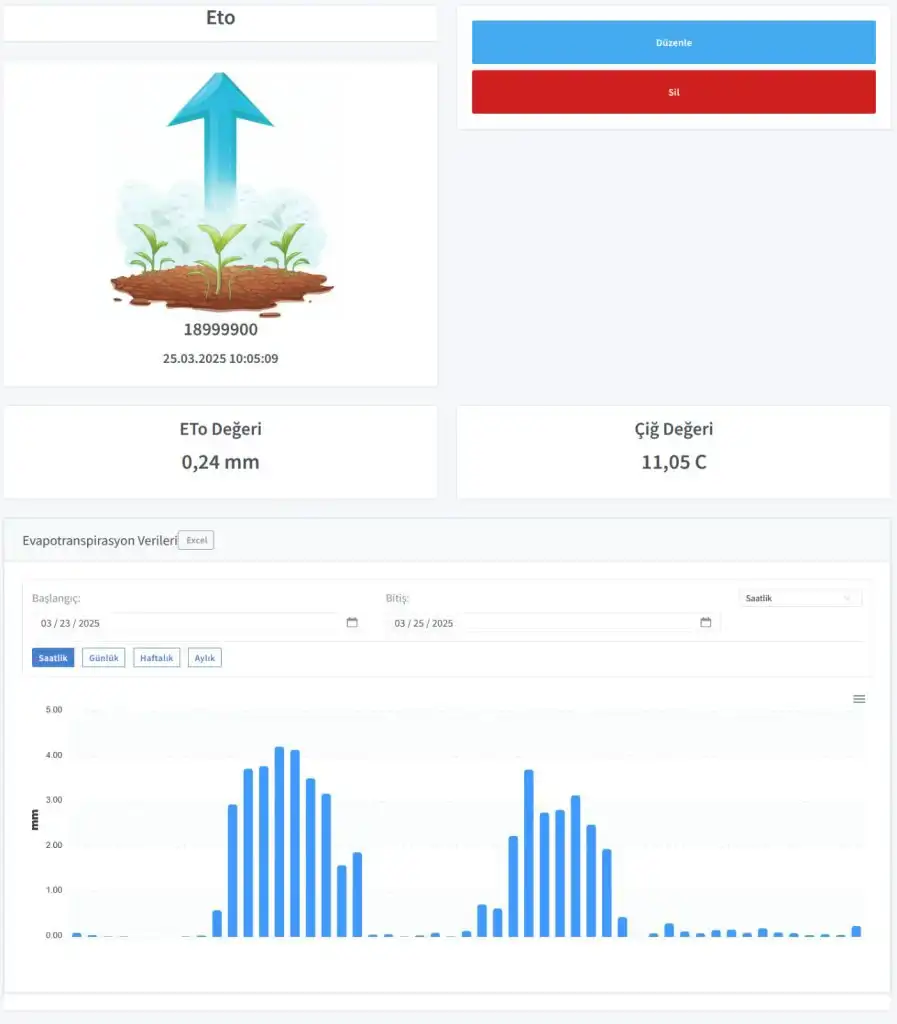
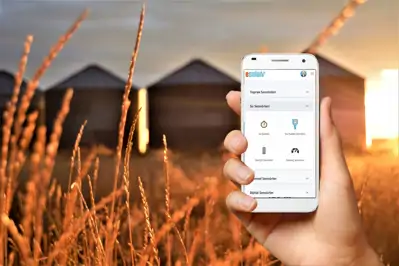
PAR sensors are an indispensable tool for efficient production. As Esular, we integrate PAR sensors into our integrated climate control and automation systems, providing easy management with remote access. With our application interface below, you can track your data instantly and direct your production according to light. 📲 Contact us for more information and your special projects!