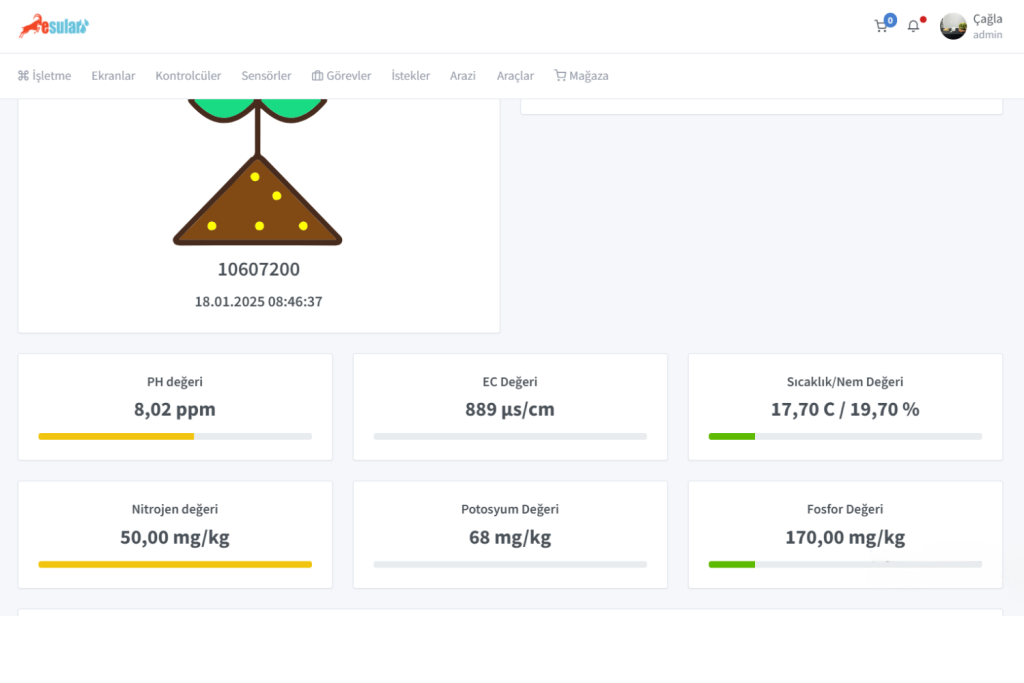
Soil quality sensors are one of the indispensable technologies of modern agriculture. By measuring moisture, pH, EC (electrical conductivity), salinity, and NPK (nitrogen, phosphorus, properties) values with a single device, it allows for the detailed analysis of the soil's nutrient value. In this way, irrigation and fertilization are carried out more appropriately, both resource saving is ensured and maintenance processes are met in the most accurate way. Offering great advantages in terms of time and cost, these sensors contribute to sustainable production. Know your soil, maximize your yield!
What Does a Soil Quality Sensor Do?
Soil quality sensors are advanced devices used to increase quality and productivity in production. These sensors provide the necessary data for healthy development by measuring moisture, pH, EC (electrical conductivity), salinity, and NPK (nitrogen, phosphorus, potassium) values.
Benefits of Soil Quality Sensors
AccurateIrrigation Planning: By measuring the moisture level in the soil, it enables the planning of irrigation time and amount, preventing over or under irrigation.
Precision Fertilization: It helps you determine missing nutrient values by analyzing NPK values. It reduces unnecessary resource usage by preventing unnecessary fertilization.
Salinity and pH Control: By providing ideal soil conditions for the root development of plants, nutrient uptake is optimized and productivity is increased.
Soil quality sensors are an important tool for efficient and quality production. Know your soil, get the best yield! 🌱
How to Use a Soil Quality Sensor?
The soil quality sensor is an extremely practical and energy-efficient device to use. Thanks to its built-in solar panel, it does not need an extra energy source. Thanks to its 3.7V rechargeable lithium-ion battery and solar panel, it can operate uninterrupted for about a year even if it receives sunlight for only a few days a year.
Usage Steps
1️⃣ Sensor Setup: The device has a plug-and-play feature. By connecting the probe with the sensor, position it appropriately in the soil.
2️⃣ Selecting the Sensor: Log in through the application, go to the “Sensors” tab, and select the “Soil Quality Sensor” option.
3️⃣ Accessing Data: You can access all parameters such as soil moisture, pH, EC, salinity, and NPK values within the sensor instantly via the mobile application.
Thanks to this practical and smart system, you can perform your soil analyses effortlessly and manage irrigation and fertilization processes more consciously.