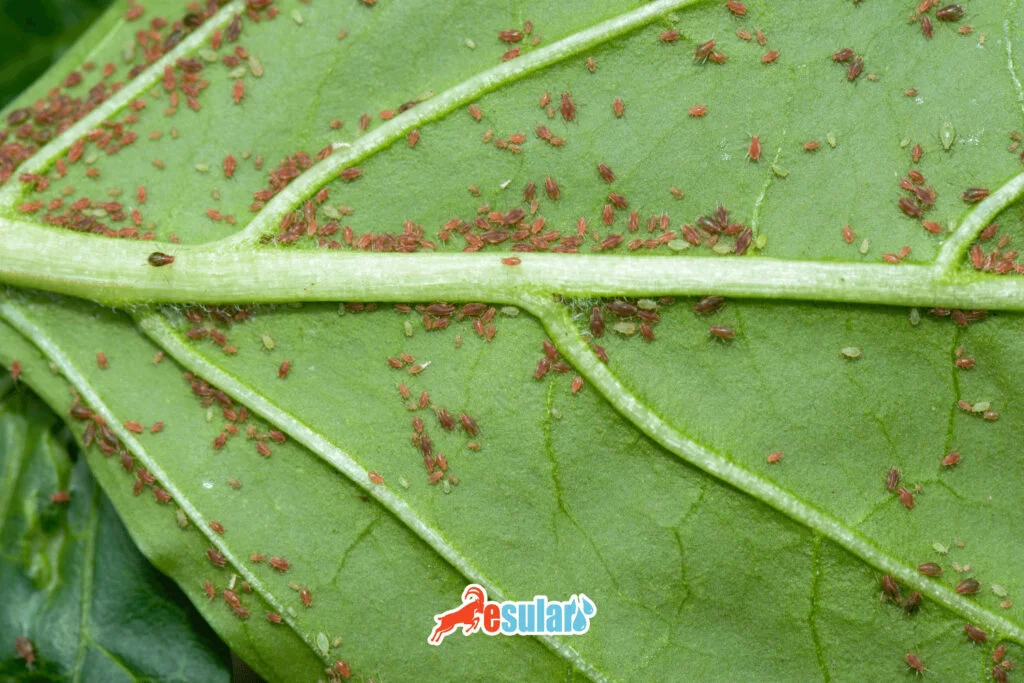
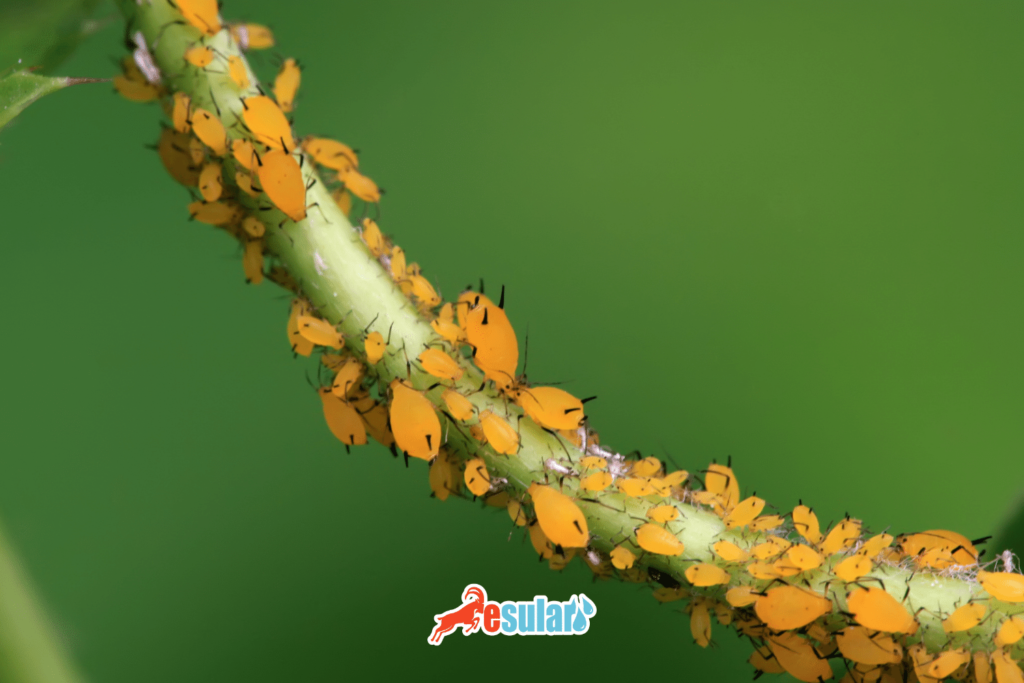
Aphids are small insects that feed by sucking plant sap. They are generally found on the lower parts of leaves, stems, and shoots. These pests usually live in colonies and mostly weaken the plant. Their anatomical structure consists of a small and soft body. Aphids, which are generally 1 to 3 mm in size, can be green, yellow, brown, and even black in color. Their antennae are usually short, their bodies are oval-shaped, and they usually do not have wings or they are underdeveloped. Reproduction is a process that rapidly increases the aphid population. Females lay eggs on the lower part of the leaf of the plant they live on. Larvae hatching from the eggs grow rapidly to become adults and mostly continue to stay on the same plant.
What Causes Aphids?
Aphids generally hold an important place among plant pests. High temperature and humidity allow them to reproduce rapidly and increase their populations. Certain factors can be effective in the emergence of aphids. For example, the imbalance or deficiency of plant nutrients can lower the plant's resistance and increase its sensitivity to aphids. Additionally, the lack of natural enemies can cause aphids to multiply easily. These can lead to difficulties in controlling the aphid population, especially with the decrease in the number of beneficial insects. Excessive plant density or planting plants too close together limits air circulation, allowing aphids to spread rapidly. Under these conditions, aphids can multiply on the lower parts of the leaves or at the stem and shoot tips
Natural Enemies of Aphids
Natural enemies of aphids include predatory insects, larvae, bats, and some birds. In addition, biological control methods can be used to reduce their harmful effects on plants. Insecticides can also be used to control aphids, but this chemical control method should be applied carefully due to its environmental impacts.
These creatures generally go through various developmental stages depending on the seasons, and they can spend the winter months with the eggs they leave on the plant. These eggs can cause new generations of aphids to emerge in the spring.
To control the pest, it is important to monitor plant health, support the population of natural enemies, and use appropriate control methods when necessary.
Do Aphids Infect Humans?
Aphids generally do not infect humans and do not cause direct harm. However, as a result of contact with the plant, they may cause allergic reactions in some people. A situation such as an aphid bite is not the case. In addition, caution should be exercised against chemical pesticides used against plant pests. It is rare for aphids to harm the lungs, but if you are experiencing serious health problems, it is recommended to seek professional help.
How to Eliminate Aphids? Fighting Aphids
There are several effective methods in fighting these creatures. By supporting natural enemies, you can control pests by increasing the population of natural enemies such as beneficial predatory insects and spiders. At the same time, you can increase plant resistance against pests by improving plant health through regular irrigation, appropriate fertilization, and healthy plant cultivation. Bio-control involves the use of beneficial organisms to control pests. Chemical control involves the use of insecticides, but should be applied carefully, taking environmental impacts into account. Among trap-based methods, the use of yellow leaf sticky traps can provide control by attracting flying pests.
Aphid Pesticide
In the process of fighting this pest, it may be necessary to resort to various pesticides. There are many aphid pesticides such as Dimethoate, Malathion, and Thiacloprid, but the usage conditions for each pesticide are different. Doses and application times of pesticides may vary depending on plant types and flowering periods. For this reason, it is important to turn to various alternative pesticides in fighting aphids. By choosing pesticides suitable for your plant's characteristics and type, you can effectively prevent the leafworm problem.
Do Aphids Harm Humans?
Aphids do not harm humans. Aphids generally feed by sucking the sap of plants and are harmful to plants. For this reason, they do not tend to harm humans or pets.