A New Era in the Fight Against Plant Diseases and Pests
Modern agriculture has become more complex than ever due to global climate change and increasing food needs. Farmers and agricultural engineers must fight against plant diseases and plant pests in a more strategic way to minimize yield losses and ensure sustainable production. At this point, climatic disease prediction and early warning systems come into play. Data from the Ministry of Agriculture and Forestry's 2025 Plant Health Implementation Program clearly reveal that the fight against harmful organisms is no longer just about chemical spraying, but requires an 'Integrated Pest Management' (IPM) based on scientific prediction models.
As Esular, with our expertise in agricultural technology, we help you detect disease and pest risks in advance by analyzing micro-climate data in your field. In this guide, we will examine in depth how prediction models used in plant health studies are established, which parameters are monitored, and the national strategies determined for 2025.

What are Prediction and Warning Systems (PWS) and Why are They Important?
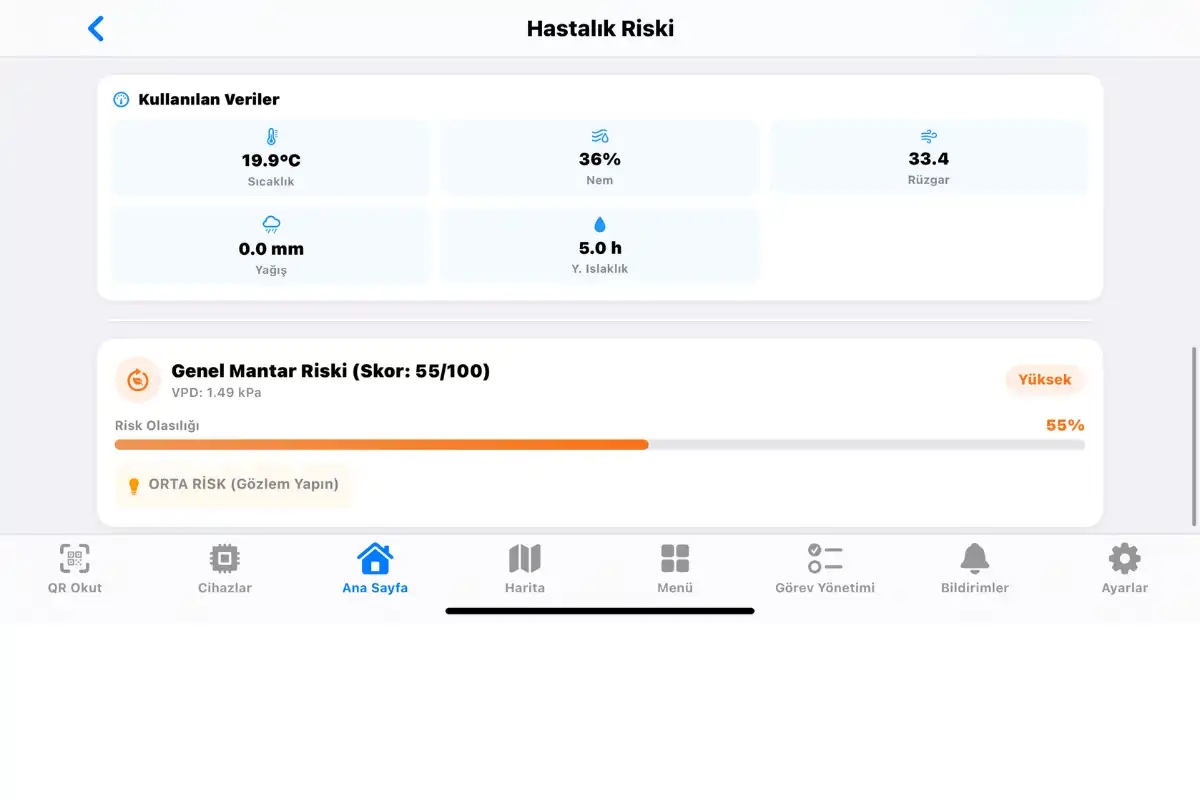
Prediction and Warning Systems (PWS) were developed to decide whether spraying is necessary in plant production, to determine the most suitable spraying time, and to save producers from unnecessary costs by warning them. The main purpose of these systems is to maximize effectiveness while minimizing the damage caused by pesticides to the environment.
Key Benefits Provided by Prediction and Warning Systems:
- Provides cost savings by reducing the number of sprayings.
- Increases food safety by minimizing the risk of pesticide residue.
- Helps protect the natural balance and beneficial organisms.
- Prevents pests from developing resistance to chemical pesticides.
- Provides labor and energy savings.
In the studies carried out by the T.C. Ministry of Agriculture and Forestry, General Directorate of Food and Control, the use of these systems is encouraged, especially for products of strategic importance. Esular technologies strengthen decision support systems by providing the precise data flow needed in this process.
Plant Disease and Pest Prediction Model Standard Trial Method
The reliability of a prediction and warning model depends on how it is tested under field conditions. According to the standard trial method determined by the Ministry, certain criteria must be met for the validity of a model. Trials are generally carried out on fruits, vegetables, cereals, and industrial plants where the disease is sensitive or the pest is an intensive problem.
Trial Conditions and Site Selection
The trial should be established on a single variety of the host plant where the disease or pest is seen every year and causes economic yield loss. If a company offers software against more than one factor in the same plant, each of these models should be tested in separate gardens or fields. Trials should be carried out in at least 3 different locations with different topographic and climatic characteristics in a province where the selected plant is widely grown, and for at least 3 years in each province.
Trial Design and Plot Sizes
Trials are established according to the 'large plots' design. The size of the area where the prediction and warning model will be tested should be at least 5 decares (da). Two main characters are used for comparison purposes:
- Prediction Model Character: The area sprayed according to the warnings given by the model.
- Sprayed Control Character: The area sprayed according to phenology or population density (traditional methods).
The size of both comparison plots should be at least 1 decare. This structure makes it possible to statistically analyze the accuracy of the model.
Monitoring Climatic Parameters and Data Collection
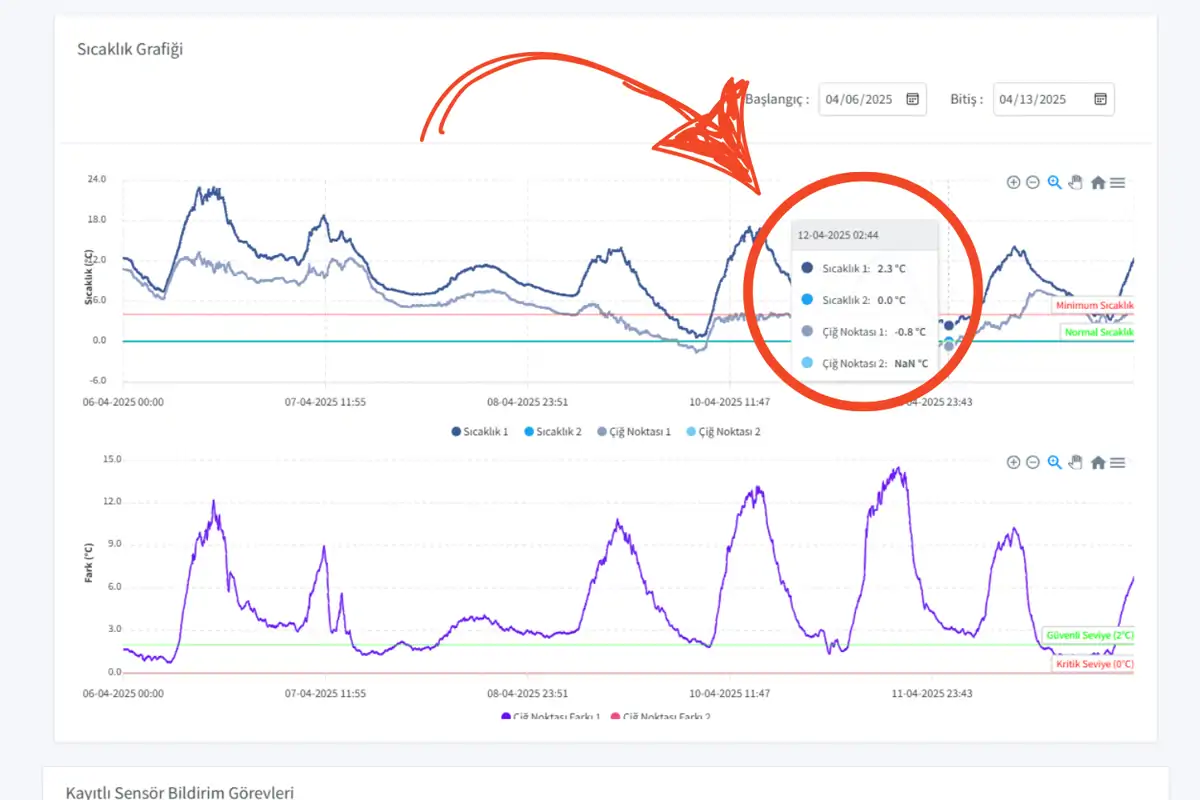
The development of plant diseases depends largely on environmental factors. Data received from electronic climate stations (weather stations) are of critical importance for climatic disease prediction. Trials generally start collecting data from January 1st of each year.
Basic Meteorological Data Monitored:
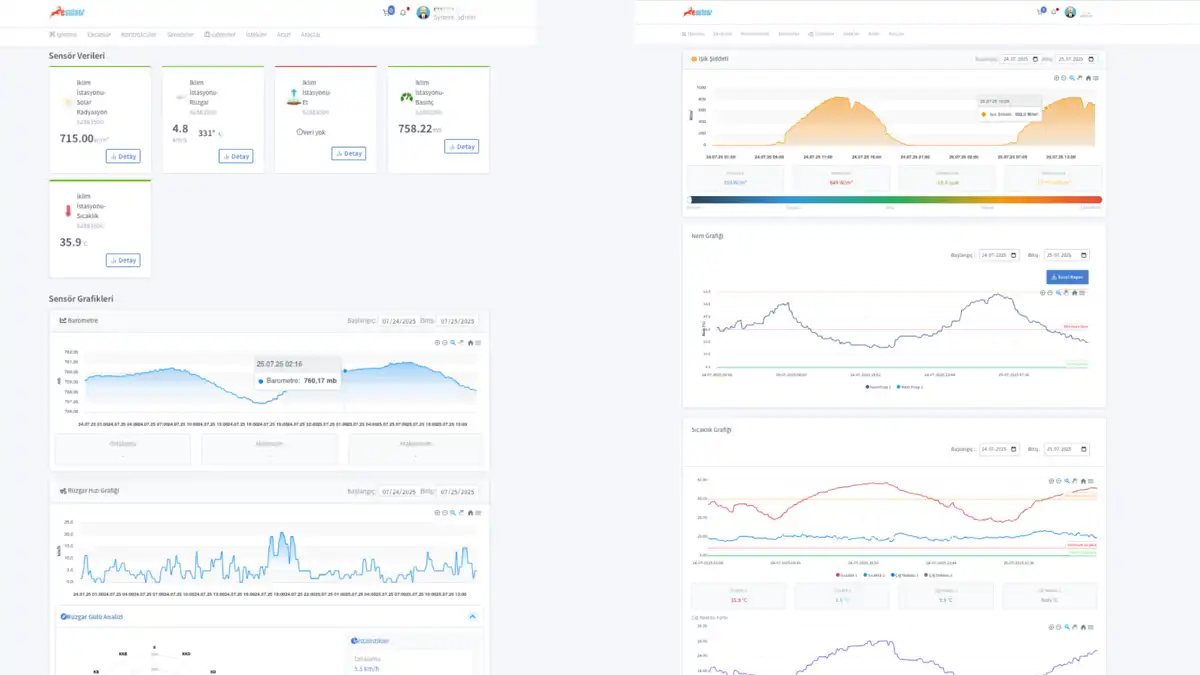
- Air Temperature and Soil Temperature
- Relative Humidity and Precipitation Amount
- Leaf Wetness Duration and Intensity
- Wind Speed and Direction
- Sunshine Duration and Intensity
This data is processed by algorithms to determine the infection period of the pathogen or the biological stages of the pest (egg hatching, larval emergence, etc.). Esular Weather Stations serve as the heart of early warning systems by presenting this data in real-time.
Prominent Pests in the 2025 Plant Health Implementation Program
The Ministry's 2025 program covers the fight against 668 harmful organisms of critical importance for the Turkish economy. In this program, special action plans and prediction-warning strategies have been determined for some pests.
Sunn Pest (Eurygaster spp.) Control
In the fight against the sunn pest, which is the biggest threat to cereal production, economic damage threshold (EDT) values have been revised according to regions.
In sunn pest control, overwintering surveys, evaluation surveys, and egg parasitism surveys are applied respectively. If extreme weather conditions such as drought are experienced, these threshold values can be revised again for that year.
Mediterranean Fruit Fly (Ceratitis capitata)
The 'Mediterranean Fruit Fly Monitoring Project' is being carried out for this pest, which has zero tolerance in exports. Trap tracking is performed in the provinces of Adana, Antalya, Aydın, Hatay, İzmir, Mersin, Muğla, and Osmaniye, and population density is reported every 15 days. You can get technical support from our experts on this subject.
Brown Marmorated Stink Bug (Halyomorpha halys)
The 2023-2025 Action Plan is being implemented for this invasive species that entered our country in 2017. It is managed in two stages as overwintering control (December-March) and control in the production area (April-November). Within the scope of biotechnical control, the use of pheromone traps and the release of the Samurai Wasp (T. japonicus) are among the most important strategies.
Integrated Pest Management (IPM) Principles
The basic philosophy in the fight against plant diseases and pests is that chemical control should be the last resort. The IPM approach includes these steps:
- Cultural Measures: Site selection, soil tillage, use of clean seeds, correct irrigation, and balanced fertilization.
- Physical and Mechanical Control: Manual collection of pests, traps, barriers.
- Biological and Biotechnical Control: Protection and release of beneficial insects (predators and parasitoids), pheromones, sticky traps.
- Chemical Control: Carried out only in accordance with prediction and warning models, when the economic damage threshold is exceeded, and using environmentally friendly selective pesticides.
All of these processes are monitored digitally through the Plant Health Registration System (BSKS) and the Agricultural Information System (TBS).
Residue Action Plan and Pre-Harvest Inspection
To prevent pesticide residue, the 'Pre-Harvest Pesticide Inspection Program' is implemented by the Ministry. Inspections have been tightened especially for products with high export potential such as peppers, citrus fruits, leafy vegetables, vineyards, pomegranates, and quinces. In 2025, these inspections will be carried out with the 'cross-inspection' model. In other words, the sample collection in one district will be carried out by the inspectors of another district.
Principles of Sampling:
- Samples are taken by applying the X or S model to represent the entire production site.
- Samples are divided into two as original and reference samples and sealed with a plastic seal.
- Samples are taken from at least 4-8 meters inside the field boundaries to eliminate the edge effect.
- Harvesting of products whose analysis results are not suitable is delayed or they are destroyed.
Precision Agriculture Applications with Esular Technology
The success of prediction and warning systems depends on how well you can measure the variables in the field. The smart irrigation systems and soil moisture sensors developed by Esular provide the 'correct irrigation' data necessary to protect plant health. Over-irrigation is the biggest trigger for fungal diseases (downy mildew, powdery mildew, etc.). Our Soil Moisture Sensor solutions, which work integrated with sensor data, naturally reduce the risk of disease by keeping soil moisture at the ideal level.
In addition, leaf wetness and humidity data from our weather stations combine with our early warning algorithms to send instant notifications to your mobile phone. In this way, you get the chance to intervene before the disease settles in your field.
Conclusion and Future Outlook
The fight against plant diseases and pests is no longer just about following a spraying schedule. The 2025 Plant Health Implementation Program and standard trial methodologies point to a period where agriculture is becoming digitalized and transformed into a data-driven model. Using climatic disease prediction and early warning systems increases both the farmer's profitability and guarantees the consumer's access to healthy food.
In the future, thanks to artificial intelligence-supported image processing technologies and IoT-based sensor networks, the diagnosis and prediction of diseases will become much more precise. As Esular, we continue to be the pioneer of this transformation and offer the most advanced technological solutions to the world's farmers.
Resources for More Information
For more detailed information on plant health and pest control, you can visit the following authoritative sources:
- T.C. Ministry of Agriculture and Forestry
- FAO - Plant Health Division
- TAGEM - General Directorate of Agricultural Research and Policies
Discover Esular smart agriculture solutions to start the digital transformation in your field and minimize disease risks. Contact us to get information about our modern weather stations and sensor technologies.