Tüm Yazılar

How is Peanut Cultivation Done?

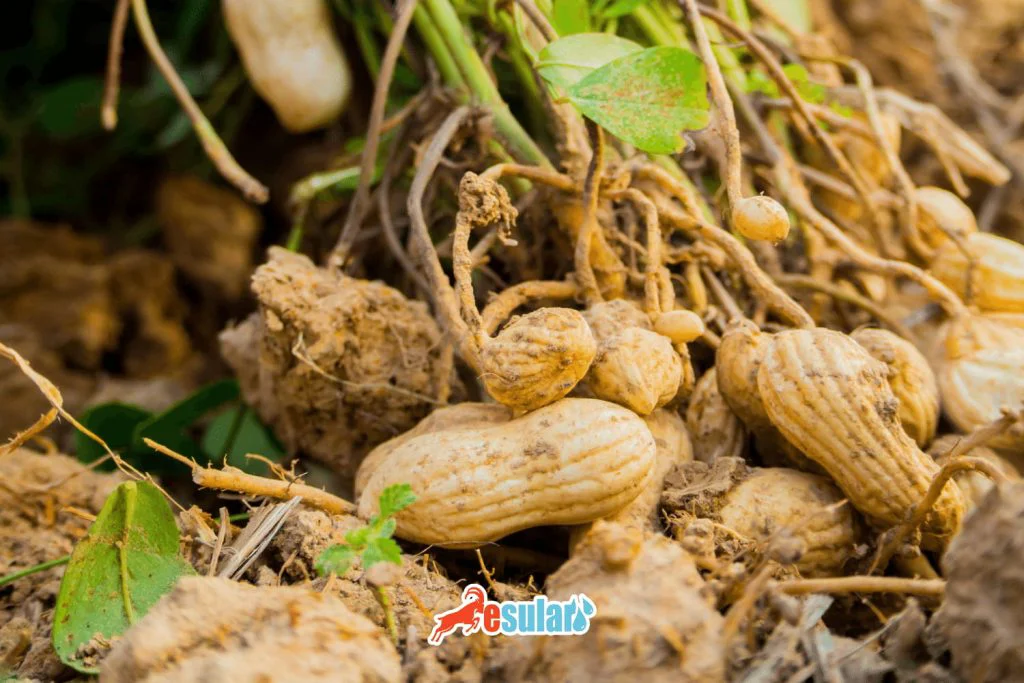
Peanut cultivation is considered an important agricultural practice worldwide and especially in warm climate regions. Peanuts, known as Arachis hypogaea, belong to the legume family and are an annual and summer plant species. They are grown in tropical and subtropical climate regions and differ from other plants by forming fruit underground. Generally, peanuts are included in the oilseed plants group and are an important industrial product due to their high oil content. The plant draws attention with its seeds that ripen underground, and these seeds with high oil content are used in many industrial fields. While peanut oil is widely used in the food industry, its meal is utilized as animal feed.

Where are Peanuts Grown?

Peanuts are an agricultural product grown worldwide, especially in warm climate regions. Although they do not require a more special growing environment compared to wheat, corn, and rice, better yields are obtained in regions with specific climate and soil conditions. Some parts of South America, the southeastern states of the United States, certain regions of China, and countries like India are the main centers of peanut production worldwide. In Turkey, peanut cultivation is common especially in the Mediterranean Region, in Adana, Osmaniye, Şırnak, and some other provinces, thanks to fertile soils and suitable climate conditions. Especially the Çukurova region is one of the most important peanut growing areas in Turkey and meets a large portion of the country’s total production. In these regions, peanut cultivation makes significant contributions to the local economy and increases agricultural income.

yer-fistigi-nerede-yetisir

What are the Peanut Varieties?

The peanut varieties grown in Turkey are: NC-7, Sultan, Osmaniye-2005, Arıoğlu-2003, Masal, Peggy, Ayşehanım, Rigel, Adanur, Batem Cihangir, Batem-5025, Gazipaşa, Çom, Florispan and Halisbey. Some of these varieties are classified as snack types, while some are classified as oil types. Additionally, these varieties, which are registered by different organizations and have different characteristics, are grown in different regions of Turkey.

How Should Climate and Soil Structure Be in Peanut Cultivation?

Suitable climate and soil conditions are very important for peanut cultivation. The plant prefers temperate to warm climate conditions and generally develops best at temperatures between 20-35 °C. Additionally, plenty of sunlight is necessary for the plant’s growth. However, temperatures below the freezing point and excessive precipitation can damage the plant. Therefore, there should be a good drainage system in the region where the plant will be grown. Soil structure is also important for peanut cultivation. Well-drained and aerated soils should be preferred. Peanuts do not grow well in saline soils, so soil salinity should be low. The optimum pH level should be between 6.0-6.4. The plant prefers loose-structured and loamy sand or sandy loam soils. These types of soils allow the gynophores (fruit stalks) to easily enter the soil and form fruit. 

Planting in Peanut Cultivation

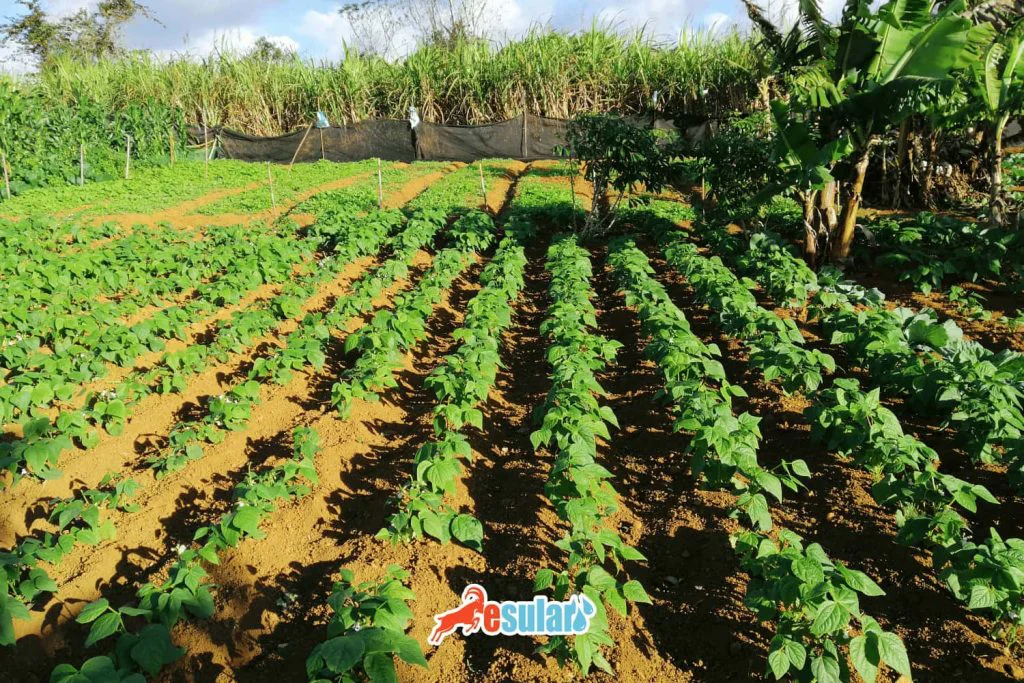
Soil temperature is a determining factor for peanut planting. In Turkey, planting can be done from mid-April to the end of May, when the soil temperature rises above 13°C. If the planting time is delayed, the harvest and drying stages may coincide with rainy periods, which increases harvest losses. The soil should be prepared appropriately for planting, and the crust layer should be broken to ensure emergence. Planting intervals are generally preferred as 60-70 cm, while the double-row planting method can also be applied in some regions. The planting depth should be an average of 5-6 cm, and it is important to adjust the intra-row distances well in manual plantings. If emergence is not complete, inoculation can be performed.

yer-fistigi-ne-zaman-ekilir

Fertilization in Peanut Cultivation

The peanut plant grows rapidly by effectively utilizing nutrients in the soil. Therefore, it is very important for the soil to be rich in nutrients. If deficiencies are determined as a result of soil analysis, fertilizers containing nutrients such as nitrogen, phosphorus, potassium, and calcium can be used. Especially a high calcium level is important for the healthy development of peanuts. Generally, it is recommended to give 3 kilograms of nitrogen and 8-9 kilograms of phosphorus per decare. Peanuts are a legume that can fix free nitrogen from the air into the soil to meet their nitrogen fertilizer requirement. Therefore, nitrogen fertilizer is not needed in areas where they are grown consecutively for a long time. Phosphorous fertilizer can be given entirely during planting, or it can be applied in late periods according to leaf analysis. If symptoms of phosphorus deficiency are seen, foliar fertilizer can be used. Peanuts pull a large amount of potassium from the soil during the growing process. However, excess potassium can prevent calcium uptake and cause the plant to rot. Therefore, excessive fertilization should be avoided.

Irrigation in Peanut Cultivation

Although peanuts are a drought-resistant plant, irrigation is necessary for economical cultivation.  The water consumption of peanuts is low in the period from planting to the beginning of flowering. One should not rush for the first irrigation and should wait for a time when the plants have flowered sufficiently and symptoms of thirst are felt. When the time for irrigation comes, the plants start to wilt and the leaves begin to close. The period when peanuts need water the most is the fruit formation periods in July and August. If irrigation is delayed in these periods, yield may decrease, the aflatoxin rate may increase, and the hull ratio of the capsules rises. After the critical period, water consumption decreases. The irrigation interval depends on soil structure, temperature, wind, humidity, and precipitation status.  

yer-fistigi-nerede-yetisir

How Often are Peanuts Irrigated?

In peanut farming, irrigation is generally performed 5-8 times. Long-term ponding should be avoided during irrigation; otherwise, leaf and stem diseases may increase, maturation may be delayed, and the small capsule ratio may increase. Sprinkler or drip irrigation systems should be preferred.

Harvest in Peanut Cultivation

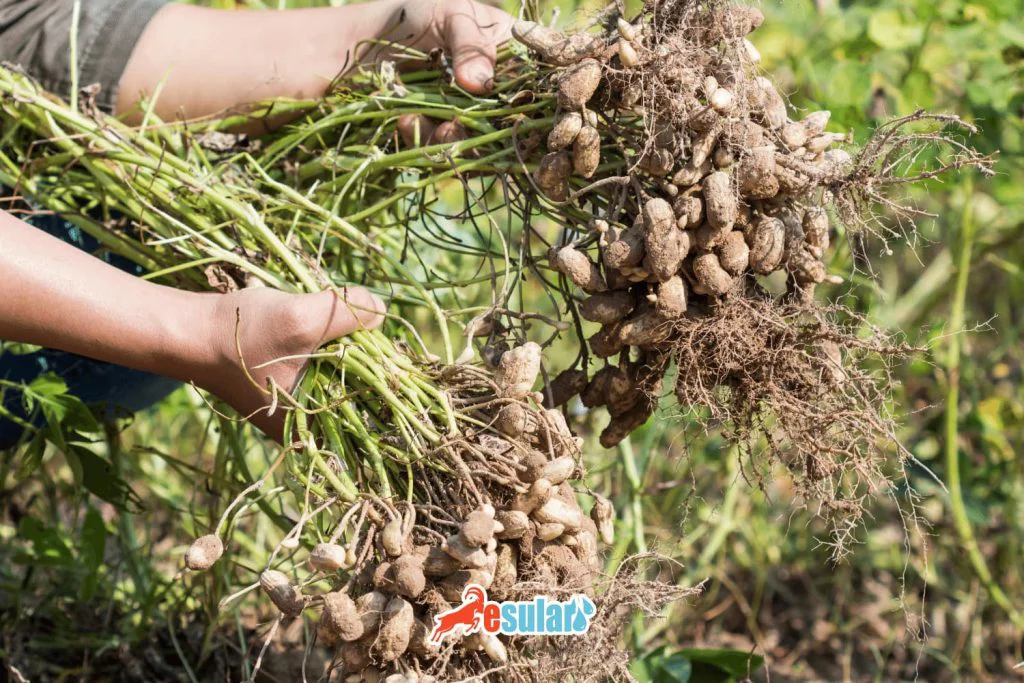
Determining the appropriate digging time for peanuts can be difficult because the plant has an indeterminate structure, meaning its development continues even during harvest. Correct harvest time is important in terms of yield and quality. While early harvest can reduce yield and quality, in late harvest, gynophores may start to rot and harvest losses may increase. The process of digging the plants from the soil after harvest is important, and the soil must be at the appropriate moisture and hardness. Then the plants are dried and threshed. While hand tools such as hoes and shovels can be used in small enterprises, tractor-drawn digging and turning machines are preferred in large enterprises. The threshing process is carried out after the plants have dried thoroughly. Threshing machines collect the capsules by directly threshing the plant rows. It is important to adjust the threshing machines correctly and to set the operating speed well. In some regions, harvested capsules may be washed due to problems caused by soil structure.

yer-fistigi-hasati

When are Peanuts Harvested?

Harvest time can vary according to variety, market type, and climate conditions. Generally, snack varieties reach harvest maturity in 140-160 days, and oil varieties reach it in 110-125 days. Various experiments have been conducted to determine the optimum harvest time; for example, in studies conducted in regions such as Adana and Hatay, May has generally been determined as the most suitable planting time. The hull scraping method can be used as a practical way to determine harvest time. In this method, the maturity level is determined by looking at the inner color of the hulls of the capsules taken from the field. Capsules with 60-70% brown-black inner hull color are considered suitable for harvest time.

How Much Peanut is Produced from 1 Decare?

Peanut yield depends on many factors, but typically professionally grown peanut producers can obtain a yield between 500 to 600 kg per decare. This yield depends on factors such as climate conditions and soil quality, as well as agricultural practices like correct irrigation, fertilization, and pest and disease control.

Daha Fazla İçerik İster misiniz?

Akıllı tarım hakkında en güncel içerikleri takip edin.