Introduction: The New Vision of Water Management in Agriculture
Water, which is one of the largest cost items of agricultural production in Turkey and worldwide, has also become our most limited resource due to climate change. In our country, more than 60% of agricultural irrigation is still carried out with traditional methods, namely furrow and flood irrigation. These primitive methods not only cause water waste but also damage the soil structure, wash away nutrients, and significantly reduce plant yield. ESular Vision is an advanced decision support system developed to offer a fundamental solution to this problem, combining IoT (Internet of Things) sensor data with international scientific calculation models.
The question most asked by farmers, 'If the moisture in my soil is 35%, how many liters of water should I give today?', is no longer a guess and is turning into a mathematical reality. ESular Vision processes the data of every single plant, every soil type, and instantaneous weather conditions in your field to offer you a perfect irrigation prescription. In this article, we will examine the system's technical infrastructure, FAO-56 standards, and the future of smart irrigation in depth.
Scientific Basis: FAO-56 Penman-Monteith Methodology
At the heart of the ESular Vision system lies the FAO-56 Penman-Monteith standard, published by the Food and Agriculture Organization of the United Nations (FAO) and accepted as the 'gold standard' of irrigation planning worldwide. This methodology is used to calculate the total amount of water the plant loses through transpiration and the soil through evaporation, namely evapotranspiration (ET).
Evapotranspiration Calculation Steps
The system takes complex meteorological data and performs the following steps in seconds:
This calculation engine works integrated with smart irrigation systems to automatically determine how long the valves will remain open. The accuracy of the system is fully compatible with FAO-56 technical documents.
MAD and TAW Model: Manageable Moisture Consumption
Just knowing 'how much' to irrigate is not enough; 'when' to irrigate is also of critical importance. ESular Vision manages plant stress using the concepts of TAW (Total Available Water) and RAW (Readily Available Water).
RAW (p × TAW), which is the share the plant can use without experiencing water stress, determines the irrigation timing. If soil moisture falls below the RAW limit, the plant spends its energy searching for water instead of producing fruit to survive. ESular Vision continuously monitors this critical point and sends an early warning to the farmer.
Soil Analysis: 6 Different USDA Soil Type Integration
Each soil type's water holding capacity and drainage rate are different. ESular Vision uses the USDA (United States Department of Agriculture) soil classification, which is accepted worldwide. The system performs automatic parameter assignment according to the soil type selected by the user or detected by sensors.
Important Note: Even if it is the same plant species under the same climatic conditions; if it is grown in sandy soil, it should be irrigated approximately 2-2.5 times more frequently than in clayey soil. ESular Vision confirms this difference with soil moisture sensor data, reducing the margin of error to zero.
Large Plant Library: More Than 35 Species
ESular Vision has a massive digital library containing more than 35 plant species most preferred in Turkish and world agriculture. Each plant's root depth, water-sensitive periods, and Kc (crop coefficient) values are predefined in the system.
Supported Plant Categories:
- Vegetables and Fruits: Tomato, Pepper, Cucumber, Eggplant, Melon, Watermelon, Potato, Strawberry.
- Grains and Industrial Plants: Wheat, Barley, Corn, Paddy, Cotton, Sunflower, Soy, Sugar Beet, Tobacco, Chickpea, Tea.
- Fruit Trees: Walnut, Apple, Cherry, Peach, Apricot, Olive, Citrus, Fig, Pomegranate, Banana, Almond, Hazelnut, Pistachio.
- Vines and Vineyards: Grape, Kiwi.
The system follows the phenological period (flowering, fruit set, etc.) of the plant and dynamically adjusts the irrigation amount. For example, the difference between the water requirement of the corn plant during the flowering period and the ripening period is automatically managed by the system.
Special Calculation Model for Tree and Vine Orchards
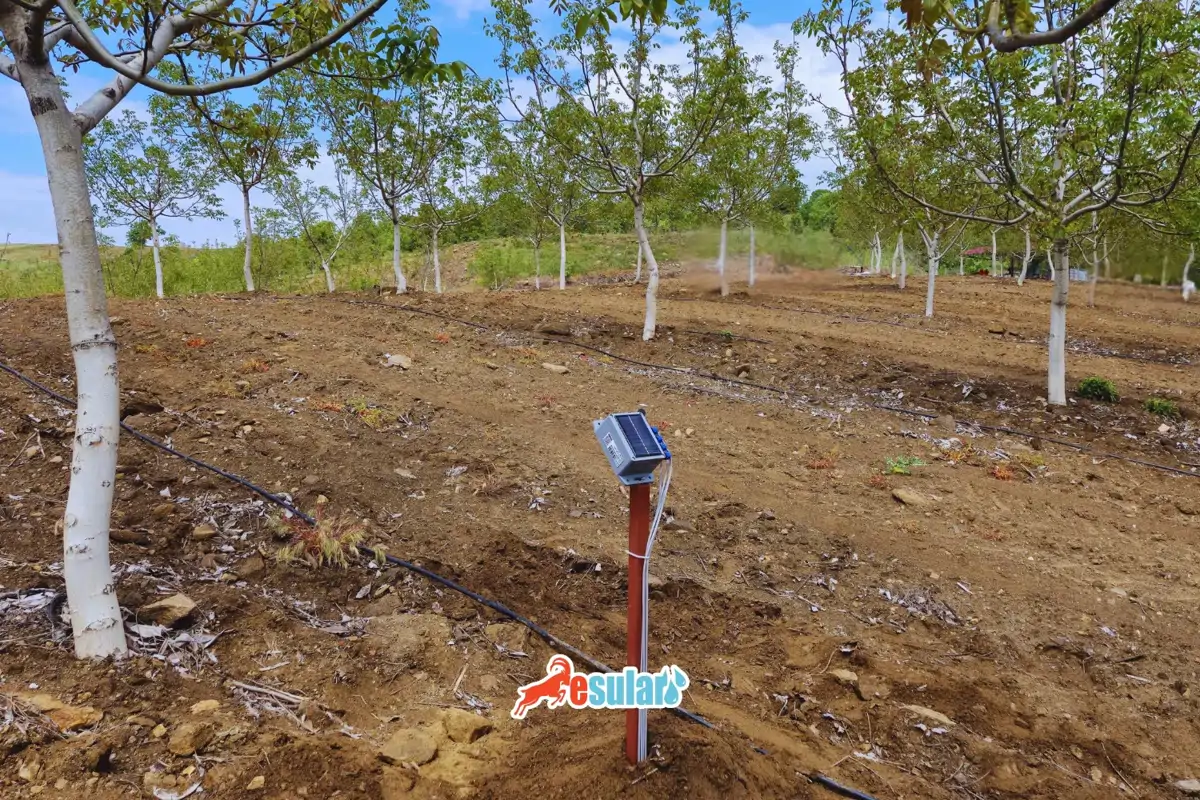
In fruit orchards, targeting only the tree's root zone instead of irrigating the entire field increases efficiency. ESular Vision performs calculations based on the 'Canopy Projection Area' in trees.
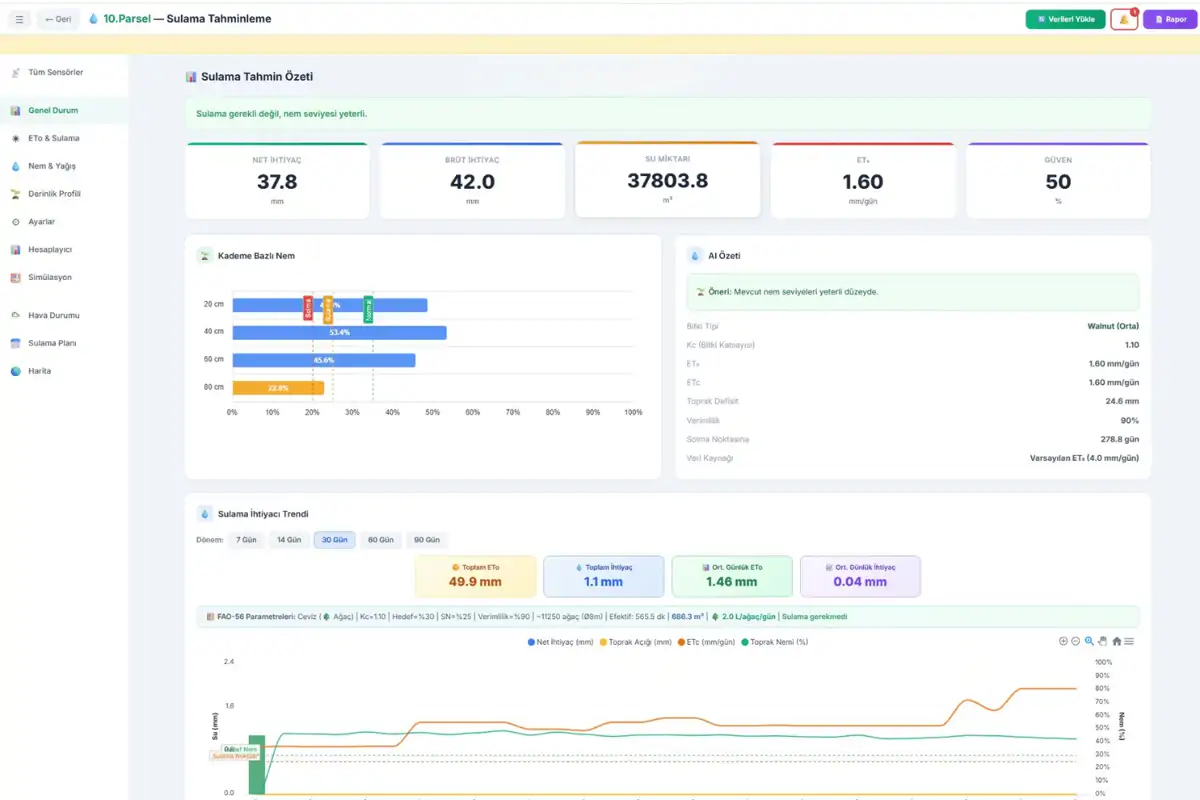
If you do not know the number of trees, the system automatically calculates by dividing the field area by the row spacing and intra-row distances. For example, if planting is done at 8x10 meter intervals in a 900-decare walnut orchard, the system automatically determines that there are 11,250 trees and the total effective irrigation area is approximately 565,000 m².
Dual Result System: Daily Maintenance vs. Total Refill
ESular Vision provides two different strategic data points to the farmer. This distinction fundamentally changes the decision-making process in modern agriculture.
1. Daily Maintenance (ETc Based)
This value ensures that the water the plant lost through transpiration and evaporation in the last 24 hours is compensated. It is ideal for enterprises that irrigate regularly. For example, the daily maintenance requirement for a walnut tree is approximately 258 liters (assuming ETo=4.2, Kc=1.10).
2. Total Refill (Deficit + ETc)
If the field has not been irrigated for a long time or extreme drought has occurred, it is the total amount of water required to bring the soil moisture back to the ideal level (Field Capacity). For example, to bring a walnut orchard whose moisture has dropped to 35% back to the 60% target moisture level, approximately 22,900 liters of water per tree may be required at once. The system recommends spreading this amount over a few weeks without drowning the plant.
Irrigation Timing and Duration Recommendations
ESular Vision not only plans the amount of water but also the operational details:
- Irrigation Interval: By dividing the RAW (readily available water) amount in the soil by the daily ETc value, it is calculated how many days apart irrigation should be performed. (e.g., ~every 8 days for walnut in loamy soil).
- Irrigation Duration: When the dripper flow rate (L/hour) and the number of drippers per tree are entered, the system tells how many hours the valve should remain open. (e.g., ~8 hours of irrigation duration to give 258 L of water with 32 L/hour total flow rate).
This data can be applied directly to the field through wireless valve control devices.
Simulation Tool: "What if ...?" Scenarios
The simulation tool within ESular Vision allows farmers and agricultural engineers to perform risk management. Users can test scenarios such as:
- If Moisture Drops to 20%: The system simulates how close the critical wilting point is approached and the necessity for emergency irrigation.
- If Soil Type Changes: Sees the effect of soil changes in different parts of the same field on water requirement.
- If Method Changes: If sprinkler is used instead of drip irrigation, how much additional water will be required due to efficiency loss (Efficiency drops from 90% to 75%) is calculated.
- If Precipitation is Expected: Integrated with meteorological forecasts, it analyzes how the expected precipitation can postpone the irrigation plan.
IoT and Sensor Integration: Real-Time Data Flow
ESular Vision is not just software, but an integrated structure with a powerful hardware ecosystem. The accuracy of the system is reinforced with real-time data from the field:
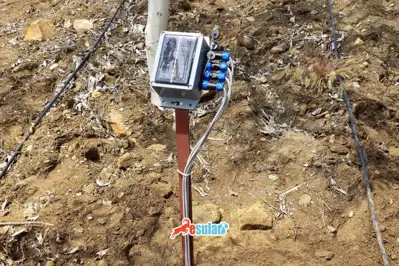
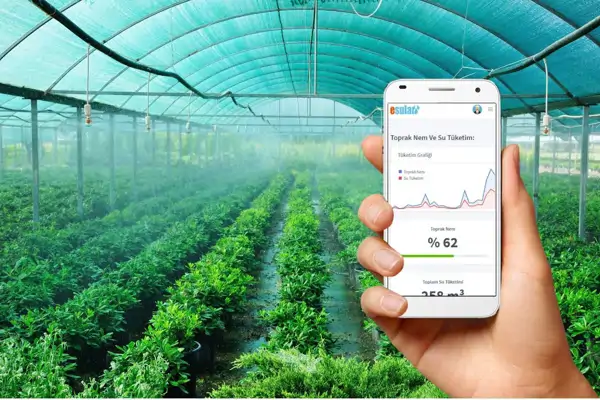
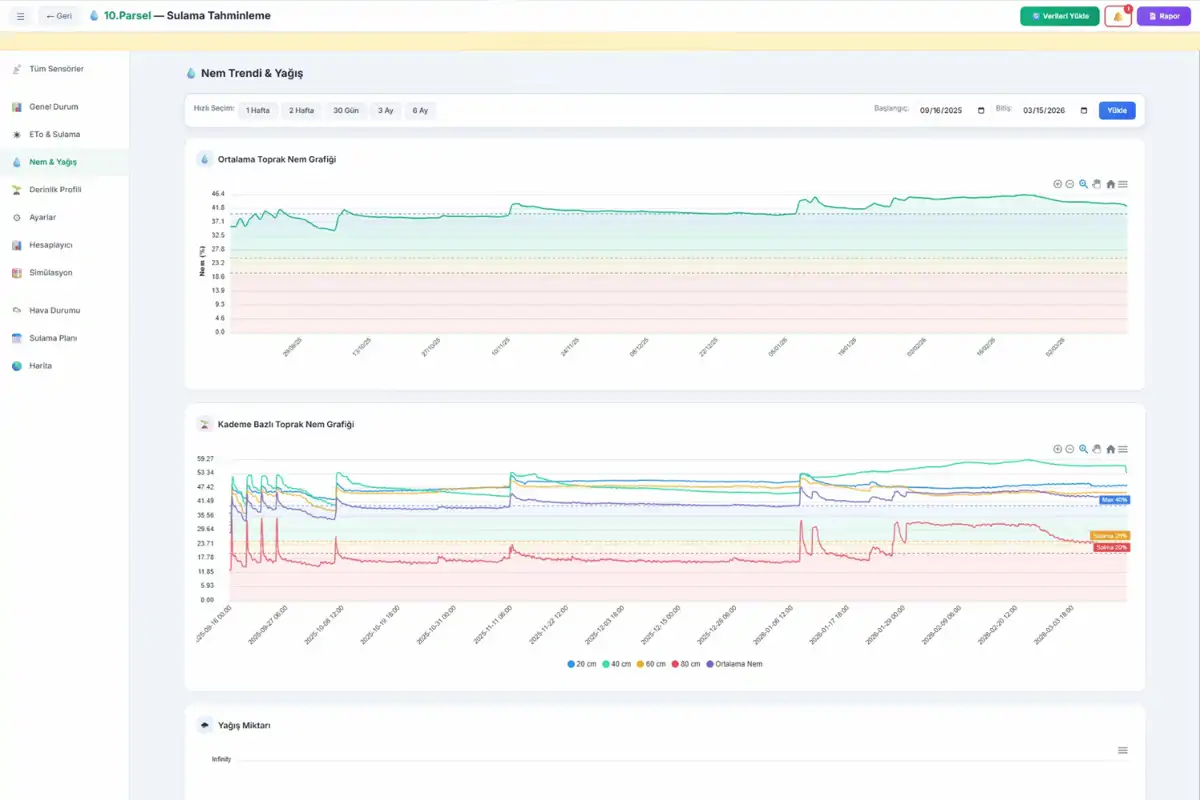
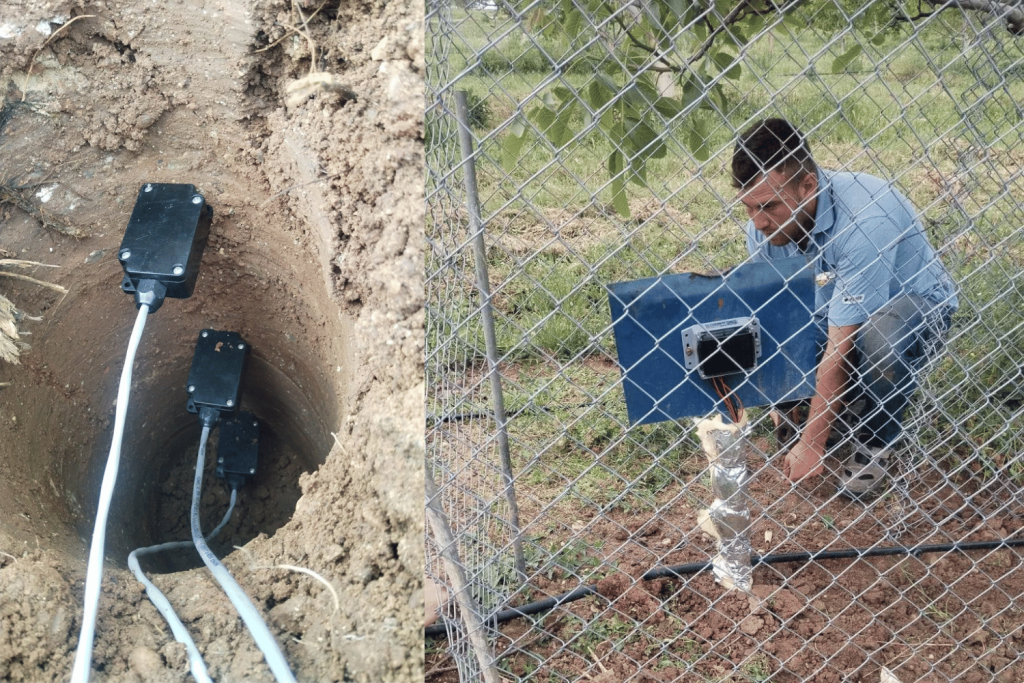
- Multi-Depth Moisture Sensors: Data from 30, 60, 90, and 120 cm depths monitor the movement of water in the soil profile. Even if the surface is dry, it prevents unnecessary irrigation by seeing the amount of moisture in the depths.
- Smart Weather Stations: By collecting local temperature, humidity, wind, and solar radiation data, it performs precise reference ET (ETo) calculation based on micro-climate.
- AI-Powered Forecasting: By using historical data and global meteorology models, it predicts the irrigation needs for the next 7 days.
To examine our products, you can visit our Agricultural Weather Station page.
API-First Architecture: Corporate Integration Capability
ESular Vision, as a modern technology platform, is designed with an API-First approach. This means that large agricultural enterprises or third-party software can integrate ESular's calculation engine into their own systems. Existing REST API endpoints are as follows:
- POST /calculate-instant: Instant water requirement calculation for a specific area.
- POST /calculate-tree: Specific irrigation prescription for a single tree.
- POST /predict: 7-day irrigation forecast combined with sensor data.
- POST /timeline: Time series analysis of past and future irrigation data.
This structure proves Esular's technological flexibility and compatibility with large-scale projects.
Summary: ESular Vision in Numbers
You can see the scope offered by the ESular Vision irrigation planning module with the summary table below:
Conclusion: Irrigate with Science, Win with Yield
Traditional irrigation methods are no longer sustainable in today's economic and environmental conditions. ESular Vision turns agriculture from a guessing game into a data-driven branch of science. Thanks to calculations made in FAO-56 standards, instantaneous data from IoT sensors, and AI-supported forecasting models, every drop of water turns into an investment for your plant.
If you want to increase your yield between 30% and 50% while saving water in your field, meet ESular Vision technology immediately. Remember, irrigation performed at the right time and in the right amount nourishes not only the plant but also our future.
Take Action!
You can contact us to get more information about our smart irrigation technologies and discover our special solutions for your business. Our expert team is ready to guide you to establish the most suitable system for your field's soil structure and plant pattern.
- Explore Our Products: Smart Irrigation Control Units
- Get Information About Our Services: Contact Form
- Start Monitoring Soil Moisture: Wireless Soil Moisture Sensor
Sıkça Sorulan Sorular
Frequently Asked Questions About ESular Vision and Smart Irrigation
What is ESular Vision and what kind of advantage does it provide in agricultural irrigation?
ESular Vision is an advanced irrigation decision support system that combines IoT-based sensor data and internationally recognized FAO-56 calculation models. Unlike traditional estimation methods, it provides water savings and increases yield by 30% to 50% by offering the mathematically most accurate irrigation prescription based on instantaneous moisture, weather, and plant type in the field.
What is the FAO-56 Penman-Monteith methodology and why is it important?
FAO-56 Penman-Monteith is the worldwide gold standard published by the Food and Agriculture Organization of the United Nations that calculates the amount of water the plant loses through transpiration and the soil through evaporation (evapotranspiration). ESular Vision uses this scientific method to calculate the plant's actual water need in seconds and makes irrigation planning completely data-driven.
How does soil type affect smart irrigation planning?
Water holding capacities and drainage rates of different soil types vary; for example, sandy soils hold water much less than clayey soils. By integrating 6 different soil types in USDA standards into its system, ESular Vision prevents plant stress by automatically optimizing irrigation frequency and amount according to the soil structure.
How is irrigation calculated in orchards and vines?
In tree and vine orchards, a special calculation model based on the Canopy Projection Area is used instead of irrigating the entire field. By considering the number of trees and planting intervals, ESular Vision ensures that only the water needed by the root zone is provided, which minimizes water and energy costs, especially in large-scale fruit orchards.
What is the difference between Daily Maintenance and Total Refill irrigation strategies?
Daily maintenance refers to regular irrigation performed to compensate for the water lost by the plant in the last 24 hours; while total refill indicates the amount required to bring the soil back to the ideal moisture level (Field Capacity) after extreme drought. ESular Vision provides both data to the farmer, allowing the most efficient strategy to be applied according to the current situation in the field.
How does the ESular Vision system work integrated with soil moisture sensors?
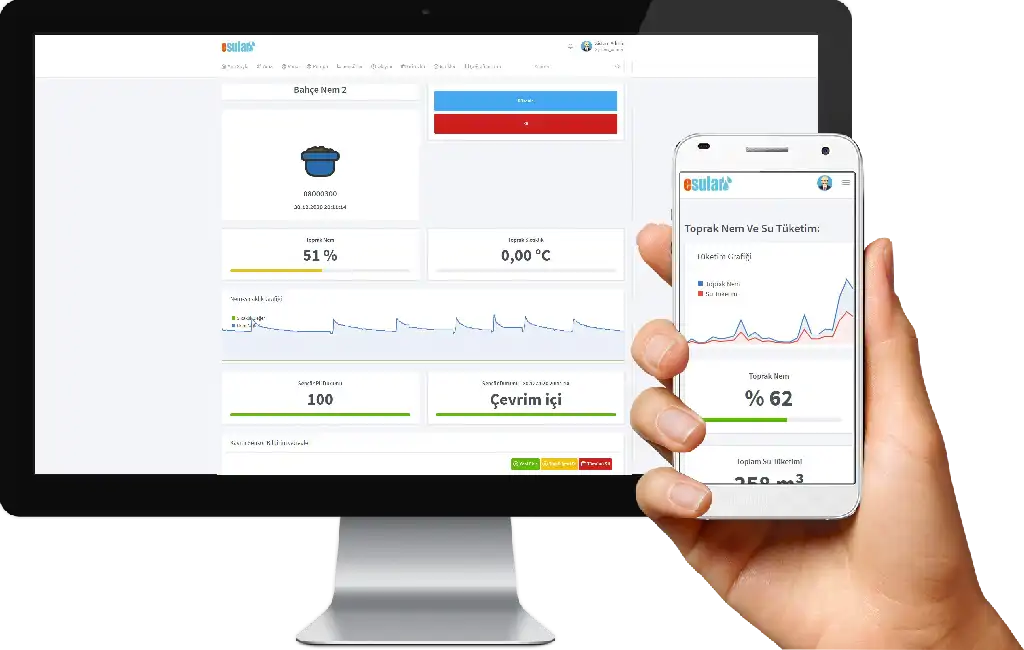
The system continuously analyzes real-time moisture data from different depths to monitor the movement of water in the soil profile. The software combines this data from sensors with meteorological forecasts to see moisture in the depths even if the surface is dry, thus providing precise management without drowning or leaving the plant without water.
For which plant species can smart irrigation planning be done?
More than 35 different plant species, from corn to walnut, from tomato to olive, are defined in the ESular Vision library. The water requirement and root depth of each plant, which change according to the growth stage (phenological period), are automatically tracked by the system, and an irrigation schedule specific to each stage is created.