Grass planting, How to plant grass correctly, the right time for grass planting, and what needs to be done before and after grass planting are in our article.
In Which Months is Grass Planting Done
In which months is grass planting done. Which month is the most suitable for grass planting. In coastal regions with a warmer climate, it is February and the first half of May – September – the first half of November.
For interior regions far from coastal areas, the first half of March and May / September – October are the most correct times for planting.
How to Plant Grass
First, after soil spreading is done in missing areas, a general rough leveling is performed for the entire area of the garden.
After broad-leaved, coniferous trees or shrub groups are planted in your garden (After Your Landscape Works Are Finished), fine leveling, i.e., general screed correction, is performed and the surface is smoothed with a roller. If the area has a muddy, hard soil structure, a 5 cm sand-peat-soil mixture is prepared and spread, and the correction process is done by rolling.
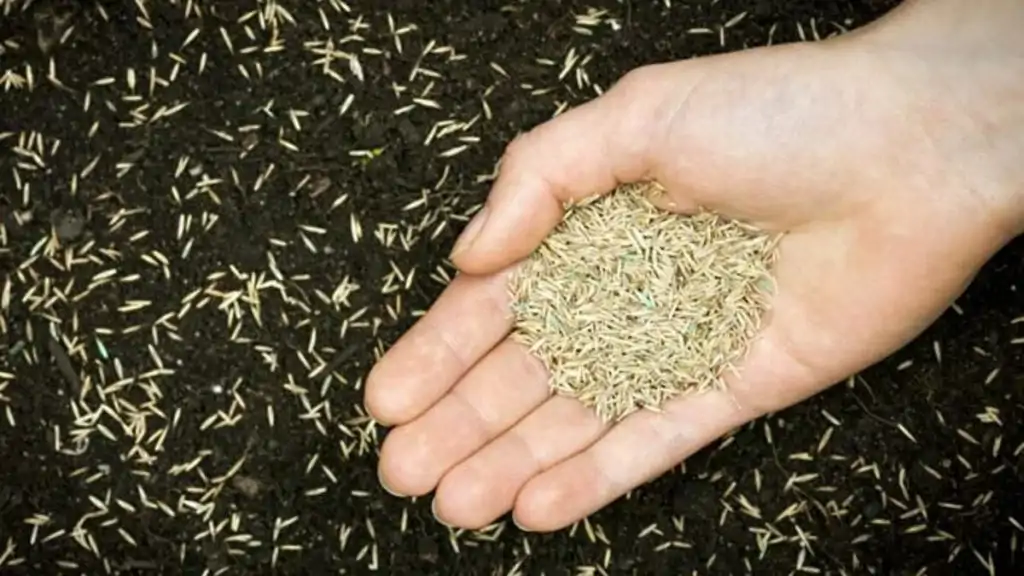
Grass seeds are distributed evenly to the area to be planted, estimated at 40-50 grams per m2, which is the standard unit, by hand or machine. However, in order not to step on and pick up the seeds from the ground, as grass seeds are sown in areas like 20 m2, the surface is covered evenly with animal manure at a maximum of 2 cm, using well-rotted manure that has been aged for at least one year.
There is now 2 cm of manure on top of the covered seeds. Now, a roller is carefully pulled over these manures in a way that does not lift the manure and seeds from the ground. The rolling process must be performed at least 2 times over the same area. The first should be transverse and the other rolling should be longitudinal.
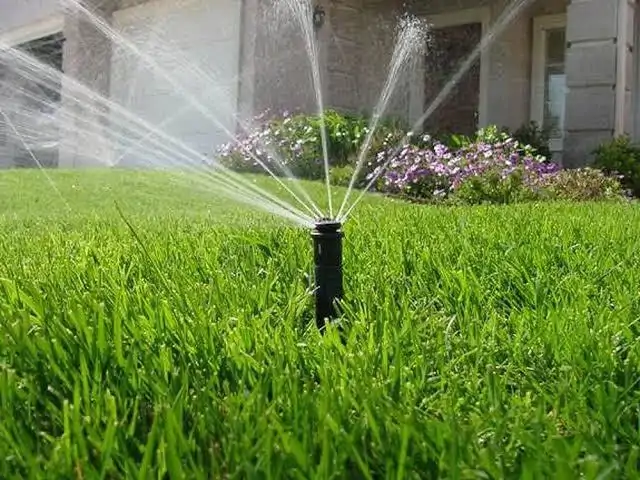
Irrigation of Grass
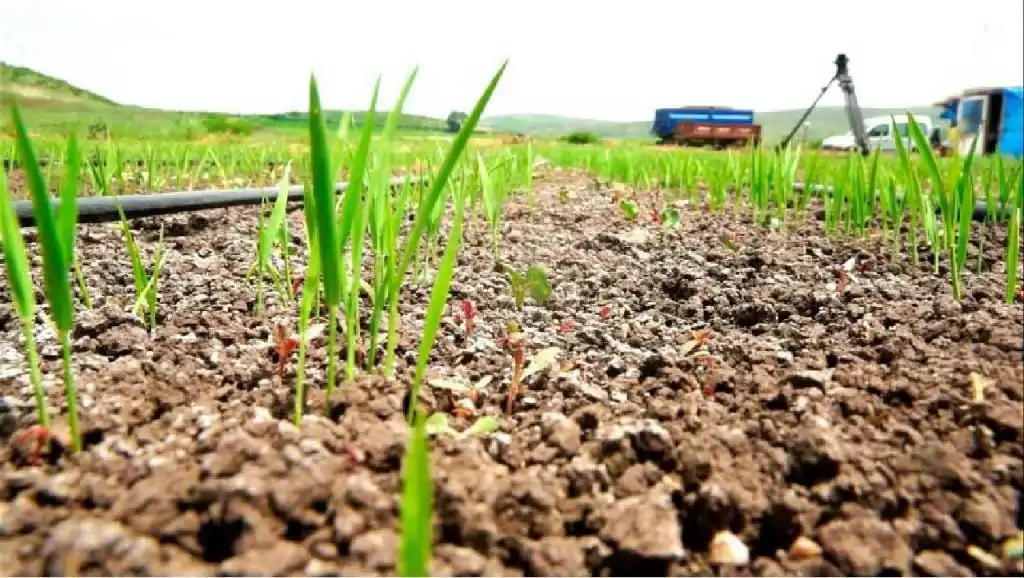
A newly planted lawn must be irrigated without waiting, and the soil must remain moist for 2-3 weeks. The irrigation method must be increased in a moist manner until the grass sprouts. After the grass has emerged and achieved its form, irrigation is returned to the standard value. After the grass emerges, fungi form in over-irrigated grass, which is why the irrigation setting is balanced in time. The emergence of mushrooms does not pose an obstacle; mushrooms can be plucked and removed from the area when desired. Care is taken for the first grass to emerge in a well-formed manner.
Our Fields of Activity
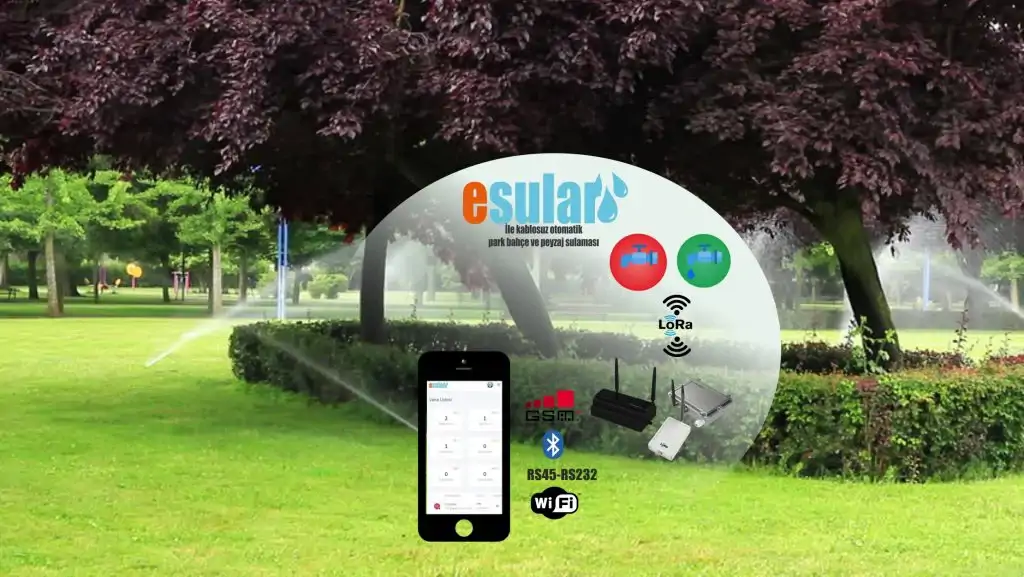
esular smart automatic irrigation system application areas
We reduce your costs with drip irrigation automation in places where water resources are scarce. Thanks to wirelessly controllable hydraulic valves, equal water distribution is provided to every point of the field and all are controlled from a single point
We make irrigation management fully automatic in modern greenhouses to keep greenhouse production at the desired level, improve product quality, and keep the pH balance under control
We enable you to use and manage the world's most valuable resource in the most efficient way without the need for cabling and external power sources in all your agricultural lands. Whether you determine your irrigation scenario or perform fully automatic irrigation
We provide more efficient and effective irrigation by making valves smart in landscape irrigations. With remotely controllable valves and remotely updated scenarios, all control is in your hands
In golf and football fields, homogeneous irrigation is ensured by controlling flow and pressure values. All valves and pumps can be controlled remotely without pulling cables
Smart Cities
In smart city applications, we ensure that irrigation zones are irrigated on time and as desired with sensors that can operate wirelessly and with internal batteries for over 10+ years. No more sprinklers that irrigate when it rains