Irrigation Timer: The Heart of Modern Gardening and Landscape Management
In modern agriculture and landscape architecture, efficient use of water is not just a matter of environmental awareness, but also a necessity for reducing operational costs and protecting plant health. Irrigation timer or commonly known as timer, is one of the most critical components of this process. From gardens to massive city parks, from boutique greenhouses to large agricultural lands, these devices that automate irrigation processes in every area ensure that the right amount of water is given at the right time.
In irrigation processes carried out with traditional methods, risks such as human error, over-irrigation, or forgetting to irrigate at times when the plant needs water most are always present. However, using a smart irrigation timer eliminates these risks and creates an ideal micro-climate for your plants. As Esular, the IoT-based solutions we have developed go beyond a simple timer and work integrated with smart irrigation and automatic irrigation systems.

In this comprehensive guide, we will examine every detail from the working principles of irrigation timers to their types, from installation details to smart sensor integrations. Whether you are a hobby gardener watering your home garden or an engineer managing thousands of decares of landscape areas; you will find all the technical and practical information you need in this article.
What is an Irrigation Timer (Timer)? Basic Working Mechanisms
An irrigation timer is an electronic or mechanical control device placed between the water source and the irrigation line (valve) that starts or stops water flow at specific time intervals. Its main purpose is to execute the irrigation program without the need for the user to be physically present.
Basic working principles of irrigation timers:
- Time-Based Control: Opens the valve at determined times and closes it at the end of the determined duration.
- Cyclic Programming: Creates recurring irrigation periods every day, every other day, or on specific days of the week.
- Flow Control: In advanced models, it shuts down the system after a certain amount of water (on a liter basis) is provided, independent of time.
- Sensor Feedback: In smart models, it dynamically suspends or starts the program according to soil moisture or rainfall data.
Today's irrigation timers are divided into three main categories according to their technologies. Understanding these categories will help you make the right irrigation timer choice for your project.
1. Mechanical Irrigation Timers
These are the simplest models. They usually have a wind-up mechanism. The user sets the irrigation duration manually (e.g., 60 minutes) and the mechanical valve cuts the water flow when the time expires. They do not require electricity or batteries but do not provide full automation as they require manual intervention before each irrigation.
2. Digital and Programmable Timers
These devices with LCD screens and battery operation allow for weekly programming. Multiple irrigation start times and durations can be set. They are the most commonly used models in garden irrigation processes. They are usually mounted directly on the faucet-type valve.
3. Smart (IoT and LoRa Based) Irrigation Timers
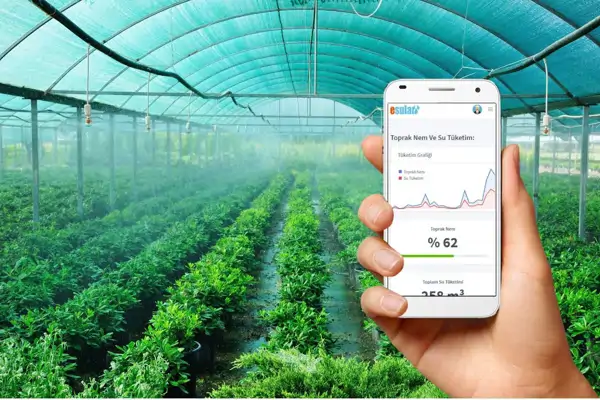
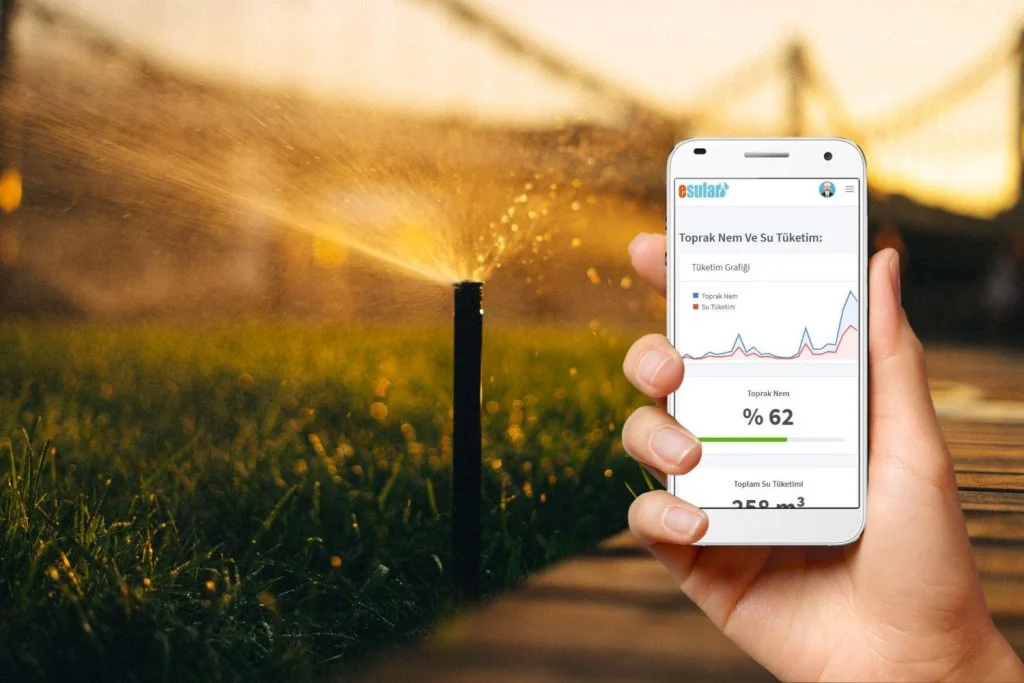
These systems, the technology of the future, are controlled via internet connection (Wi-Fi, GSM, or LoRa). These devices, which are Esular's area of expertise, can be managed from anywhere in the world via a mobile application. They can optimize irrigation by pulling local weather data from the internet. These systems are preferred in professional landscape irrigation and park irrigation projects.

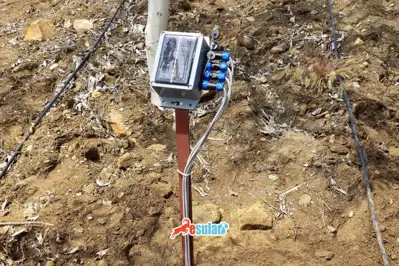
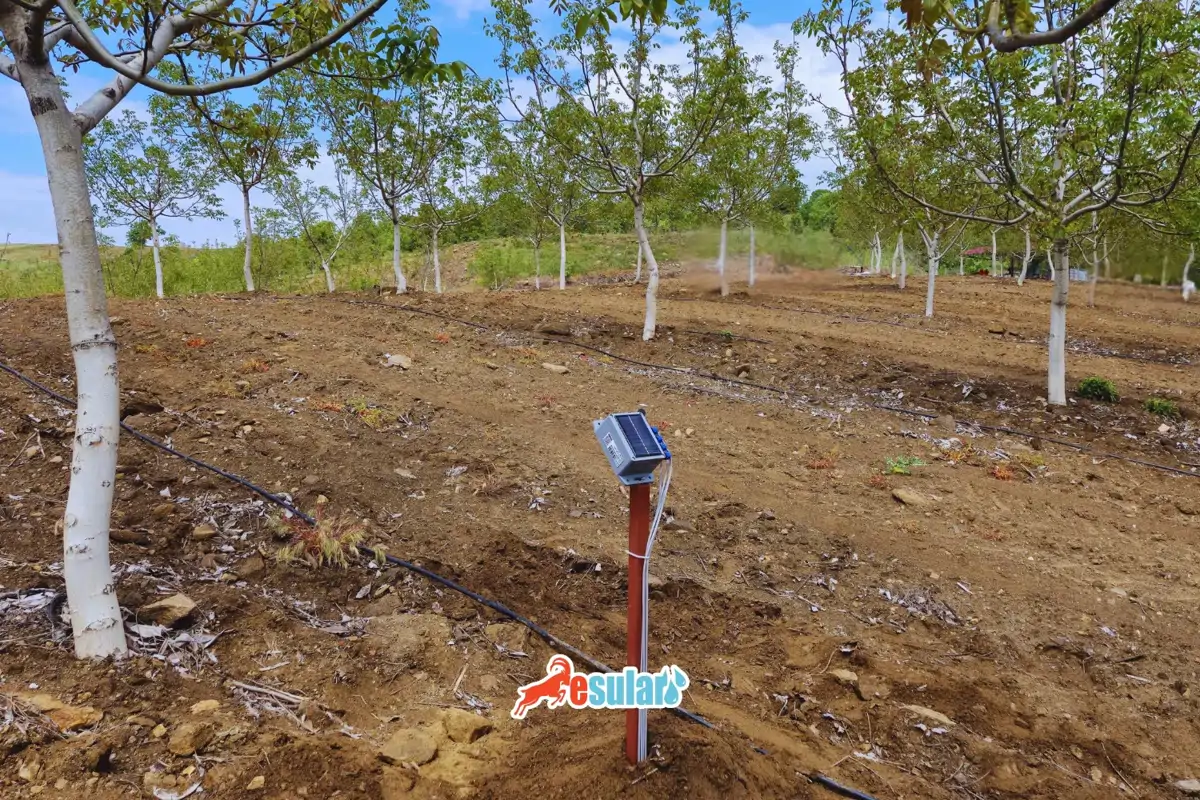
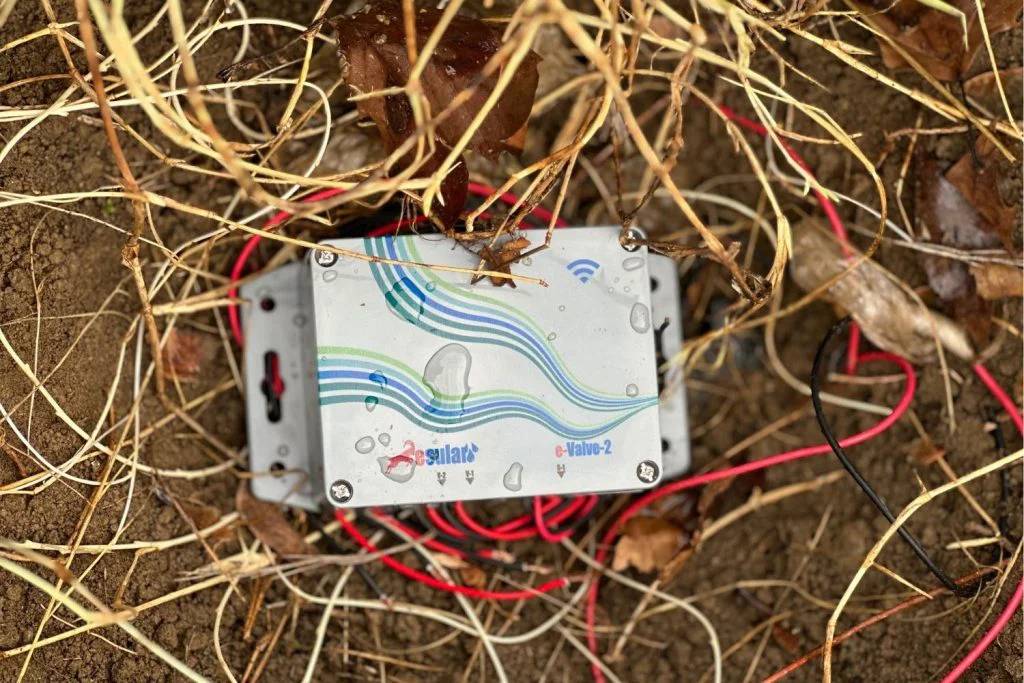
The Smart-Garden Series Wireless Smart Valve Control Unit offered by Esular is one of the most advanced solutions in this field. While it eliminates the cost of pulling cables thanks to being battery-powered, it provides uninterrupted communication over long distances with LoRa technology.
Advantages of Using an Irrigation Timer: Why Should You Use a Timer?
Using an automatic timer not only provides comfort but is also a serious investment in resource conservation and plant health. Here are the main advantages of using an irrigation timer:
Benefits of Using an Irrigation Timer:
- Water Savings: Prevents waste by precisely adjusting the amount of water plants need. Provides up to a 50% reduction in water bills by preventing unnecessary irrigation.
- Time Savings: By automating the irrigation process that takes hours every day, it allows you to devote your time to your other tasks.
- Plant Health: Regular irrigation prevents stress formation in plants. Especially irrigation done in the early morning hours reduces evaporation and minimizes the risk of fungal diseases.
- Precise Control: Every plant group's water need is different. Thanks to multi-zone timers, you can irrigate grass areas for different durations and trees for different durations.
- Vacation and Long-Term Absences: Prevents your garden from drying out while you are not at home; the system takes over the task on your behalf.
According to Food and Agriculture Organization (FAO) reports, smart irrigation management in agricultural and landscape areas is vital for the protection of freshwater resources in the world.
Selecting an Irrigation Timer for Garden Irrigation and Landscape Irrigation Applications
Every garden or landscape area is not the same. A small balcony garden and a site landscape covering decares of land require different equipment. When choosing an irrigation timer, you should consider the scale of your project.
Solutions for Home-Type Garden Irrigation
In home gardens, faucet-type, battery-powered timers are usually sufficient. These devices are easily screwed onto standard garden faucets. If you have both a grass area and potted plants in your garden, you can program both zones independently by choosing two-outlet models. For more information on this subject, you can examine our garden automatic irrigation system guide.
Professional Landscape Irrigation and Park Irrigation Systems
In large areas such as municipal parks, hotel landscapes, and housing estates, central control systems are essential. For park irrigation processes in such areas, LoRa-based wireless valve control units are used. The advantages of these systems are:
- No Cabling Required: Pulling cables to valve boxes in large areas is both costly and a high risk for malfunction. Wireless systems solve this problem.
- Central Management: You can see the status of hundreds of valves and change their programs from a single center or via the cloud.
- Instant Monitoring: It can detect leaks in the lines instantly by working integrated with the Wireless Battery-Powered Meter Flow and Consumption Sensor.
As Esular, we proved how 40% water savings were achieved in park irrigation systems with the smart irrigation project we implemented in large projects such as Bursa Botanical Park.
Smart Irrigation Timer and IoT Technology: Timer Systems of the Future
Traditional timer systems work at the programmed hour regardless of what the weather is like. This means irrigation continues even on a rainy day. IoT (Internet of Things) based irrigation timers solve this problem fundamentally.
Technical Features of Smart Irrigation Timers:
Esular's E Series Remote Controlled Wireless Smart Irrigation Central Station allows you to manage the entire site from a single point. This system is not just an irrigation timer, but a full-scale agricultural management platform.
Sensor Integration with Irrigation Timer: The Secret of Full Automation
True automation should measure not only time but also need. You can increase the intelligence of your system by supporting your irrigation timer with various sensors.
Soil Moisture Sensors
A soil moisture sensor connected to your irrigation timer measures the water level in the soil instantly. If the soil is already moist, the system will not work even if the timer skips the irrigation hour. This prevents plant roots from rotting due to excessive water. Esular's Wireless Battery-Powered Soil Moisture Sensor is the most ideal solution for this integration.
Rain Sensors
Irrigating while it is raining is not only a waste of water but also an inefficient use of the system. Rain sensors stop the program by sending a signal to the irrigation timer as soon as precipitation begins. After the precipitation stops and the sensor dries, the system returns to its normal program.
Pressure and Flow Sensors
When there is a pipe burst or valve failure in the system, the irrigation timer cannot detect this and water continues to flow wastefully. Smart systems automatically cut off the water and send you a notification when they detect an abnormal situation thanks to wireless pressure sensors.
Irrigation Timer Installation and Usage: Step-by-Step Guide
Correct installation is essential for the long-lasting and efficient operation of the system. Here is a general installation procedure:
- Valve Connection: Mount your irrigation timer (or solenoid valve) to the water source. Be sure to use Teflon tape for sealing.
- Device Mounting: Mount the control unit (timer) in a place protected from sun and direct water (if it is not IP67 protected).
- Zone Identification: Divide your garden into zones. Determine grass areas as Zone 1 and the drip line as Zone 2.
- Programming: Enter the irrigation duration and frequency for each zone. Tip: The most ideal time is between 05:00 - 07:00 in the morning to prevent evaporation in the summer months.
- Test Run: Ensure all valves and sprinklers are working correctly using the manual operation mode.
For detailed installation steps, you can take a look at our how to install an automatic irrigation system article.
10 Critical Factors to Consider When Choosing an Irrigation Timer
There are many different brands and models on the market. To make the right choice, you should consider these criteria:
- Number of Valves (Station/Zone): How many different irrigation lines will there be in your garden? Buying a model with one more outlet than you need is beneficial for future expansions.
- Connection Type: Will you only program at the device, or do you want remote control?
- Power Source: If it is difficult to pull an electrical line, choose battery-powered or solar-powered models.
- IP Certificate: Resistance of the device to outdoor conditions, moisture, and dust (at least IP65 is recommended).
- Sensor Inputs: Can a rain or moisture sensor be connected?
- Ease of Use: Menus should be understandable and the mobile application should have language support.
- Budget: Think long-term; while a cheap timer can cause water waste, a smart system pays for itself in 1 year.
- Distance and Coverage Area: In large areas, choose devices using LoRaWAN technology.
- Valve Compatibility: Does it work with latch-type or normal solenoid valves?
- Technical Support: Having a contact person you can reach in case of installation and malfunction after purchasing the product.
Experience the Future in Your Garden with Esular Smart Garden Series
As Esular, we are completely changing the traditional irrigation timer concept with the innovative perspective we bring to the landscape and garden irrigation world. Our Smart-Garden series was designed to meet all the needs of modern landscape.
Why Esular Smart Garden?
- Full Wireless Freedom: Set up the system in minutes with battery-powered units without pulling any cables.
- Advanced Algorithms: Optimizes irrigation using soil moisture and weather forecast data.
- Expandable Structure: Scalable from a small garden to a massive golf course.
- Local Technology, Global Standard: IoT solutions developed in Turkey at world standards.
Take advantage of the power of technology to keep your landscape areas green at all times and to protect our water resources. Esular systems take control of every drop in your parks and gardens.
Frequently Asked Questions (FAQ)
How long is the irrigation timer battery life?
With quality alkaline batteries and a twice-daily irrigation program, low-energy devices like Esular usually complete an irrigation season (6-9 months) easily. This period can be further extended with lithium-ion battery options.
Will my program be deleted if the electricity is cut off?
Modern digital and smart irrigation timers have internal memory (EEPROM). Even if the power is cut off, the program is not deleted; if the timer is supported by a battery, it continues to work. In cloud-based systems, all data is stored on servers.
What is the best irrigation time?
The most ideal time is the morning hours just before sunrise (04:00 - 08:00). In these hours, the wind is low, evaporation is minimum, and there is enough time for water to seep into the soil. Evening irrigation is also an option, but leaves remaining wet throughout the night can trigger fungal diseases.
Which timer is suitable for a drip irrigation system?
Drip irrigation systems usually require low pressure and long-term irrigation. Digital irrigation timers that can make precise adjustments on a minute basis and can open valves even at low flow rates are the most suitable.
Conclusion: Efficiency is a Choice
Buying an irrigation timer is not just buying a tool to water your garden; it is how you manage your time, your money, and our most valuable resource, water. With the opportunities offered by technology, irrigation has now ceased to be a burden and has become a process watched with pleasure.
As Esular, we offer you the most efficient, robust, and user-friendly systems with our leadership in smart agriculture and landscape technologies. To take your garden or project to the next level and manage every drop of water wisely, you can contact us.
Take Action:
- To examine our products in detail: Esular Product Catalog
- To get special solutions and a quote: Contact Form
- Subscribe to our blog to follow innovations in the world of smart irrigation!
Within the scope of the Water Efficiency Mobilization initiated by the R.T. Ministry of Agriculture and Forestry, you can also support this national movement by switching to smart systems in your garden.