Digital Revolution in Agriculture: Remote Irrigation and Well Management via Mobile Phone
Modern agricultural techniques are taking on a more efficient and sustainable structure every day with the opportunities offered by technology. Remote irrigation well control via mobile phone, which is at the forefront of these technologies, is an innovation that fundamentally changes the operational capacity of agricultural enterprises. It is no longer necessary to travel kilometers to turn a pump on or off, go to the field at midnight, or be physically present to follow the irrigation sequence. With the IoT-based solutions we have developed and offer as Esular, we allow you to manage all the well and pump systems in your field with a smartphone in the palm of your hand.
Water management in agricultural production is the most critical component of efficiency. In today's world where water resources are increasingly scarce and energy costs are rising, the clearest answer to the question what are smart irrigation systems is the use of water and energy at the right time and in the right amount. Well systems that can be controlled via mobile phones offer not just a simple on-off mechanism, but also an advanced automation infrastructure that programs and monitors irrigation processes. In this article, we will examine every point in depth, from the technical details of GSM-based well control devices to programming features, from the economic advantages they provide to their areas of use.
Technical Specifications of GSM-Based Remote Well Control Devices
Remote well control systems use the GSM (Global System for Mobile Communications) network as the communication infrastructure. This means the device can be managed from anywhere where there is network coverage. These devices, produced to industrial standards, are designed to be resistant to harsh weather conditions and electrical fluctuations in the field. Unlike standard smart home solutions on the market, these systems are capable of managing high-voltage submersible pumps and heavy industrial-type motors.
Basic Hardware Features of Well Control Devices:
- Relay Capacity: There are high-quality relays on the device, usually capable of switching 250V/10A. These relays can trigger pumps of much greater power via contactors.
- Communication Infrastructure: It receives commands via SMS or voice call over the GSM network. In rural areas where the internet connection is weak, the possibility of control via SMS guarantees the uninterrupted operation of the system.
- Administrator and User Authorization: Due to security protocols, the device can define full authority for 8 different administrator numbers, while it can give only on-off (relay activation) authority to 1,000 different phone numbers.
- Voice Message Guidance: When the control-by-call feature is used, it confirms whether the operation was successful by guiding the user with voice messages.
- Built-in Battery Structure: When integrated with special models like the E series, it continues to work for up to 24 hours during power outages and sends a notification to authorities via SMS at the moment of the outage.
- Programmable Timer: Automatic start and stop commands can be defined for specific time intervals on a weekly or daily basis.
Technical hardware is the heart of the system, but software flexibility determines the user experience. The fact that the device has a registered IMEI and is 100% domestic production is a great advantage in terms of network compatibility and technical support under conditions in Turkey. Our Wireless well and pump control system GSM F series product is a professional solution that meets these technical requirements at the highest level. Furthermore, as emphasized by the FAO (Food and Agriculture Organization), digital water management is of critical importance for global food security.
How to Control a Well via Mobile Phone?
The use of the system is extremely simple and does not require technical knowledge. All communication is provided via a standard SIM card (whether prepaid or postpaid) inserted into the device. Even if the SIM card runs out of credit, the control-by-call feature continues to work; this ensures that irrigation does not stop in emergencies.
1. Control via Voice Call
When you call the number inside the device, the system recognizes you and changes the status of the relay. If the pump is closed, it opens it; if it is open, it closes it. This process is usually free because the device detects the command without answering the call and performs the operation. If the voice guidance system is active, it gives you information about the status of the pump. This method is the most accessible solution for every farmer who does not use a smartphone but has a mobile phone.
2. Control via SMS Commands
Using special SMS formats, the duration for which the pump will run can be determined. For example, when a command like "AC 60" is sent, the pump runs for 60 minutes and automatically turns off at the end of the period. This feature prevents water waste and electricity bills caused by forgetfulness. Reports such as the device's signal level, electricity status, and operation history can also be received via SMS.
3. Mobile Application and Programming
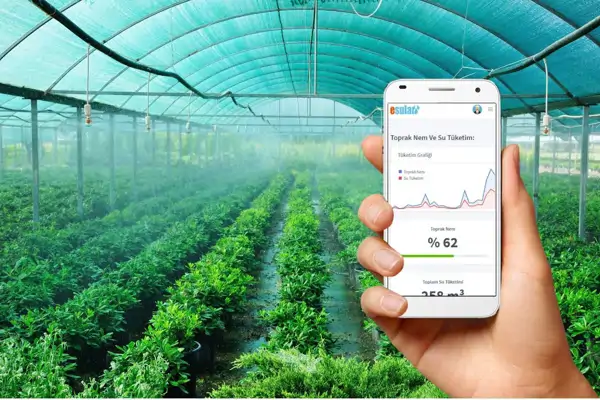
In the advanced systems offered by Esular, all these processes can be visually monitored via a mobile application. You can create a weekly irrigation schedule through the application and plan in seconds which day and at what time the well motor will be activated. In this way, a significant decrease in agricultural labor costs is experienced. Thanks to our cloud-based software, you can more accurately predict your future irrigation needs by analyzing past irrigation data.
Usage Areas of Well Control Systems
These systems are used in a wide range of general automation needs, not just for opening and closing wells. Thanks to its industrial design, it has the capability to manage all kinds of electrical loads.
Basic Application Areas:
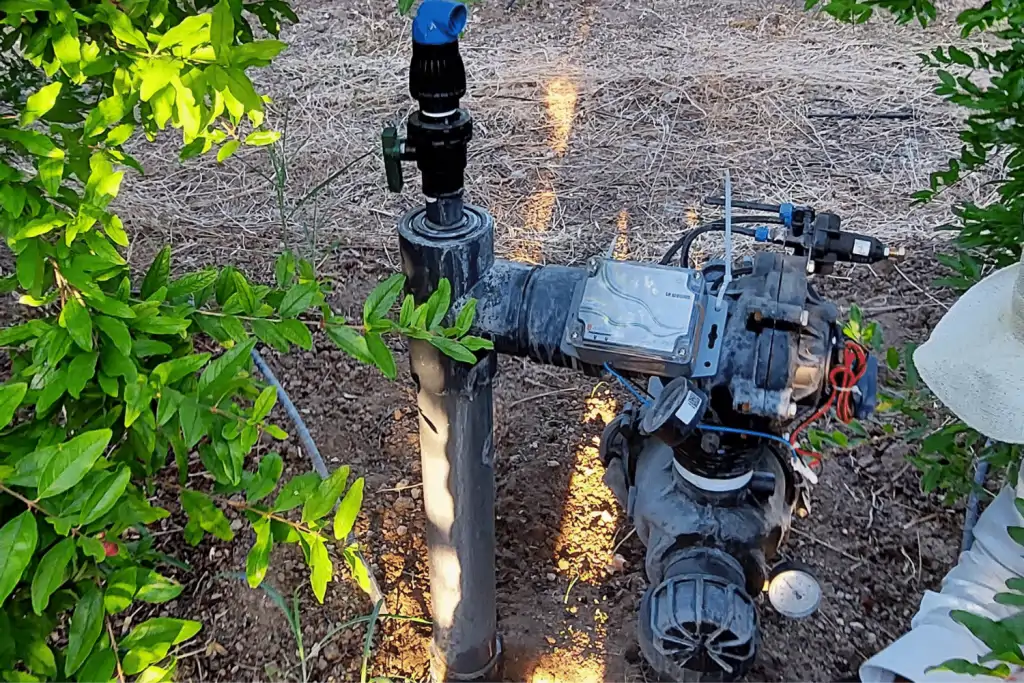
- Submersible Pumps: Panel control and dry-run protection for all submersible pump models that draw water from deep wells.
- Surface Pumps: Management of centrifugal pumps that irrigate from canals or pools.
- Solenoid Valves: Remote control of solenoid valves at the main line or plot entrance in places with pressurized water lines.
- Greenhouse Ventilation and Heating: Remote activation of electric fans or heaters inside the greenhouse. Full integration can be achieved with greenhouse automation systems.
- Automatic Doors and Barriers: Opening of barriers or gates at the entrance of agricultural enterprises by authorized numbers.
Usage areas can be expanded according to the needs of the enterprise. For example, in a cooperative structure, by authorizing up to 1,000 members, each member can be enabled to activate the system by phone during their own irrigation hour. This is revolutionary in terms of fair water distribution and record-keeping. For more details, you can review our article on fair water distribution in cooperatives and smart well automation.
Economic and Operational Advantages of Remote Irrigation Control
When investing in an agricultural technology, the most important criterion is the return on investment (ROI). Mobile phone well control systems are systems that pay for themselves in a very short time with the savings they provide. The Republic of Turkey Ministry of Agriculture and Forestry also supports such efficiency-increasing technologies with various grant programs.
Key Advantages Provided by the System:
- Energy Savings: Reduces electricity bills by between 20% and 40% by preventing unnecessary operation of pumps. Learn more about energy savings with GSM pump control.
- Labor and Time Savings: The time spent and fuel cost for going to the field are reduced to zero. A farmer can manage dozens of different wells without leaving their home.
- Protection of Water Resources: Prevents the depletion of groundwater by ensuring that water is given as much as the soil needs.
- Extension of Equipment Life: Controlled and timed operation of pumps extends equipment life by reducing overheating and mechanical fatigue.
- Instant Notifications: By receiving an instant SMS notification in case of a power outage or malfunction, you prevent irrigation disruption and plants from entering stress.
Especially in large areas, if wells in different regions need to work synchronously, remote control is an inevitable need. The GSM remote irrigation control system we offer as Esular combines these advantages on a single platform.
Installation Guide: How to Connect the Well Control Device to the Panel?
The installation of the device is designed to be compatible with industrial panels. However, for electrical safety, it is recommended that the installation be done by an expert. The following steps outline a general installation scheme:
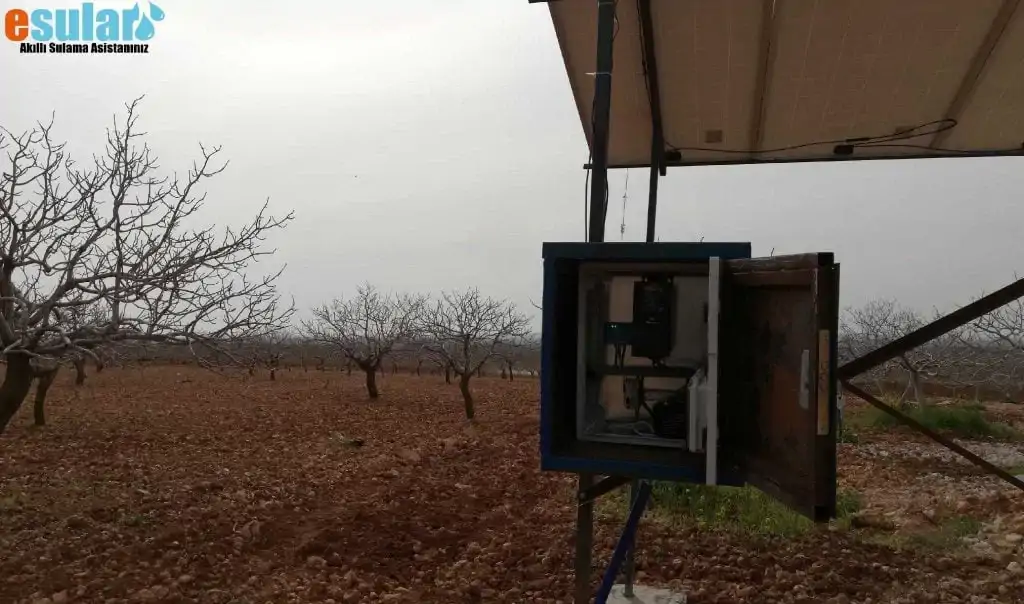
- Power Supply Connection: The device usually works with a 12V DC adapter. Power is taken from a suitable point inside the panel.
- Antenna Installation: In places where the GSM network is weak, magnetic antennas that can be extended outside the box are used. The antenna should be positioned at the point where it will receive the signal best.
- Relay Connection: The coil ends of the contactor driving the pump are connected to the relay terminals (NO - Normally Open) on the device. When the device activates the relay, the contactor is energized and the pump runs.
- SIM Card Activation: A SIM card with the PIN code deactivated is inserted into the device.
- Administrator Definition: During the initial installation, the administrator number is registered to the device via SMS. After this stage, the device only accepts commands from the authorized number.
Esular systems are configured in a way that is closest to the plug-and-play logic. For detailed technical support and connection diagrams, you can contact our technical team.
Technical Comparison: GSM vs. Manual Control
Esular and IoT Entegrasyonu: Tam Otomasyona Geçiş
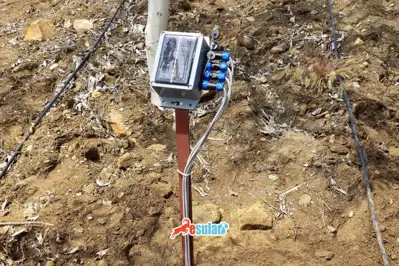
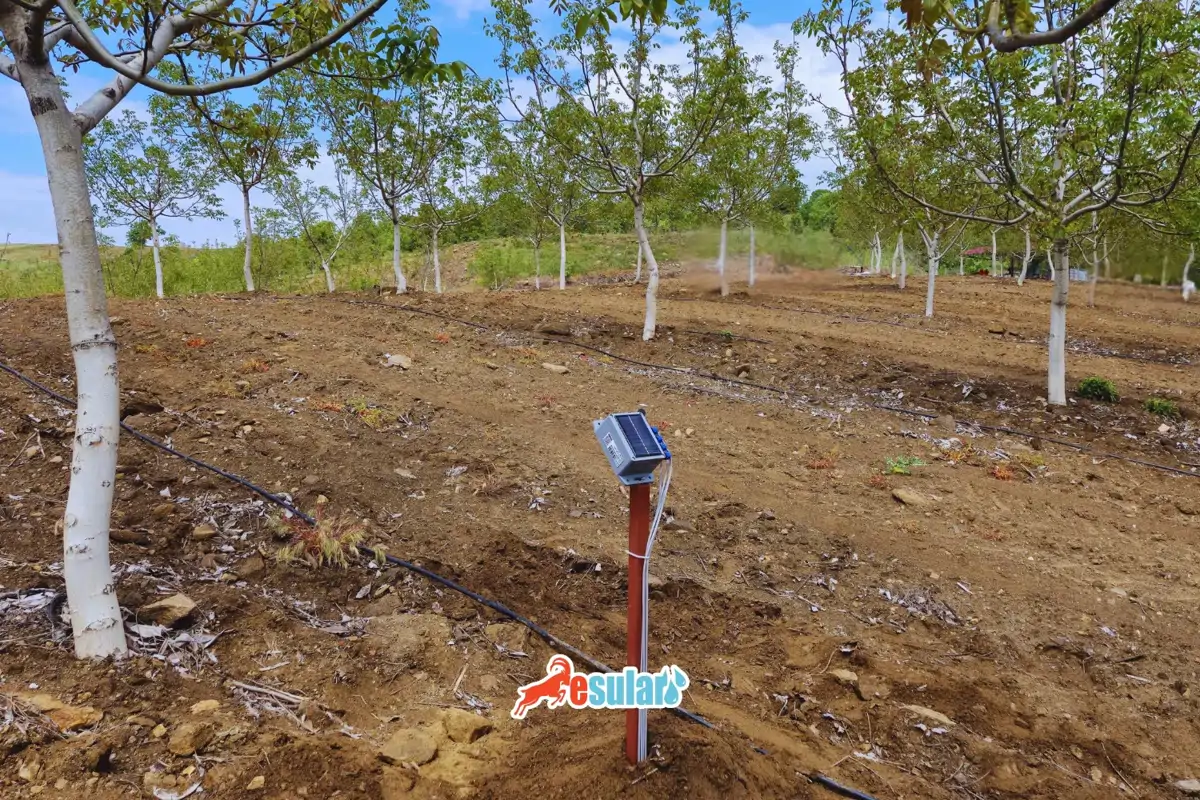
Just remotely opening and closing a pump is the starting step. Real efficiency is provided by systems that "decide" when the pump will open. The soil moisture sensors and meteorology stations offered by Esular can work integrated with well control devices.
The scenario works as follows: When the soil moisture falls below the critical level, the data from the sensor is transmitted to the cloud platform. The platform starts irrigation by sending an automatic command to the well control device. When the moisture level reaches the ideal point or when rain starts, the system stops irrigation automatically. This is an ecosystem that does not require human intervention and has a zero margin of error.
Integrated Smart Farming Components:
- Soil Moisture Sensors: As we detailed in our what is a soil moisture sensor article, it bases the irrigation decision on scientific data.
- Wireless Valve Control: Wireless valve control devices that manage which plot the water will go to while the well is operating.
- Pressure Sensors: Systems that protect the pump by detecting bursts or blockages in the pipeline.
- Meteorology Stations: Calculates the actual water need of the plant using evapotranspiration (ET) data.
Frequently Asked Questions (FAQ)
Below you can find the most frequently asked questions and answers about remote well control systems:
1. Does the system work in places without internet?
Yes. Esular's GSM-based systems can work over SMS and voice calls even if there is no internet connection. This is the biggest advantage in rural areas.
2. What does the system do when the power goes out?
Thanks to the built-in battery or UPS support in our devices, an SMS notification is sent to you the moment the power is cut. When the power returns, the system can continue from where it left off or remain closed for safety (depending on user preference).
3. Is the system compatible with all types of submersible pumps?
Yes. Since our device triggers the contactor, it is compatible with all types of submersible pumps (single-phase or three-phase) driven via a contactor.
4. What is the cost of the SIM card?
You can use a standard M2M line or a regular prepaid line. The annual cost is much lower than the fuel cost you would spend to go to the field once.
Conclusion: The Future of Farming Begins Today
Remote irrigation well control via mobile phone is one of the most basic tools a modern farmer should have. In agricultural production where time is more valuable than money, it is only possible to increase operational efficiency and minimize risks through technology. As Esular, with our domestic production power and global vision, we continue to offer world farmers the most reliable and advanced automation solutions.
Step into the world of smart irrigation to provide water and energy savings in your field, reduce labor costs, and maximize your product yield. To learn how you can digitalize your own well system and find the most suitable solution for you, you can visit our product pages or contact our expert consultants immediately.
Take Action!
If you also want to carry your agricultural enterprise to the next level, meet Esular's expert team. Contact us for free discovery and project planning, let's build the future of agriculture together.
- Visit our website: esular.com
- Read our blog posts: All Blog Content
- Examine our products: GSM Well Control Unit
- Contact Us: Contact Form