Saffron Reached 600 Thousand Lira per Kilogram: Rains Made Harvest Difficult
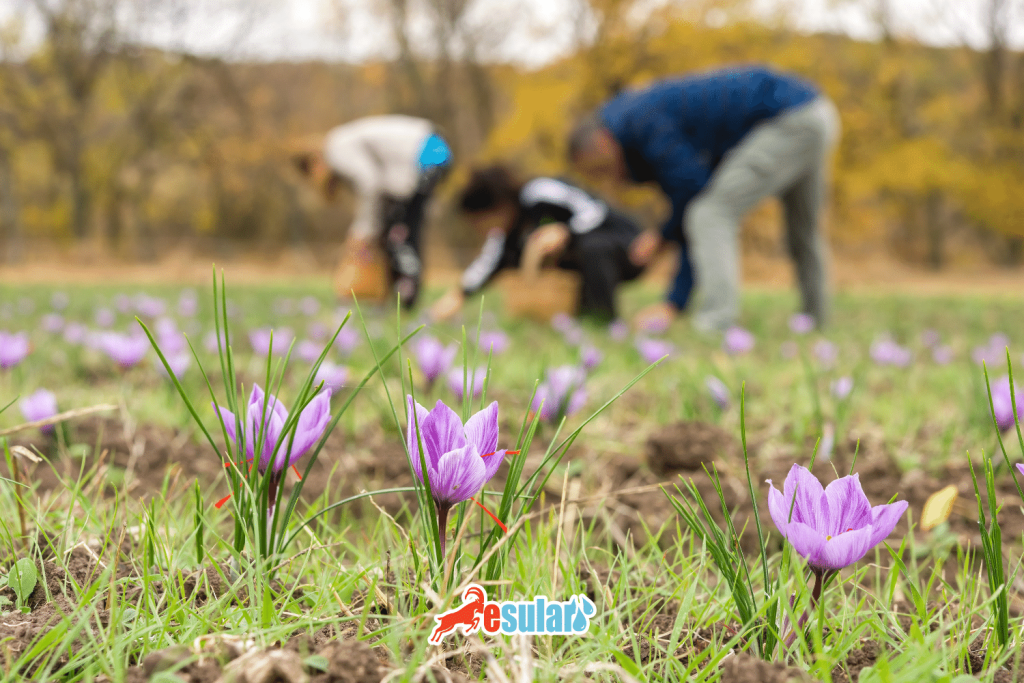
The 9th Saffron Festival, eagerly awaited in the Safranbolu district of Karabük, which is on the UNESCO World Heritage List, took place with a different picture this year. The kilogram price of saffron, known as the world's most expensive spice, is expected to reach 600 thousand lira in the 2025 harvest. However, the rains that were effective during the festival period made the work of saffron producers quite difficult.
How Does Rain Affect Saffron Harvest?
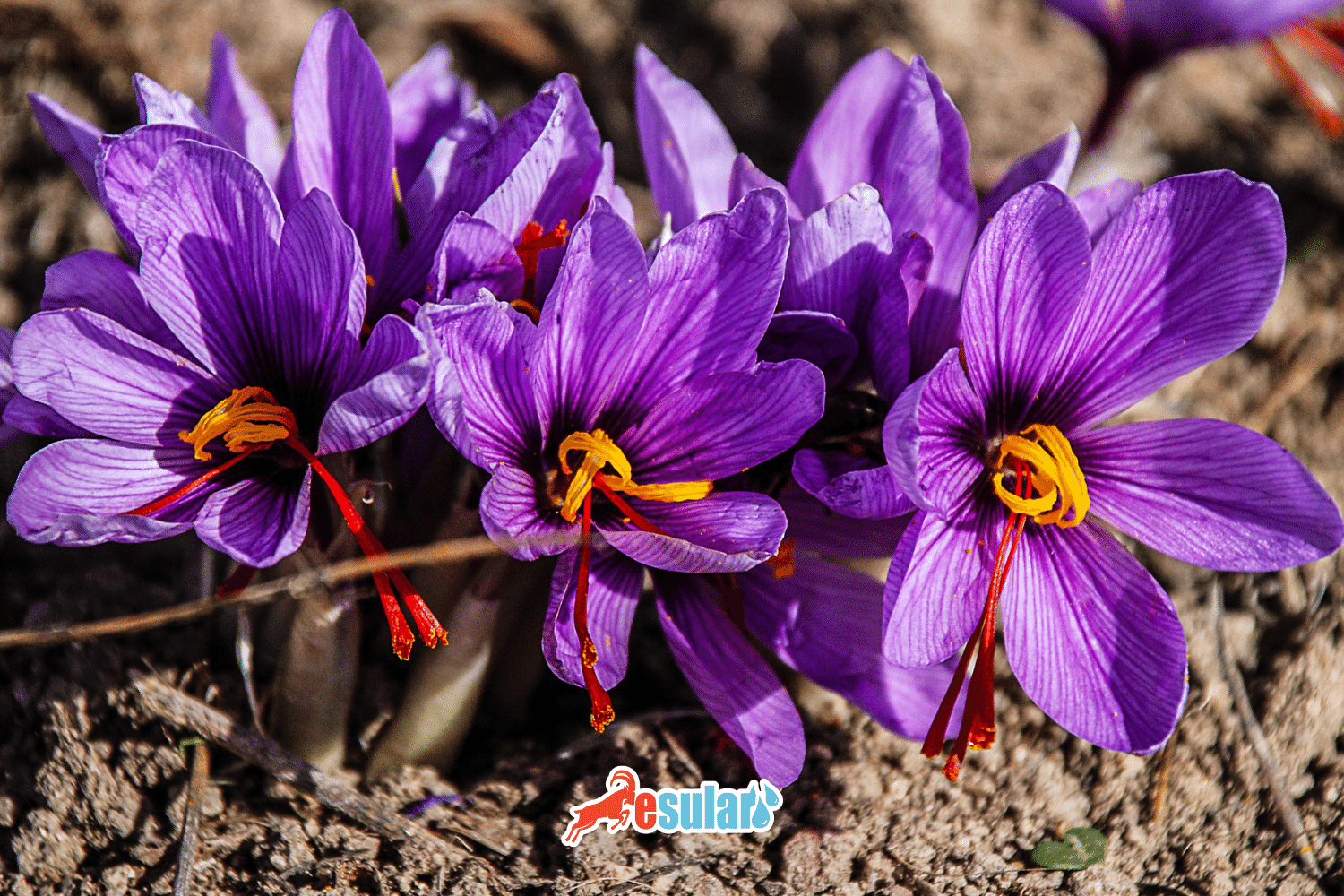
Saffron producer İsmail Yılmaz explains the effects of heavy rains on the harvest as follows: “We are receiving rain during the Saffron Festival period this year. Therefore, we could not collect many saffron flowers in the field. Because when we put guests in the fields, when they are stepped on, the flowers have difficulty blooming the next day because it is muddy.”
Stating that they have been collecting saffron flowers for about 8-10 days, Yılmaz estimates that they sold the 2024 product for 450 thousand lira per kilogram, and the 2025 harvest will be around 600 thousand lira. This situation demonstrates once again how critical water management is in saffron cultivation.
Water Management in Saffron Cultivation: A Delicate Balance
The saffron plant has a structure that is extremely sensitive to water. This valuable plant, which does not want too much water, can experience serious yield loss if incorrect irrigation is applied. Saffron's water need changes according to periods:
- After Planting (August-September): If the soil is very dry, a light life water is sufficient to start rooting.
- Flowering Period (October-November): It is important that the soil is moist. If there is a long-term drought, light irrigation should be done every 7-10 days.
- Winter and Spring Months: Generally, natural precipitation is sufficient. However, irrigation may rarely be required during dry periods.
- Summer Months (Dormancy Period): It should definitely not be irrigated. Irrigation during this period can cause the bulbs to rot.
Increase Saffron Yield with Smart Irrigation
In traditional irrigation methods, it is difficult to predict the effect of precipitation and determine the optimal irrigation time. This is exactly where esular smart irrigation systems come into play. With drip irrigation automation, you can provide precise water control in your saffron fields.
Yield Increase in Saffron Farming with esular Soil Moisture Sensors
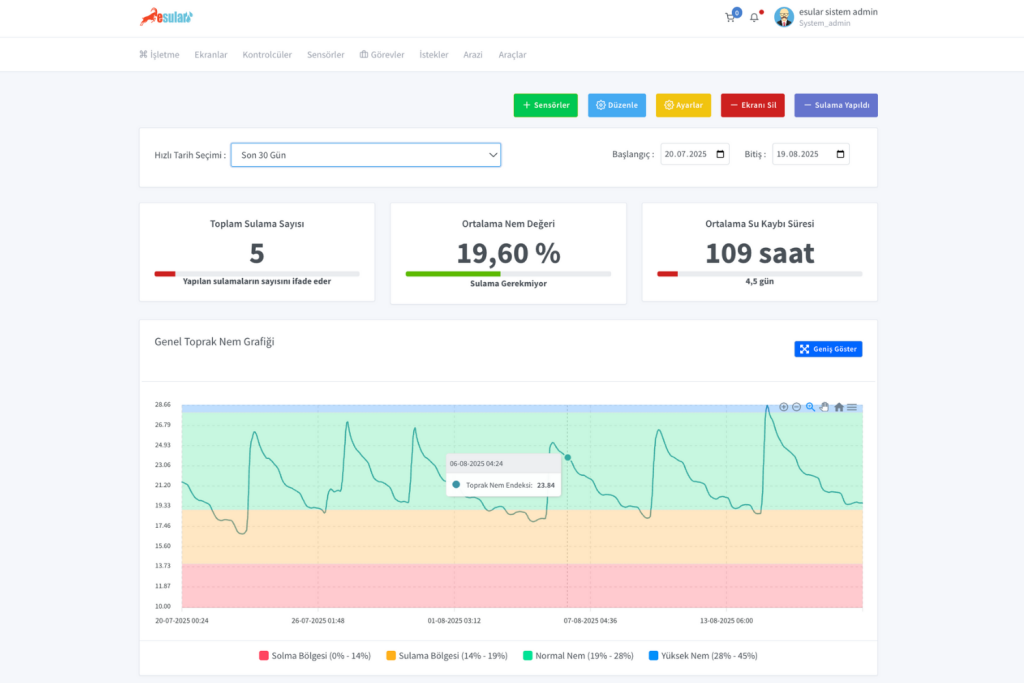
In the cultivation of sensitive plants like saffron, continuous monitoring of the soil moisture level is of vital importance. esular Wireless Soil Moisture Sensors are creating a revolution in saffron cultivation:
Why esular Soil Moisture Sensors?
- Measurement at 3 or 4 Different Depths: By performing gradual measurements at depths of 30cm, 60cm, and 90cm, it monitors the moisture in the root zone where the saffron bulbs are exactly located.
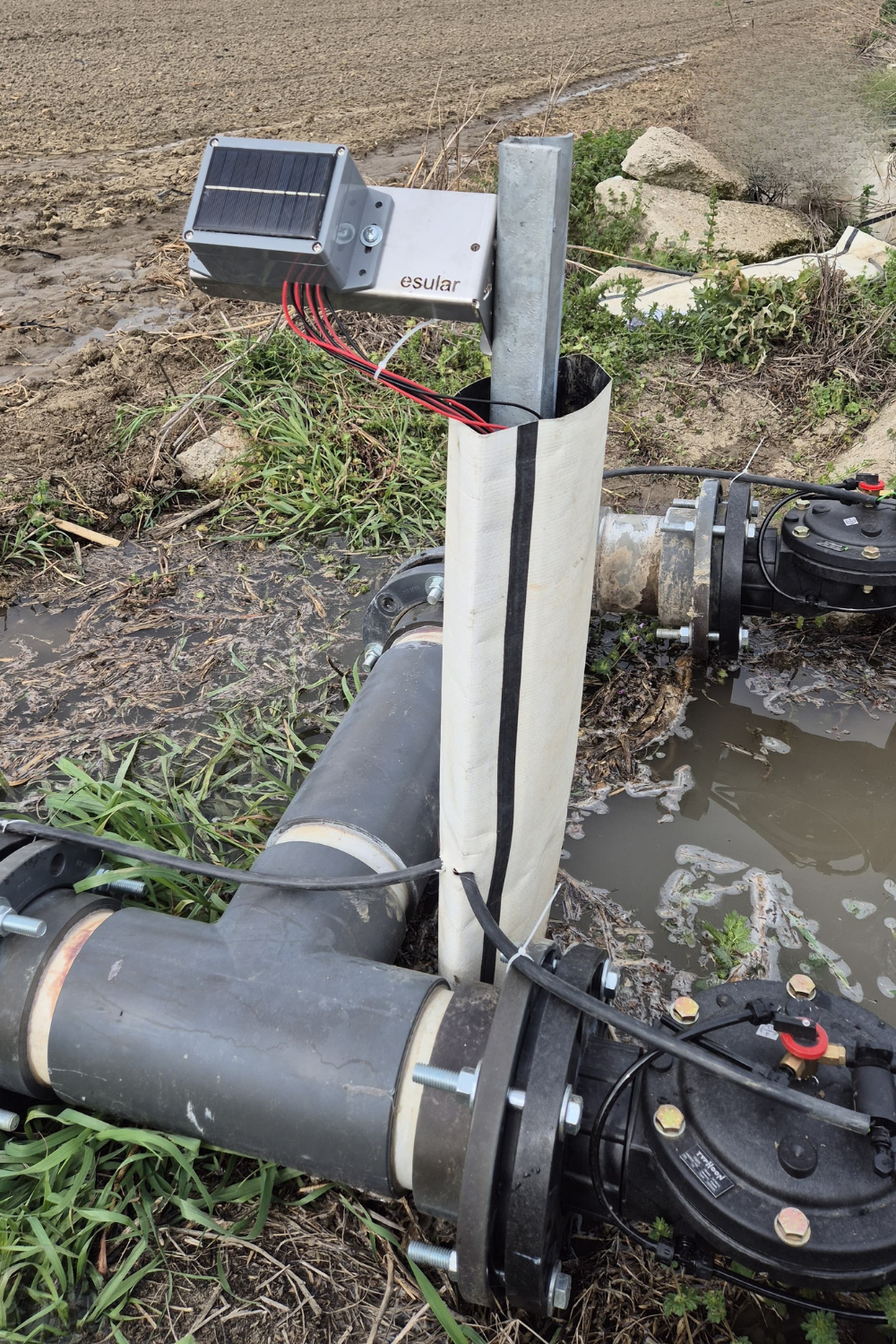
- Solar Powered and Wireless: Does not require electricity infrastructure, saves from the cost of pulling cables.
- 10+ km LoRaWAN Range: Works smoothly even in large agricultural lands.
- Mobile Application Control: Monitor your field instantly from anywhere in the world.
- Automatic Irrigation Triggering: Automatically operates the irrigation system according to the moisture level you set.
esular Soil Moisture Sensor Packages
We offer special packages for saffron producers of different scales:
Soil and Climate Requirements in Saffron Cultivation
To grow saffron successfully, correct soil structure and climate conditions are essential:
Ideal Soil Properties
- Drainage: Well-drained soils should be preferred, soils with high groundwater should be avoided.
- Structure: Sandy, loose, stone-free soils are ideal.
- pH Value: Should be between 6.0-8.0.
- Organic Matter: Soils enriched with decomposed cattle manure increase yield.
Climate Requirements
Saffron grows successfully in temperate and continental climate conditions. It likes southern slopes protected from the wind. Humid and cool weather conditions stop its development, so dry and sunny weather is ideal during the flowering period.
Success in Saffron Harvest with Smart Irrigation Systems
The key to success in saffron cultivation is to give the right amount of water at the right time. With esular smart irrigation solutions:
🌱 Yield Increase
25-40% yield increase with optimum moisture level.
💧 Water Saving
Up to 40% water saving with precise irrigation.
📱 Remote Control
Instant monitoring from anywhere with the mobile application.
⚡ Energy Independence
Solar powered system, no electricity required.
Wireless Smart Valve Control Unit
To irrigate multiple zones separately in your saffron fields, the esular Wireless Smart Valve Control Unit is the ideal solution. With its completely wireless structure and solar panel charging feature, it eliminates energy and wiring problems.
Soilless Saffron Cultivation: Agriculture of the Future
In recent years, saffron production with soilless agriculture methods has also started in Turkey. The first soilless vertical saffron production carried out in Denizli opened a new era in agriculture. esular also offers smart automation solutions for soilless saffron cultivation:
- Control of fertilization systems in greenhouse environments
- Irrigation automation
- Lighting control
- Ventilation management
- EC-pH tracking and automation
All these systems are managed remotely via our esular application and can be monitored instantly.
Benefits and Usage Areas of Saffron
Reasons why saffron, sold for 600 thousand lira, is so valuable:
Health Benefits
- Cell Regeneration: Supports cell regeneration with its antioxidant properties.
- Strengthening Memory: Shows a protective effect against Alzheimer's disease.
- Depression and Stress: It is a natural mood regulator.
- Eye Health: Beneficial for macular degeneration (yellow spot disease) in the eye.
- Digestive System: Has appetite-increasing and digestion-facilitating effects.
Usage Areas
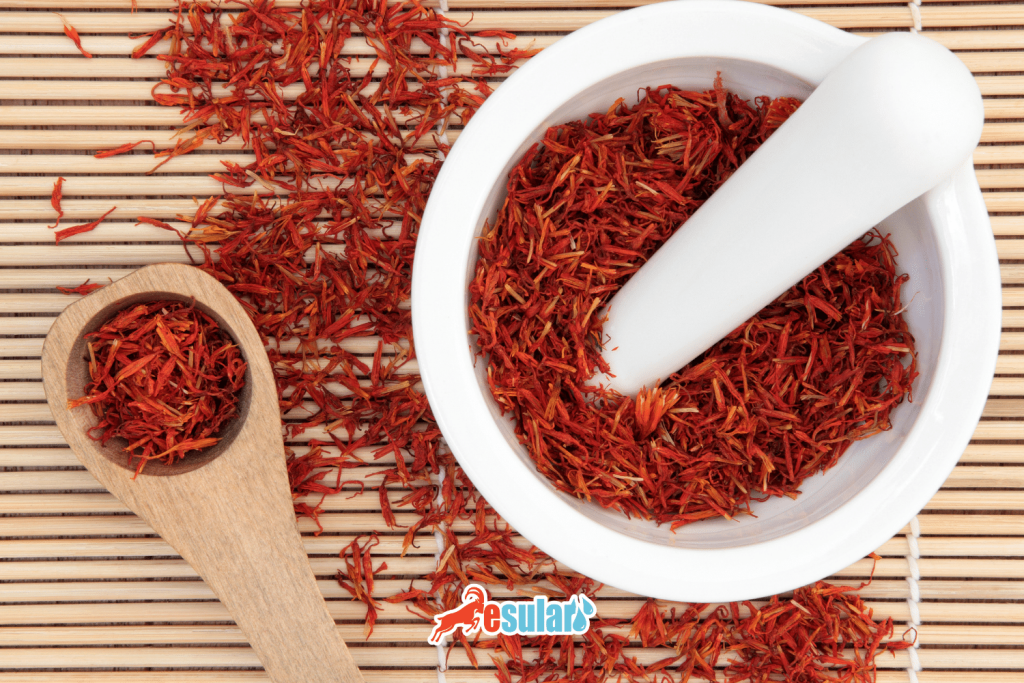
- Kitchen: In rice dishes, saffron pudding (zerde), desserts, and beverages.
- Cosmetics: In skin care products.
- Pharmaceutical Industry: In medical preparations.
- Textile: As a natural fabric dye.
ℹ️ Saffron Usage Tip
100-120 cups of saffron tea can be made from one gram of saffron. 1 gram of saffron can last about a month for an average family. Soaking it in water before use allows its aroma to open up better.
Saffron Harvest Period and Processing
Saffron harvest requires special care. Here are the critical stages of the harvest process:
Harvest Time
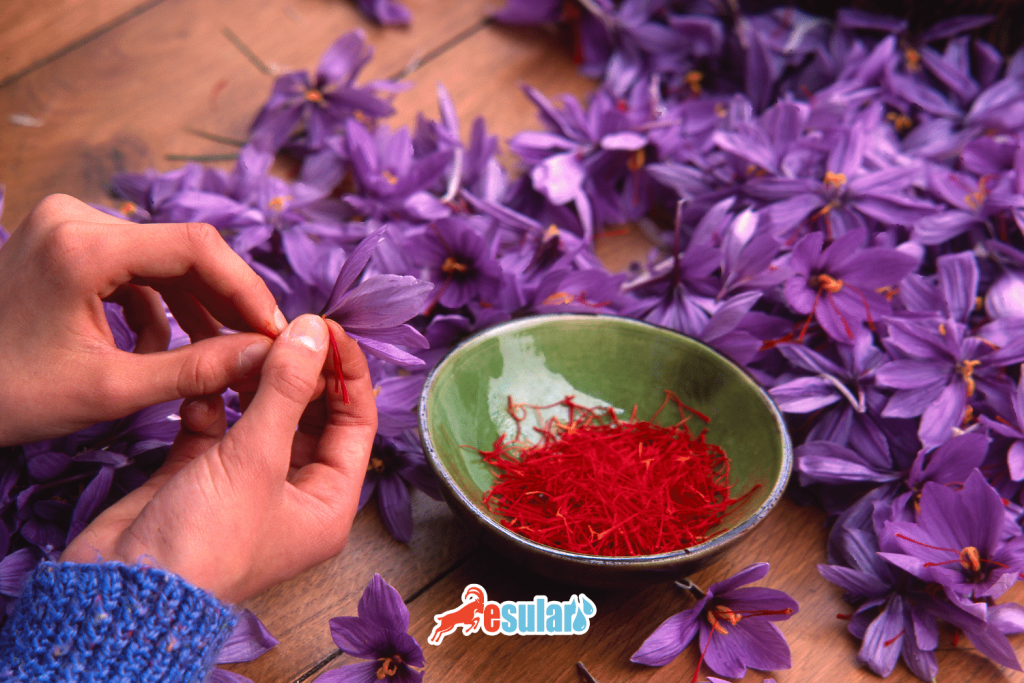
Saffron flowers usually start to bloom around October 15 and last for about 1 month. Flowers should be collected every morning before sunrise, before they have opened. This is of critical importance for the quality of the saffron.
Processing Process
- Collected flowers are kept in the shade to allow them to open.
- The 3 red stigmas in the center of the flowers are carefully plucked.
- Stigmas are dried for 24-26 hours in ventilated ovens set to 30 degrees.
- Dried saffrons are stored in wooden boxes or dark-colored bottles in cool places that do not receive light.
📊 Saffron Yield
Approximately 75,000 saffron flowers are needed to obtain half a kilogram of saffron. In Safranbolu, saffron is planted on over 100 decares annually and 50-55 kilograms of product can be harvested.
Switch to Smart Saffron Farming with esular
In a high value-added product like saffron, it is very important to increase efficiency and prevent losses by using technology. With esular smart farming technologies:
- You can schedule irrigation timing with precipitation forecasts.
- You can prevent excessive or insufficient irrigation by monitoring soil moisture instantly.
- You can control different parcels separately with multi-area management.
- You can plan for future seasons by analyzing past data.
- You can receive instant warnings about abnormal situations with mobile notifications.
esular Smart Irrigation Packages
We have special packages in different scales for saffron cultivation. Each package is prepared for full integration and easy installation:
🎯 Special Saffron Producers Package
Contact us for smart irrigation solutions specially prepared for saffron cultivation.
Frequently Asked Questions in Saffron Cultivation
How Many Months is Saffron Harvested?
Saffron bulbs are planted in August and sprouting begins about 30-45 days later. Flowering usually occurs between late October and mid-November. The yield may be low in the first year, but it increases significantly from the second year onwards.
Is Saffron Cultivation Profitable?
When the kilogram price of saffron reaches 600 thousand lira, profitability is quite high. However, the initial cost, labor-intensive production, and harvest process should be considered. You can increase yield and reduce costs by using smart irrigation systems.
What is the Biggest Problem in Saffron Production?
Water management is the most critical issue in saffron production. Too much water causes bulb rot, while insufficient water causes yield loss. You can eliminate this problem with esular soil moisture sensors.
How Much Product is Obtained from One Decare of Saffron Field?
An average of 500-1000 grams of dry saffron can be obtained from an area of one decare. This amount varies depending on soil quality, irrigation, climate conditions, and bulb quality.
Conclusion: Meeting of Technology and Tradition
Saffron cultivation, which has been carried out in Safranbolu for centuries, is becoming more efficient and sustainable by meeting with modern technology. Saffron prices reaching 600 thousand lira emphasize the importance of this valuable plant once again.
esular smart irrigation systems, by blending traditional knowledge with modern technology, offer saffron producers the opportunity for:
- Higher yield
- Less resource consumption
- Easier management
- Safer production
By minimizing the negative effects of precipitation, we ensure that you have a quality harvest in every season.
🌾 Digitalize Your Saffron Cultivation
Move your saffron farming to modern technology with esular smart irrigation systems. Contact us now for a free consultation.
📞 Call Now: 0541 247 45 05✉️ Send an E-mail
Visit our store to discover our other smart farming products
📚 Related Articles
The future of modern agriculture is being shaped by smart technologies.