Introduction: Global Water Scarcity and the Need for Modern Irrigation
Today, one of the greatest environmental and economic problems the world faces is water scarcity. Population growth, industrialization, and climate change are increasing the pressure on freshwater resources every day. The sector most affected by this situation is agriculture, where water consumption is most intensive. Incorrect practices in traditional irrigation methods cause a large portion of the water to evaporate before reaching the plant or to be wasted by seeping into the ground. At this point, smart irrigation and automatic irrigation systems, which maximize water efficiency, have become a necessity rather than a luxury.
The efficiency of irrigation systems directly depends on design, installation, and specific field conditions. Incorrect methods lead not only to water waste but also to the deterioration of plant health and loss of yield. Smart irrigation technologies are a set of systems that calculate water use precisely, preventing over-irrigation and providing the water the plant needs at the right time. As Esular, we build a sustainable future by offering these technologies to our farmers and landscaping professionals.
Differences Between Smart Irrigation and Automatic Irrigation
Although many people use these two terms interchangeably, there are technically significant differences between them. Automatic irrigation systems are generally systems that open and close valves at specific times through an irrigation timer. These systems operate independently of changes in the outside world (rain, extreme heat, etc.).
On the other hand, smart irrigation systems are automatic systems with a technological intelligence layer added. These systems update the irrigation schedule in real-time using data such as soil moisture, air temperature, evaporation rate, and even meteorological forecast data. If the soil is already moist or rain is expected, the smart system automatically postpones irrigation. This is a revolutionary step in water and energy savings.
Basic Components of Smart Irrigation Systems
A comprehensive smart irrigation infrastructure consists of various hardware components that communicate with each other. The harmony of these components determines the success of the system:
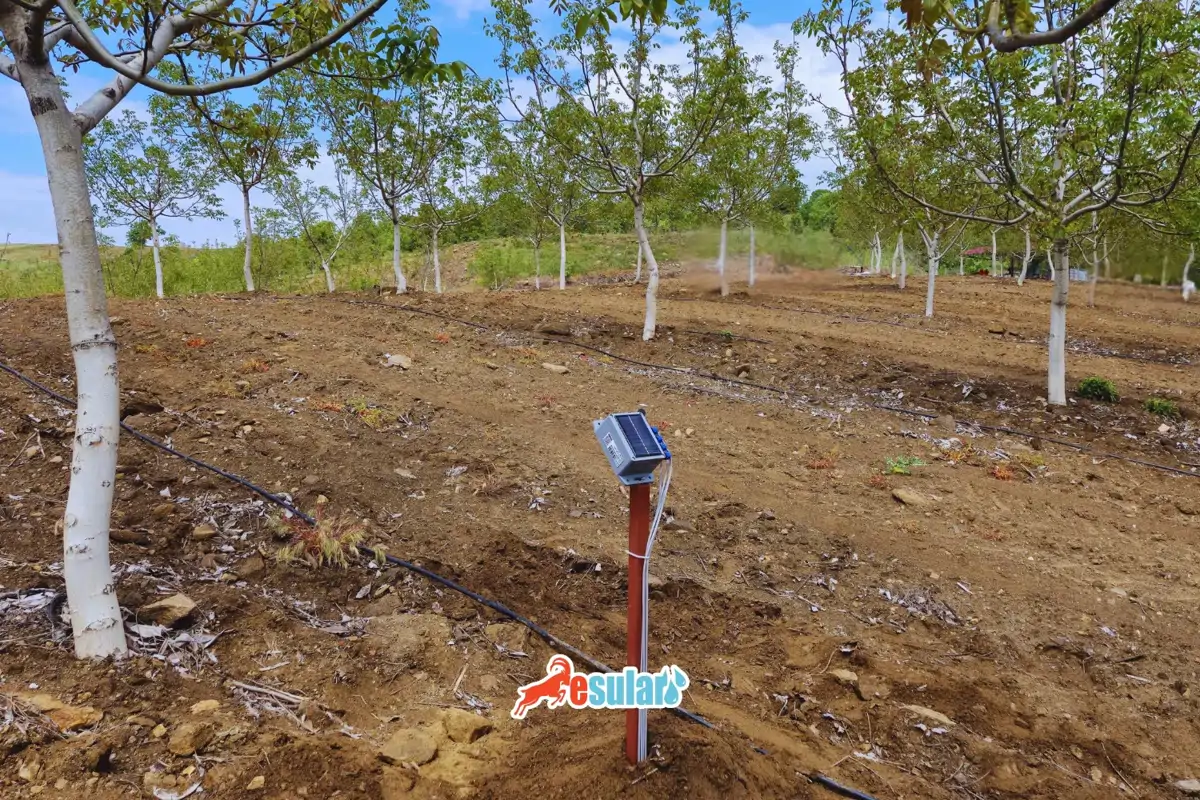
- Solar Energy Systems: Thanks to photovoltaic (PV) panels, the system can operate without the need for grid electricity. The power generated is stored in batteries and used for night irrigation.
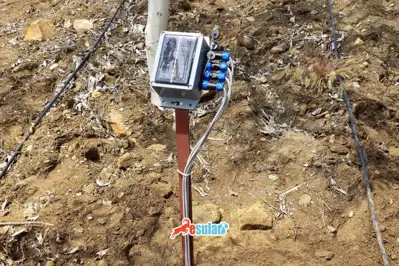
- Water Management and Control Station: This unit, the brain of the system, contains a Micro Control Unit (MCU) and processes all data.
- Sensor Network: Temperature, humidity, soil moisture, and atmospheric pressure sensors measure environmental parameters.
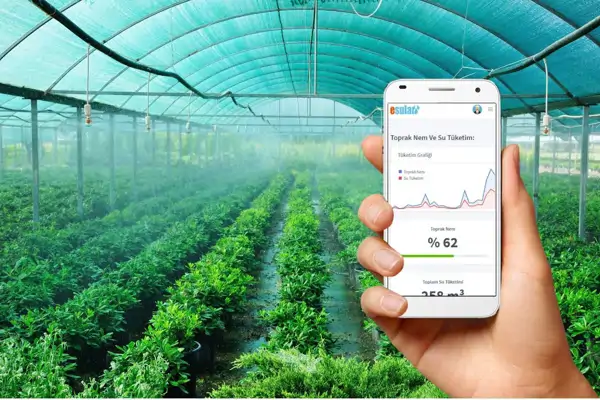
- Network Infrastructure (IoT): Enables data transfer to the cloud system and allows the user to control the system from their mobile device.
- Actuators and Valves: Solenoid valves and pumps that physically start the water flow according to signals from the MCU.
Advantages and Benefits of Smart Irrigation Systems
The adoption of these systems provides multi-dimensional gains for the user and the environment. Here are the prominent advantages of smart irrigation systems:
- Water Savings: By providing exactly as much water as the plant needs, water waste is reduced by up to 50%.
- Economic Efficiency: Reduced water and electricity bills allow the system to pay for itself in a short time.
- Freedom of Space and Time: The system can be managed via smartphone or computer from anywhere with internet access.
- High Yield and Quality: Since plants are fed at an optimal level without entering water stress, an increase in product quality and quantity is observed.
- Four-Season Use: The system automatically revises its schedule according to changing seasonal conditions.
- 24/7 Monitoring and Security: Thanks to sensors, the system provides instant warnings in cases such as frost risk, pipe bursts, or excessive pressure.
To get more detailed information about these advantages, you can visit our Esular vision page.
Internet of Things (IoT) Based Irrigation and Remote Monitoring
The Internet of Things (IoT) is a massive communication network where physical objects are connected to each other or to larger systems. The use of IoT in smart irrigation systems allows billions of data points collected from the field to turn into meaningful information. For example, a soil moisture and temperature and ambient humidity sensor transmit data wirelessly to the central station, and the central station transfers this data to the cloud.
Users can monitor the moisture value of the soil instantly via mobile and web applications. When the air temperature drops below 4°C, the system automatically cancels irrigation against the risk of frost. This level of automation minimizes the need for human intervention while ensuring maximum optimization of resources. According to FAO (Food and Agriculture Organization) data, the widespread use of such technologies plays a critical role in solving the global water crisis.
Soil Moisture Sensor
The most critical parameter in agricultural irrigation is the amount of water in the soil. Soil moisture sensors generally use two basic approaches to determine water content:
- Tansiometric Sensors: Measure the water-holding power (tension) of the soil.
- Volumetric Sensors (VWC): Estimate volumetric water content based on the dielectric constant of the soil. The dielectric constant of water is much larger than that of air, making precise measurement possible.
The soil moisture sensor has a threshold value determined by the user. If the soil moisture is above this threshold, the system skips the planned irrigation. We examined this subject with technical details in our article titled What is a soil moisture sensor?. Placing sensors at the plant root depth (usually 15-30 cm) is vital for the accuracy of the measurement.
Evapotranspiration (ET) Calculation
Evapotranspiration (ET) is the combination of evaporation from the soil surface and transpiration by plant materials. ET-based smart irrigation systems compensate for this loss by calculating how much water the plant actually loses. There are three basic types of ET controllers:
- Signal-Based Controllers: Calculate the ET value using data from a meteorological source and transmit it wirelessly to the central station.
- Historic ET Controllers: Based on the water usage curves of the region in past years.
- On-site Weather Measurement Controllers: Collect instant weather data (wind speed, solar radiation, humidity) with sensors installed on-site.
These systems are technologies that maximize water savings, especially in large landscape areas and large agricultural lands.
Rain, Pressure and Flow Sensors: Protectors of the System
It is important not only that an irrigation system works, but that it works safely. This is where auxiliary sensors come into play:
- Rain Sensors: Stop irrigation when a certain amount of precipitation falls.
- Pressure Sensors: Excessive pressure can cause pipes to burst and water loss. Pressure-regulating spray heads and sensors ensure the system stays within the optimum pressure range.
- Flow Sensors: Detect potential leaks or blockages by measuring the speed of water. It can shut down the system instantly in case of an unexpected flow increase (such as a pipe burst).
- Wind Sensors: Prevent water drift and non-homogeneous distribution by stopping irrigation when wind speed exceeds a certain threshold.
Filtration Technologies in Irrigation Systems
Clogging of irrigation equipment, especially drippers and sprinkler heads, can completely destroy the efficiency of the system. Therefore, filtration is the heart of the system.
Solenoid Valves and Control Devices
Solenoid valves are units that operate with an electrical signal and physically control water flow. In a smart irrigation system, these valves open or close within milliseconds with a command from the control device. Modern irrigation timer models now have SIM card slots and can be controlled from the other side of the world via the GSM network.
The smart irrigation control devices offered by Esular are designed to work smoothly even in the harshest terrain conditions with low energy consumption and high connection stability.
The Future in Smart Automatic Irrigation Solutions: Fertigation and pH Control
Future irrigation systems will not only provide water but will also manage the nutritional needs of the plant. With the method called fertigation, fertilizers are mixed into the irrigation water in precise dosages. Smart automation units constantly measure the acid and pH values of the water, keeping it at a level where the plant can take in nutrients in the best way. Especially in greenhouses and soilless agriculture, this precision can double the yield.
Drainage control is also part of this process. Sensors measuring the amount of water returning from drainage and the concentration of fertilizer in it determine what the next irrigation cycle should be like. This creates a closed-loop ecosystem, bringing it closer to the zero-waste goal.
Conclusion and Evaluation
Smart irrigation and automatic irrigation systems are the most fundamental way to ensure sustainability in agricultural production. Increasing our productivity while protecting our water resources is only possible by using the right technologies in the right way. Every technological component, from soil moisture sensors to IoT-based controllers, is a building block for a greener and more productive world.
As Esular, with our expertise in agricultural technologies, we offer our farmers not just a product, but an end-to-end solution. If you want to save water on your land, increase yield, and digitalize your irrigation processes, meet our professional solutions.