The Role of Smart Irrigation in the Digital Agriculture Era
The world population will reach 10 billion by 2050, and to feed this growing population, agricultural production needs to increase by 70 percent. On the other hand, traditional farming methods are no longer sufficient in the face of challenges such as climate change, water scarcity, and decreasing agricultural lands. This is exactly where digital agriculture and smart irrigation systems come into play.
In this article, we will examine in depth the critical role played by smart irrigation technologies within the digital agriculture revolution, their applications in Turkey, and how they will shape the agriculture of the future.
What is Digital Agriculture? The Path to Agriculture 4.0
Digital agriculture is a modern agricultural approach in which various digital technologies are used to increase efficiency in agricultural production processes, reduce waste, and support sustainability.
The Digital Evolution of Agriculture:
Agriculture 1.0 – Traditional Agriculture: Manual operations based on human and animal power. Classic agricultural methods that have lasted for thousands of years.
Agriculture 2.0 – Mechanization: The introduction of agricultural machinery such as tractors and combine harvesters. The reflection of the Industrial Revolution, which began in the 19th century, on agriculture.
Agriculture 3.0 – Precision Agriculture: The use of GPS, computer-aided systems, and sensor technologies. Technological agricultural practices developing since the 1980s.
Agriculture 4.0 – Digital Agriculture: Full integration of the Internet of Things (IoT), Artificial Intelligence (AI), Big Data, and automation systems. The digital transformation that started with the Industry 4.0 revolution in 2011 and is spreading rapidly today.
Agriculture 4.0 centers data-driven decision-making processes in agricultural production. Instant data collected from sensors are analyzed, processed with artificial intelligence algorithms, and implemented through automated systems. In this way, the farmer can monitor what is happening in their field in real-time and make the most accurate decisions.
Basic Components of Digital Agriculture
The digital agriculture ecosystem consists of many technological components:
IoT Sensors and Smart Devices: Wireless sensors that measure parameters such as soil moisture, temperature, humidity, pH, and EC (electrical conductivity). These sensors allow you to see the big picture by collecting data from every corner of the field.
Wireless Communication Technologies: Data transfer occurs between sensors and control units thanks to protocols such as LoRa/LoRaWAN, GSM, and WiFi. In particular, LoRaWAN technology is preferred in agricultural applications due to its range of up to 10 kilometers and low energy consumption.
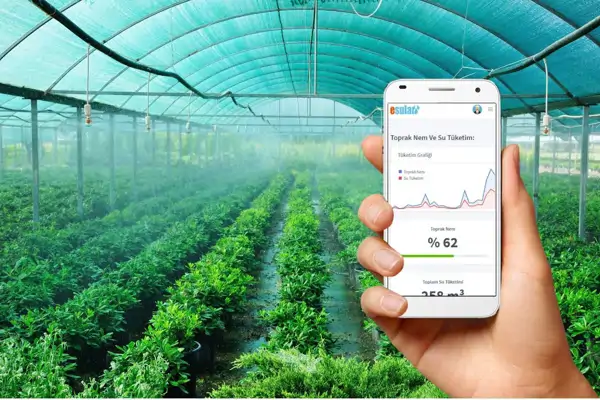
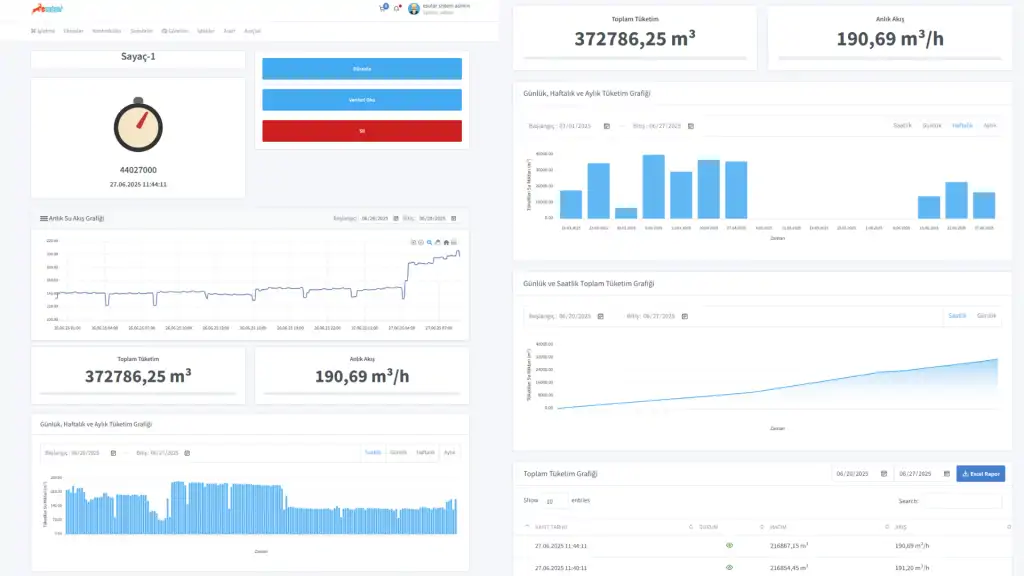
Cloud-Based Data Platforms: All collected data is stored, analyzed, and reported on cloud servers. Farmers can access this data from anywhere via a mobile application or web interface.
Artificial Intelligence and Machine Learning: Future predictions are made by analyzing past data and current conditions. For example, the ideal irrigation time is automatically calculated by combining weather data and soil moisture.
Automation Systems: Valve control units, pump controls, and fertilization systems operate automatically. Human intervention is minimized.
Smart Irrigation Systems: Water Management at the Heart of Digital Agriculture
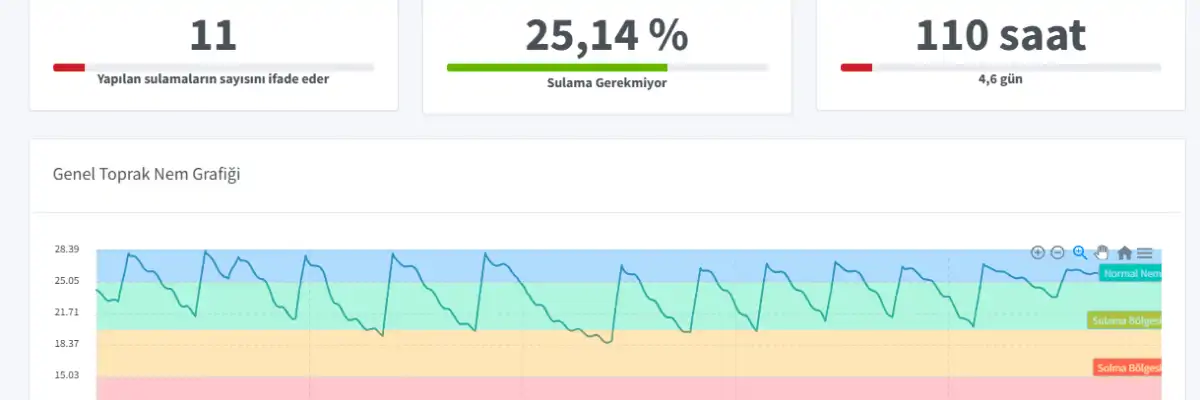
Water is the most critical input in agriculture. 70 percent of global water consumption goes to agricultural irrigation. However, a large amount of waste occurs in traditional irrigation methods. This is exactly where smart irrigation systems come into play.
What is Smart Irrigation?
Smart irrigation refers to automation systems that ensure irrigation is carried out at the exact time and in the amount needed by analyzing data collected from sensors (soil moisture, weather, plant type, growth stage, etc.). The system provides scientific and data-oriented answers to the questions of "when, how much, and where to irrigate."
Working Principle of Smart Irrigation Systems:
1. Data Collection (Monitors): Instant data is collected from devices such as soil moisture sensors, climate stations, and rain sensors. Parameters such as soil moisture level, air temperature, wind speed, and precipitation amount are constantly measured.
2. Data Analysis (Learns): The collected data is analyzed with artificial intelligence algorithms on the cloud platform. Plant-specific water needs are calculated. Weather forecasts are also integrated into the system. For example, if rain is expected tomorrow, irrigation is postponed.
3. Automatic Irrigation (Manages): According to the analysis results, valve control units are automatically activated. Irrigation is carried out in the required areas for the required duration. The system records and reports the entire process.
This cycle repeats continuously, and the system begins to make better decisions by learning. Seasonal changes, plant development stages, and environmental factors are automatically taken into account.
Benefits Provided by Smart Irrigation
Research and real field applications clearly reveal the benefits provided by smart irrigation systems:
Water Savings: An average of 30-50 percent water savings is achieved. Unnecessary irrigation is completely eliminated. This saving is of vital importance, especially in regions at risk of drought. A 40 percent water saving means thousands of tons of water per year on a 100-decare land.
Yield Increase: Since plants are kept at the optimal water level, they grow healthier. Stress factors are minimized. An average of 20-35 percent increase in product yield is recorded. Higher quality products are obtained.
Energy Savings: Since pumps only run when necessary, electricity consumption decreases. Especially in large irrigation systems, energy savings of 25-40 percent are possible. Costs are further reduced by optimizing the use of night tariffs.
Labor Reduction: The need for manual control is eliminated. The farmer can control the entire system without going to the field. Time is saved, and the risk of human error is minimized.
Fertilizer Efficiency: With fertigation (mixing fertilizer into irrigation water) systems, fertilizer can also be applied precisely. Excessive fertilization is prevented, and soil and water pollution are reduced. Fertilizer savings of 20-30 percent are possible.
Disease Control: Fungal diseases caused by excessive irrigation are prevented. Problems such as root rot are reduced since soil moisture levels are kept optimal.
Environmental Sustainability: It contributes to the protection of water resources. The decline in groundwater levels slows down. Since chemical use is reduced, soil and water pollution are prevented.
Esular: Turkey's Domestic Digital Agriculture Solution
Esular has been developing completely wireless and long-lasting IoT-based agricultural automation systems in Turkey since 2019. The company's philosophy of "Monitors, Learns, Manages" reflects the essence of digital agriculture.
Esular's Technological Advantages:
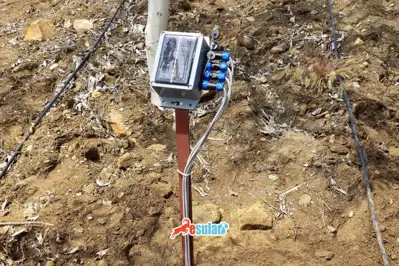
Completely Wireless Structure: It requires no wiring. All sensors and control units operate wirelessly. In this way, installation cost and time are minimized. A range of up to 10 kilometers is provided with LoRaWAN technology.
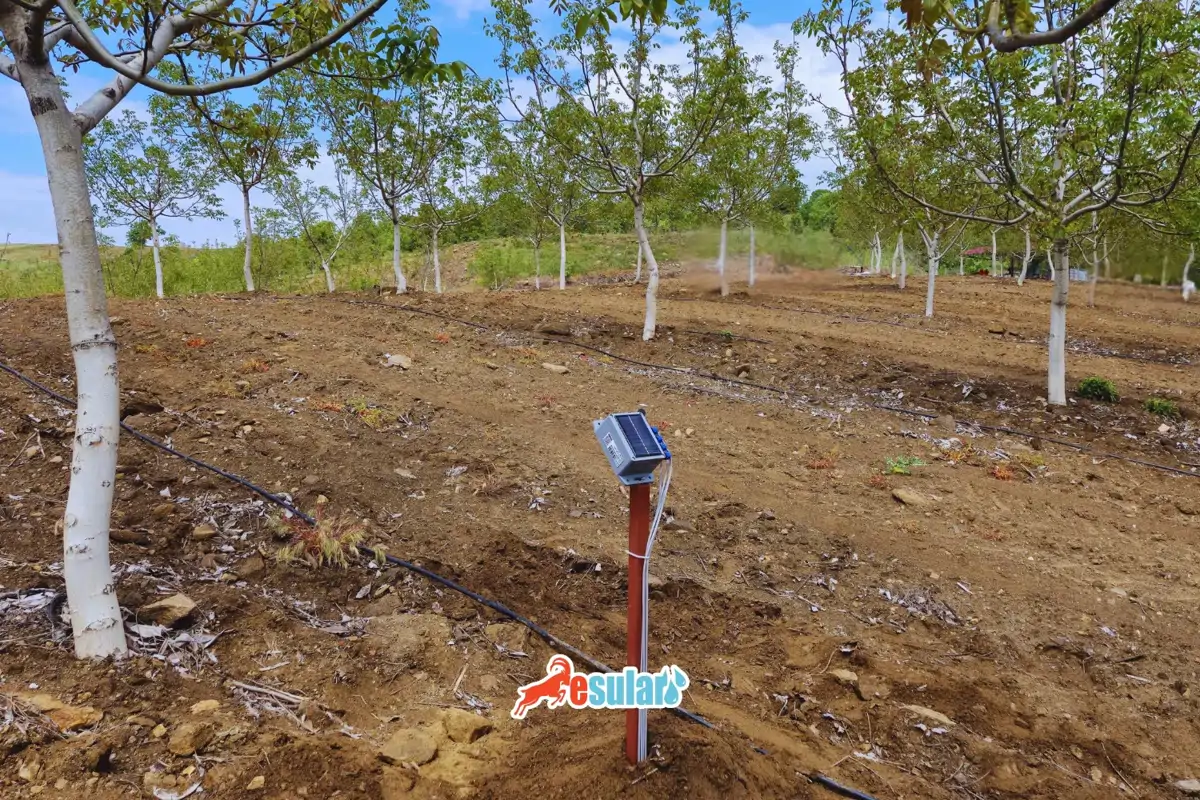
Energy Independence: Thanks to solar panels and long-lasting lithium-ion batteries, it does not require electricity infrastructure. Sensors offer a battery life of 5-10 years, and control units 3-5 years. Solar-powered models operate indefinitely.
Modular and Scalable: The system can be easily expanded according to needs. Solutions are offered at every scale, from a small vegetable garden to thousands of decares of agricultural land.
Domestic Production and Support: All products are manufactured in Turkey. Turkish technical support and fast service are provided. Spare parts supply is easy.
Affordable Cost: Installation costs are low thanks to the wireless structure. The investment payback period is an average of 2-3 years.
https://store.esular.com/kablosuz-akilli-vana-kontrol-unitesi-selenoid-vana-uyumlu-1
Esular Product Ecosystem: Integrated Solutions
Esular offers a fully integrated digital agriculture ecosystem:
1. Wireless Soil Moisture Sensors
Wireless soil moisture sensors measure soil moisture and temperature at different depths between 1 and 4 levels. With optional EC (electrical conductivity) measurement, soil salinity and nutrient levels can also be monitored. It provides instant information for irrigation decisions by sending data with minute precision.
Features: ±2% measurement accuracy, 3-5 year battery life, IP68 waterproof, -20°C to +65°C operating range.
2. Wireless Valve Control Units
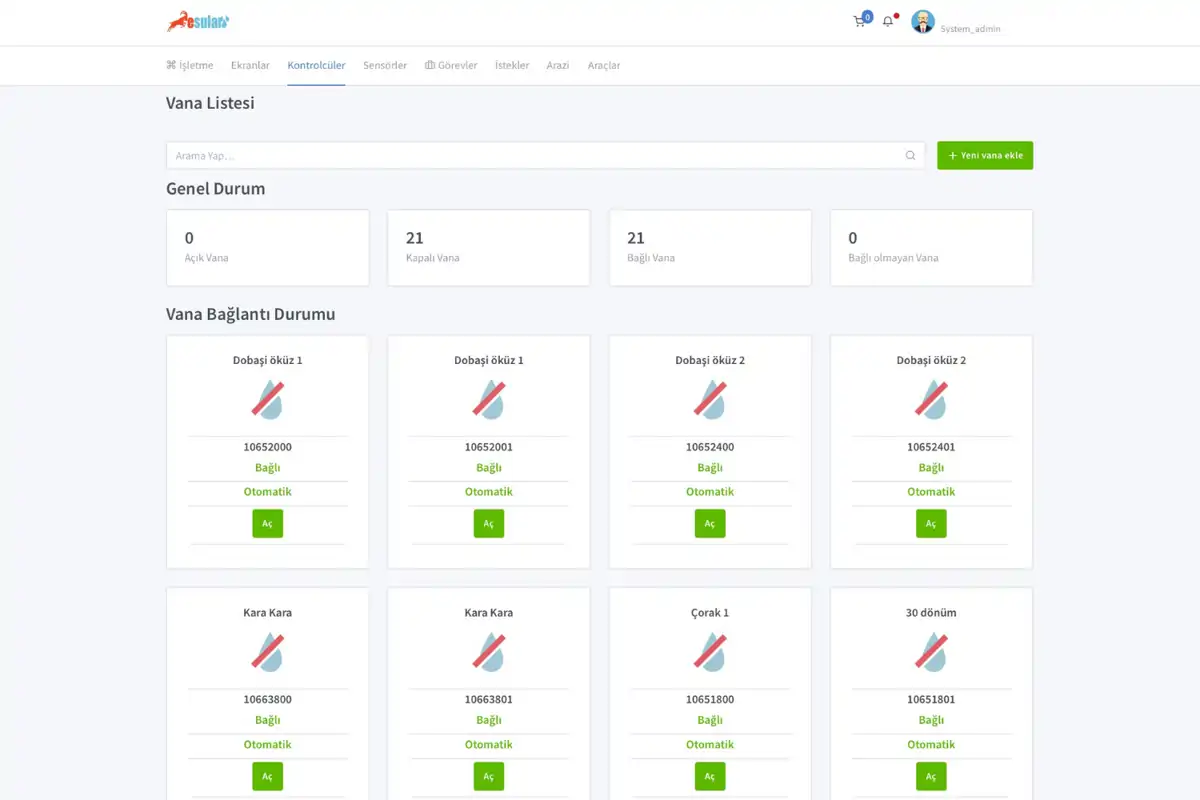
Wireless valve control units that perform automatic irrigation based on data from soil moisture sensors. Compatible with 9V latch solenoid valves. Solar-powered or battery-operated options are available.
Features: 5-10 km wireless range, programmable irrigation scenarios, manual remote control, solar-powered operation.
3. Climate and Meteorology Stations
Agricultural climate stations measure all weather parameters such as temperature, humidity, wind speed and direction, precipitation amount, and pressure. It protects plants from frost with the agricultural frost early warning system. Weather data plays a critical role in irrigation decisions.
4. Pump and Well Control Systems
Manage your pumps from anywhere in the world with GSM remote pump control systems. Pump protection and energy optimization are provided by integrating pressure sensors and water meters. Electricity costs are reduced with night tariff automation.
5. Automatic Fertilization Systems
pH and EC controlled fertigation systems. Fertilizer is mixed into the irrigation water precisely. The nutrient formula is automatically adjusted according to plant needs. Up to 25 percent fertilizer savings are achieved.
6. Greenhouse Climate Control Systems
With greenhouse automation systems, greenhouse temperature, humidity, and CO2 levels are automatically controlled. Ventilation, heating, and irrigation systems work integrated.
Success Stories from the Real World
MAREM Fruit Research Institute Project
MAREM, one of Turkey's leading agricultural research institutions, uses the Esular smart irrigation system in its trial orchards. Irrigation optimization research is conducted on different fruit types, and scientific data is collected.
GAP Region Smart Well Project
A wireless well control system was installed in an enterprise engaged in cotton farming in the GAP region. 45 percent water savings and 28 percent energy savings were achieved on 500 decares of land. Annual cost savings reached significant levels.
Eskişehir Walnut Orchard Automation
Drip irrigation automation was installed in a 150-decare walnut orchard. Fully automatic irrigation was provided with soil moisture sensors and wireless valve controls. 40 percent water savings and a 25 percent yield increase were achieved.
Antalya Citrus Orchard
A smart irrigation system was applied in orange and mandarin orchards. Thanks to multi-level soil moisture measurement, the moisture in the root zone was kept at an optimal level. An increase in fruit quality and weight was observed.
The Future of Digital Agriculture: Trends and Expectations
Digital agriculture and smart irrigation technologies continue to develop rapidly:
Artificial Intelligence and Machine Learning: In the future, systems will become even smarter. They will optimize irrigation strategies themselves by analyzing past data. They will be able to detect plant diseases through visual recognition.
Satellite Imagery Integration: Plant health maps will be created for large lands using satellite images. Problematic areas will be detected with NDVI (Normalized Difference Vegetation Index) analyses.
Drone Technology: Spraying, fertilization, and visual inspection will be carried out with agricultural drones. Drones will contribute to smart irrigation systems with the data they collect.
Blockchain and Traceability: The entire process from production to consumption will be recorded with blockchain. The consumer will be able to see how the product was grown and how much water was used.
5G Connectivity: Data transmission will be much faster with 5G technology. Real-time video streaming and instant intervention will become possible.
Autonomous Vehicles: Driverless tractors and robots will work integrated with smart irrigation systems, making fully autonomous farming possible.
The global smart agriculture market is expected to exceed 15 billion dollars by 2025. Digital agriculture investments are also increasing rapidly in Turkey. With the Digital Agriculture Strategy Document of the Ministry of Agriculture and Forestry, digital transformation in the sector will accelerate.
Transitioning to Digital Agriculture: Practical Suggestions for Farmers
A step-by-step guide for those who want to transition to digital agriculture:
1. Needs Analysis: Evaluate the size of your land, the type of product, and your existing irrigation system. What problems do you have? Is your priority water saving, yield increase, or labor reduction?
2. Start Small: Instead of installing a system on all your land at once, start in a pilot area. See the results, get to know the system, then expand.
3. Get Training: Learn how to use the system. Companies like Esular offer free training and technical support. Learn to use the mobile application effectively.
4. Track the Data: Track the data regularly throughout the first season. Compare your water consumption and product yield. Calculate your return on investment.
5. Optimize the System: Analyze the data at the end of the season. Update your irrigation strategy for the next season. As the system learns, you will get better results.
6. Use Support: Benefit from agricultural consultancy services. Share experiences with farmers using similar systems.
Conclusion: Digital Agriculture is Not the Future, But Today's Reality
Digital agriculture and smart irrigation systems are no longer a luxury, but a necessity. In the face of climate change, water scarcity, and increasing food demand, it is not possible to perform sustainable agriculture with traditional methods.
Smart irrigation systems play a critical role within the digital agriculture revolution. They are indispensable for the efficient use of water resources, improving product quality, and environmental sustainability.
Domestic technology companies like Esular offer the Turkish farmer affordable, easy-to-install, and effective solutions. Thanks to wireless technology, long battery life, and modular structure, enterprises of all sizes can transition to digital agriculture.
Digital agriculture is not just for large enterprises. Small family businesses can also benefit from these technologies and increase their competitiveness. The important thing is to take the first step and be open to change.
The agriculture of the future will be data-driven, automation-supported, and sustainable. Being a part of this transformation means both economic gain and contributing to the environment.
Price Warning: The prices of the products mentioned in this article are the list prices as of the publication date of the content. For current prices and campaigns, please visit the product pages. Prices are subject to change.
Digital Agriculture Solutions for Your Land
The Esular expert team is ready to design the most suitable smart irrigation and digital agriculture system for your agricultural enterprise.
📞 Call Now: 0312 222 44 55
✉️ E-mail: [email protected]
📋 Free Discovery and QuoteStart Digital Agriculture
Related Articles and Resources
- 📖
- 📖
- 📖
- 📖
- 📖
💡 Important Note:
Transitioning to digital agriculture is a journey. Start with small steps, learn the system, and expand gradually. Esular is with you at every step of this journey. You can contact us for free consultancy services.