What is a Net Radiometer? The Basis of Energy Balance and Irrigation Decisions in Agriculture
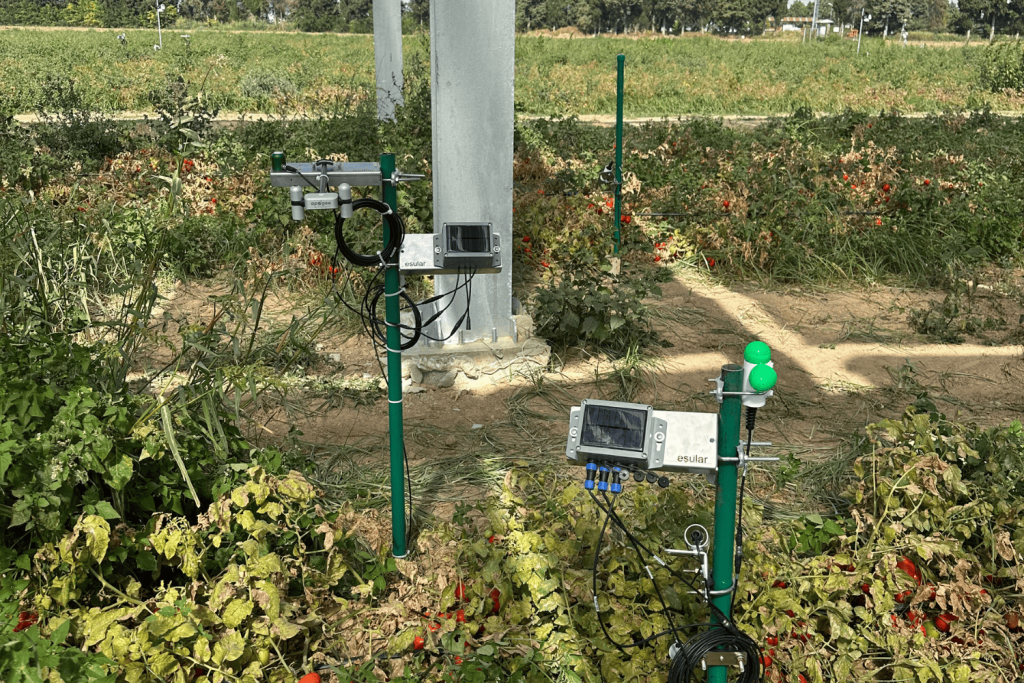
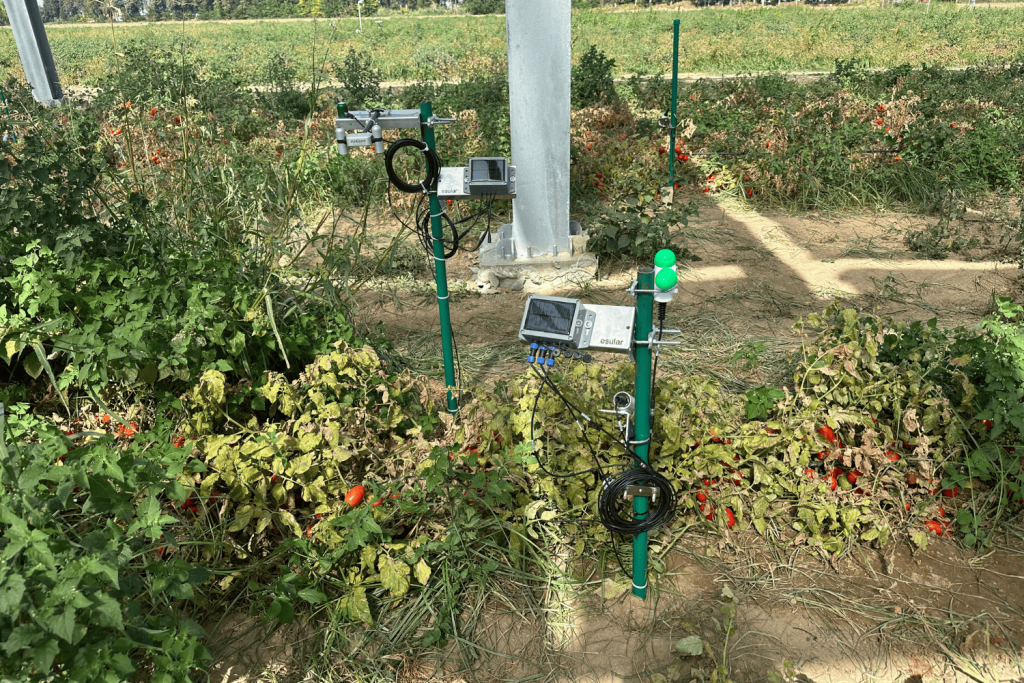
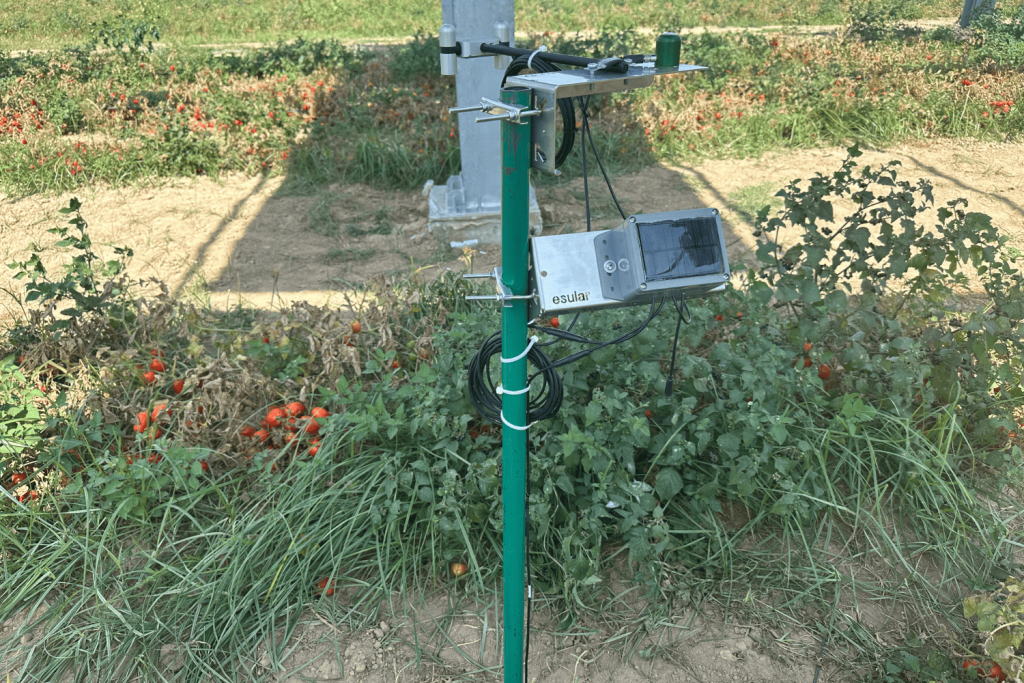
A net radiometer is a measurement sensor that directly answers the question, “How much of the energy from the sun actually heats and evaporates the plant and soil?” It reveals the energy balance of a surface (soil, vegetation, water surface, etc.) by measuring the total radiation energy it receives and loses.
What Does a Net Radiometer Measure?
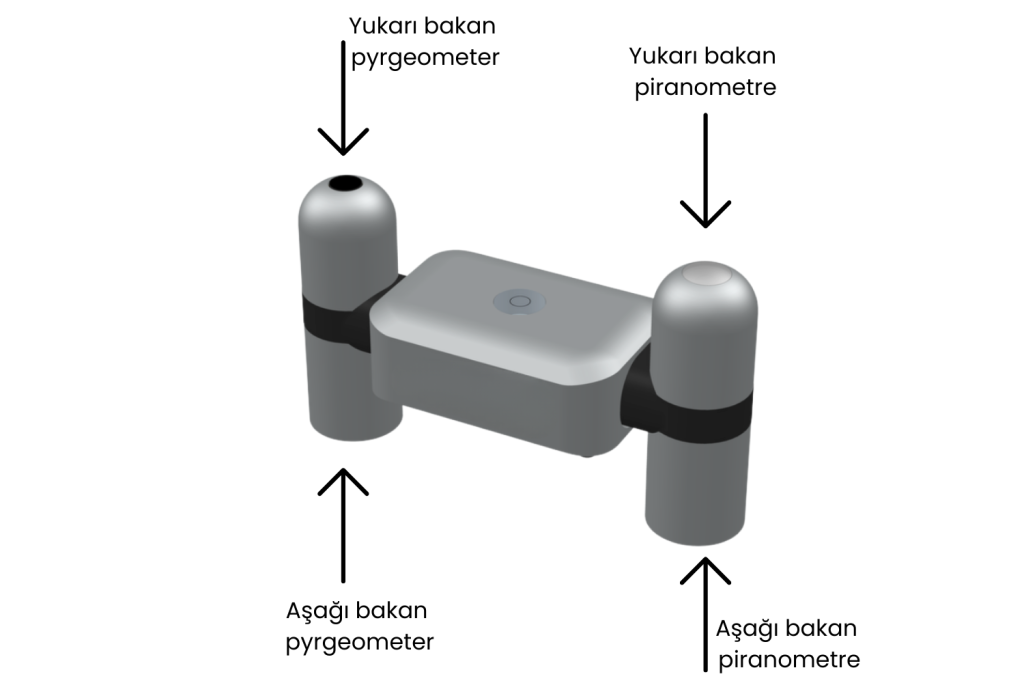
A net radiometer evaluates four basic radiation components together:
Incoming shortwave radiation (Solar radiation)
Reflected shortwave radiation (albedo effect)
Incoming longwave radiation from the atmosphere
Outgoing longwave radiation from the surface
The difference between these components is expressed as follows:
Net Radiation = Incoming − Outgoing (shortwave + longwave)
Therefore, a net radiometer measures the energy actually gained or lost by the surface.
What Does a Net Radiometer Do?
A net radiometer is of critical importance in the following areas:
Agricultural Irrigation Planning
It is the primary input for crop evapotranspirasyon (ET) calculations
It is used to determine when and how much irrigation should be performed
Microclimate and Climate Analysis
It explains the soil–atmosphere energy exchange
It plays a critical role in frost risk, heat stress, and heat island analyses
Water and Energy Balance
It directly affects soil warming, evaporation, and plant transpiration
Plant Stress Analysis
Rₙ: Net radiation (MJ m⁻² day⁻¹)
G: Soil heat flux
Δ: Slope of the saturation vapor pressure curve
During daylight hours, 60–80% of ET₀ is directly related to net radiation. That is, the net energy entering the plant-soil system determines water consumption.
Net radiation:
Heats the soil and the plant
Provides the energy required for water evaporation
Behavior of Net Radiation
Rₙ = 0 → Even if there are wind and humidity differences, ET drops significantly
As Rₙ increases → The plant's water consumption increases
Clear and sunny summer days: → Rₙ high → ET₀ high → irrigation requirement increases
On cloudy / short days: → Rₙ decreases → ET₀ decreases
Night: → Rₙ is usually negative (the surface loses energy)
How is Rₙ Calculated? (According to FAO-56)
FAO-56 divides net radiation into two parts:
Shortwave (solar) net radiation
Rns = (1- α) Rs
α (albedo) ≈ 0.23 (reference grass)
Rₛ → Incoming solar radiation
2. Longwave net radiation
Rnl
Heat difference between incoming from the atmosphere + outgoing from the surface
It is related to temperature, humidity, and cloudiness
3. Total net radiation
Rn = Rns – Rnl
What is a Pyranometer?
A pyranometer measures the shortwave solar radiation reaching a surface.
Radiation it measures
Solar-derived shortwave
Wavelength range: ≈ 0.3 – 3 µm (300–3000 nm)
What does it measure?
Global solar radiation
Direct solar radiation + scattered radiation in the atmosphere
What is a Pyrgeometer?
A pyrgeometer measures longwave (thermal) radiation emitted from the surface and the atmosphere.
Radiation it measures
Thermal infrared (longwave)
Wavelength range: ≈ 4.5 – 50 µm
What does it measure?
Incoming longwave radiation from the atmosphere
Outgoing longwave radiation emitted by the surface
How does a pyrgeometer provide information about frost risk?
Why does frost occur?
Radiation frost in agriculture mostly occurs under these conditions:
Clear and cloudless night
Weak wind
The surface (soil/plant) losing net heat to the atmosphere
The main pathway for this heat loss is:
emission of energy into space via longwave radiation (thermal IR).
What does a pyrgeometer measure?
A pyrgeometer measures longwave radiation:
L↓ (incoming longwave from the atmosphere)
L↑ (outgoing longwave from the surface)
Critical difference for the night:
Lnet = L↓ – L↑
Negative value → The surface is losing heat to the atmosphere
Growing negative value → Accelerating cooling → frost risk is increasing
Don't forget to check out our article below for more detailed information about agricultural frost!
Difference between clear and cloudy nights (critical)
Clear sky (high frost risk)
L↓ from the atmosphere is low
L↑ emitted from the surface is high
Net longwave loss is large
Plant temperature drops rapidly
A pyrgeometer measures this directly
Cloudy night (low frost risk)
Clouds re-emit IR
L↓ increases
Net energy loss decreases
A pyrgeometer indicates that the risk of frost has decreased.
Agricultural decision mechanism
Thanks to the pyrgeometer:
Warnings are given before frost occurs
Wind machines, fogging, and irrigation are started on time
Unnecessary intervention is prevented
The pyrgeometer does not measure frost itself; by measuring the nighttime radiative heat loss that causes frost, it reveals the risk of frost hours in advance.
Don't Guess Irrigation Without Measuring Net Radiation
What determines how much water a plant needs is not just temperature or humidity, but the net energy that actually enters the plant-soil system.