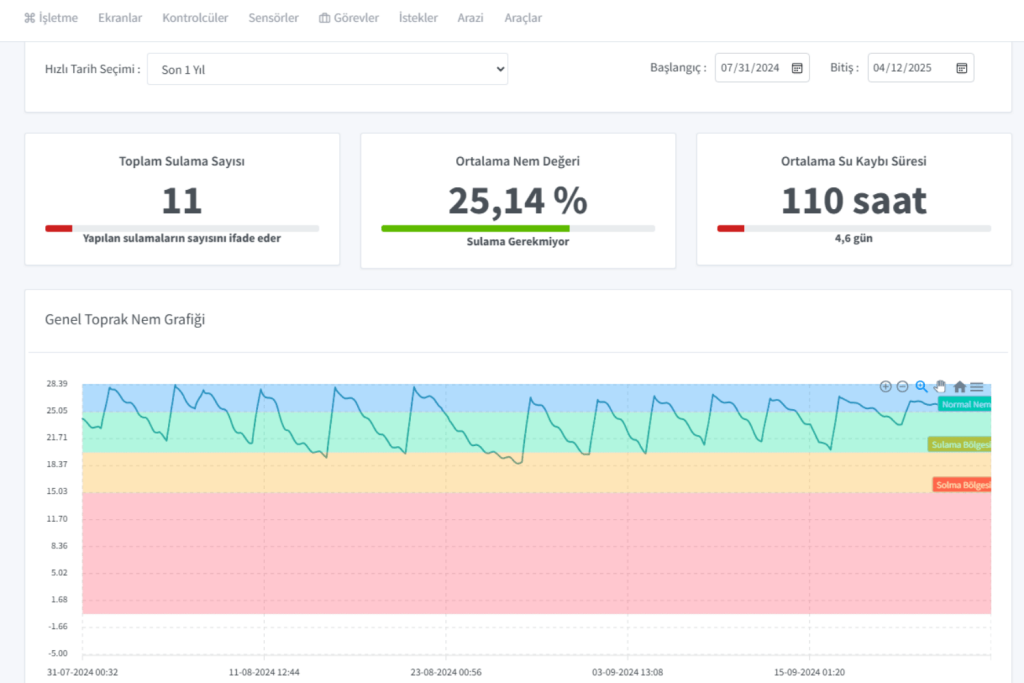
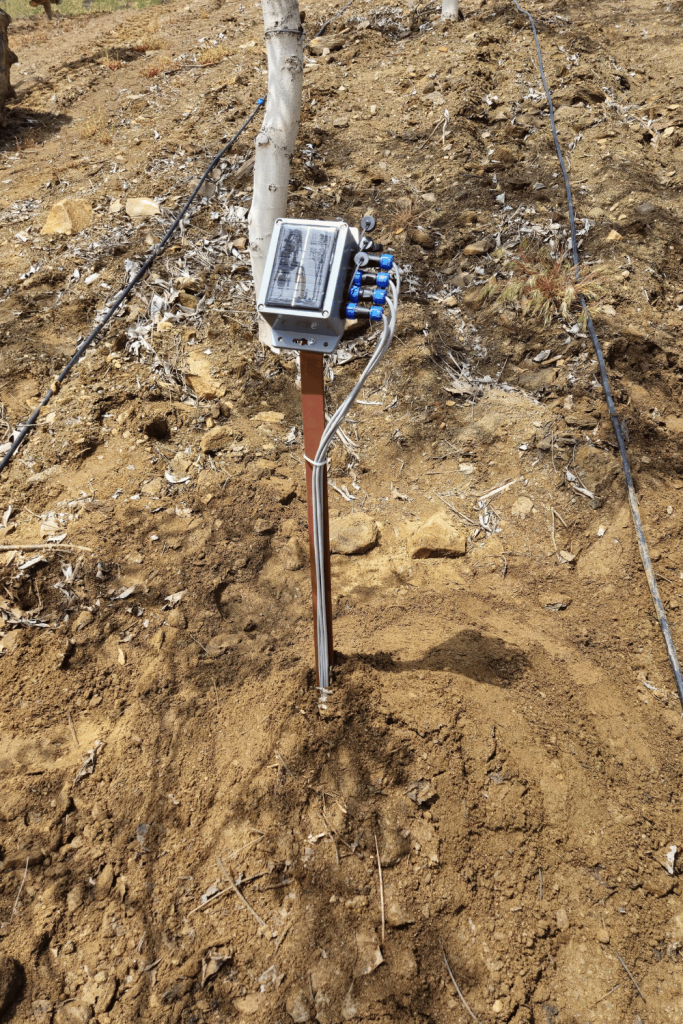
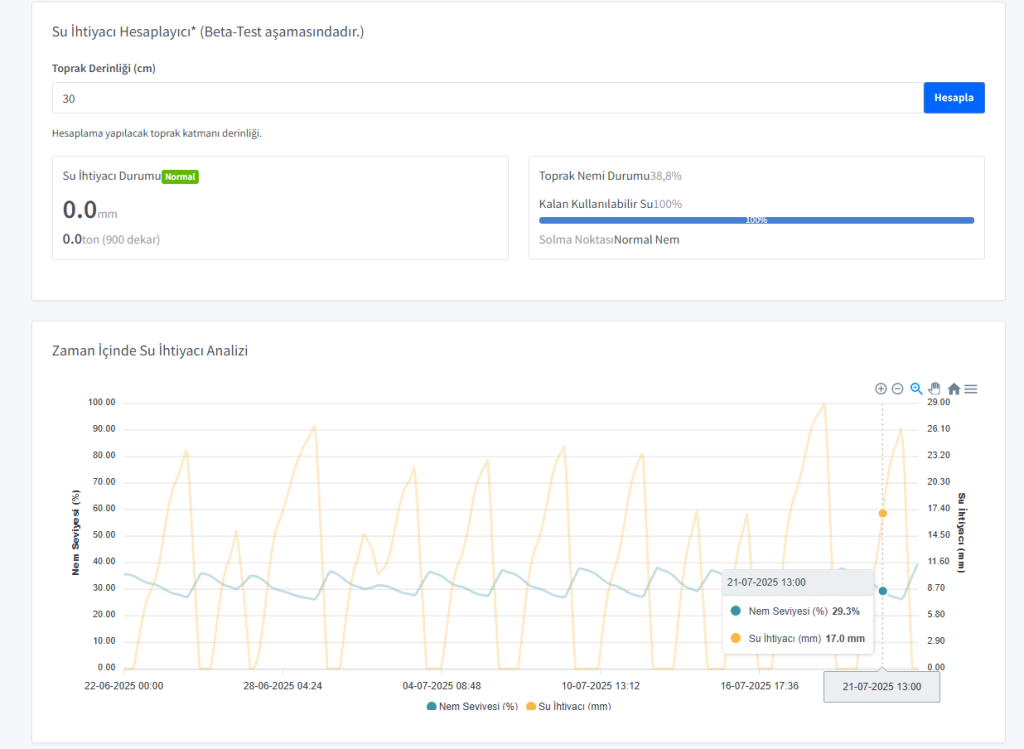
Soil moisture sensors are devices used to determine the water needs of the plant by measuring the amount of water contained in the soil. Thanks to these sensors, the amount of water in the soil can be measured precisely, ensuring the plant is irrigated in the most efficient way.
This technology particularly allows for determining the water needs of the plant and performing the most suitable irrigation according to changing conditions. Factors such as changing air temperatures, plant type, and soil type cause the amount of water in the soil to change over time. Moisture change in the soil is a dynamic process due to the plant's water consumption, water loss through transpiration, and water moving to deeper layers of the soil under the effect of gravity. Therefore, the irrigation process can be dynamically adjusted by continuously measuring the moisture value.
How Does a Soil Moisture Sensor Work
Soil moisture sensors are used to proportionally measure the amount of water in the soil. Soil, by its nature, holds a certain amount of water within itself, and up to the saturation point, the amount of this water can be measured using various electrical and mechanical methods.
This moisture value, measured proportionally between the saturation point and the wilting point, can be interpreted according to the soil type to determine the plant's optimal irrigation point and the required irrigation amount. Specifically, preventing the plant from reaching the wilting point and maintaining the optimal moisture level is of critical importance for efficient agriculture.
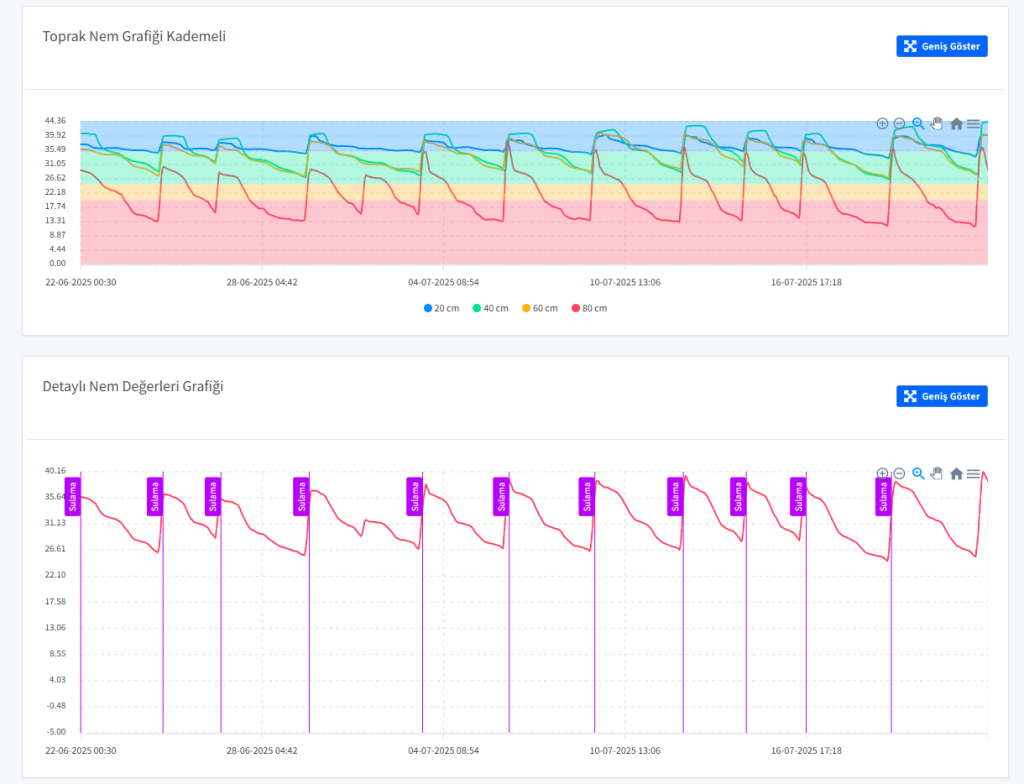
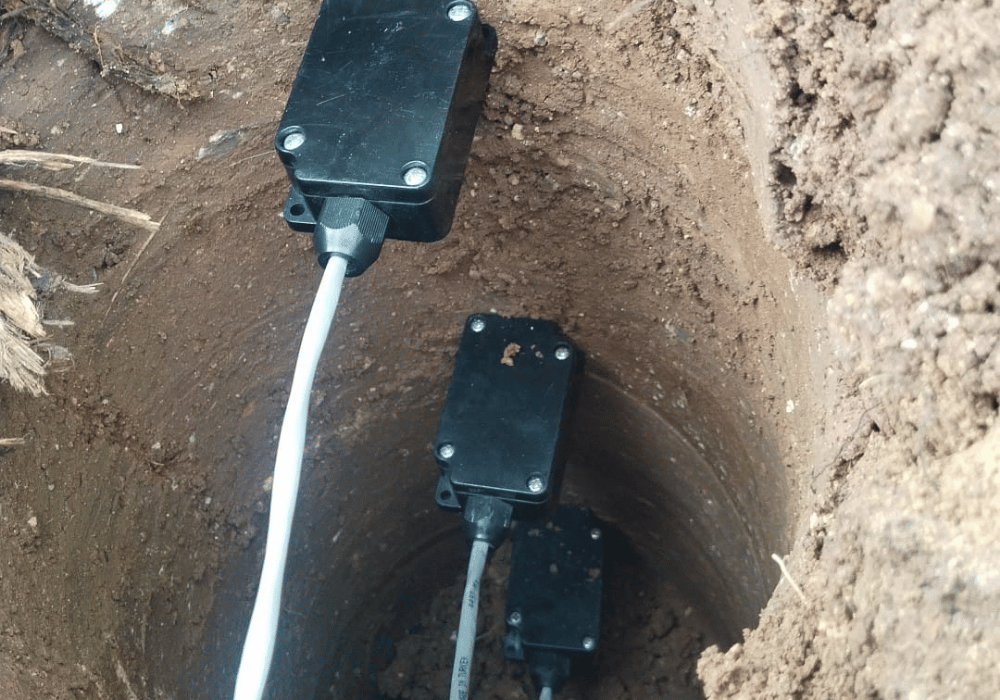
Multi-Level Soil Moisture Measurement
While the soil, which contains the water and other nutrients necessary for the plant, needs to be kept at a certain moisture value, we may need to measure the moisture at different depths for different plant species.
Thanks to the multi-level measurement system:
Moisture levels at different depths can be measured separately
Areas with excessive water retention or puddles can be identified
The infiltration rate of water in the soil can be determined
Moisture distribution in the root zone can be analyzed
As Esular, we offer customized multi-level measurement solutions for your agricultural lands with the sensors and software we have developed.
Soil Water Holding Capacity
Every soil type has its own unique water holding capacity. While sandy soils have a low water holding capacity, clayey and loamy soils have a high water holding capacity. This capacity is determined by calculating the amount of water held per kilogram.
Water holding capacities according to soil type:
Sandy soils: Low water holding capacity, drains quickly
Loamy soils: Medium level water holding capacity, ideal agricultural soil
Clayey soils: High water holding capacity, drains slowly
With the sensors and software solutions we have developed, we are able to measure the amount of water in the soil precisely and calculate how much irrigation should be performed. In this way, both water savings are achieved and your plants are guaranteed to grow in optimal conditions.