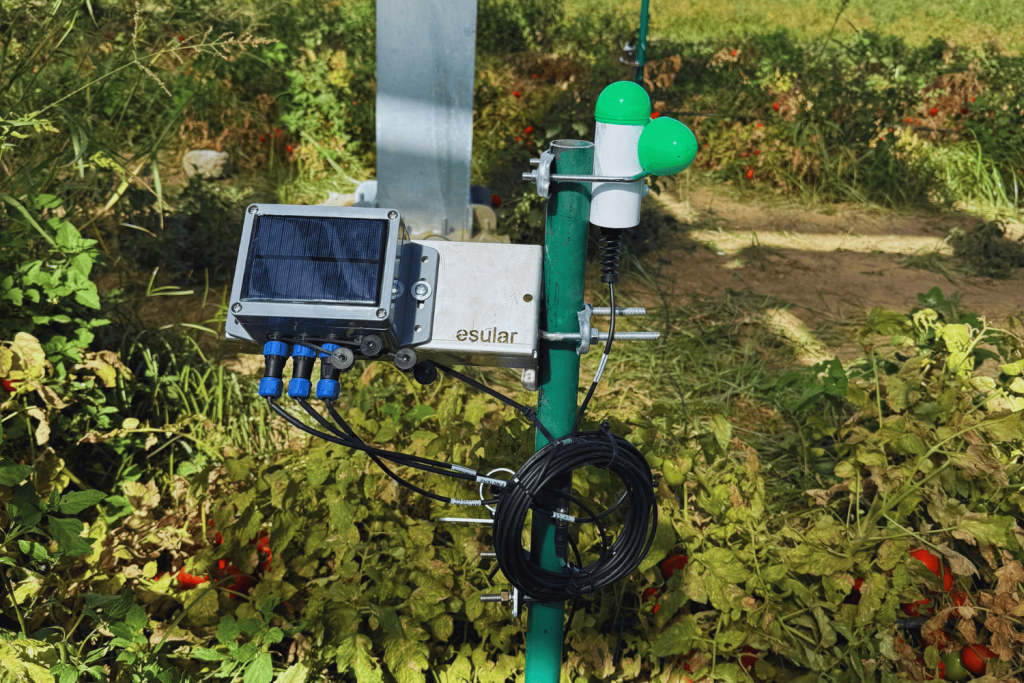
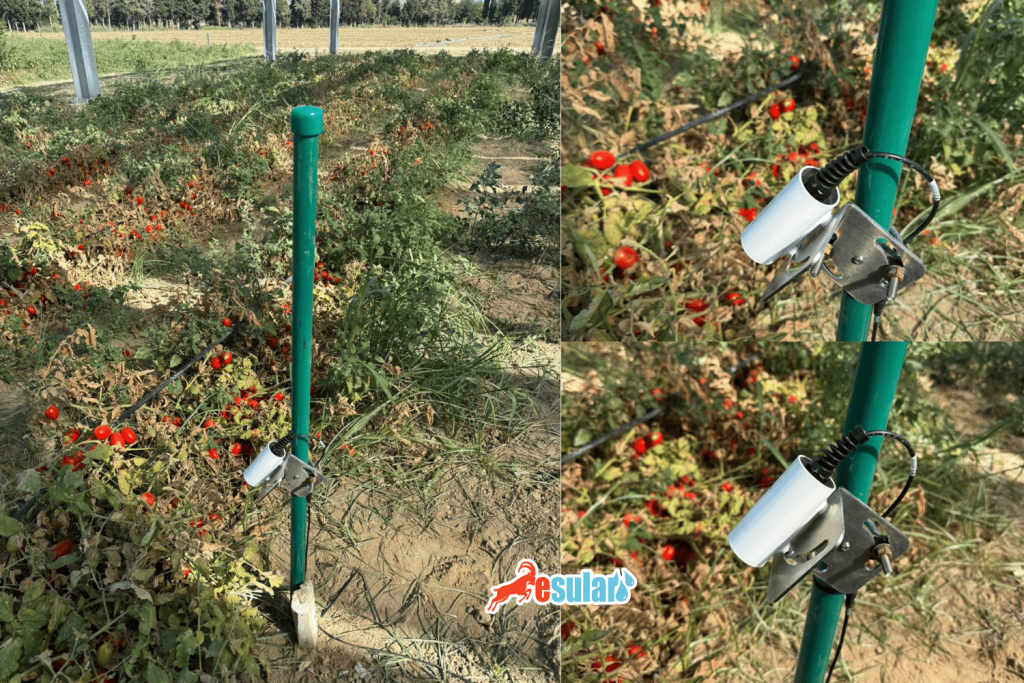
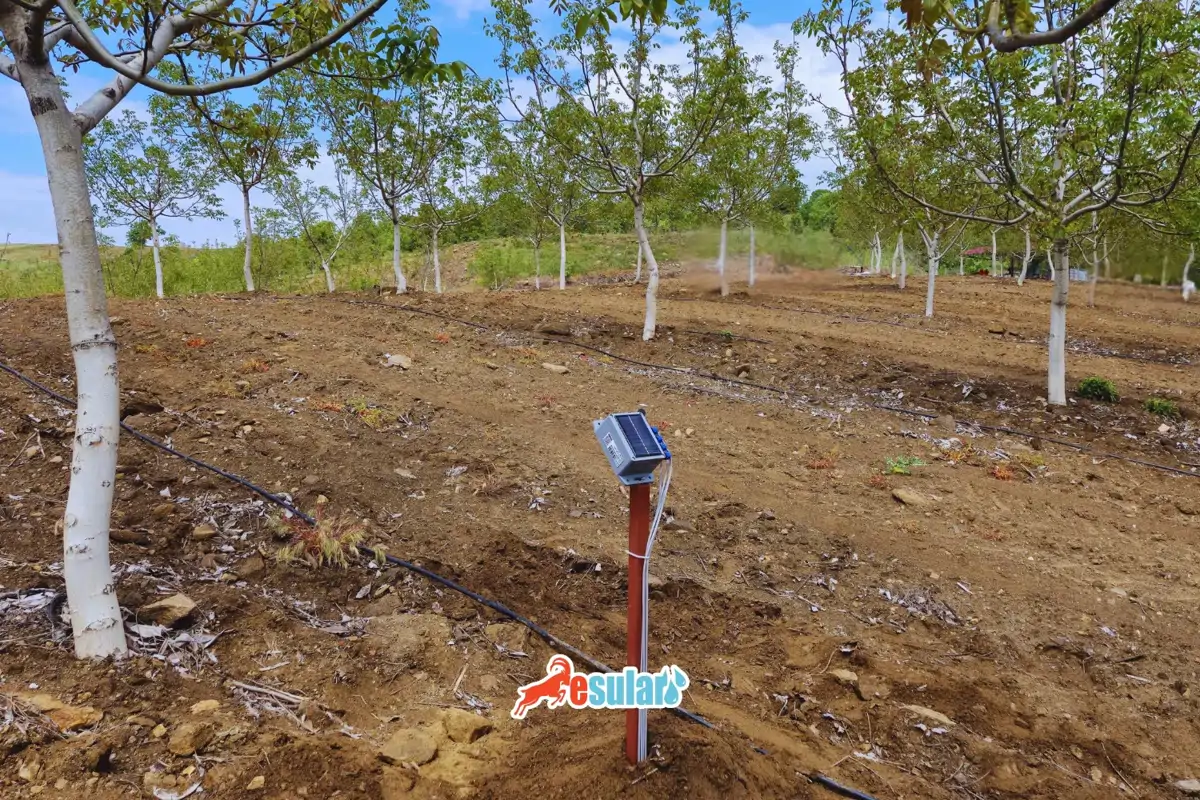
An infrared radiometer (IR radiometer) is a sensor that obtains non-contact temperature information by measuring the infrared (thermal) radiation emitted by a surface or object. The measurement is based on the heat energy naturally emitted by the object.
How Does It Work?
Every object emits infrared radiation (IR)depending on its temperature. An IR radiometer:
Detects thermal IR radiation coming from the object
Converts this radiation into temperature according to the Stefan–Boltzmann law
Performs measurements without contact
Measurement Wavelength
Generally8 – 14 µm (atmospheric window) This band is the range where atmospheric absorption is low and the most accurate temperature measurement is made.
What Does It Measure?
Surface temperature (plant leaf temperature, soil, water, asphalt etc.)
Thermal radiation flux
Indirectly:
Plant water stress
Night cooling / Frost risk
Heat island effect
Spectral range 8–14 µm (micrometers) indicates the electromagnetic wavelength range detected by the sensor.Specifically for this sensor, infrared (IR) radiation is measured.
Why 8–14 µm?
This range is the region where the heat radiation peaks naturally emitted by objects such as the earth's surface, plants, animals, and buildings.
Thermal radiation (temperature emission) is defined by the Stefan–Boltzmann Law and the Planck curve.
For example, if an object is at a temperature of approximately 20–30 °C, its most intense emission is around 8–12 µm.
Atmospheric Reason?
The 8–14 μm range is known as the "transparent window" region of the atmosphere:
The atmosphere absorbs very little radiation at these wavelengths.
Thus, it is possible to directly measure the heat coming from the surface.
After 14 μm, CO₂ and H₂O vapor absorb the radiation to a large extent.
Difference From a Pyrgeometer
Feature
Infrared radiometer
Pyrgeometer
Measurement
Surface temperature
Long wave radiation
Field of view
Narrow (specific area)
Wide (hemisphere)
Wavelength
8 – 14 µm
4.5 – 50 µm
Usage
Object/plant temperature
Energy balance
Output
°C
W/m²
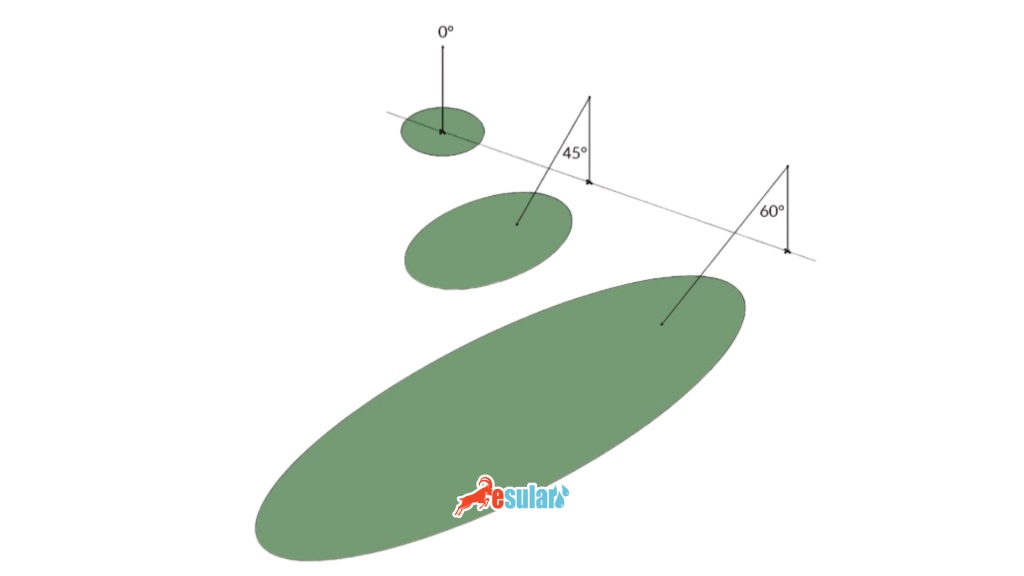
Field of View
The Apogee SI-411 sensor has a 22° half-angle. Formula:
r = d × tan(θ)
Area diameter = 2r
Where:
d = distance between the sensor and the target surface (e.g., 1 meter)
θ = half-angle (22°)
Area diameter = 2r
As the sensor moves away from the surface, the measured area expands linearly.