What is Greenhouse Automation? An Introduction to the Future of Modern Agriculture
Greenhouse cultivation is a complex production model where the ideal climatic conditions needed by plants are created with artificial setups. Greenhouse automation is the management of critical parameters in this artificial environment such as temperature, humidity, light, CO2 levels, and irrigation-fertilization through sensors and control units without the need for human intervention or with minimum intervention. In greenhouse farming, which requires a much more precise balance compared to open-field agriculture, outdoor weather conditions and indoor greenhouse variables are in constant interaction. A perfect automation system should be able to perceive these variables down to the finest detail, analyze them, and implement the most accurate decisions for plant development within seconds.
Today, developments in the field of agricultural technology have transformed greenhouses from being mere plant shelters into data-driven production factories. Esular like innovative companies' solutions aim to maximize the yield obtained per unit area while reducing the workload of farmers. A smart greenhouse automation is not just a control panel, but an ecosystem that functions as the 'brain' of the greenhouse.
Basic Components of Greenhouse Automation Systems
Automation systems used in a greenhouse are generally examined under two main headings: Climate control automation and irrigation-fertilization automation. These two systems are managed by a central microprocessor or computer unit. For the system to work healthily, the following basic units must be in harmony:
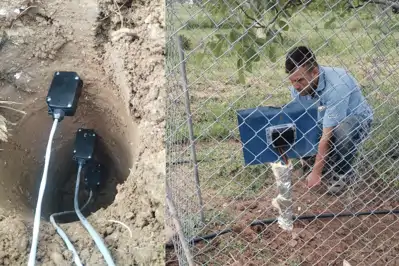
- Sensors: Collects data such as air temperature, soil moisture, relative humidity, CO2 level, light intensity (PAR), wind speed, and direction.
- Central Control Unit: The unit that processes incoming data, compares it with predefined set values, and makes decisions (PLC or special microprocessors).
- Actuators (Motors and Valves): Mechanical parts that open windows, operate heaters, or control irrigation valves according to commands from the control unit.
- Monitoring and Recording Units: Enables real-time monitoring of data on the screen and recording for historical analysis.
Climate Control Automation: The Greenhouse's Life Support System
Climate control is the most critical and dynamic part of greenhouse farming. In the summer months, the heat rising due to the effect of the sun must be evacuated, and in the winter months, the plant must be protected against the risk of freezing. However, climate control is not just about temperature; the dual interaction between humidity and temperature increases the complexity of the system.
Temperature and Humidity Interaction: When the heating system operates, the relative humidity in the greenhouse tends to decrease. Conversely, when ventilation windows are opened, both the temperature drops and the humidity is balanced. Fogging systems increase humidity while providing evaporative cooling to lower the temperature. To maintain this delicate balance, automation systems use the following methods:
- Natural Ventilation: Automatic opening and closing of roof and side windows according to wind direction and speed.
- Mechanical Ventilation: Providing air circulation with the help of ventilators and fans.
- Fogging and Humidification: Spraying water into the air in the form of droplets with high-pressure nozzles.
- Heating Systems: Maintaining the ideal temperature with hot water pipes or hot air blowers.
Ventilation and Wind Control
Good ventilation can reduce the indoor greenhouse temperature to a level 2-3°C lower than the outdoor environment. In modern greenhouses, ventilation automation is based on the number of air changes per hour. This number should be around 50-60 in plastic-covered greenhouses and 40-50 in glass greenhouses. Under ideal conditions, it is aimed to keep this value between 15-30.
When wind speed reaches dangerous levels, the automation system automatically closes the windows to prevent structural damage. In advanced systems, it is possible to leave only certain windows (for example, leeward windows) open according to the direction the wind is blowing. Additionally, thanks to rain sensors, when the first drop falls, the windows close rapidly, preventing the plants from getting wet uncontrollably.
Irrigation and Fertilization Automation (Fertigation)
The process of providing water and nutrients to plants simultaneously is called 'fertigation'. Greenhouse automation optimizes this process according to the growth stage of the plant, soil moisture, and the amount of sunlight. Smart irrigation systems thanks to which water waste is prevented, while the amount of fertilizer the plant needs can be adjusted with gram precision.
Advantages of Irrigation Automation:
- Precise Dosing: Preparation of the ideal nutrient mixture by continuously measuring pH and EC (electrical conductivity) values.
- Timing: Irrigation at the most appropriate times of the day so that the plant does not enter stress.
- Labor Savings: Labor costs reduction by up to 70% with the elimination of manual irrigation and fertilization processes.
- Yield Increase: An increase in yield between 65% and 80% in plants that receive the right nutrient at the right time.
Venturi or injector pumps used in irrigation systems mix the nutrients taken from fertilizer tanks into the main water line at certain ratios. When this process is integrated with soil moisture sensor data, the plant is irrigated only when it truly needs water.
Control Methods in Greenhouse Automation: Feedback and Feedforward
Automation systems work with two basic logics according to how they process data and react. In academic studies and industrial applications, these methods are defined as follows:
In a feedback system, fans operate when the temperature exceeds 25°C. In a feedforward system, by looking at the increase in the intensity of solar radiation outside, cooling measures start to be taken before the inside of the greenhouse heats up.
Expert Systems and Artificial Intelligence
In modern greenhouse farming, simple threshold values (set values) are no longer sufficient. Expert systems are software that have the ability to 'make decisions' through the combination of multiple programs. These systems can include artificial intelligence features such as pattern recognition, problem-solving, learning, and understanding human language. Especially in climate control, these advanced algorithms are used to minimize the effect of 'atmospheric disturbances' (unexpected wind gusts or cloudiness) in the outdoor environment.
Technical Details: The Data Journey from Sensor to Actuator
Understanding how data is processed in a greenhouse automation system is important for evaluating the efficiency of the system. The process generally follows these steps:
- Analog Data Collection: Sensors (for example, NPN type transistors or resistance-based humidity sensors) receive analog signals from the physical environment.
- Signal Conversion (ADC): Analog signals are converted into digital signals that the microprocessor can understand.
- Data Processing (PLC/Computer): Digital data is processed with Visual Basic or special embedded software.
- Sending Commands: The processor sends energy to motors or valves through relays or contactors.
- Feedback: When the process is completed (for example, when the window is fully opened), the system confirms that the process has occurred through limit switches or sensors.
Laboratory Studies and Future Predictions
Research conducted by institutions such as Akdeniz University has proven the effectiveness of different control methods in greenhouse automation. Control systems with DTMF (Dual-Tone Multi-Frequency) and radio waves tested in a laboratory environment show the potential of wireless communication in greenhouse farming. These systems allow the management of windows and irrigation from distances of up to 300 meters with telephone keys or radio signals.
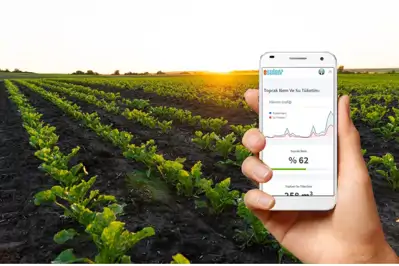
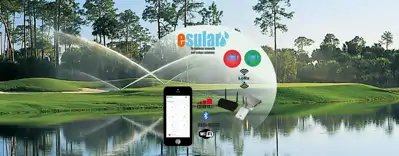
In the future, thanks to IoT (Internet of Things) based systems, greenhouses will be manageable from anywhere in the world with smartphones. Esular offers this technology to the service of farmers today by developing systems that provide high-frequency and secure data transmission. In this way, cabling costs and labor errors are eliminated.
Things to Consider When Setting Up Greenhouse Automation
- Scalability: The system being compatible with new sensors or sections to be added in the future.
- Backup: Availability of manual control in case of power outage or system failure.
- Durability: Sensors being resistant to high humidity and temperature conditions inside the greenhouse (IP65/IP67 protection class).
- User-Friendly Interface: Software where data can be easily read and settings can be simply made.
Conclusion: Why Should You Invest in Greenhouse Automation?
Greenhouse farming in our country is still in the phase of fully assuming its modern identity. The only way to reach the high yield levels in developed countries is to put technology at the center of production. Greenhouse automation is not just a luxury, but a necessity to remain competitive. A correct automation investment is a system that pays for itself in a short time, protects plant health, and offers a comfortable living standard to the producer.
If you also want to raise the technological level of your greenhouse and increase your yield while saving water and fertilizer, meet Esular's smart agricultural solutions. You can contact us for more information and special solutions for your project.