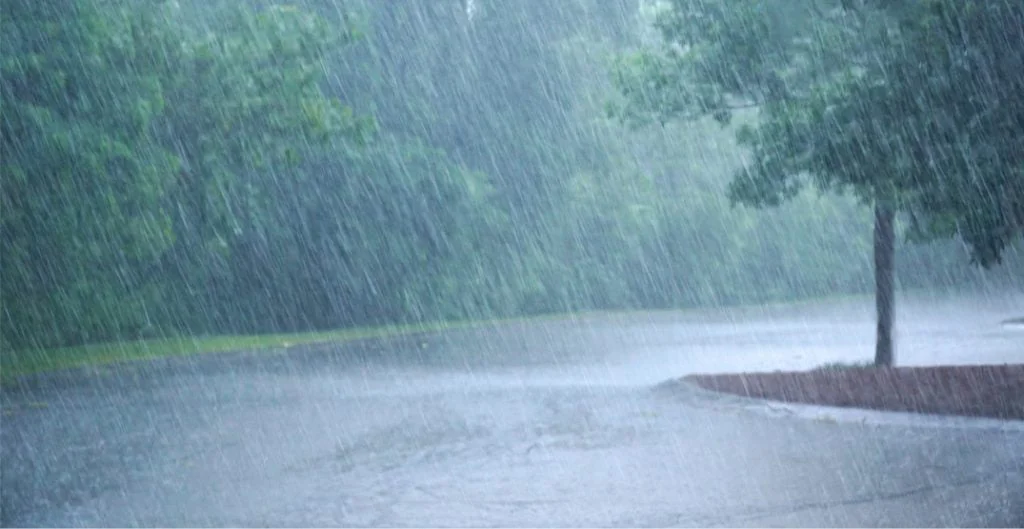
Precipitation amount is the total amount of precipitation falling per unit area within a year. Annual precipitation amount is expressed in mm, cm and m, while daily precipitation amount is expressed in kg/m².Precipitation is measured with a pluviometer. Precipitation can occur in many different forms; these are rain, snow, graupel, hail, and sleet.
The amount of precipitation falling per unit of time is called precipitation intensity.
Falling precipitation; if ≤ 2.5 mm/h (low-intensity precipitation), if 2.5-7.6 mm/h (medium-intensity precipitation), if ≥ 7.6 mm/h (high-intensity precipitation)
The unit of precipitation is mm, cm, kg/m2.
V = 1 x 1 x 0.02 V = 0.02 m3 V = 20 liters 20 L/m2 20 kg/m2
20 mm = 2 cm = 0.02 m
Factors Affecting Precipitation Amount
Factors affecting the amount of precipitation are respectively as follows;
Air Mass: For a place to receive precipitation, it must be under the influence of suitable air masses and associated frontal systems. If the air mass is humid, this value increases.
Elevation and Topography: Up to an elevation of approximately 1500 – 2000 m above sea level, the amount of precipitation increases between 50 – 400 mm for every 100 m. After this elevation, precipitation decreases.
Isolation from Marine Influence: As distance from the sea increases, the amount of precipitation decreases.
Currents: Air masses that warm up and become humid under the influence of warm water currents leave precipitation when they move over cool land.
Vegetation Cover: Since transpiration, especially in forests, increases the amount of humidity, precipitation increases by 3 – 6%.