Tüm Yazılar

Agricultural Irrigation
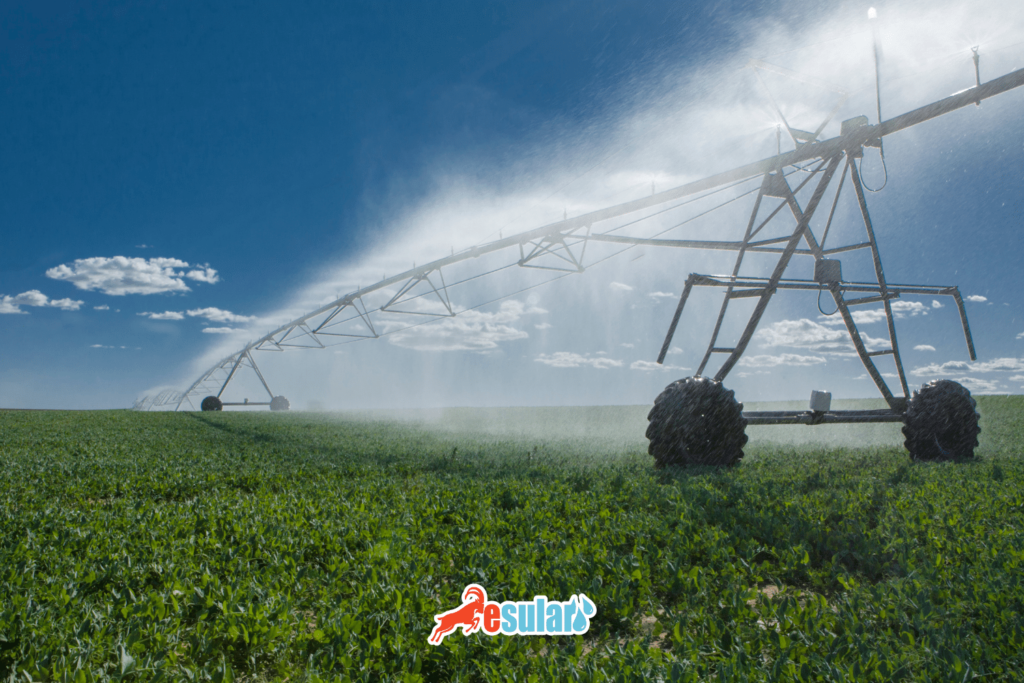
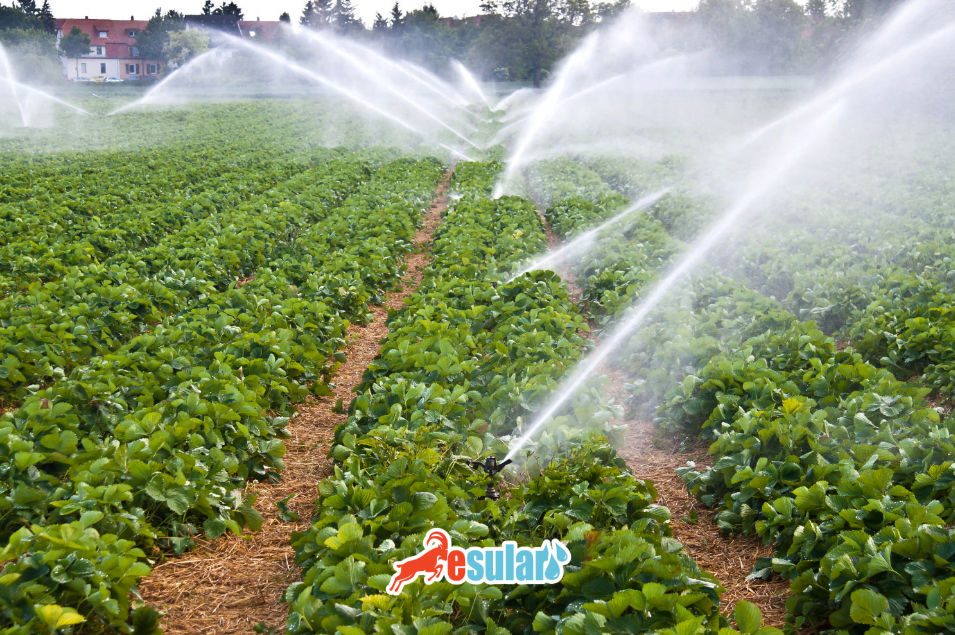
Agricultural irrigation is the process of artificially providing the water needed by plants to the soil in cases where there is insufficient water in the soil. Through agricultural irrigation, it is ensured that plants receive sufficient water, and consequently, yield and quality increase. Factors such as acid, hot water, underground, surface, solar-powered, or combined systems, which are among agricultural irrigation methods, may vary according to the selected method, the source of the water, how the water will be transported, and how it will be distributed to the soil.
What is Irrigation?
Irrigation is a method performed to ensure the normal development of plants with water artificially provided to the soil. In agricultural irrigation, an efficient irrigation method should be used to protect surface or groundwater resources. The use of solar-powered systems, which have been widely used in recent years and are especially preferred because they provide energy savings, is also possible.
Plant Net Irrigation Water Requirements
Plant net irrigation water requirements are monitored according to meteorological station data. These data calculate the amount of water needed by plants, taking into account factors such as weather conditions, soil moisture, soil type, and plant species.
Meteorological station data are important for determining the amount of water needed by plants. These data include factors such as daily or weekly precipitation amounts, humidity rate, air temperature, and wind speed. These data are used to determine the amount of water needed by plants.
The net irrigation water requirement needed by plants may vary according to agricultural irrigation methods. For example, while using a surface irrigation system, the amount of water needed by plants may be higher because water suffers losses on the soil surface. While using an underground irrigation system, the amount of water needed by plants may be lower because it prevents water loss on the soil surface.
In conclusion, the net irrigation water requirement needed by plants, calculated by considering meteorological station data, may vary according to agricultural irrigation methods and is important for the healthy development of plants. Using these data, correct irrigation methods can be applied to increase productivity and protect water resources.
Amount of Irrigation Water to be Applied
The amount of irrigation water is calculated according to the water requirement of the plants and the water-holding capacity of the soil. By considering the soil moisture in the effective root zone of the plants, the amount of water required to bring the water level in the soil to the water-holding capacity is provided. You can use the calculation tool above for the annual water needs of important plants in our province.
- Factors affecting the amount of irrigation water to be applied
Plant water requirement: Each plant's water requirement is different and can change throughout the growing season.
Soil type: Soil type can vary according to water-holding capacity and water permeability.
Soil moisture: Soil moisture in the effective root zone of the plants can affect the amount of irrigation water.
Weather conditions: Hot and dry weather conditions increase the water requirement of plants, while rainy weather conditions can decrease it.
Size of the cultivation area: The amount of irrigation water can vary according to the size of the area where plants are grown.
Irrigation method: Different irrigation methods require different amounts of water. For example, pond irrigation uses less water, while double-row irrigation may require more water.
Plant production purpose: The purpose of plant production can also affect the amount of irrigation water. For example, more water is needed for fruit and vegetable production, while less water is sufficient for flower cultivation.
- Factors Affecting Plant Irrigation Amount According to Meteorological Data
- Precipitation amount and frequency
- Amount and duration of sunlight
- Wind speed and direction
- Air temperature and humidity rate
- Soil moisture
- Age and growth period of the plant
- Soil type and characteristics (temperature, pH, minerality, etc.)
- Plant variety and water requirement
- Irrigation system and technology
- Size and structure of the agricultural area
Factors Affecting the Amount of Irrigation Water
The most important factors affecting the amount of irrigation water are: -Meteorological data: Factors such as precipitation amount, soil moisture, wind speed and direction, and solar heat can affect the amount of irrigation water. -Soil type: Soil type can affect the water-holding capacity in the soil. For example, in sandy soils, water flows more easily and more frequent irrigation is required, while in clayey soils, water is held more easily and less irrigation is required. -Plant type: The water requirement of plants can change. For example, plants such as alfalfa and potatoes may need more water, while plants such as beans may need less water. -Plant development period: The development periods of plants can also affect the water requirement. For example, fruit trees have a higher water requirement during the fruit formation period.
Determination of Irrigation Timing
Some methods you can use to determine the timing of irrigation are as follows:
Tensiometer: This tool is used to measure soil moisture. It is placed in pits, and through the indicators on it, soil moisture is determined and whether it is time for irrigation is identified.
Soil auger: In this method, soil samples are taken to measure moisture, and estimations are made by squeezing them in the palm, looking at the clump formation, checking for ribbon formation by rolling between fingers, and observing the color.
Looking at the general condition of the plants: In this method, it is possible to roughly determine the irrigation time by looking at the general condition of the plants in table 5. For example, in some plants such as alfalfa, potatoes, and beans, thirst first causes color darkening in the leaves, and later causes wilting and curling.
Weather conditions: Weather conditions, especially temperature, humidity, and precipitation amount, can affect soil moisture and the water requirement of plants. Therefore, it may be necessary to irrigate more frequently during hot and dry periods.
Field capacity: Field capacity can determine the water-holding capacity of the soil and the amount of water plants can utilize. Therefore, it is important to irrigate by taking field capacity into account.
You can see the regional irrigation timings for some plants on the graph in the tool below.
Plant | Water Sensitive Period | Water Requirement Symptoms | First Irrigation Time | Last Irrigation Time | Irrigation Day Period |
|---|---|---|---|---|---|
Vineyard | From the stage where fruits reach large unripe grape size until 15 days before sweetening | Slowing of growth in shoots, darkening of leaves | Beginning of July | Beginning of August | 40- 50 |
Fruits | From the beginning of fruit stone hardening until 15 days before fruit ripening | Slowing of growth in shoots, darkening of leaves | End of May | Beginning of August | 100- 110 |
Alfalfa | Beginning of flowering and after mowing | Slowing of growth, wilting of leaves in the early morning hours | Beginning of June | End of September | 160- 180 |
Forage Crops (Meadow, Pasture) | After each grazing | Slowing of growth, wilting of leaves in the early morning hours | Beginning of June | End of September | 130-150 |
Potato | From the formation of tubers until ripening | Wilting of leaves in the early morning hours | Beginning of May | End of June | 90- 100 |
Maize | From the formation of the tassel until the milk stage | Wilting and darkening of leaves in the early morning hours | Mid-June | Beginning of August | 50- 70 |
Strawberry | Until the development and ripening of the fruits | ||||
Cereals | Between jointing and heading |
Effective Root Depths for Plants
Irrigation is a process performed to ensure that the water needed by plants is present in the effective root depth of the soil. Effective root depth is the depth at which plants take eighty percent of the water in the soil. Therefore, during irrigation, whether the water has reached the effective root zone depth in the soil should be checked using a moisture control rod. Additionally, water should be provided as much as the soil can store. If more water than this is given, plant roots will not be able to benefit from this water. If less water than the field capacity is given to the effective root depth, the plant will face insufficient irrigation and will not be able to receive the necessary moisture.
General effective root information for the most commonly sown and planted crops
| Plant | Effective Root Depth (m) |
|---|---|
|
Vineyard |
90-180 |
|
Pepper |
30-60 |
|
Strawberry |
30-45 |
|
Tomato |
30-60 |
|
Bean |
60 |
|
Cucumber |
45-60 |
|
Cereals |
60-75 |
|
Melon |
75-90 |
|
Pasture |
45 |
|
Fruit Trees |
90-150 |
|
Maize |
75 |
|
Potato |
60 |
|
Onion |
90 |
|
Sugar Beet |
60-90 |
|
Alfalfa |
90-180 |
Agricultural Irrigation Methods
-
Upper Surface Irrigation: Water is applied over the field with a water jet or a hose. This method is one of the most commonly used methods.
-
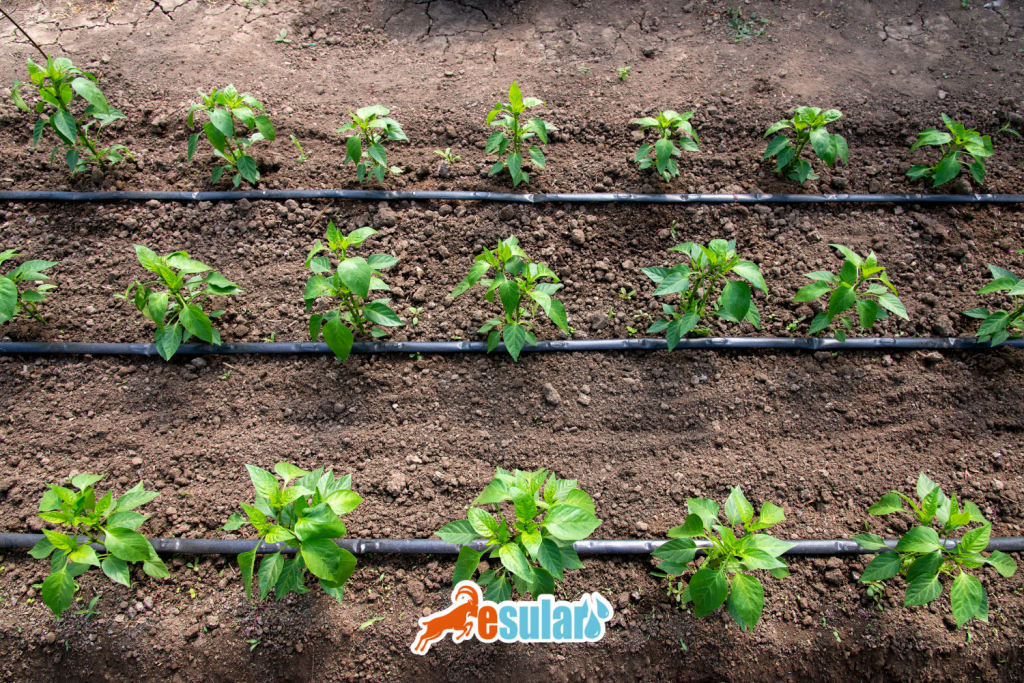
Sub-surface Irrigation: Water is provided to plants through a pipe system under the soil. This method ensures that water stays in the soil for a much longer period and meets the water needs of the plants.
-
Vertical Irrigation: Water is provided through a pipe system placed vertically into the soil. This method ensures that water stays in the soil for a longer period and meets the water needs of the plants.
-
Basin Irrigation (Pond Irrigation): After a pond is created on the field, water is taken from inside the pond and provided to the plants. This method ensures that water stays in the soil for a longer period and meets the water needs of the plants.
-
Furrow Irrigation (Drained Irrigation): After a drainage system is created on the field, water is provided to the plants through the drainage system. This method ensures that water stays in the soil for a longer period and meets the water needs of the plants.
6. Subirrigation: Water is provided from water wells under the plants. This method ensures that water stays in the soil for a much longer period and meets the water needs of the plants.
Kategoriler