Banana Cultivation
Banana cultivation is generally concentrated in the hot and humid tropical forests of Southeast Asia. The banana tree is a herbaceous plant species and is characteristically covered with sheathed leaves. Under these leaves, there is a swollen rhizome. The leaf surface varies between an average of 2.5 to 3 square meters depending on the variety. The trunk of the banana tree usually carries a single branch that will form a bunch of fruit.
Banana production in Turkey was first carried out in the Anamur region in 1935. Over the years, Turkey's domestic banana production has increased and reduced the need for imported bananas. This development has contributed to banana cultivation in Turkey becoming an important sector.
Careful management of factors such as suitable climate conditions, soil structure, and irrigation methods for banana cultivation is important for healthy and efficient banana production.
Greenhouse Banana Cultivation
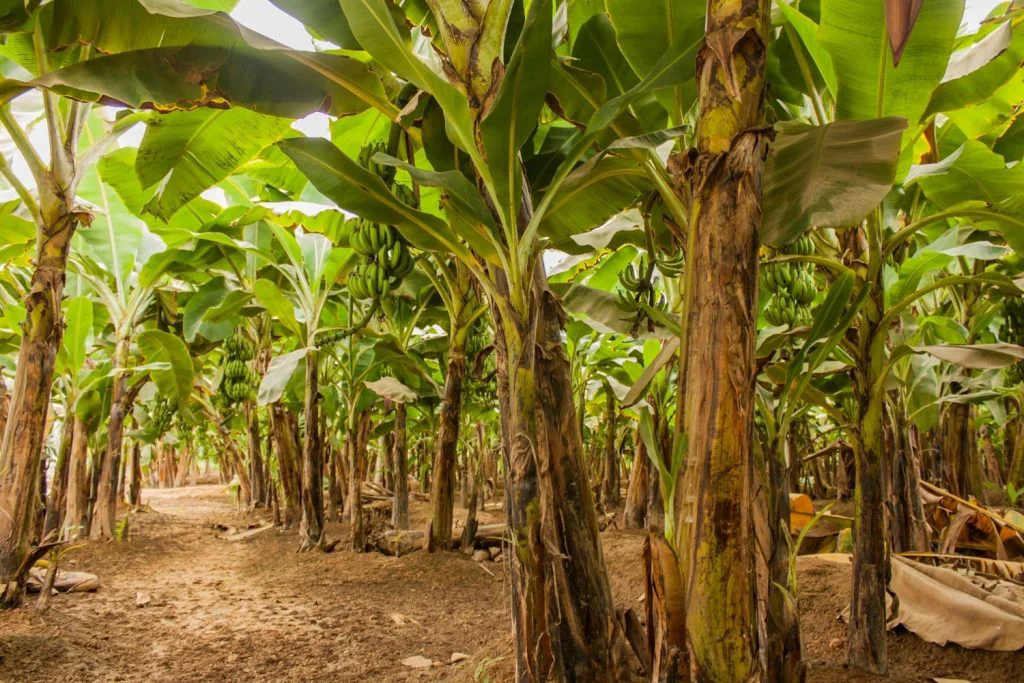
Banana cultivation in a greenhouse environment is generally carried out under metal and wooden greenhouses.
When choosing a suitable location for banana planting, the effects of frost and wind should be avoided. Additionally, it is important that irrigation water is available and of high quality. Before planting, it is necessary to control nematodes to disinfect the soil. The use of windbreaks is important for protecting plants, especially in windy regions.
There are two basic methods for arranging plants inside the greenhouse:
- Simple Lines: Rows arranged at 2.5 m intervals in every direction.
- Double Line (Twin): 1.5 to 2 m between twin rows; 4 to 6 m between double rows; and 1 to 2 m intervals between plants in the row.
Plants should consist of well-selected and well-maintained mother plants. Mother plants should be free from issues such as plant diseases and should not be affected by soil nematodes. The suckers around the mother plants should be selected before the vegetative period of the plant. It is recommended to perform eye-opening before the flowering of the mother plant.
Soil preparation includes disinfecting the soil with nematicide before opening the planting holes. The holes should generally be 40 to 50 cm in width and 35 to 40 cm in depth. A mixture of fertilizer, nitrogen, and potassium should be added to each hole. Plants are planted in holes that have been quickly disinfected by dipping them in pre-prepared and diluted bleach. During this, only 8-10 cm should be allowed to appear above the neck. Very deep plantings should be avoided to prevent crown rot.
Banana Tree Diseases And Pests
The banana tree can be affected by various diseases and pests throughout its entire life cycle. These issues include the following:
- Yellow Sigatoka: A fungal disease affecting banana leaves. It can weaken the plant by causing yellowing and spotting on the leaves.
- Black Sigatoka: A fungal disease with high virulence that can cause more damage than Yellow Sigatoka. It can completely destroy bananas.
- Dysfunctional Wilt: A disease frequently seen in banana production areas. It can cause plants to wilt.
- Moko or Bacterial Wilt: A bacterial disease that causes high production loss and has no resistant variety.
- Soft Rot: A disease caused by motile bacteria. It leads to the weakening of the plant by causing the rhizome to rot.
- Banana Mosaic: A disease caused by the cucumber mosaic virus. It can cause mosaic-like symptoms on the leaves.
- Cracks in Banana Tree: A virus transmitted through citrus scales. It can cause symptoms such as yellowing and wilting on leaves.
- Nematodes: A serious problem for banana growers. They prevent the normal development of the plant by damaging the root system.
These diseases and pests are important issues that banana growers should pay attention to. Taking appropriate measures for disease and pest management is important for protecting plant health.
Things to Consider in Greenhouse Banana Cultivation
There are a number of important factors to consider in greenhouse banana cultivation. First, the amount of irrigation must be meticulously controlled because over-irrigation can cause the bulb to rot and the plant to die. Care should be taken with the plant's root system and surroundings during planting and removal processes. An effective ventilation system is needed for temperature and humidity control inside the greenhouse; care should be taken especially in summer months to ensure the internal temperature does not exceed 34 degrees. When choosing greenhouse covering material, high light transmittance and low humidity condensation rates should be considered. Additionally, pest control strategies should be developed, and plant maintenance should be performed regularly. The use of chemical fertilizers should be avoided, and organic fertilizers should be preferred. Cutting the main flower ensures that the plant's energy is used to nourish the fruits and supports healthy fruit formation. These measures are important for healthy and efficient greenhouse banana cultivation.
Fertilization in Banana Cultivation
Fertilizer plays a major role in banana cultivation, as the banana tree needs suitable nutrients for healthy growth and efficient fruiting. It is important for the soil to be rich in organic matter to provide the nutrients the plant needs. Therefore, mature fertilizers can be used to improve soil quality before planting. The use of light organic fertilizers such as compost or worm humus can also increase soil fertility.
The fertilizer need of the banana tree varies depending on its age and size. Young plants should be fertilized more frequently; 0.1-0.2 kg of fertilizer can be used every month. The amount can be increased for adult plants, but it is important to reduce the fertilization amount if the temperature drops below 14ºC or if plant growth stops.
Fertilizers are generally indicated by NPK ratios on the label. Since bananas especially have a high potassium requirement, fertilizers containing potassium can be preferred. However, a balanced fertilizer or a fertilizer containing the missing nutrients based on soil analysis results can also be used. Regular fertilization is an important practice for healthy and efficient banana cultivation.