Blueberry Cultivation
Blueberry cultivation is an agricultural activity that has become popular worldwide in recent years. Blueberry, that is, yaban mersini, is known as a fruit with many health benefits and due to these properties, its consumption is gradually increasing. For this reason, many farmers and agricultural businesses are interested in blueberry cultivation.
Blueberry cultivation is a special process that requires the right climate, soil conditions, variety selection, and maintenance methods. There are basic steps for successful blueberry cultivation, and it should be carried out by taking these steps into consideration.
Ecological Requirements of Blueberry
The ecological requirements of blueberry make it a species that especially prefers cool climates and acidic soils. Ideal growing conditions generally include low temperatures in winter and mild summers, which is important for the plant to go through its dormancy period. Acidic soils increase the plant's nutrient uptake and generally require a pH level between 4.0 and 5.0. Well-drained soils are important for the blueberry plant, which is sensitive to water accumulation. Additionally, this plant, which likes semi-shaded areas, prefers to avoid excessive sunlight. Blueberry, which likes humid environments, also requires wind protection and soils with appropriate microbial activity.
Blueberry Propagation Methods
Various methods used to propagate blueberry plants aim to preserve the genetic characteristics of the plant and obtain new plants with desired traits. Although propagation by seed is generally not preferred in commercial production, propagation with saplings is a common method. This is achieved by using young shoots or cuttings taken from the mother plant. Propagation by cuttings involves rooting healthy shoots taken from the mother plant, and this method usually gives successful results. Additionally, blueberry plants can be propagated using methods such as layering and bud grafting.
Blueberry Propagation by Seed
The propagation by seed method is generally preferred for use in breeding studies. In this process, seeds obtained from fully ripened fruits are covered with a thin layer of sand approximately 3 mm thick. Then, the seeds germinate in a greenhouse within a temperature range of 15-25°C, usually in 5 to 8 weeks. This process involves the germination and sapling formation stage of the seeds, and providing appropriate environment and temperature conditions supports successful germination. Propagation by seed is an important method for breeders seeking genetic diversity.
Blueberry Propagation by Cuttings
Blueberry is generally propagated by cuttings, and in this process, softwood, semi-hardwood, and hardwood cuttings are preferred. Most growers generally obtain blueberry saplings from nurseries. However, after the establishment of the garden, growers may also turn to blueberry production on their own farms. In the choice of cutting type, priority is usually given to hardwood, semi-hardwood, and softwood cuttings. With this method, farmers can keep genetic characteristics under control and increase their diversity.
Propagation by Root Cuttings
It is carried out by cutting and removing a rooted piece of wood from the underground stem.
Propagation by Wood Cuttings
Cuttings prepared from 10-15 cm long, dormant old shoots formed in the previous growth period are used. The cutting is made diagonally just below a bud from the bottom cut and just above a bud from the top cut, and the cutting is prepared by completely cutting off and discarding the fruit buds on the shoot.
Propagation by Blueberry Root Shoots
It is carried out by taking advantage of the root-forming property of shoots growing from underground at the root collar part. It is the simplest and fastest propagation method, especially preferred in cases where a small number of saplings are needed.
Blueberry Maintenance Tasks
Blueberry maintenance tasks are important for the healthy growth of blueberry plants and for achieving productive production. First, it should be ensured that the plants have an appropriate soil pH level, because blueberry prefers acidic soils. Irrigation should be carried out regularly to prevent the plants from drying out and to support fruit formation. Fertilization from the time of sapling planting should be applied at regular intervals during the growing season, especially with fertilizers containing organic matter. Regular pruning of plants is important in terms of increasing sunlight and ventilation. Additionally, the control of harmful organisms and regular monitoring against diseases should also be part of the maintenance routine. These methods can support the healthy development of blueberry plants and ensure high-quality fruit production.
Soil Tillage and Weed Control in Blueberry Cultivation
Due to its shallow root system, the blueberry plant needs superficial soil tillage. Especially in dry seasons and when there are limited irrigation opportunities, soil tillage should be continued throughout the vegetation season. Although the hoeing method is generally used, in large areas, hoeing machines are preferred to increase the efficiency of this process. Weed control is generally carried out through soil tillage and herbicide applications. In this way, the healthy development of the blueberry plant is supported and a productive production process is ensured.
Irrigation in Blueberry Cultivation
Irrigation in blueberry cultivation is of critical importance for healthy growth and high yield. An effective irrigation program brings quality with it. These plants generally prefer acidic and well-drained soils, so irrigation frequency and amount should be carefully adjusted by considering soil moisture levels.
The irrigation process can be carried out using either drip or sprinkler methods, depending on available facilities. Since blueberry plants have a long ripening season, irrigation is applied at 10-day intervals, usually 2-3 times during the harvest period. Irrigation strategies should be organized based on factors such as the plant's needs, climate conditions, and soil characteristics. Continuous observation and selection of the appropriate irrigation method are important for maximizing the healthy growth and fruit yield of blueberry plants.

Smart Irrigation Systems in Blueberry Cultivation
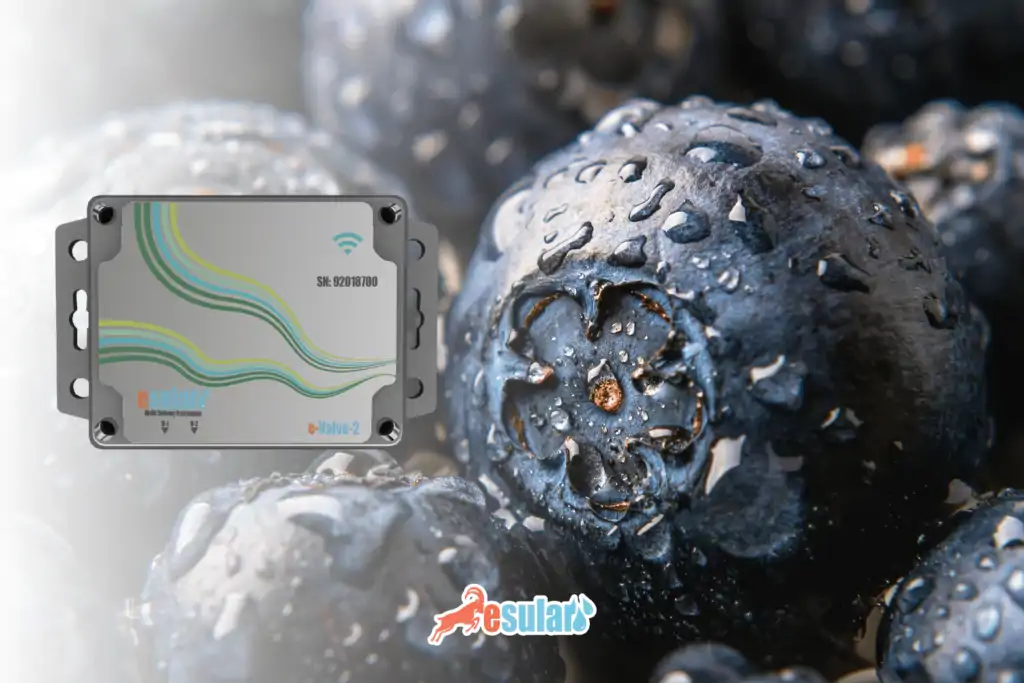
Smart irrigation systems in blueberry (yaban mersini) cultivation are a modern agricultural technology used to meet the water needs of plants more effectively and efficiently. Smart irrigation systems measure soil moisture levels, air temperature, and other environmental factors through various sensors and automatic control mechanisms. This information is tracked and analyzed by Web or mobile applications, a computer, or a smart control unit, and algorithms are used to optimize the irrigation system. By using Esular smart irrigation systems, it is possible to modernize blueberry cultivation and save water, energy, and manpower.
How Often Should Blueberry Be Irrigated?
The answer to the question of how often blueberry should be irrigated is that since blueberries generally have a long ripening season, irrigation is applied at 10-day intervals and usually 2-3 times during the harvest period.
Fertilization in Blueberry Cultivation
One of the processes of critical importance for success in blueberry cultivation is the application of appropriate fertilization methods. According to recommended practices, it is suggested to apply 50-70 kg of compound fertilizer (5-10-5) per decare in the spring when the buds swell. If the soil is overly acidic, 16 kg/da of sodium nitrate or calcium nitrate should be applied approximately 6 weeks after this fertilization. If the soil is not acidic, alternatively, 13-14 kg/da of fertilization should be done in the form of ammonium sulfate. This correct fertilization practice is important for meeting the nutrient needs of the plants and ensuring healthy growth.
Pruning in Blueberry Cultivation
The general guideline for pruning practices in blueberry cultivation is as follows: Low-spreading branches close to the ground should be cut; upright branches or shoots should be preferred. If the branches in the middle of the bushes are very close and densely intertwined, the weak and older branches in the middle should be removed. Pruning can generally be started in the autumn, immediately after the leaves fall. However, in regions with a risk of exposure to winter frosts, pruning can also be carried out in the spring. Pruning is done to maintain the shape of the plant, increase air circulation, and ensure that sunlight reaches more effectively.
Harvest in Blueberry Cultivation
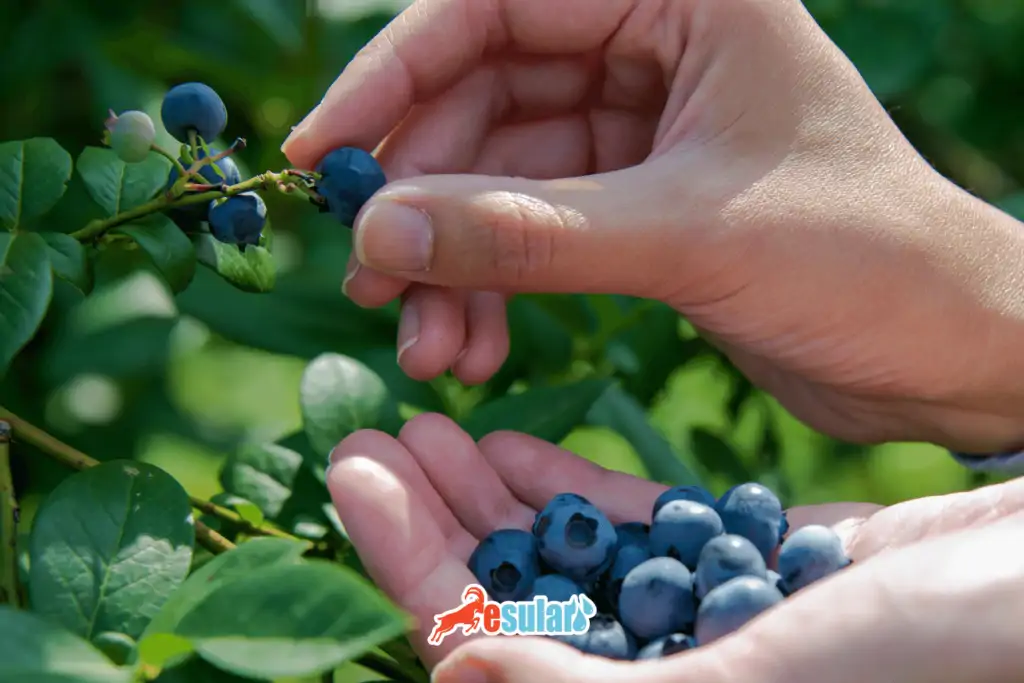
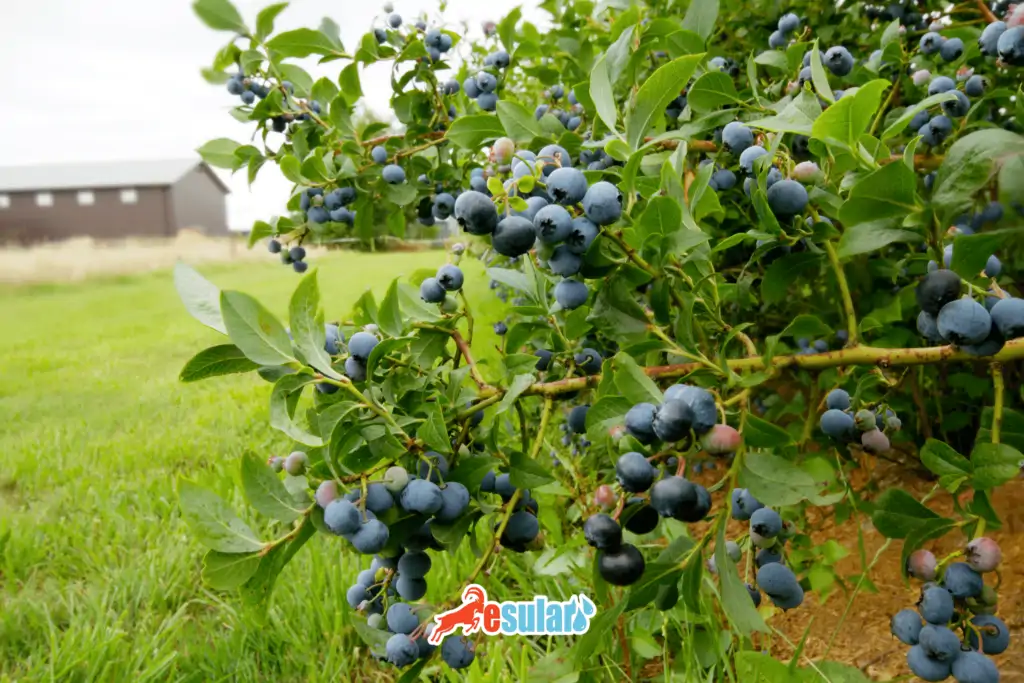
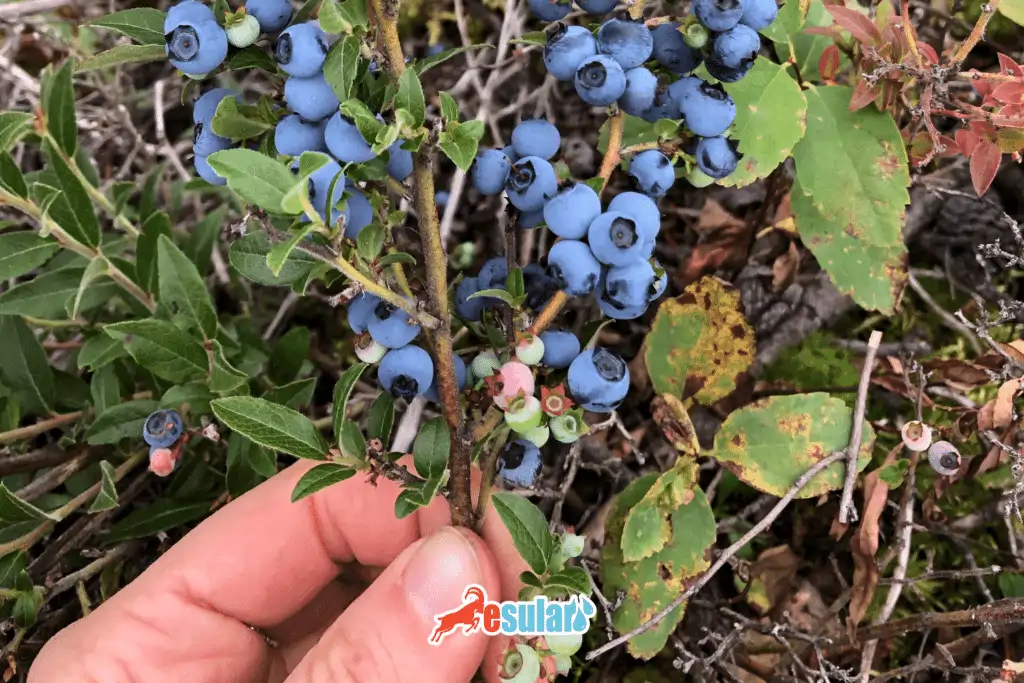
Blueberry fruits develop in clusters, and there are usually 5-10 fruits in a cluster. These fruits ripen within 60-80 days depending on the variety, the type of branch left during pruning, and the climate. During the ripening process, the fruits soften, color, sweeten, and the berries grow. Since blueberry fruits ripen at different times, harvesting should be done at least once a week throughout the ripening period. In manual harvesting, ripe fruits are separated from the cluster using the thumb and index finger, and in this way, unripened berries are left on the cluster, so that the collected fruits are obtained without injury. On flat or terraced areas, harvesting machines can be used; however, considering that fruits may be damaged in mechanical harvesting, unripened fruits may also be collected, and the shelf life of the fruits may decrease, hand harvesting is recommended where labor is available. Blueberry is not harvested in rainy weather, and after harvest, the temperature of the fruits must be lowered by subjecting them to a pre-cooling process; in this way, the shelf life of the fruits can be increased.