Cotton Cultivation
Cotton cultivation is of great importance for producer countries due to its wide usage areas, economic added value, and providing employment. Cotton is the primary raw material for the ginning industry for processing, for the textile industry with its fiber, for the oil and feed industry with its seed, and for the paper industry with its linter. The oil obtained from cotton seeds is increasingly used in biodiesel production as an alternative to petroleum. Population growth and rising living standards are increasing the demand for cotton. For this reason, the need for cotton is increasing worldwide, and despite past economic difficulties, production and consumption values are expected to increase in the future.
Since the number of countries with an ecology suitable for cotton farming is small, a large part of world cotton production is carried out by a few countries, including Turkey. Although China has been the leader in cotton cultivation for many years, it has been in competition with India's production increase in recent years. According to estimates for the 2018/19 season, the top five countries producing the most cotton in the world are China, India, USA, Brazil, and Pakistan, respectively. In consumption, the top five places were taken by China, India, Pakistan, Bangladesh, and Turkey. The top five countries leading in cotton cultivation yield obtained per unit area in the 2018/19 season are: Australia, Turkey, China, Brazil, and Mexico.
According to International Cotton Advisory Committee (ICAC) data, in the 2018/19 season, Turkey ranks eleventh in the world in terms of cotton planting area, second in terms of lint cotton yield per unit area, sixth in terms of cotton production amount, fifth in terms of cotton consumption, and sixth in terms of cotton imports.
Cotton Growing Conditions
Soil Requirement
Although the cotton plant shows a characteristic of being able to grow in all kinds of soil, it is important for the soil to have a deep profile and be alluvial to obtain maximum yield and quality. For ideal cotton farming, it is desired that the soils be deep, sandy-clay structured, have high water-holding capacity, have good permeability characteristics, and be easily workable and irrigable.
Climate Requirement
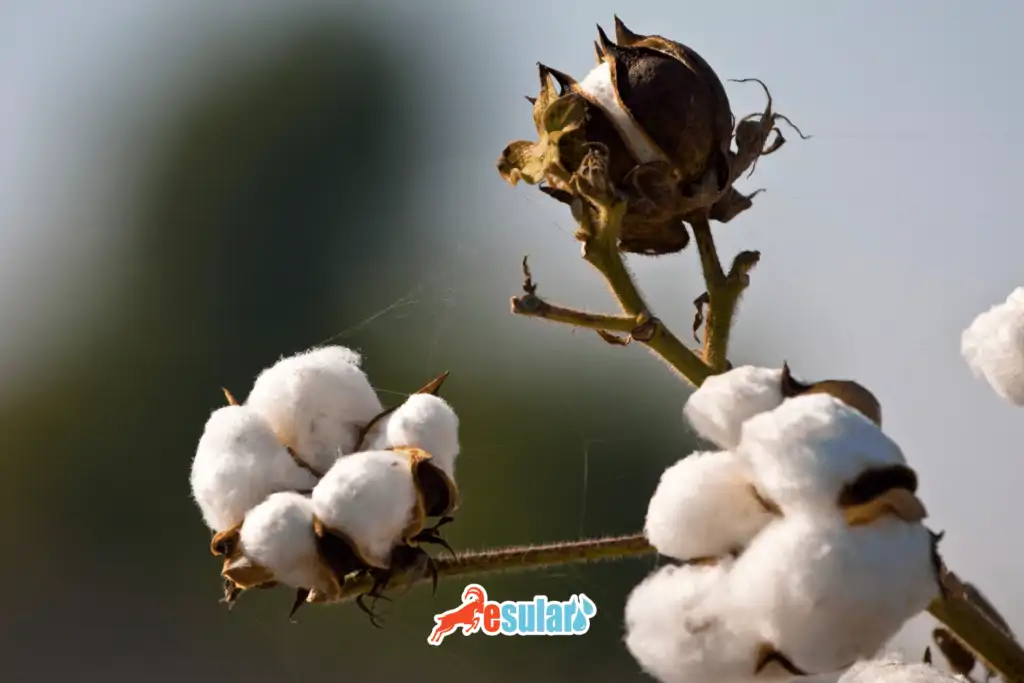
In cotton cultivation, temperature, sunlight, precipitation, and relative humidity play an important role among the basic climate factors. It is optimal for the annual average temperature to be 19ºC, and 25ºC in the summer months. It is desired that the temperature be 20ºC before square formation, 25ºC during the flowering period, and 30-32ºC during the development process of the bolls. During the harvest period, a decrease in temperature (down to 15ºC) is preferred for the bolls to open properly.
Soil Preparation
In the stage of preparing the field for cotton planting, first, field cleaning and subsoil processing should be carried out. In areas where cotton cultivation has been carried out for many years, a hard layer known as a plow pan or hardpan may form under the plow over time. This layer must be broken because it can hinder the development of plant roots. Tools called subsoilers are generally used for this process. A subsoiler is a tool that can process up to a depth of 90 cm without disturbing the upper structure of the soil. This process is usually applied together with autumn and winter plowing and follows the preparation of the seedbed. If cotton is to be planted again after cotton in the field, the stalks are cut in the autumn months and the soil is plowed at a depth of 20-25 cm. If the field is weedy and the soil structure is suitable, the plowing process can be repeated in the winter months. If cotton is to be planted after grain harvest, it is recommended to plow immediately while the soil is at the appropriate moisture (tav). The spring plowing, which is the last plowing to prepare the seedbed in cotton cultivation, is generally carried out at a depth of 15 cm.
Planting
When is cotton planting done?
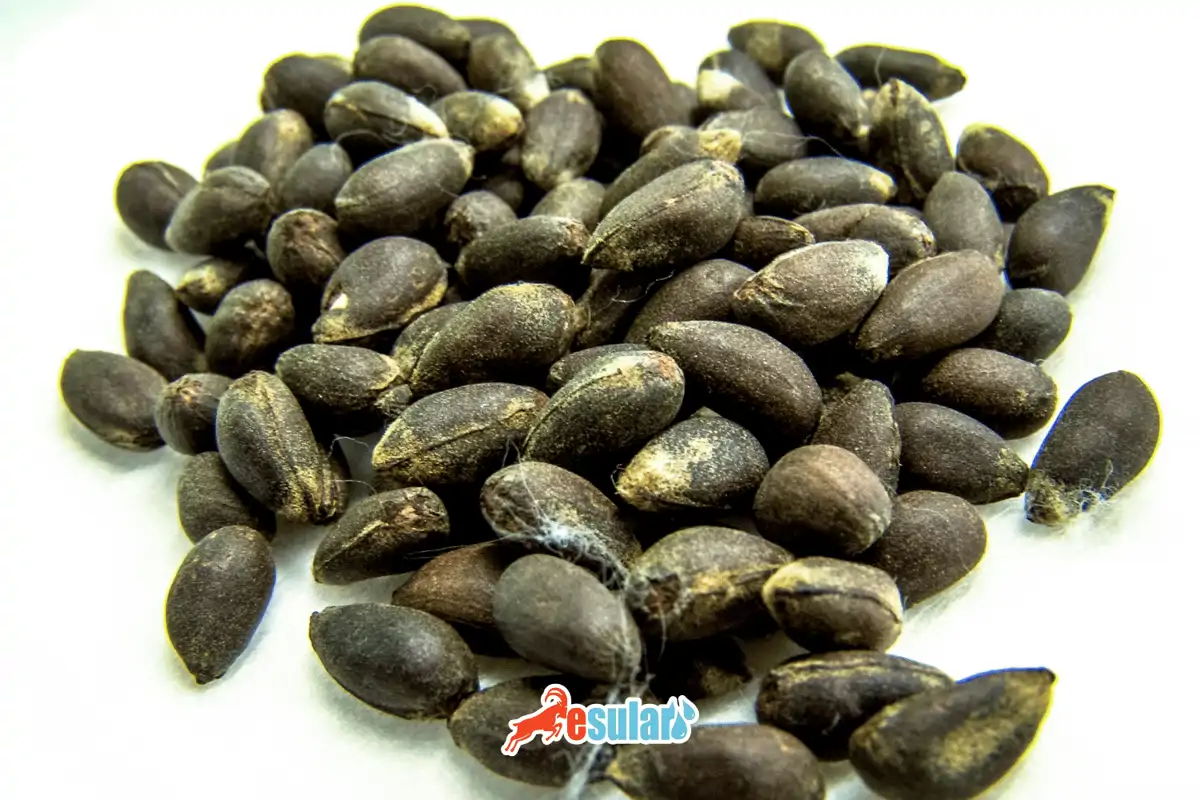
To obtain high yield and quality products, the use of seeds with high genetic purity is extremely critical. When choosing a good seed lot, the following characteristics should be considered:
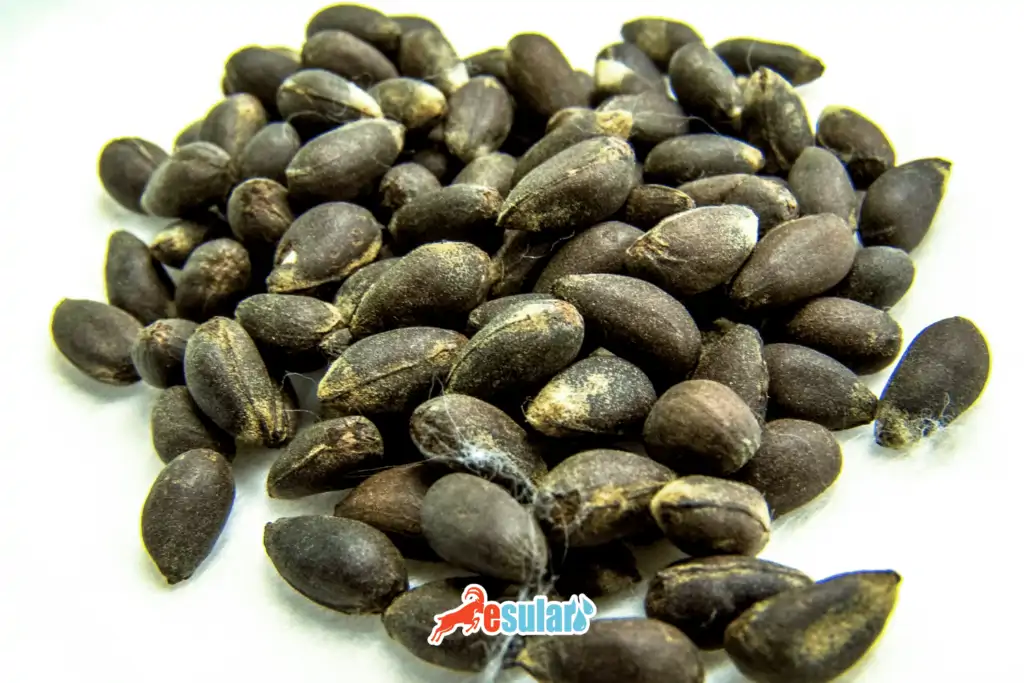
- Cotton seeds should be large, full, and uniform in shape and color; they should not contain many naked, green, brown, or sparsely fuzzy seeds.
- It should be selected and well-cleaned; it should not contain foreign substances such as empty and broken seeds or leaves.
- Seeds should be dry and hard.
- Germination power should be 80% and more.
- It should be delinted (delinte tohum).
Cotton planting time is determined depending on climate conditions. For planting, the soil temperature must be above 15ºC. Planting time may vary from year to year, but generally, the most suitable planting time is between March 25-April 30. Planting is carried out in rows with a drill; the row spacing should be 70 cm, and the distance between plants in the row should be 35-40 cm. Planting depth is generally 3-4 cm depending on soil conditions. Germination of the seed occurs within 5-10 days under normal conditions.
Where does cotton grow?
High cotton production costs have caused cotton producers, especially in the Aegean and Çukurova regions, to turn to alternative crop diversity, and cotton planting areas have narrowed over time due to the influence of policies implemented by countries like the USA. Cotton farming in Turkey is generally concentrated in the Aegean Region, Southeastern Anatolia Region, Çukurova, and Antalya regions. According to TUIK data for 2018, the Southeastern Anatolia Region took first place in terms of planting areas. According to the same data, 57% of the cotton produced in Turkey was produced in the Southeastern Anatolia Region, 21% in the Aegean Region, 21% in the Çukurova region, and 1% in the Antalya region.
Maintenance
Maintenance operations in cotton cultivation include thinning, hoeing, and topping. Thinning is necessary for the healthy development and rapid maturation of the plant. A light thinning (singling) should be done at 5-6 cm intervals when the plants still have 4 leaves. The first thinning should be carried out with the first hoeing, and the second (full) thinning with the second hoeing. It is important to destroy weeds that appear after emergence by hoeing. The number of hoeings varies depending on the weed status in the field. Breaking off the 10-15 cm part from the top of the plant after the bolls start to open is called topping. This process can be applied in late-planted or over-irrigated fields. There is no need for topping or the use of growth regulators in normally developing plants.
Irrigation
Depending on different climate and soil conditions, the water requirement of the cotton plant varies between 400-600 mm. Since the annual precipitation amount in cotton production regions is usually insufficient, the amount of water required for the healthy development of the plant must be provided through irrigation. Irrigation time and the amount of water to be given are determined according to the signs of water demand of the plant and the moisture status in the soil. For this reason, it is important to benefit from the power of technology here. For the varieties grown in our country, in medium-textured soils and normal climate conditions, it will be appropriate to irrigate 4-5 times at 15-20 day intervals. You can read our following content for correct irrigation.
Diseases and Pests
The most common diseases in cotton cultivation;
—Cotton wilt disease
—Seedling root rot
—Angular leaf spot disease
—Anthracnose
The most common pests in cotton cultivation;
—Soil worms (Cutworms)
—Cotton aphid
—Leafhopper
—Whitefly
—Red spider mite
—Pink bollworm
—Bollworm
—Cotton leafworm
—Spiny bollworm
—Beet armyworm
High humidity levels and hot weather conditions provide a suitable environment for the emergence of diseases and pests. For this reason, the necessity of spraying 4-5 times arises in the Çukurova region.
Fertilization
The amount of fertilizer to be used in cotton cultivation varies according to climate and soil conditions, as well as irrigation and cotton variety. In determining fertilizer types and amounts, soil analyses should be carried out first. Generally used fertilizer types and amounts are as follows:
Nitrogenous fertilizers: 14-16 kg of pure nitrogen per decare
Phosphorus fertilizers: 4-6 kg of pure phosphorus per decare
Potassium fertilizers: Since our soils are generally rich in potassium, there may be no need for use. However, this situation should be determined by soil analyses.
Other fertilizers: Should be determined according to soil and plant analysis results.
Harvest
Cotton harvest begins with the ripening of the bolls. The harvest date varies depending on climate conditions, planting date, and irrigation conditions. In our country, harvest usually starts from the end of August and continues until the beginning of November. Although cotton harvest is generally carried out manually 2-3 times, manual harvest has ceased to be economic due to labor shortages. For this reason, the transition to mechanization in cotton harvest has become inevitable. In recent years, many studies and applications have been made for machine harvesting.