Increasing Productivity with Smart Farming and Modern Technologies
In the modern agricultural world, the most fundamental element determining productivity is blending the right information with the right technology. In this new era where traditional methods have left their place to data-based decisions, our producers have many question marks in their minds. Smart farming does not only consist of sensors and software; it is about understanding the language of the soil, calculating every drop of water, and meeting the plant's needs exactly on time. As Esular, we address a wide range of topics that our farmers in the field are most curious about, from fertilization to irrigation, from tractor selection to agricultural loans.
Frequently Asked Questions About Fertilization Strategies and Plant Nutrition
Fertilization is one of the most costly and critical stages of agricultural production. Correct fertilizer selection and application method directly affect the harvest quantity and quality. Here are the most popular questions from the field:
Does Microgranular Fertilizer Really Increase Yield?
Microgranular fertilizers accelerate root development, especially during the emergence period, and provide homogeneous germination. Among producers, the question 'Will there be a 2-ton increase in yield if we achieve balanced and stable emergence without using microgranules?' is frequently asked. However, a 2-ton yield increase alone is not guaranteed. Yield increase depends on the following factors:
- Soil structure and drainage capacity
- Organic matter level
- Irrigation schedule and smart farming system use
- Basal fertilizer balance
- Variety selection
When applied correctly, it significantly supports emergence power and early development, especially in beets and corn. Microgranule is a 'starter' fertilizer and does not meet the seasonal nutrient needs alone.
Should We Reduce Basal Fertilizer When Using Microgranules in Beet Planting?
Normally, a producer who applies 40 kg of basal fertilizer per decare may tend to reduce this amount when using microgranules. However, microgranule is not the main nutrient source. Dropping far below 40 kg is risky; the 35-40 kg range is considered safe. The most accurate approach is to optimize according to soil analysis results.
Smart Irrigation and Water Management: The Key to Yield
The water crisis and increasing energy costs have made irrigation management the most strategic issue in agriculture. The solutions offered by Esular aim to reduce costs by ensuring the most efficient use of water.
Does Drip Irrigation Increase Yield by 30%?
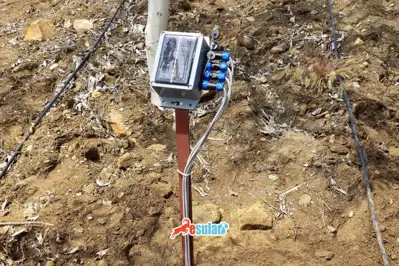
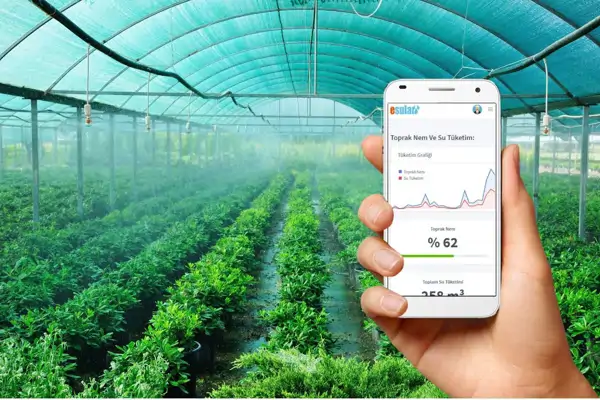
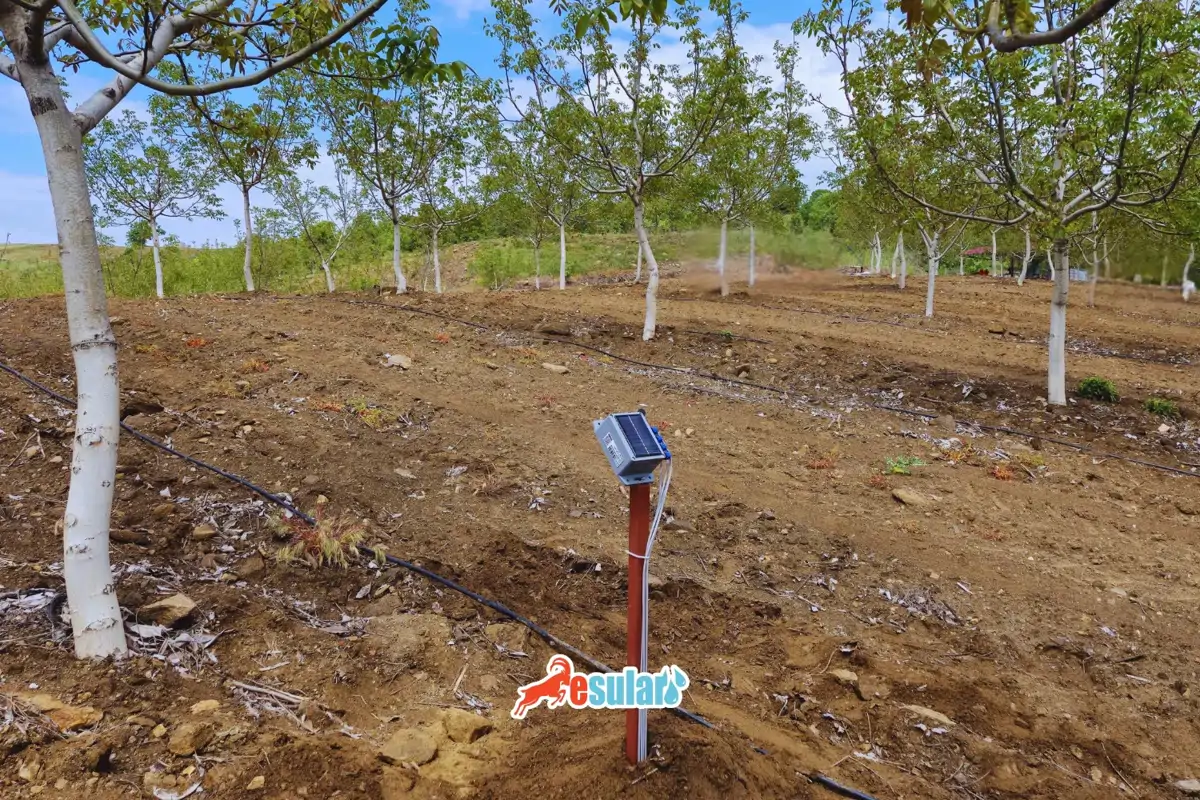
Field data and producer feedback show that drip irrigation systems can provide up to a 30% yield increase. However, this rate varies according to soil structure, fertilizer program, and irrigation frequency. In terms of water and energy efficiency, drip irrigation is definitely the superior method. Especially systems supported by wireless battery-powered soil moisture sensors prevent the plant from entering water stress.
How to Reduce Electricity Costs in Irrigation?
Especially in regions like Southeastern Anatolia, electricity costs reaching 2500 TL per decare per season challenge the producer. In 12-14 hour irrigation scenarios, the following strategies should be followed to reduce costs:
- Performing pressure optimization
- Reducing evaporation by preferring night irrigation
- Selecting efficient pumps and stages
- Sensor-supported management with Esular smart irrigation systems
Esular systems prevent unnecessary pump operation by providing the exact amount of water the soil needs on time and provide significant energy savings.

Crop-Based Cultivation Questions: Beet, Corn, and Sunflower
Each plant's water and nutrient needs are different. We detail the crop-specific questions most asked by our producers below.
Does Microgranular Accelerate Beet Emergence?
Yes, especially in cold soils, early spring plantings, and lands with phosphorus lock-up, starter microgranules significantly accelerate emergence. However, as our producers say: 'It is not a miracle on its own', it must be supported with correct irrigation and basal fertilization.
Can Animal Manure Be Used Instead of DAP in Silage Corn?
Animal manure is a great source of organic matter for the soil, but it does not exactly replace DAP (Diammonium Phosphate). General recommendations are as follows:
- Well-rotted cattle manure: 3–5 tons/decare
- Poultry manure: 1–1.5 tons/decare
⚠️ Warning: Fresh manure can burn plant roots and may not fully meet phosphorus needs. The best results are obtained with a balanced use of organic and chemical fertilizers.
Can Second Crop Oilseed Sunflower Be Grown in Central Anatolia?
Yes, after barley or wheat harvest, 2nd crop sunflower can be grown in Central Anatolia. However, there are critical success factors:
- Planting date should be at the latest early July (around July 5th).
- Frost risk should be considered as harvest may extend to the end of October.
- Mid-early varieties (e.g., LG5485) should be preferred.
- The irrigation plan should be clear; usually, 3-4 waterings are sufficient.
Agricultural Mechanization and Tractor Selection
Equipment and tractor selection changes everything from fuel consumption to labor efficiency.
What is the Ideal Plow for a 100 HP Tractor?
According to field experiences, a 4-bottom 12-inch plow is considered ideal for a 100 horsepower tractor. Using larger equipment in heavy soils strains the engine and significantly increases fuel consumption (over 3.5 liters per decare). Operating the plow vertically makes plowing easier and provides fuel savings.
Is a License Required for Using Agricultural Drones?
Yes, operators who will perform field spraying with drones are required to have DGCA (Directorate General of Civil Aviation) registration and the relevant UAV license. In case of unauthorized flights and complaints, serious penal sanctions are applied.
Soil Science: pH Balance and Sulfur Application
Fertilization done without knowing the chemical structure of the soil means burying money in the ground. Especially in high nutrient-consuming plants like corn, pH balance is vital.
What is the Ideal pH Range for Corn?
The optimum soil pH range for the corn plant is between 6.0 and 7.2. In this range, the availability of elements such as iron, zinc, and phosphorus is maximum. When the pH rises above 7.5, phosphorus becomes bound and the plant cannot be nourished. In this case, it is recommended to apply elemental sulfur to lower the pH over time. You can monitor these values instantly with Esular's wireless soil pH-EC sensor.
Questions About Agricultural Loans and Financing
The issue our producers struggle with most when investing is financing. Information in the field about agricultural loans up to 400,000 TL can sometimes be confusing.
What are the Conditions for the 400,000 TL Agricultural Loan?
Although it is stated in the announced campaigns that tax and SGK debt conditions will not be required, implementation differences can be seen among bank branches. For the most accurate information, Ziraat Bank or Agricultural Credit Cooperatives should be contacted directly. Loan expenses (insurance, file fee, etc.) vary from bank to bank.
Find Solutions to Your Questions with Esular Technologies
Real experiences in the agricultural field show that most yield losses stem from wrong timing and incomplete analysis. As Esular, we eliminate these problems with the smart irrigation and automation solutions we have developed.
- Precision Irrigation: Provide the exact water the plant needs with soil moisture sensors.
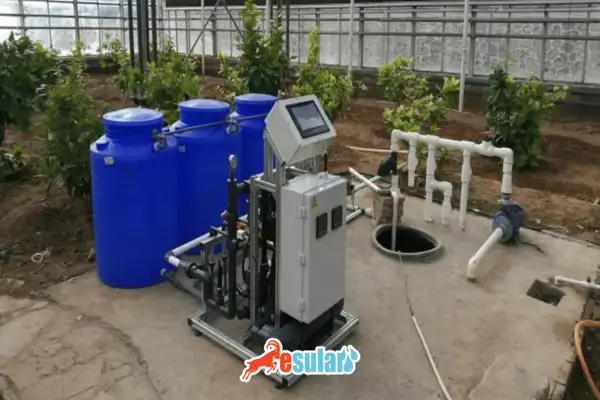
- Remote Control: Start and stop irrigation with wireless valve control units without going to the field.
- Climate Tracking: Be prepared in advance for frost risk and disease pressure with meteorology stations.
- Data Analysis: Plan for the next season by analyzing your past data via the Esular cloud platform.
To get more information about smart farming systems and discover our solutions specific to your business, you can contact us or visit our about us page to review our vision.
Conclusion: Abundance That Comes with Data
The only thing that determines success in agriculture is not seeds or fertilizer. Success is the combination of correct fertilization, perfect water management, correct equipment adjustment, and the selection of varieties suitable for the region. The answer to the question 'Which crop makes the most money?' is clear: The crop from which you get the highest yield is the most profitable one. The way to maximize yield is to make technology a part of your field.
For more information and demo requests:
- Visit our website: esular.com
- Follow our blog posts: Esular Blog
- Examine our products: Smart Irrigation Packages
With Esular, let your field always be under your control and your yield always at the peak!