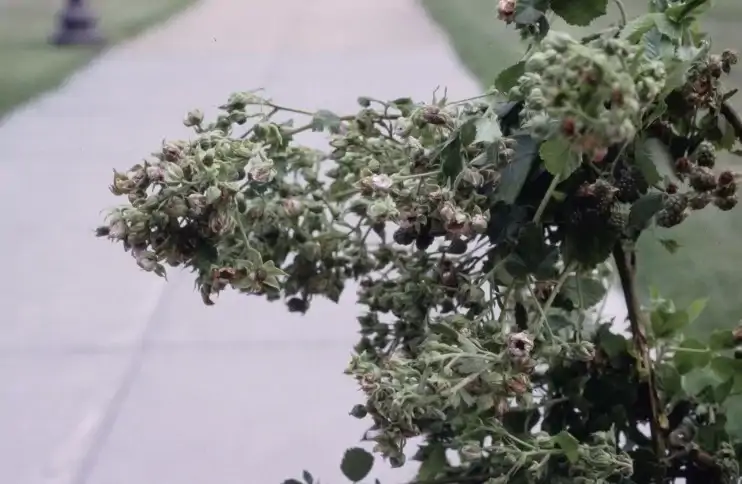
Distorted petals and enlarged sepals giving a double blossom appearance are among the visible symptoms. Unopened flowers appear enlarged and redder than normal. Fruit is not produced on infected canes.
Causal Agent
Fungus
Conditions for Disease Development
Wild blackberry can act as a carrier for the disease; the flowers of non-infected plants can be infected from the flowers of infected plants and symptoms are seen the following year.
Control Method
The most effective method in controlling the disease is the use of resistant blackberry varieties; if plants are already infected but the disease is not yet severe, abnormal flower clusters should be removed and destroyed. Old plants should be removed and destroyed immediately after harvest; Fungicide application can limit damage; the disease can also be controlled by harvesting fruits only in different years, completely destroying the above-ground part of the plants in the intervening years; the planting can be divided in two, so that one half can be cut while the other half is harvested for fruit every year.
Orange Rust in Blackberries
Symptoms
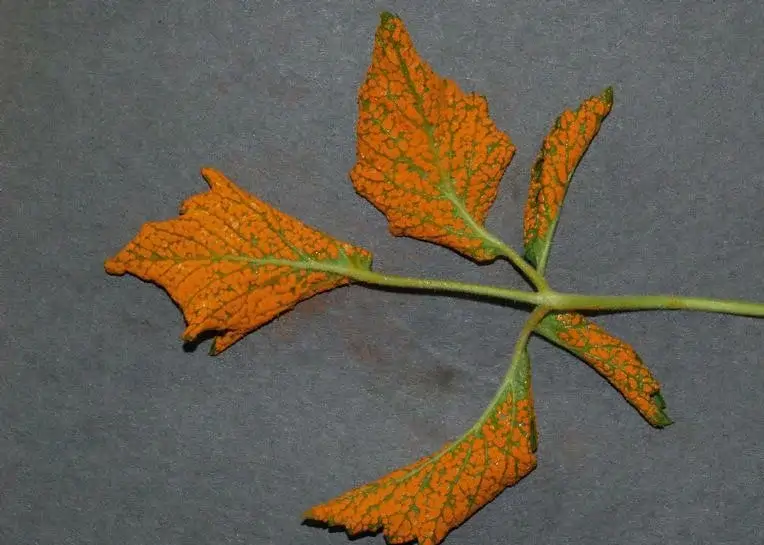
New growth is weak and spindly and lacks thorns; leaves are stunted and distorted and pale in color; waxy pustules develop on the undersides of leaves and become orange and powdery; infected leaves eventually drop from the plant.
Causal Agent
Fungus
Conditions for Disease Development
the fungus overwinters in the host plant
Control Methods
Infected plants must be completely removed. Air circulation around the leaves should be regulated by pruning and trellising the vines. The spread of rust can be minimized by applying leaf fungicides while orange spores are being produced.
Gray Mold in Blackberries
Gray mold on blackberry fruit
rotting fruit covered with fungal growth
Symptoms
Black fungal fruiting masses where spores develop are formed. Flowers can be infected by the fungus and a scorched appearance occurs. A watery rot is visible on the fruit.
Causal Agent
Fungus
Conditions for Disease Development
The occurrence of Botrytis fruit rot is favored by cool and wet conditions; physical damage to the fruit increases the likelihood of infection.
Control Method
Air circulation around the vines should be provided. Over-fertilization of plants should be avoided. Protective fungicides can be used to control the disease.
Anthracnose in Blackberries
Symptoms
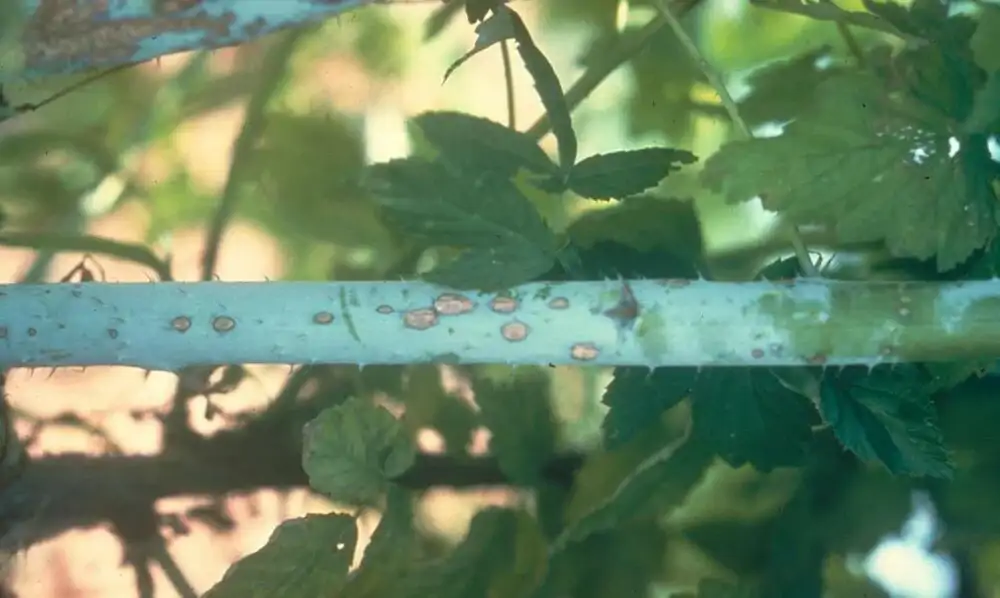
Small purple or red circular lesions are seen on the branches, which enlarge and form a sunken gray, cracked center. Lesions are raised and purple. Lesions merge to form large discolored areas.
Causal Agent
Fungus
Conditions for Disease Development
The occurrence of the disease is supported by prolonged rainy weather and excessive irrigation.
Control Method
Excessive nitrogen fertilizer applications should be avoided, areas surrounding the plants should be kept free of weeds, overhead irrigation and watering only during the day should be avoided, ensuring that plants have enough time to dry.