Greenhouse Automation Products and the Transformation of Modern Agriculture
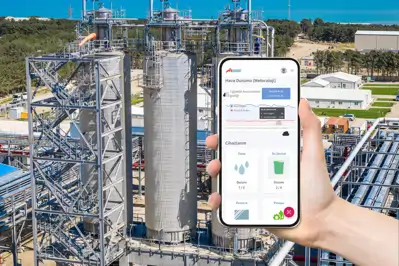
Traditional agricultural methods are leaving their place to technology-oriented solutions in the face of the uncertainties brought by the climate crisis and the food needs of the increasing population. The most important pillar of this transformation is formed by greenhouse automation products. Greenhouses are controlled areas that ensure plants are grown in ideal conditions independent of the external environment. However, providing this control manually both increases labor costs and creates a structure open to human error. As Esular, the smart greenhouse systems we have developed maximize water, energy, and fertilizer savings while protecting plant health.
The success of a greenhouse depends on how precisely the micro-climate within it is managed. The answer to the question what is greenhouse automation is the instantaneous measurement of temperature, humidity, light, CO2, and nutrient balance through sensors and their automatic management by control units. In this article, we will examine in depth the basic automation components that should be present in a modern greenhouse, the technical details, and how these systems work.
Greenhouse Climate Control and Ventilation Automation
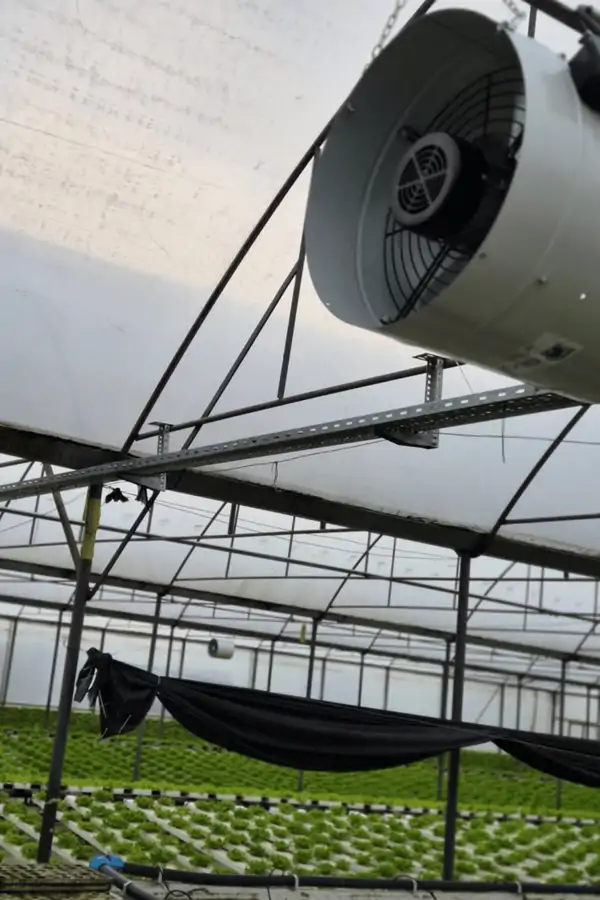
Air circulation and temperature balance within the greenhouse directly affect the transpiration and photosynthesis rate of plants. Automation of ventilation systems is generally carried out through smart window control panels.
Smart Greenhouse Window Control Panels
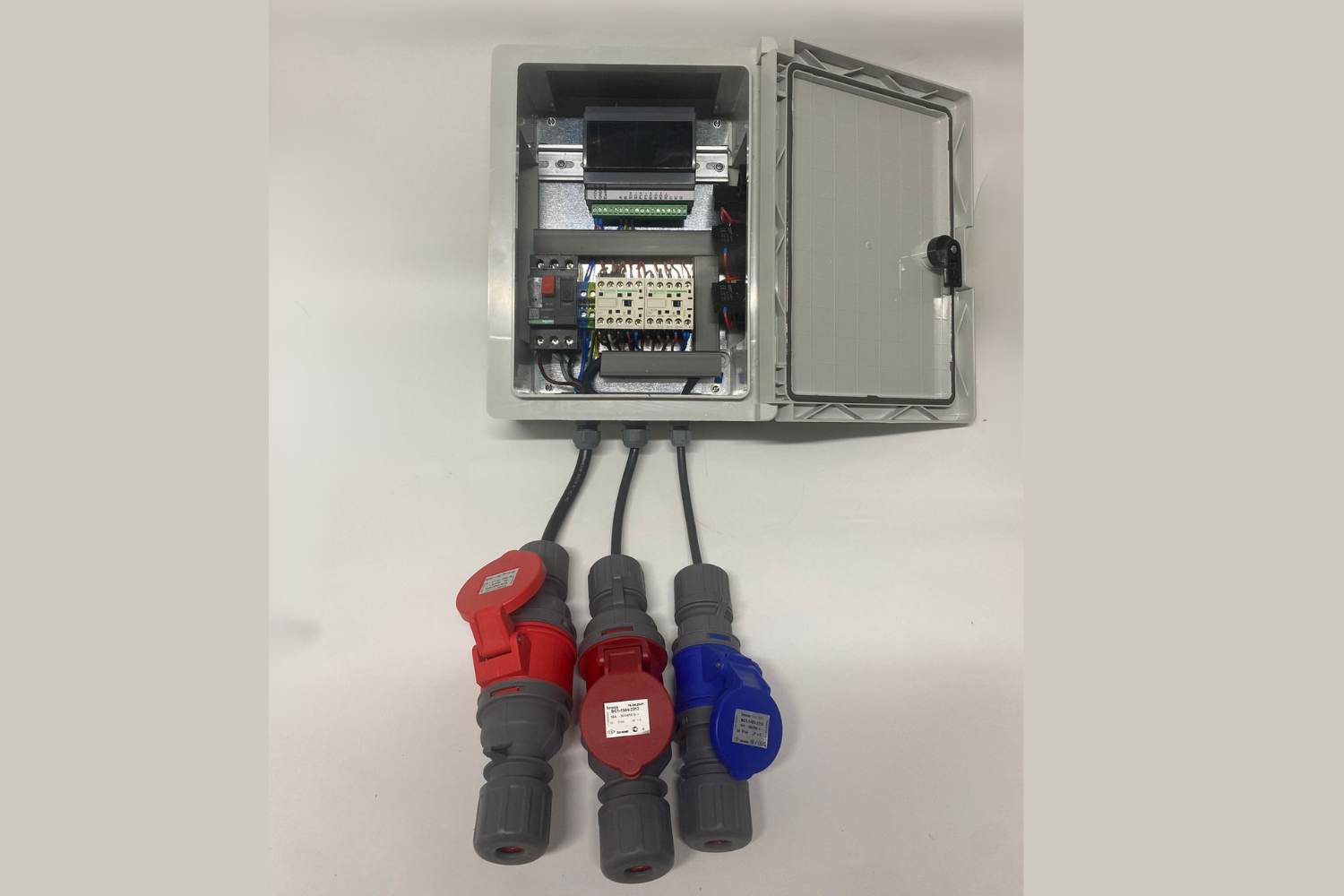
Opening and closing greenhouse windows manually may be insufficient during sudden weather changes (storms, excessive temperature increase, etc.). The Smart Greenhouse Window Control Panel digitalizes this process by wirelessly controlling AC asynchronous motors. It is possible to monitor and manage the status of the windows through a mobile application from anywhere with an internet connection.
Advantages of Window Control Systems:
- Wireless Access: It provides the opportunity to control from anywhere in the world by connecting to the internet via Wi-Fi.
- Gradual Opening: Windows are opened at rates such as 25%, 50%, or 75% to prevent sudden air shocks.
- Sensor Integration: Windows are automatically triggered according to data coming from temperature-humidity sensors in the indoor and outdoor environments.
- Energy Saving: It reduces heating costs by preventing unnecessary heat loss.
For large complexes with a central management need, the Smart Central Greenhouse Window Control Panel should be preferred. This unit reduces installation costs by managing multiple motors from a single point.
Greenhouse Irrigation and Fertigation Automation Products
Providing water and fertilizer to the plant at the right time and in the right amount in greenhouse production is the key to increasing yield. Fertigation (fertilization with irrigation) is the heart of modern greenhouse cultivation.
Automatic Liquid Fertilization System (Smart Agro-Series)
Developed for professional greenhouses, the Automatic Liquid Fertilization System proportionally controls 4 different fertilizer tanks. The system constantly measures the pH and EC (electrical conductivity) values of the water and adjusts the nutrient solution according to the plant's current needs.
Technical Specifications of the Smart Agro Series:
- High Capacity: It can perform precise fertilization up to 4000 liters per hour.
- Precise Measurement: Data tracking at 0.01 resolution with integrated pH and EC probes.
- Wireless Communication: Cloud-based management with GSM, WiFi, and LoRaWAN options.
- Homogeneous Mixture: It delivers the same quality of nutrients to every plant by mixing the fertilizer equally with water.
For more technical details about fertilization automation, you can visit our article How to Fertilize in Soilless Agriculture?.
Smart Valve Control Units
Pulling cables for valve control in wide greenhouse areas is both costly and difficult for fault detection. Esular's Wireless Smart Valve Control Unit can manage valves up to a distance of 10 km with LoRa technology. Thanks to its self-solar-powered structure, it does not need external energy.
Valve Control Options:
- Solenoid Valve Compatible: Ideal for 9V Latch solenoid valves.
- Actuator Valve Compatible: Allows flow adjustment by performing proportional control (0-100%).
- IP68 Protection: It is resistant to humid greenhouse environments with its completely waterproof structure.
Sensor Technologies in Greenhouse Automation
Sensors are the sensory organs of an automation system. It is not possible to talk about smart management without accurate data. The basic sensors used in greenhouses are as follows:
1. Wireless CO2, Humidity and Temperature Sensor
Carbon dioxide (CO2) is necessary for plants to photosynthesize. The Wireless Battery Powered CO2-Humidity-Temperature Sensor precisely measures the air quality inside the greenhouse between 400 ppm and 10,000 ppm. When the CO2 level drops, the system can automatically close the ventilation and activate the CO2 generators.
2. Soil Moisture and EC Sensors
Knowing the moisture level in the plant's root zone optimizes irrigation timing. The Wireless Battery Powered Soil Moisture Sensor measures the moisture at soil depths of 30, 60, 90, and 120 cm gradually. It also monitors salinity and fertilizer density in the soil by performing EC measurement.
3. Hydrostatic and Ultrasonic Level Sensors
Used to monitor the water level of greenhouse irrigation tanks and pools. The Ultrasonic Level Sensor makes precise measurements up to 6 meters without contacting the liquid. When the water level falls below the critical threshold, it prevents dry running by automatically stopping the pump.
Basic Features of Greenhouse Sensors:
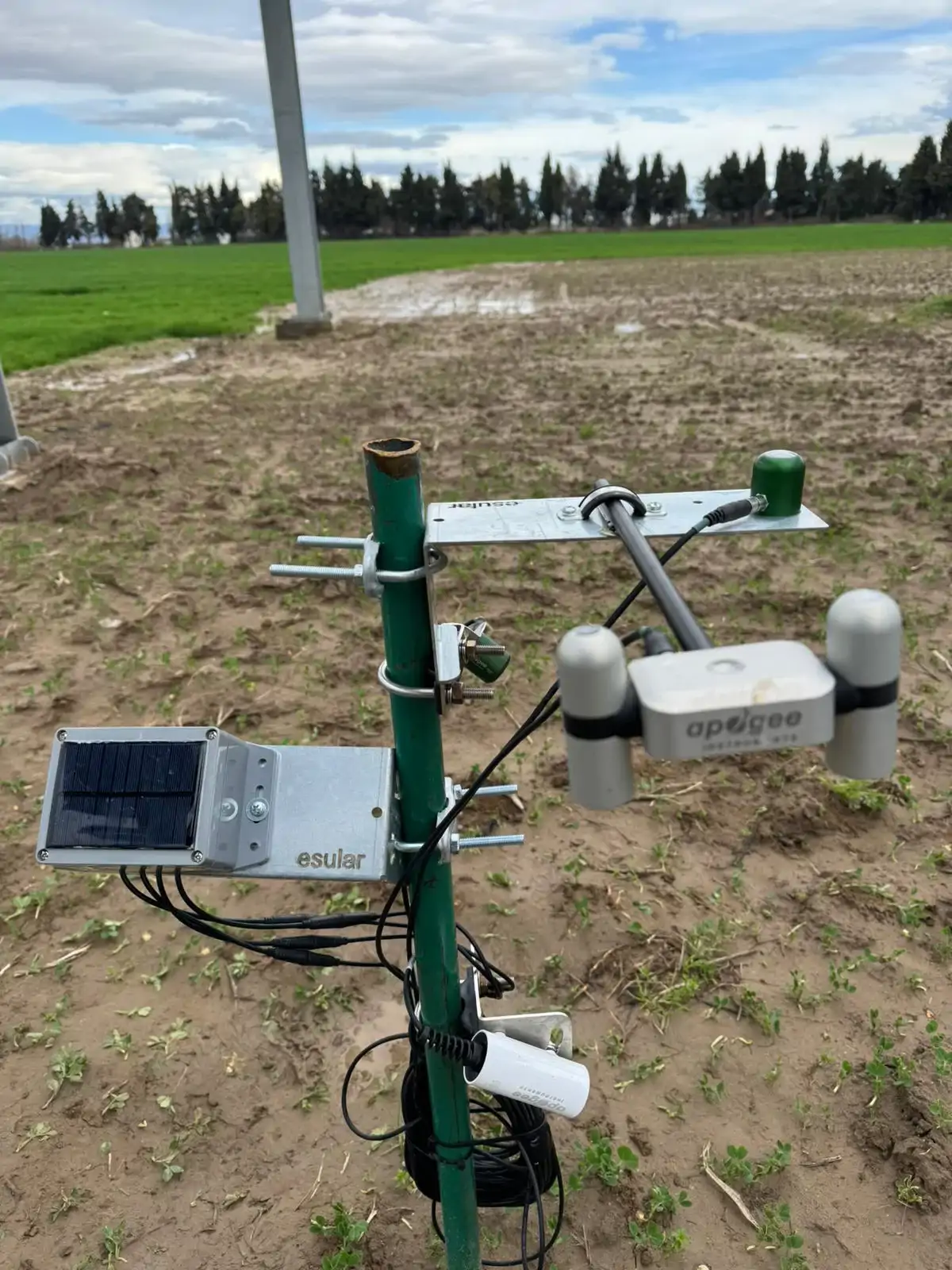
- LoRaWAN Technology: Provides low power consumption and long-range communication.
- Solar Energy: Integrated panels on the sensors constantly charge the batteries.
- Mobile Notifications: Sends instant alarms when limit values are exceeded (for example, when the temperature rises above 35°C).
Agricultural Meteorology Stations
Greenhouse automation should follow not only the interior but also the outdoor environment conditions. Agricultural meteorology stations collect wind speed, wind direction, precipitation amount, and solar radiation data outside the greenhouse.
Contribution of Meteorological Data to Greenhouse Management:
- Wind Protection: When wind speed exceeds a certain limit, windows are automatically closed to prevent damage to the greenhouse structure.
- Precipitation Sensor: When rain starts, windows are closed to prevent plants from being damaged by excessive humidity.
- Solar Radiation (Pyranometer): Shading curtains are automatically opened or closed according to the intensity of sunlight.
Esular's Climate Station-Agricultural Maxi model reveals the daily water needs of plants with scientific data by calculating evapotranspiration (ETo).
Greenhouse Automation Packages and Installation
Different automation packages are available according to the need and greenhouse size. The packages we offer as Esular are as follows:
Greenhouse Climate Control Professional Package
Designed for large-scale commercial greenhouses. It includes the E Series Professional Control Unit, 2 wireless temperature-humidity sensors, and direct control of 2 different window motors. It provides uninterrupted management in giant complexes with a 10 km wireless communication range.
Greenhouse Climate Control Standard Package
Ideal for medium-scale enterprises. It can increase plant efficiency by up to 25% with the F-Max series control unit and automatic temperature control scenarios. It offers a reliable connection with the M2M communication line.
Greenhouse Climate Control Basic Package
An economical start for hobby greenhouses and small businesses. It offers the opportunity to monitor temperature and humidity values instantly via the free mobile application.
Economic Benefits of Using Greenhouse Automation
Investment in greenhouse automation usually pays for itself in the first production season. The main sources of these savings are:
- Water and Fertilizer Savings: With precise fertigation and soil moisture tracking, water and fertilizer usage decreases by 30-40%.
- Labor Cost: Savings are achieved in personnel expenses with the elimination of the need for manual control.
- Yield Increase: Freeing plants from stress factors increases product quantity and quality (BRIX, hardness, etc.).
- Disease Prevention: Maintaining the humidity balance minimizes the risk of diseases such as fungi and mold.
For a more detailed economic analysis, you can examine our article Greenhouse Automation Guide: Yield and Savings.
Technology of the Future: Artificial Intelligence and IoT Integration
The Internet of Things (IoT) and artificial intelligence are taking greenhouse automation products to the next level. Esular systems can plan irrigation and heating decisions in advance according to the future weather by analyzing past data. For example, if extremely hot weather is expected tomorrow, the system protects the plants by optimizing soil moisture starting from today.
In addition, with blockchain in agriculture technology, the entire growing process (fertilizer used, amount of water, CO2 level) of the products coming out of the greenhouse is recorded, ensuring that transparent and reliable food is offered to consumers.
Conclusion and Recommendations
Greenhouse automation products are not just a technology investment, but also a strategic step taken for a sustainable future. With the selection of the right sensors, a reliable wireless infrastructure, and user-friendly software, you can transform your greenhouse into a high-efficiency factory. As Esular, we stand by the world's farmers with the solutions we have developed with our local engineering power.
If you also want to modernize your greenhouse and step into the world of smart agriculture, you can start by choosing the package most suitable for your needs. You can always contact our team for professional consultancy and technical support.
Contact Esular
To get a free discovery and quote for your greenhouse automation projects, reach us from our Contact page or visit our About Us page to learn about our vision and talk to our experts.