How Does a Greenhouse Automatic Irrigation System Work? Step-by-Step Working Principle
In modern greenhouse cultivation, precise irrigation is one of the most critical factors for protecting plant health and maximizing yield. Traditional, manual irrigation methods bring many problems such as root rot due to over-irrigation, plant stress due to insufficient irrigation, high labor costs, and water waste. Digital agricultural technologies are designed to solve these problems fundamentally. So, how exactly does a greenhouse automatic irrigation system work?
The working principle is based on an ecosystem similar to the human body: "sensors" (eyes) that perceive data, a "brain" (central station) that processes this data and makes decisions, and "implementers" (valve control units) that apply this decision. Here is the step-by-step working principle of this system with esular technology.

Core Components: Smart Greenhouse Ecosystem
A fully functional automatic irrigation system consists of three main components:
- 1. Observers (Sensors): Wireless soil moisture sensors specially designed for greenhouses, wireless climate sensors (CO2, humidity, temperature) that measure the environment's climate, and devices that measure water level.
- 2. Brain (Central Station - Gateway): The main control unit that collects data wirelessly (usually LoRa) from all sensors in the field and transfers this data to the cloud (GSM/Wi-Fi). At the same time, this unit transmits the commands to be sent to the valves.
- 3. Implementers (Valve Control Units): These are wireless smart valve control devices that trigger existing solenoid valves by receiving "OPEN" or "CLOSE" commands from the central station.
Step-by-Step Working Principle: From Data to Action
The automatic irrigation cycle occurs with these three components working in perfect harmony. The process proceeds with the "Monitor, Learn, Manage" philosophy.
Step 1: Installation and Placement
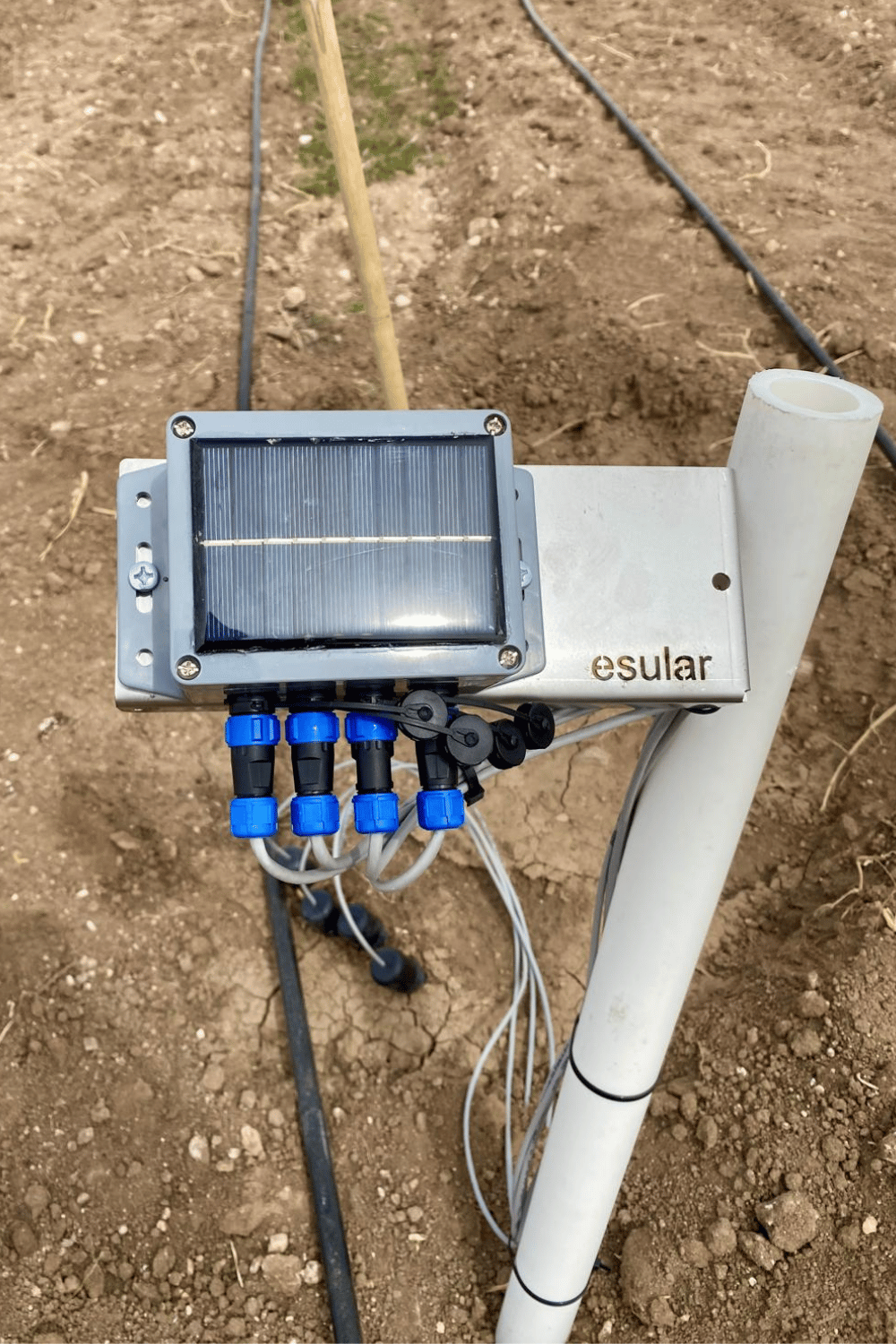
To start the system, physical installation is performed first. Esular Central Communication Station (Gateway) is placed at a central point of the greenhouse or land in a way that it can communicate with all sensors and valves. Wireless Soil Moisture Sensors are mounted at depths where plant roots are active (e.g., 30cm, 60cm) and at points that best represent the general moisture status of the greenhouse. Finally, Wireless Smart Valve Control Units are placed next to the existing irrigation valves (solenoid valves) in the greenhouse and connected to the valves.
The biggest advantage of this system is that esular technology is completely wireless. There is no need to pull energy or data cables for either sensors or valve control units; they are all battery-powered or solar-powered.
Step 2: Data Collection (Sensor Network in Action)
Once installation is complete, the "observers" begin to work. The Wireless Soil Moisture Sensor placed in the soil measures the soil's moisture and temperature levels at determined intervals (e.g., every 30 minutes). Simultaneously, the greenhouse climate sensor measures air humidity, temperature, and CO2 levels.
Step 3: Communication (Data Flowing to the Center)
Data measured by sensors (e.g., "Zone 1 Moisture: 35%") is sent to the Central Station (Gateway) via low-power LoRaWAN wireless technology. This station can securely collect this data even from distances up to 10 km.
Step 4: Decision Making (Brain Analyzing)
The Central Station receives the "35% Moisture" data from the sensor. This data is compared with the rules previously determined by the user via the mobile application.
For example, the rule could be:
IF 'Zone 1 Moisture' < 40% (Minimum Threshold) IS TRUE
AND IF there is no precipitation in the 'Weather Forecast'
THEN OPEN 'Zone 1 Valve' for 45 Minutes
The Central Station, based on this rule, decides that irrigation needs to be performed.
Step 5: Taking Action (Wireless Valve Control)
After the "brain" makes a decision, it sends a command to the "implementers". The Central Station sends a signal to the Wireless Smart Valve Control Unit in "Zone 1" via LoRaWAN: "OPEN".
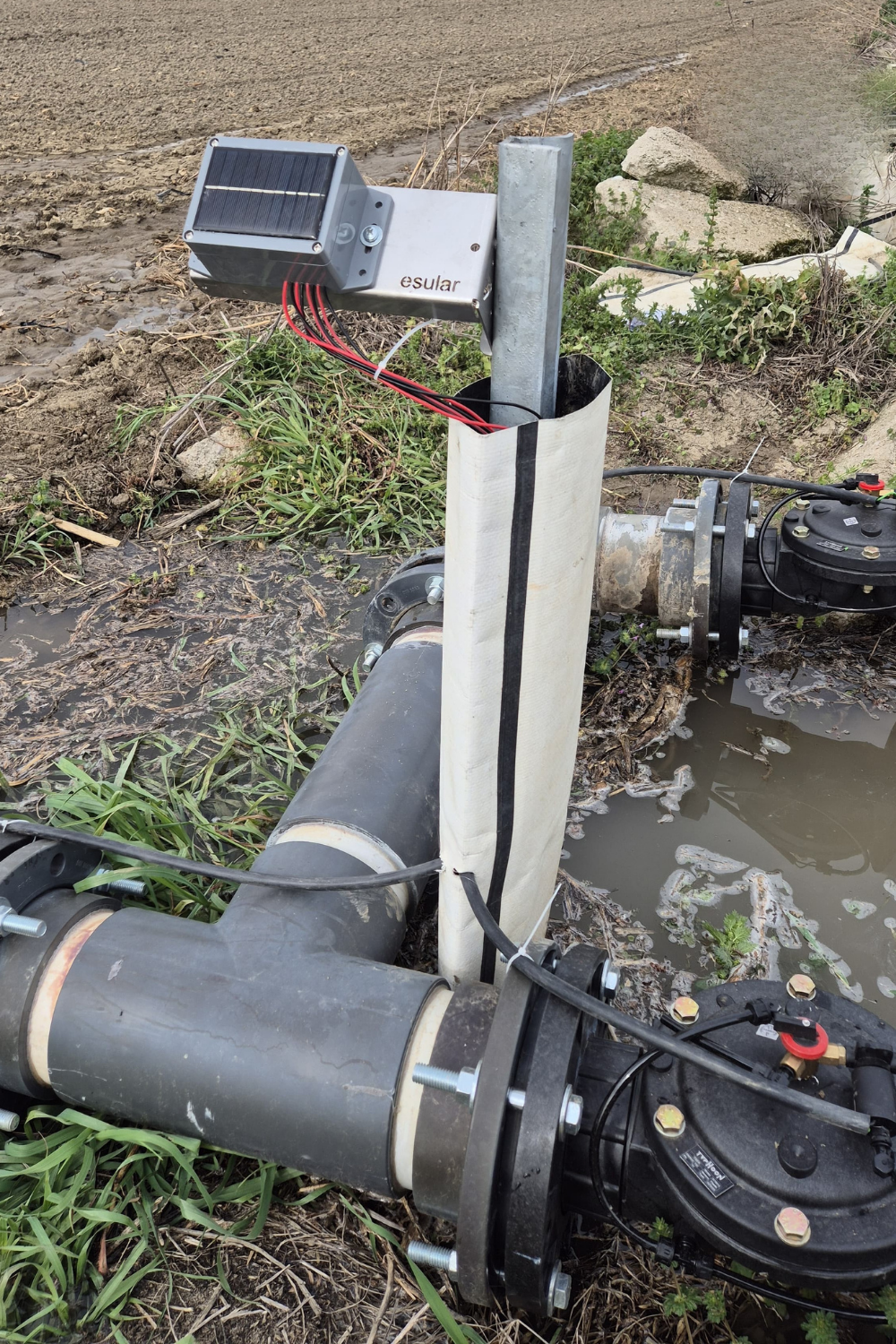
As soon as the Valve Control Unit receives this signal, it sends a small electrical signal to the connected 9V Latch solenoid valve. This signal ensures the valve opens and irrigation begins. No cables are needed for this command.
Step 6: Completion of the Cycle and Monitoring
Irrigation starts and the soil gets wet. The Soil Moisture Sensor continues to measure. When the moisture level reaches 45%, 55%, and finally 60% (Maximum Threshold determined by the user) from 35%, the sensor sends this new information back to the Central Station.
The Central Station perceives that the moisture has reached the target (e.g., 60%) and this time sends the "CLOSE" command to the Valve Control Unit. The valve closes and irrigation stops. This entire process is monitored and reported instantly by the user via the mobile application.
The Building Blocks of Your System: Esular Products
To implement this automatic irrigation ecosystem, industrial-quality products developed by esular, which are fully compatible with each other, are used. Here are the main heroes of this system:
1. Wireless Battery-Powered Soil Moisture Sensor
As the "eyes" of your system, this sensor measures soil moisture and temperature at 1, 2, 3, or 4 different levels. With optional EC measurement, it also allows you to track the salinity and nutrient levels of your soil. With its solar panel and battery structure, it works for years without requiring maintenance.
2. Wireless Smart Valve Control Unit
As the "hands" of your system, this device connects to your existing solenoid valves. It opens or closes your valves with commands received from the central station. Models with 1, 2, or 4 valve outputs are available and completely wireless. Thanks to its solar panel structure, it does not cause energy problems.
3. Central Control Station (Gateway)
As the "brain" of your system, this station can communicate with hundreds of sensors and valve control devices simultaneously with a LoRa range of up to 10 km. By connecting to the cloud platform via GSM (SIM Card) or Wi-Fi, it allows you to manage your system from anywhere in the world.
Conclusion: Data-Driven Smart Irrigation
The working principle of the greenhouse automatic irrigation system is based on the "measure, decide, implement" cycle. Esular technology automates this entire cycle reliably without cable and energy dependency. As a result, unlike traditional methods, your irrigation decisions are based on real-time data from your plant's root zone, not assumptions or a calendar.
Thanks to this approach, it becomes possible to achieve up to 60% water savings, up to 40% yield increase, and up to 60% reduction in labor costs. To carry your greenhouse into the digital agriculture era and increase your productivity, automation is not a luxury, but a necessity.
Get Information About Greenhouse Automation Solutions
Contact our expert team to learn more about our wireless and smart automation solutions tailored to your greenhouse's needs. Benefit from our free discovery and project design services.
📞 Switchboard: 0850 303 49 91
📱 WhatsApp: 0541 247 45 05
✉️ E-mail: [email protected]
🌐 Web: www.esular.com
⚠️ Price Warning: Prices are subject to change. The prices of the products mentioned in this content are the list prices prior to the publication date. For current campaigns and prices, visit store.esular.com.