Comprehensive Principles of Soil-Based and Soilless Strawberry Cultivation: Achieve High Yield with Smart Farming
Strawberry is a strategic fruit species widely grown all over the world and in our country, thanks to its high adaptation ability and potential to create economic value in a short time. However, climate change and decreasing water resources make sustainable success with traditional methods difficult. Therefore, to maximize yield and quality in cultivation, it is critically important to understand the basic principles of soil-based and soilless agriculture, especially their integration with smart technologies.
Basic Information on Strawberry Cultivation: Ecology, Morphology, and Variety Selection
Overview of Strawberry Production in the World and Turkey
According to 2018 FAO data, world strawberry production is over 8.3 million tons. Turkey is an important player in the global market with a production of 440,968 tons. Strawberry cultivation in our country is concentrated in provinces such as Mersin, Aydın, and Antalya. In our country, where the average yield is 2.74 tons/da, it is possible to increase this figure with modern cultivation techniques.
Plant Morphology and Growth Cycle
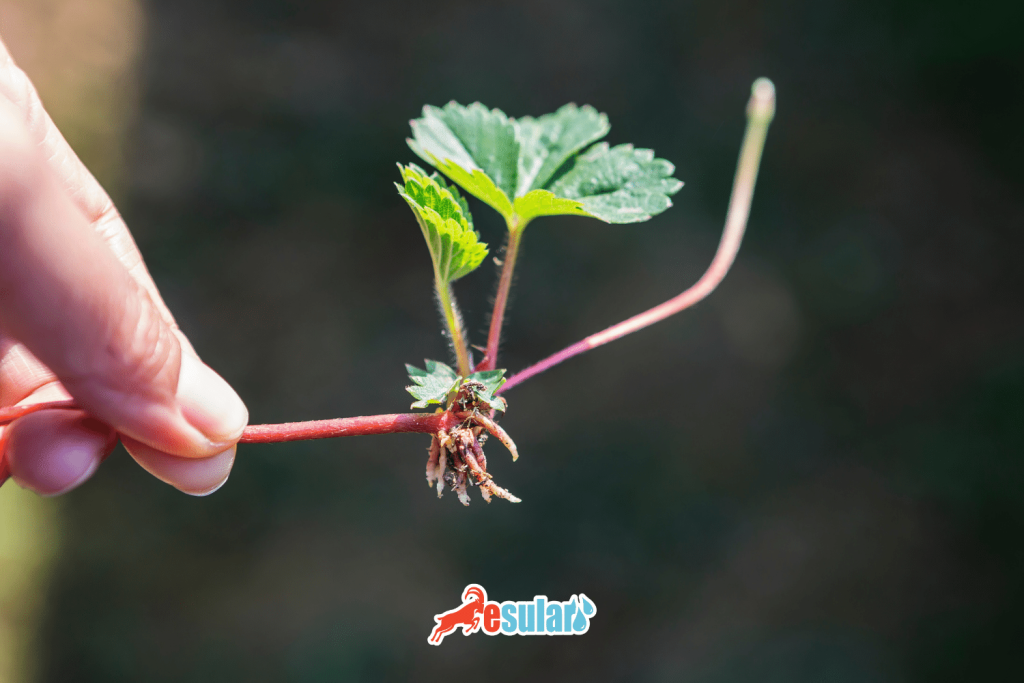
The strawberry plant consists of basic parts such as roots, root collar (crown), leaves, flowers, fruits, and runners (stolons). The root collar (crown) of the plant is the vital center where new shoots and flower clusters are formed. Runner (stolon) formation is the plant's vegetative reproduction mechanism and this development is not desired in the fruit plot; it should be pruned regularly. The time from flowering until the fruit reaches maturity varies between 20 and 50 days depending on the variety and environmental factors. A flower cluster contains 1 primary, 2 secondary, 4 tertiary, and 8 quaternary flowers, respectively.
Ecological Requirements: Temperature, Humidity, and Soil
Climate and soil conditions must be managed with great care in strawberry cultivation:
- Temperature: The optimum temperature range is 18-25 C. Plant development drops significantly at temperatures below 5 C. Flowers are damaged at -2 C.
- Relative Humidity: The ideal humidity range is %50-70. High humidity during the flowering period increases fungal diseases (especially Gray Mold).
- Frosts and Fogs: Late spring and early autumn frosts are risky. Fogs can cause shape deformities in fruits by preventing pollination during the flowering period.
- Soil: It prefers sandy-loamy, light-textured, and well-drained soils. High groundwater and lack of drainage lead to root collar rot. The optimum pH value is between 6.5-7.0.
To monitor these critical environmental factors, esular Climate and Meteorology Stations should be used. These stations collect all data from frost risk to evapotranspiration instantly, allowing you to take proactive measures.
Strawberry Varieties and Classification
Strawberry varieties are divided into 3 according to their reactions to day length in terms of flowering:
1. Short Day (SD) Strawberry Varieties: Needs 8-12 hours of day length above the critical temperature of 15 C. Almost all greenhouse cultivation in Turkey is done with these varieties (September-October planting, November-June yield). Examples: Camarosa, Festival, Fortuna, Amiga.
2. Day-Neutral (DN) Strawberry Varieties: They are not affected by day length and are suitable for summer and autumn production in places where summers are cool. The advantage is extending the harvest period and resistance to temperatures. Examples: Albion, San Andreas, Portola, Monterey. Although the yield is low in the first year for these varieties, it increases in the second year and is suitable for perennial cultivation.
3. Long Day Varieties: There are few and usually have F. x ananassa and F. virginiana genetic resources.
Seedling Production Methods and Seedling Types
Seedling production is done with Seeds (for breeding purposes), Runners (stolons), Underground stems, Leaf cuttings, and Tissue Culture (virus-free propagation). Basic types used in commercial cultivation:
- Fresh Seedling: Uprooted and planted in September-October. It is early under greenhouse conditions. However, if it hasn't completed its chilling requirement, the yield may decrease.
- Plug Seedling: Rooted in trays with misting irrigation. Seedlings that have received their chilling are preferred. It can be planted in any season and there are no problems with seedling establishment.
- Frigo Seedling: It is a seedling that has completed its dormancy and stored starch (rested). It is stored at -2 C. Yield per plant, size, and quality are high. It is suitable for high altitude areas with day-neutral varieties.
esular Automation: Misting irrigation and environment control are important in plug seedling cultivation. esular Wireless Climate Sensors optimize misting timing and humidity control.
Cultural Practices, Irrigation, and Fertilization Management
Fruit Production Methods and Cultural Practices
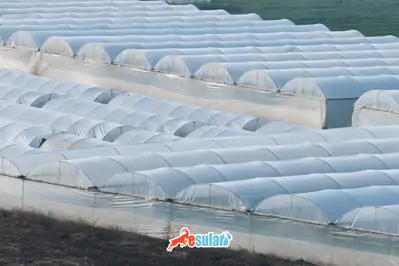
Cultivation systems are carried out in Open Field and Protected (Low/High Tunnels). The biggest challenge of greenhouse cultivation is pollination control and daily climate management. During the flowering period, tunnels must be opened to ensure sufficient bee/insect activity. esular systems reduce this difficulty by optimizing ventilation with automatic window control.
Soil Preparation and Planting
- Soil Preparation: The soil should be plowed at least 30-40 cm deep and basal fertilization (decomposed farm manure, P, K) should be applied.
- Disinfection: Soil should be disinfected with Solarization (irrigation and covering with plastic in summer) or Fumigation (chemical).
- Planting: Care should be taken that planting is not too deep or too shallow, and the roots should not be curled. Usually, triangular planting is preferred.
- Mulching: Black plastic mulch plays a critical role in weed control, increasing soil temperature, and preventing Botrytis by cutting the fruits' contact with the soil.
Cold and Frost Protection Methods
To protect flowers at -2 C and the plant at lower temperatures:
- Sprinkler Irrigation: Protection is provided with the freezing heat of the water on the plant by spraying water continuously during the frost event.
- Greenhouse Cultivation: Low or high tunnels are used.
- Mulching: The plant is protected by using straw or plastic mulch.
Hormonal Applications: There is no need to use hormones in fruit production. The seeds (achenes) on the fruit naturally synthesize auxin, increasing the fruit size.
Irrigation and Fertilization Management (Fertigation)
Fertilization in strawberry cultivation should be done together with the drip irrigation system (fertigation). In this way, fertilizer loss is minimized and its effective use is ensured.
Nutrient Deficiencies
Nutrient uptake rates change according to the plant growth period, and deficiencies are usually seen in old leaves for mobile elements (N, K, Mg) and in young leaves for immobile elements (Ca, Fe).
- Nitrogen (N) Deficiency: Yellowing and reddening in old leaves. Excess causes fruit softness and Botrytis sensitivity.
- Calcium (Ca) Deficiency: It is an immobile element. Tip burn is seen in its deficiency. High K and N applications reduce Ca uptake.
- Iron (Fe) Deficiency: Iron uptake becomes difficult in high pH and calcareous soils, and yellowing (chlorosis) is seen in young leaves. It is intervened with Fe chelated fertilizers.
- Potassium (K) Deficiency: Brown coloring on the edges of old leaves. Potassium increases resistance to cold and winter conditions.
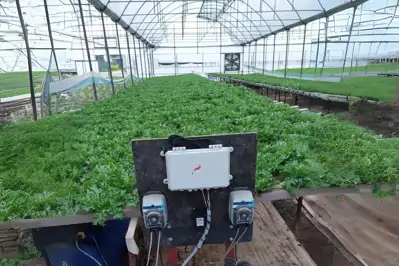
esular Solution: To base your irrigation decisions on scientific data, use the esular Wireless Soil Moisture, EC, and Temperature Sensor. Thanks to these sensors, by monitoring soil moisture and nutrient concentration instantly, you prevent unnecessary irrigation and fertilizer applications, which provides an average of 40% water savings.
Pest and Disease Control
The main principle in control is to keep the disease and pest population below the economic damage level with cultural measures.
- Diseases: Diseases such as Powdery Mildew, Botrytis (Gray Mold), Phytophthora (Red Stele), and Rhizoctonia (Black Root Rot) are common. Mulching, drainage, and good ventilation are the most basic protection methods.
- Pests: Two-spotted Spider Mite, Thrips, Aphids, and Cotton Leafworm (Spodoptera littoralis) are important pests. Biological and biotechnological control methods (yellow/blue sticky traps, beneficial insects) should be preferred before chemical control.
- Spraying Time: For spider mites, spraying should be done when 15 or more active individuals per leaflet are detected.
esular Greenhouse Climate Automation: Keeping humidity and temperature in a precise range in the greenhouse is the smartest way to prevent fungal diseases like Botrytis. Ventilation can be automated with Smart Greenhouse Window Control Systems.
Harvest and Storage
Strawberry is a delicate fruit species that spoils quickly. Harvesting should be done at three-quarters maturity and in the early hours of the morning. It should be picked by holding the fruit stem and twisting it.
Storage: Pre-cooling should be done at 8-10 C before storage. The most suitable storage temperature is 0 C. It can be stored for 10-12 days at 0 C and 90% relative humidity.
Soilless Strawberry Cultivation: Controlled and Sustainable Production
Basic Concepts of Soilless Agriculture
Soilless agriculture (Hydroponics) is a controllable cultivation system that optimizes internal and external environmental conditions that will keep the plant upright without losing water. Systems are divided into two main classes as Water Culture (Deep Water Culture, NFT, Aeroponics) and Substrate Culture (in Bags, Pots, Beds).
Advantages and Disadvantages of Soilless Agriculture
- Advantages: High yield, up to 40% water savings, freedom from soil dependency, off-season production.
- Disadvantages: High investment cost, technical knowledge requirement, sensitivity to environmental conditions.
Selection of Growing Medium (Substrates)
Substrate Culture is preferred in strawberries. The ideal substrate should have 30-50% aeration and 50-70% water holding capacity. Cocopeat stands out with its high water and air capacity. Substrate temperature should be optimum 18-22 C.
Fertigation (Nutrient Solution) Management
The most critical and technical part of soilless agriculture is fertigation management. It mainly depends on keeping the nutrient solution pH, EC, and temperature within the optimal range.
- pH Management: The ideal range is 5.8-6.5.
- EC Management: The ideal EC range is 1.4-1.8 dS/m. High EC can cause tip burn.
- Drainage Control: Nutrient accumulation is prevented by checking daily drainage pH, EC, and ratio.
- Recirculation (Closed System): Reusing the drainage provides 25% water and 50% fertilizer savings. The nutrient solution should be sterilized against disease risk.
Examples of Soilless Strawberry Growing Systems
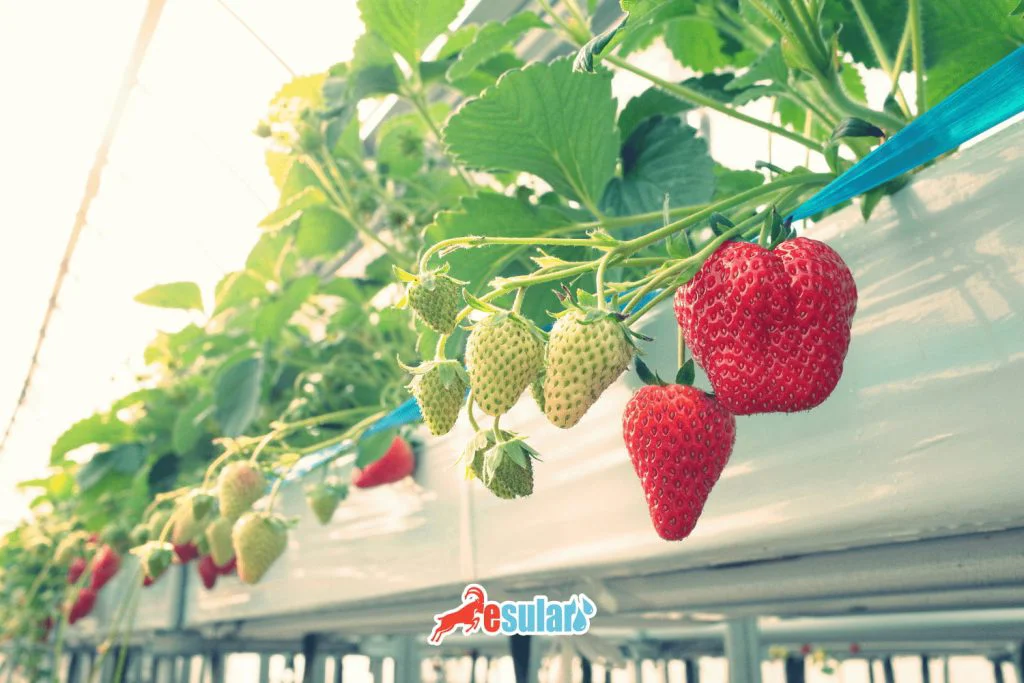
Horizontal and Vertical Bag Culture, Pot Cultures, and Gutter (Suspended) Systems are common. In these systems, yield increase is achieved by increasing the number of plants per unit area (12-15 plants/m²). esular's wireless sensors optimize feeding intervals by reporting the substrate moisture and EC status of these systems instantly.
Future Strawberry Farming Starts with esular
High yield and profitability in strawberry cultivation start with the right variety selection and continue with meticulously managed cultural practices. Whether soil-based or soilless, the formula for success lies in data-driven and automated management. As esular, we offer wireless and energy-independent IoT solutions that facilitate these critical management processes.
Switch to smart farming solutions for resource savings, maximum yield, and minimum risk in your strawberry greenhouse or field. Take a step into a sustainable and profitable future by making decisions based on scientific data at every step, from production planning to fertigation management.
Contact esular Experts
Let's establish the smart irrigation and fertigation system most suitable for the budget and scale of your strawberry project together. Request Free Project Consultancy
⚠️ Prices are subject to change. The prices of the products mentioned in this content are the list prices before the publication date. For current campaigns and prices, visit store.esular.com address.