Tüm Yazılar

How is Eggplant Cultivation Done?
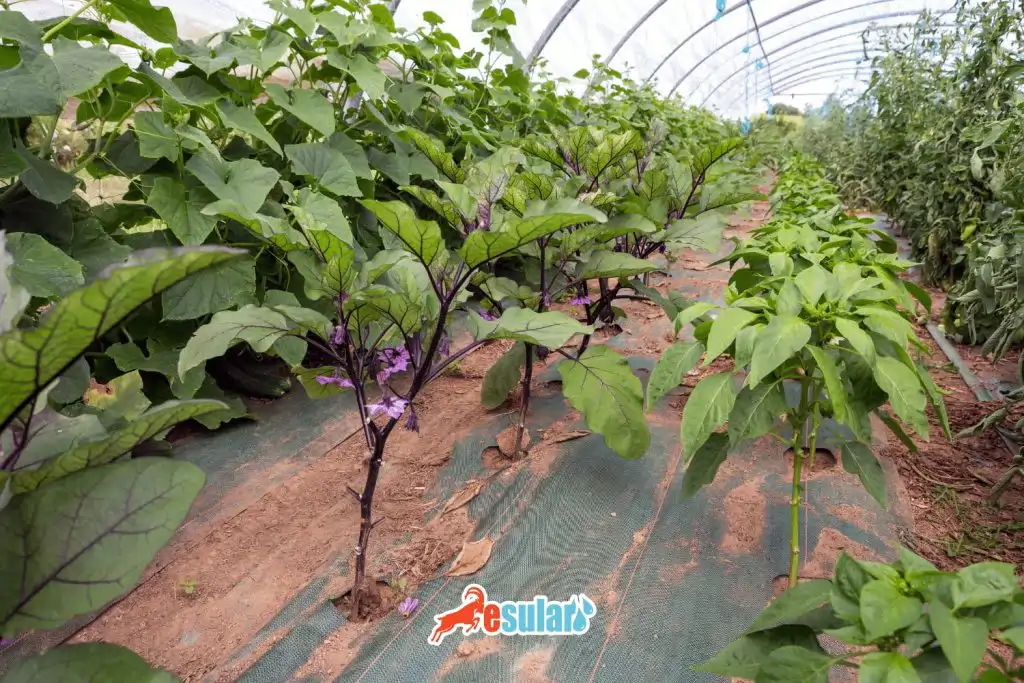
Eggplant cultivation can be successfully carried out in many regions with suitable climate conditions. Eggplant is a widely grown and consumed vegetable in Turkey. It is generally grown in the Southeastern Anatolia, Mediterranean, Aegean, and Marmara regions of our country. However, eggplant cultivation can be done in any region where climate conditions are suitable. Eggplant cultivation is generally done on agricultural lands or under greenhouse conditions. While it is carried out in the open field or as under-row cover cultivation on agricultural lands, year-round production can be achieved by providing a more controllable environment in greenhouse conditions. Since eggplant is a vegetable preferred by a wide range of consumers in our country, its market is quite extensive. It is offered to consumers both fresh and processed (dried eggplant, tomato paste, pickles, etc.). The demand for eggplant is quite high in both the domestic market and foreign trade. Eggplant cultivation can be productive with correct agricultural practices and disease-pest management.
Suitable Climate and Soil Structure for Eggplant Cultivation
Eggplant, which is a warm climate plant, cannot withstand low temperatures and may be damaged at temperatures below -1 ºC. However, the ideal temperature range for the development of the eggplant plant is around 25-30 ºC. Especially having a night temperature between 15-20 ºC is important for the plant to grow healthily and set fruit. Soil quality is of great importance in eggplant cultivation. The plant does not prefer clayey soils much and becomes prone to root rot in heavy, damp soils. Additionally, soils with poor drainage that hold water at low temperatures are not suitable for the plant. The eggplant plant is moderately sensitive to salinity, and the EC in the soil must be below 2.5 mS. The most suitable soil types for eggplant cultivation are those that are deep, permeable, rich in organic matter and nutrients, and have a loamy or loamy-sandy structure. Additionally, a soil pH value between 6-6.7 is ideal for the plant. Eggplants grown under these conditions result in healthy growth and high productivity.
Seedling Planting in Eggplant Cultivation
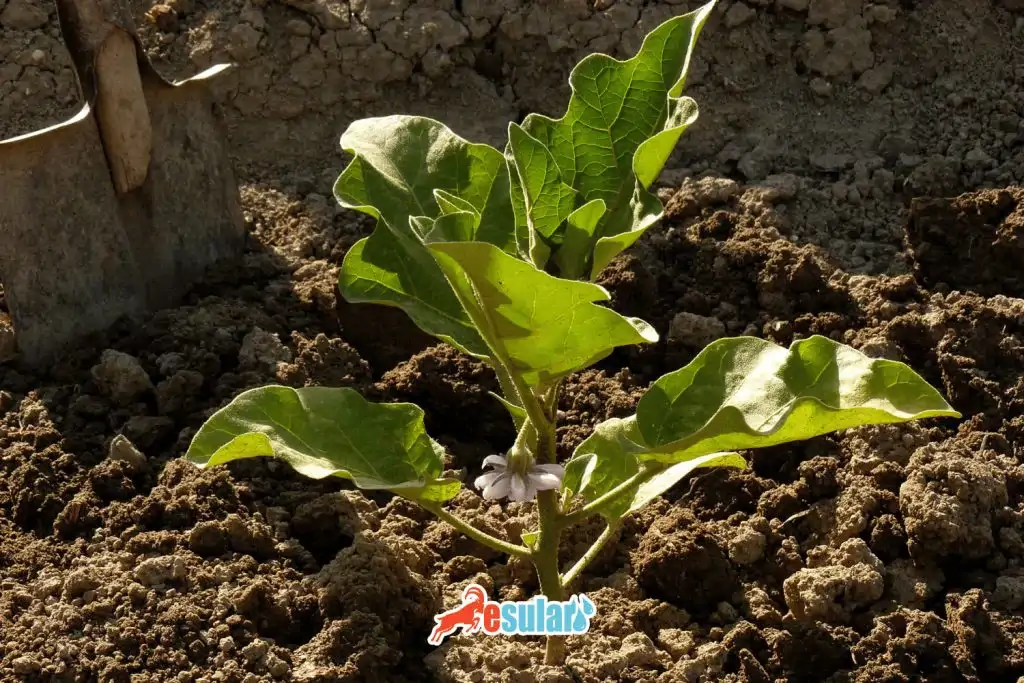
Seedling planting is very important in eggplant cultivation, and correct techniques must be applied for a successful harvest. Seedling planting is generally carried out not by sowing seeds directly, but by transferring pre-grown seedlings to the soil. This process includes steps such as choosing the right seeds, preparing the appropriate planting environment, and regular irrigation. Before starting seedling planting, it must be ensured that the area to be planted is well-drained, rich in nutrients, and in a position that can receive sunlight. Seedlings grown in seedling containers or seedling bags are made ready for planting and placed on the soil surface at appropriate intervals. After the planting process, it is important to water the seedlings regularly and support them with appropriate nutrients. Additionally, taking necessary precautions to protect seedlings against diseases is an important part of the planting process. Regularly monitoring the development of the plants after planting and performing additional maintenance procedures when necessary is important for a successful eggplant harvest.
Fertilization in Eggplant Cultivation
Soil preparation and fertilization processes are of great importance in eggplant cultivation. In order for the soil to be productive and for the plants to receive the nutrients they need, correct fertilization methods should be applied. To enrich the soil in terms of organic matter, 5-8 tons of well-rotted farm manure is applied per decare and the soil is mixed by deep plowing. Considering the basic nutrients needed by eggplant plants, 20kg of nitrogen, 10kg of phosphorus, and 25kg of potassium should be given in pure form for an area of 1 decare. During the fertilization process, while phosphorus fertilizer is used in base fertilization, nitrogen and potassium fertilizers are applied in parts. While a portion is used in base fertilization, the other parts should be applied according to the periods when the plants need them, for example, before the first flowering and after fruit set. In this way, while ensuring the healthy growth of the plants and their efficient fruiting, the soil is also fed in a balanced way in terms of nutrients.
Irrigation in Eggplant Cultivation
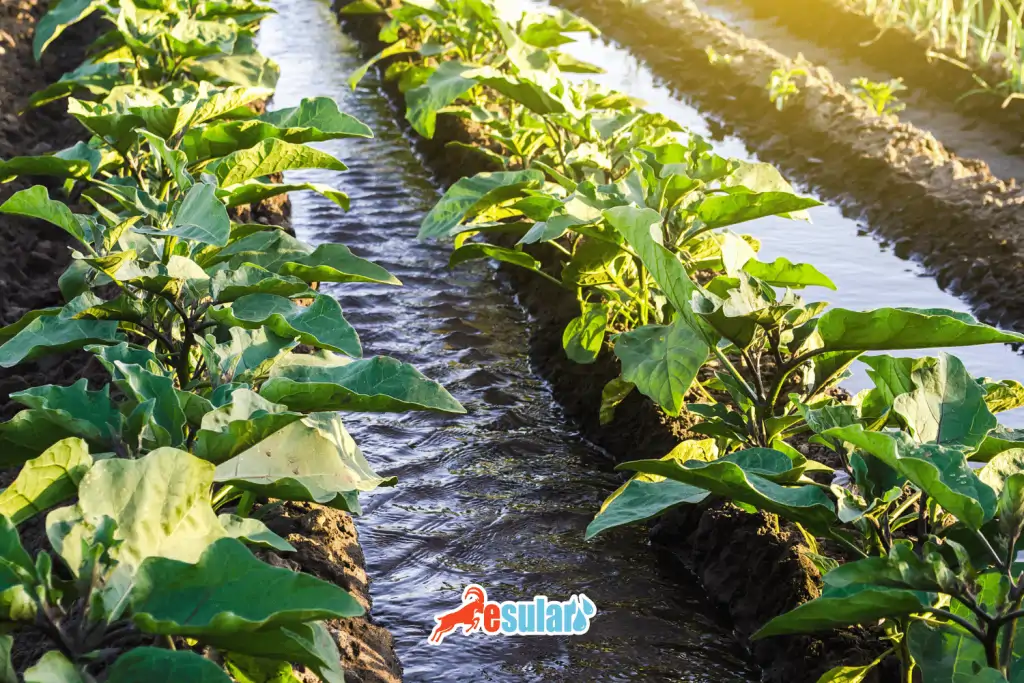
Drip irrigation is quite ideal as an irrigation method in eggplant cultivation. In this method, water is delivered directly to the root zones of the plants in drops, thus preventing water waste and ensuring more effective irrigation of the plants. The amount of irrigation for eggplant plants should be adjusted according to soil moisture and environmental conditions. The amount of water given to the plants after initial planting should be sufficient to ensure seed germination. However, when fruits begin to appear, the amount of water should be reduced. This prevents excessive growth of the plants and ensures that the fruits have better quality. Irrigation processes should be monitored regularly and adjusted according to the needs of the plants, thus preventing problems such as water stress and over-irrigation. In this way, it is possible to increase productivity in eggplant cultivation and use water resources more efficiently.
Smart Irrigation Systems in Eggplant Cultivation
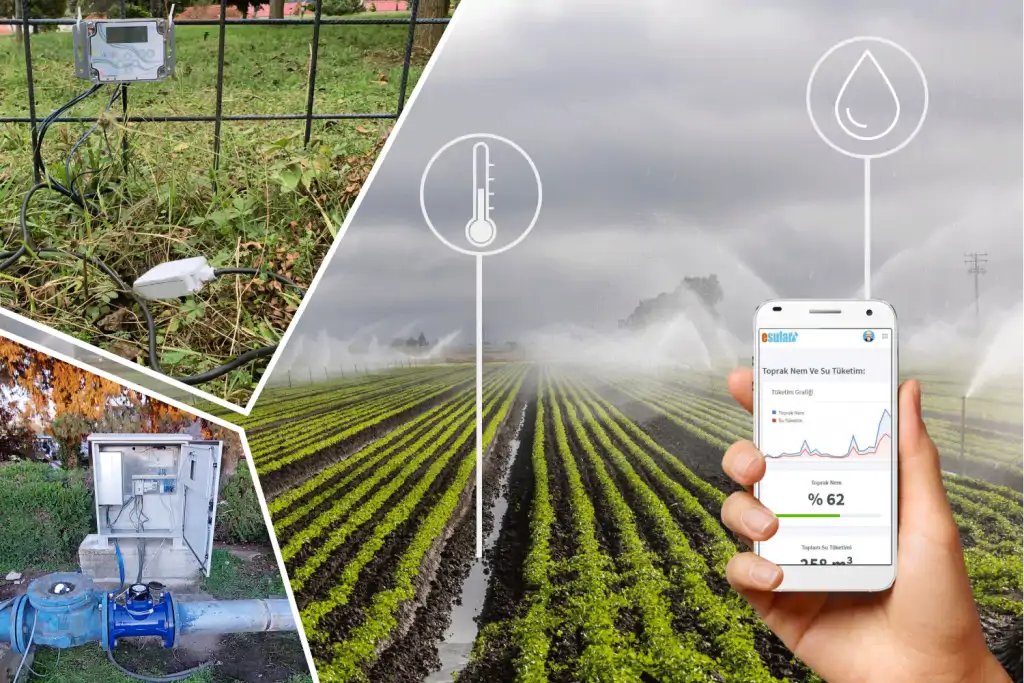
Smart irrigation systems in eggplant cultivation are a modern method that ensures the efficient use of water. These systems correctly determine the amount of water needed by the plants, preventing unnecessary water consumption. Additionally, they provide ideal irrigation conditions for the plants by continuously monitoring the moisture level of the soil. In this way, root development of the plants is encouraged, and their healthy growth and development are supported. Smart irrigation systems eliminate the risk of plants staying thirsty by optimizing irrigation timing. At the same time, they require less labor compared to manual irrigation methods and reduce operating costs. These systems are also environmentally friendly. They contribute to the protection of water resources and sustainable agricultural practices. Smart irrigation systems manage the water and nutrient needs of the plants remotely via sensors, automatic irrigation controls, and, if you wish, a fertilization device, no matter where you are. This results in healthier plants and higher productivity. You can contact us to get more detailed information on this subject. https://esular.com/akilli-sulama-sistemleri
What are the Diseases and Pests Seen in Eggplant Cultivation?
Diseases and pests frequently encountered in eggplant cultivation have serious effects on plant health and productivity. These diseases include anthracnose, phytophthora rot, bacterial wilt, and various viral infections. Anthracnose is a fungal disease that creates spots on leaves, stems, and fruits, while phytophthora rot causes root rot by fungi found in the soil. Among the pests are organisms such as the eggplant moth, whitefly, red spider mite, and aphids. These pests can cause yield loss by damaging the leaves and fruits of the plant. Therefore, it is important to take appropriate measures to control diseases and pests in eggplant cultivation.
Harvest in Eggplant Cultivation
Eggplant harvest should be done when the fruits reach normal size and maturity. For the harvesting process, the fruit stalk should be carefully cut with the help of a knife or scissors, leaving the stalk on the fruit. Eggplants harvested in this way can stay fresh for a longer time and are prevented from being damaged during transport. Carrying out the harvest at regular intervals helps to obtain more products from the plant and to obtain high-quality fruits. In this way, a more successful production can be achieved by increasing productivity in eggplant cultivation.
How Much Eggplant is Produced from 1 Decare?
The amount of fruit obtained per plant in eggplant cultivation can vary and generally ranges between 10 and 30. The yield can usually be between 2 and 13 tons per decare. These yields can vary depending on growing conditions, variety selection, fertilization, irrigation, and other cultivation practices. Providing appropriate agricultural methods and correct care is important for successful eggplant cultivation.
Kategoriler