Tüm Yazılar

How is Peach Cultivation Done?
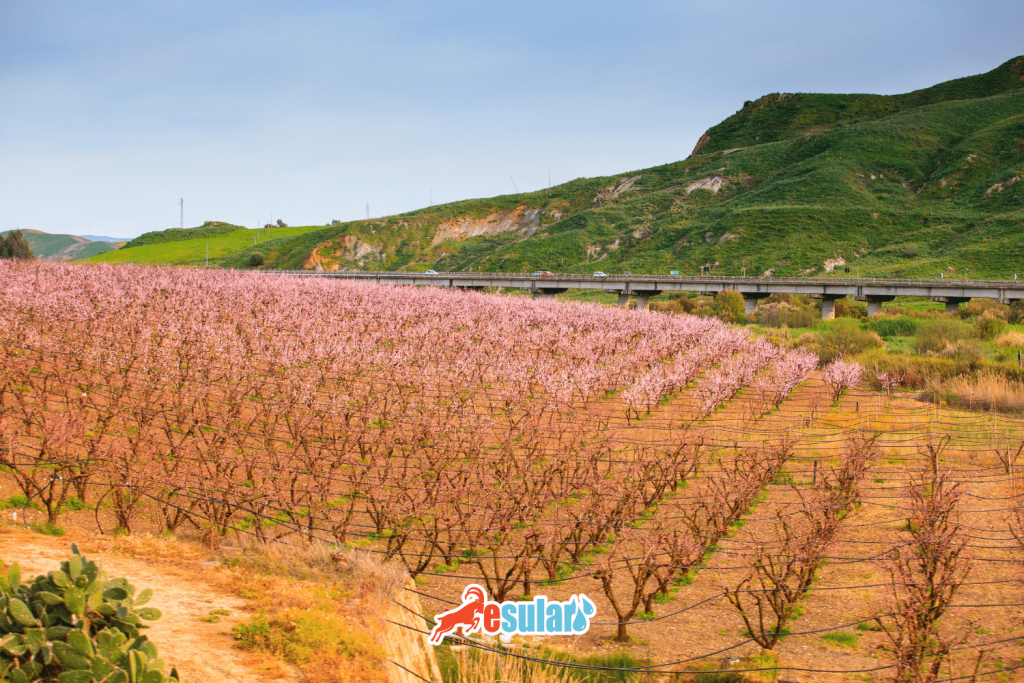
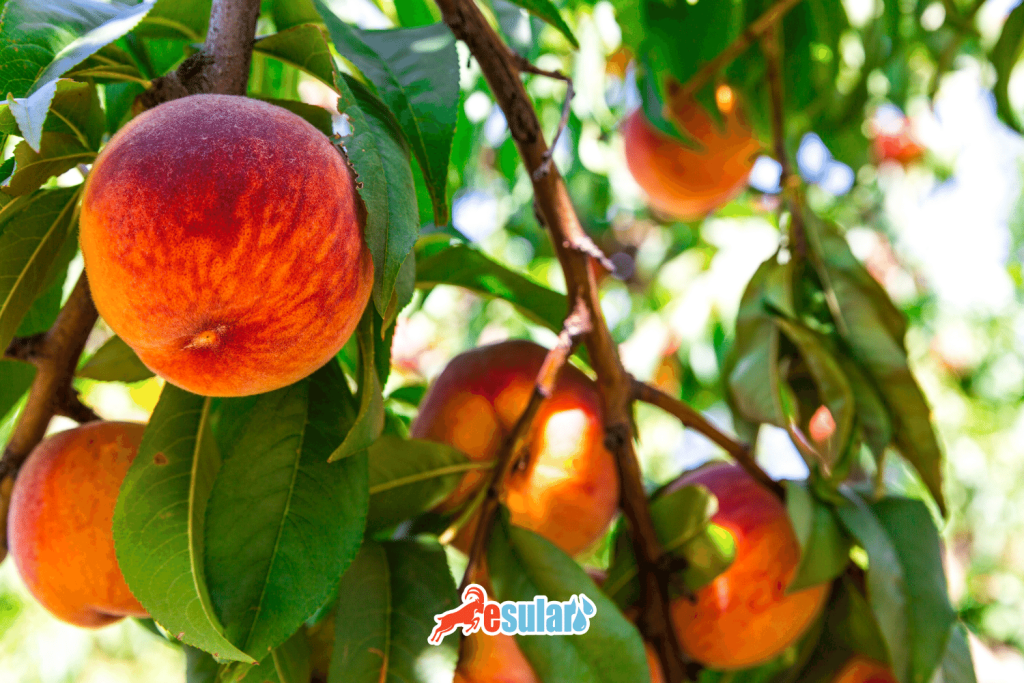
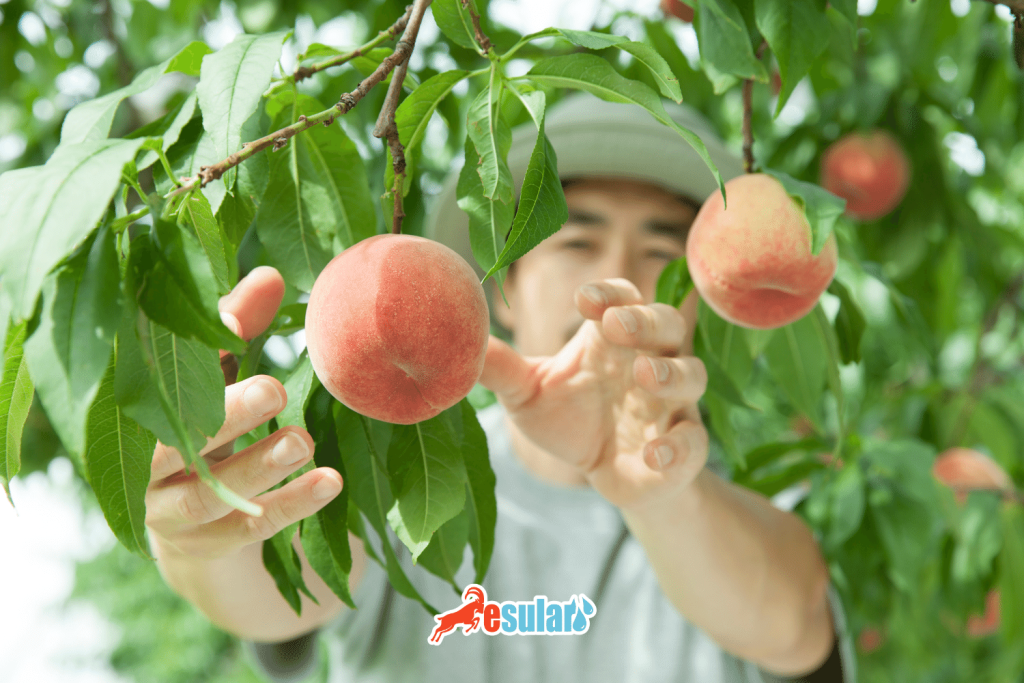
Peach cultivation is an agriculturally important sector and is widely practiced in many countries. Having come from East Asia and China and found suitable conditions for economic cultivation in our country, the peach is produced intensively, especially in the Marmara Region. Peach cultivation in our country has developed rapidly due to its high adaptation ability, tendency to bear fruit early, and providing an important raw material for the agricultural industry. In this way, it has become an important part of Turkish agriculture and gained economic value. Peach cultivation is an important sector that contributes to economic development by increasing the agricultural production potential of our country. Diversity is very important in peach cultivation. There are more than 150 peach and nectarine varieties in Turkey. This diversity allows them to be presented to the consumer by ripening at different times in accordance with different climate and soil conditions. Thus, a continuous supply of fresh fruit can be provided in the peach cultivation sector and market demands can be met.
How Should the Climate and Soil Structure Be in Peach Cultivation?
Peach trees generally grow better in temperate climates. Ideally, the annual amount of precipitation should be between 600-1000 mm. The risk of fungal diseases may increase in excessively humid regions. In addition, a sufficient chilling period is needed for the trees to enter a dormant period in winter. However, the frequency and severity of frost events can pose a risk during the flowering period. Suitable soils for peach trees are those that provide good drainage, are rich in humus, and are slightly acidic. Clay soils do not drain water well and can cause roots to rot. Sandy soils cannot hold much water and can lead to plants becoming dehydrated. The most suitable soils are well-drained, sandy-clay, or clayey in structure and well-drained. Soil pH level is also important; ideally, it should be between 6 and 7. High pH levels can prevent the uptake of iron and other minerals by the plant. Low pH levels can cause aluminum and other toxic substances to be released. Therefore, it is important to check the soil pH level regularly and correct it if necessary..
Sapling Planting in Peach Cultivation
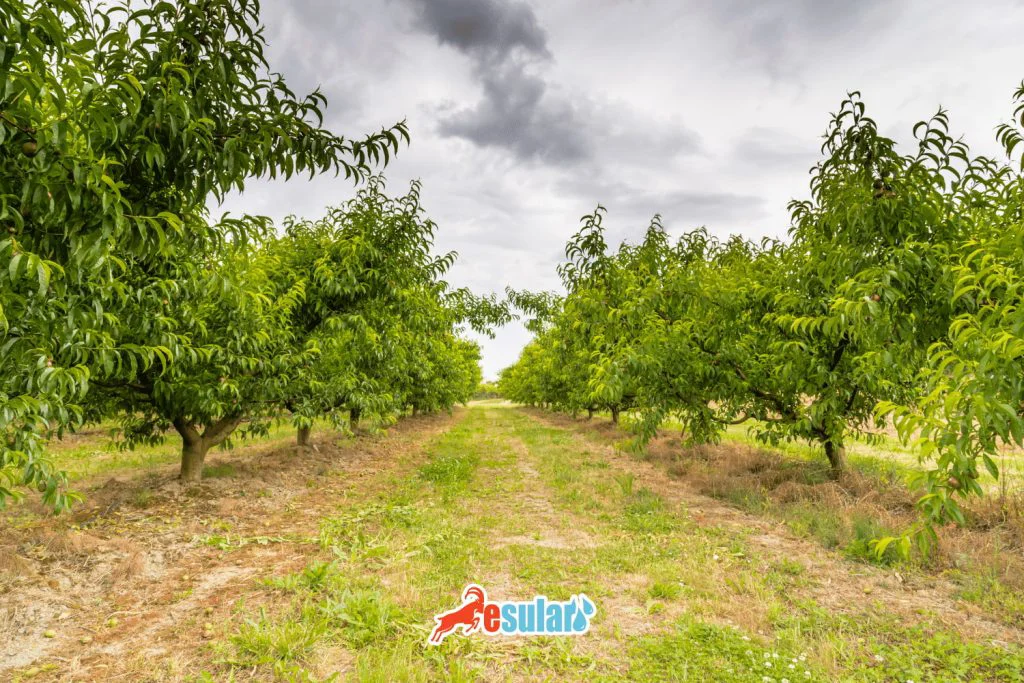
Peach orchards in our country are generally established with a closed system. In this system, planting intervals are usually determined as 6x6m or 6x5m, and a square or rectangular planting arrangement is preferred. When peaches are propagated by seed, they may show genetic diversity and lose variety characteristics. For this reason, peach varieties are generally propagated by grafting onto seedling rootstocks. Commonly used rootstocks include vegetatively propagated clonal rootstocks such as GF677, Cadaman, and Garnem. In Turkey, seeds obtained from wild peach trees are generally used in sapling production. Generally, almond seedlings are used in heavy and calcareous soils, while almond seedlings, which are more sensitive than peaches, are preferred for humid and heavy soils. Grafting peach trees onto suitable rootstocks can increase productivity and disease resistance. Rootstocks such as Nemaguard and GF305 are preferred as they are nematode-resistant and compatible with varieties. Especially GF305 rootstocks have the feature of giving homogeneous seedlings and are generally compatible with all peach varieties. However, different rootstock options should be used according to different soil and climate conditions.
Maintenance And Pruning
Regular pruning of trees is necessary for healthy development, increased fruit quality, and increased yield. Peach trees that are not pruned quickly drop in yield and dry up. In addition, single-stem forms are also preferred in densely planted areas. In each of these forms, the climatic conditions of the region affect the density of the branches. Peach needs more light compared to other fruit types. For this reason, sparser branching should be provided in humid and low-light regions. In arid and sunny regions, denser branching should be preferred. In peach trees, too many branches should not be left at the ends of the main branches to ensure good light intake in the inner parts and lower branches and the formation of flower buds. For this reason, it is necessary to open the inner parts of the tree with summer pruning in May and June and to maintain the shape of the tree with normal pruning in the winter months. This regular pruning process ensures the healthy growth of peach trees and efficient fruiting.
Smart Irrigation Systems in Peach Cultivation
Irrigation in peach cultivation is very important during the ripening process of the fruits. Especially irrigations carried out 3-4 weeks before the ripening date of the fruits give the best results. Irrigations made in this period perfect the size, taste, and color of the fruits. Smart irrigation systems not only provide water savings in peach cultivation but also offer many advantages to producers. These systems continuously monitor and optimize the irrigation need through sensors and automatic controls. In this way, while ensuring that water is used at the right time and in the right amount, problems such as over- or under-irrigation are prevented.
Smart irrigation systems provide time and labor savings for farmers. They require less manpower compared to manual irrigation processes and allow farmers to devote more time to other important agricultural activities. In addition, thanks to the automatic control of the systems, the irrigation process can be continuously monitored and controlled remotely; thus, farmers can manage their lands from any place. Smart irrigation systems also increase productivity and improve product quality. By precisely monitoring soil moisture, they meet the water needs of the plants. This allows for the growth of healthier plants and higher yields. As a result of more consistent irrigation, fruits become larger, tastier, and more colorful, which makes the products more attractive at the marketing stage.
In conclusion, smart irrigation systems represent a modern approach in peach cultivation and offer farmers a more efficient, sustainable, and profitable production process. These systems reduce environmental impacts while lowering production costs and providing a competitive advantage to farmers.
Fertilization in Peach Cultivation
Fertilization in peach cultivation is of critical importance to ensure the healthy growth of trees and efficient fruit production. Regular use of farm manure and commercial fertilizers balances the nutrients in the soil and provides basic nutrients such as nitrogen, phosphorus, and potassium that trees need. Leaf and soil analyses are used as a guide in determining the fertilization program, and the amount of fertilization is adjusted accordingly. A correct fertilization program contributes to the health of the trees, increases fruit quality, and maximizes yield. For this reason, it is important to regularly follow the fertilization program in peach cultivation and adjust it when needed.
Diseases And Pests Seen In Peach Cultivation
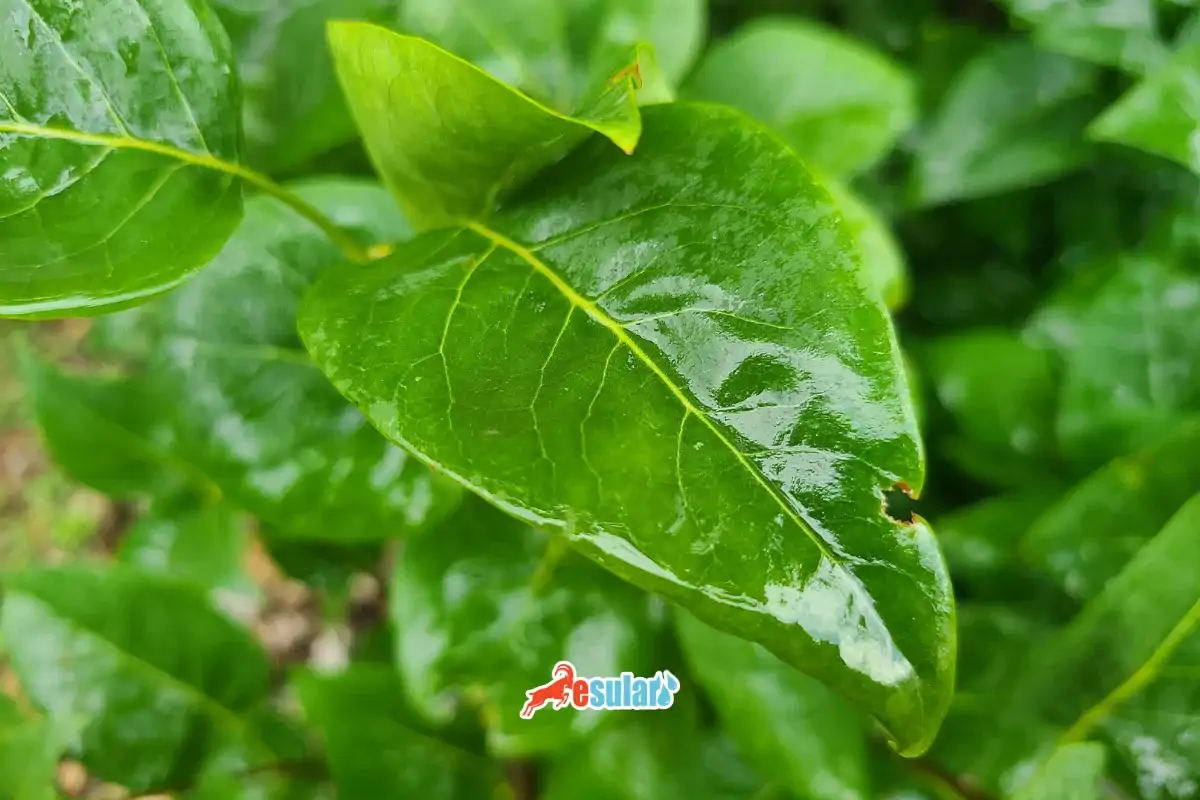
Among the primary concerning diseases in peach cultivation are crown gall, powdery mildew, shot hole (freckle disease), and leaf curl. Crown gall manifests itself especially with the cracking of bark at the root collar and the formation of swellings on the roots of the trees. Powdery mildew is a fungal disease that causes gray spots to form on peach leaves. Shot hole or freckle disease is a fungal infection that causes spots and holes to form on leaves. Leaf curl or klok is a virus disease that causes curling and deformities on the edges of the leaves. Cultural measures should be taken to prevent and control these diseases, and chemical control methods should be applied when necessary. Important pests encountered in peach cultivation include aphids, scale insects, and the Mediterranean fruit fly. While aphids cause damage by sucking peach leaves, scale insects damage the bark and prevent the growth and development of the tree. The Mediterranean fruit fly causes quality loss and product loss by damaging the fruits. Integrated pest management methods should be used in the fight against these pests.
Harvest in Peach Cultivation
The harvest time for peach fruits is decided by evaluating the skin color and fruit flesh firmness. The skin color of ripening peaches changes and the fruit flesh softens. Fruits to be sent to distant markets or stored in cold storage are harvested 24-48 hours before reaching full maturity. Since fruits on peach trees do not ripen at the same time, harvesting is generally carried out at 2-4 day intervals and in 3-4 rounds. Peach is generally a fruit that is not stored, but it can sometimes be stored to meet market demand. Stored peaches can be kept at 0°C and 85-90% relative humidity for 2-4 weeks. However, a decrease in quality may be seen in fruits stored for longer periods. One of the most suitable varieties for storage is J.H.Hale.
How Many Years After Does a Peach Tree Give Fruit?
If peach sapling planting was done according to the rules, if the saplings were able to receive sufficient nutrients, and if their healthy development is in question, they start to bear fruit after two years under normal conditions. However, it may take 5 years for it to enter yield and order consistently. This process may vary depending on the environmental conditions of the sapling, its care, and the geographical region where it is grown.
Kategoriler