Tüm Yazılar
How to Cultivate Sour Cherries?
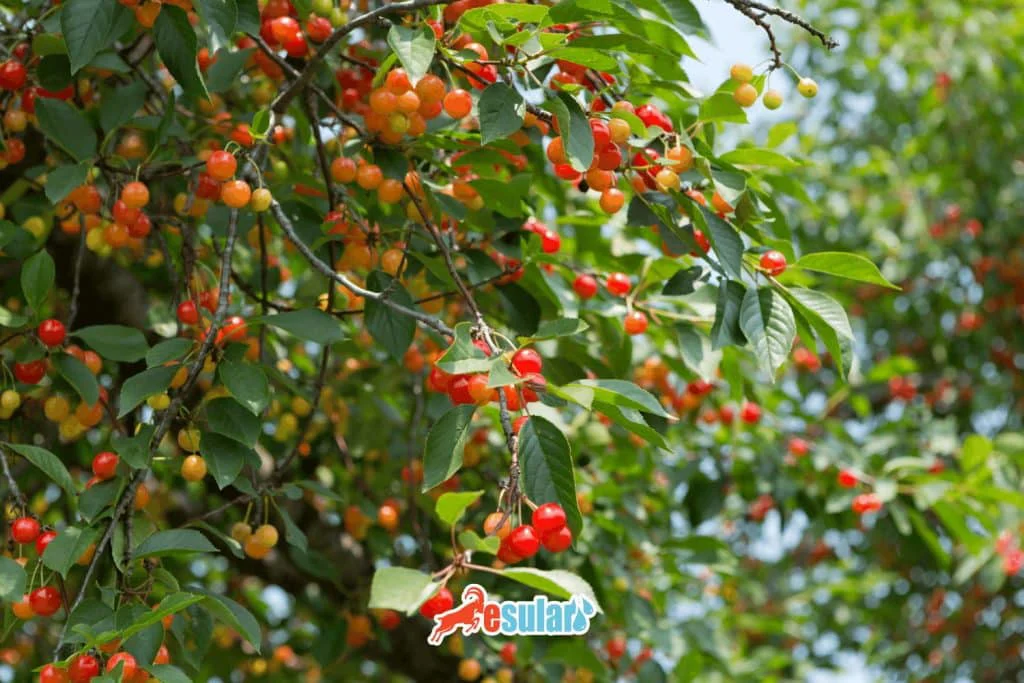
Sour cherry cultivation is an activity that holds an important place in agricultural production and has high economic value. Sour cherry is a fruit that has a special place among summer fruits and is also very valuable in terms of health. Filled with rich antioxidant content, vitamin C, fiber, and other important nutrients, sour cherry provides many benefits for human health. In addition to fresh consumption, sour cherry can be utilized and processed in many different ways such as jam, marmalade, compote, fruit juice, ice cream, and pickles. Furthermore, used in the cosmetic and pharmaceutical industries, sour cherry has a wide market potential.
Sour cherry production is not only a source of agricultural income but is also important for preserving environmental and ecological balance. Sour cherry orchards prevent soil erosion, increase biodiversity, and provide natural habitats. Consequently, sour cherry cultivation plays an important role for both agricultural production and the health sector. The value of this fruit is increasingly rising with the health benefits it provides and its commercial potential. Therefore, sour cherry cultivation is considered an important sector in agricultural production.
What are the Sour Cherry Varieties?
- Kütahya sour cherry is an important sour cherry variety in our country. Its fruit is round and heart-shaped, and the tip is blunt. It is dark red, tart, and juicy. The trees are productive and do not cause fruit cracking.
- Montmorency sour cherry is a variety widely grown in Europe and America. It has varieties such as long-stemmed, short-stemmed, and weeping branched. The fruit skin is light red or pink; this type of sour cherry, which is tart and juicy, is of high quality. The trees are also productive and do not show a tendency to crack.
- Hungarian sour cherry ripens slightly before the Kütahya sour cherry. Its fruit is roundish and heart-shaped, dark red in color, soft and juicy; this sour cherry variety is also productive and can be used suitably for the fruit juice industry.
- Katırlı sour cherry is one of the main sour cherry varieties and ripens at the same time as the Kütahya sour cherry. Its fruit, which is bright dark red, has a round heart shape and a juicy, tart taste profile. The trees are productive and can be used in the fruit juice industry.
- Heimanns Rubin sour cherry ripens slightly before the Kütahya sour cherry. The fruits of this variety, which yields regular and abundant fruit every year, are round, heart-shaped, and dark red in color. It is tart and juicy, the trees are also productive and suitable for use in the fruit juice industry.
Where Do Sour Cherries Grow? In Which Province Are They Grown the Most?
In our country, they generally grow in the Marmara, Aegean, Central Anatolia, and Black Sea regions. Their known homeland is southern Europe and northern Anatolia. Sour cherry production is quite common in Turkey, and especially provinces such as Afyonkarahisar, Kütahya, Bursa, İzmir, and Çanakkale stand out in sour cherry cultivation. These provinces are ideal areas for sour cherry cultivation in terms of climate and soil conditions. Their rich fertile soils and suitable climate conditions ensure the healthy growth of sour cherry trees and high-quality fruit production in these regions. Therefore, these provinces are in a leading position in sour cherry production.
Climate and Soil Structure in Sour Cherry Cultivation
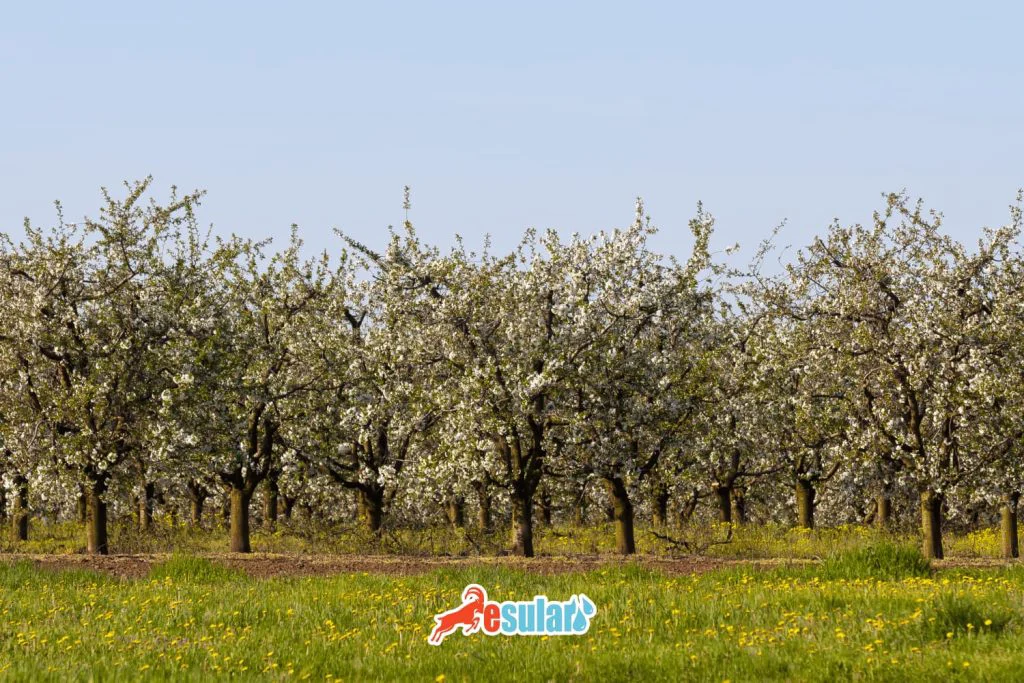
These trees grow best in deep and well-drained soils. Sour cherry trees are resistant to frost and have the ability to go into a dormancy period during the cold winter months to bloom and form fruit healthily in the spring. For this reason, regions where a sufficient chilling period can be provided in the winter season are ideal for sour cherry cultivation. Sour cherry trees develop well in calcareous or loamy soils and require good drainage of the soil. Good drainage prevents the roots from being exposed to excessive water and ensures the healthy growth and fruiting of the tree. A soil pH between 6 and 7 is ideal for sour cherry cultivation. When all these factors come together, it is seen that suitable climate and soil conditions are of vital importance for successful production in sour cherry cultivation. Therefore, it is very important for those planning to cultivate sour cherries to make the right variety selection by considering local climate and soil conditions.
Planting Sour Cherry Saplings
Preparation of the land is necessary before the planting process. The soil should be plowed with a subsoiler at 90 cm intervals during the August-September period. If problems such as partial groundwater and water accumulation exist, ditches should be opened at 40-50 meter intervals. Saplings should be planted in the autumn, which is the most suitable time. During planting, one shovel of superphosphate and 100 grams of Ammonium sulfate should be added to each hole and mixed into the soil. While planting can be done in different shapes on flat lands, a diamond pattern should be preferred on sloping lands. Planting intervals and row arrangement should be determined based on factors such as soil condition, rootstock, irrigation, and fertilization. Heading back after planting should not be rushed and should be done when the buds have swollen thoroughly. Additionally, if there are a small number of seedlings in areas where the weather is not harsh, they can be grafted with shield budding. The planting process must be carried out carefully because correct planting is the first step for the long-term success of the orchard.
Fertilization in Sour Cherry Cultivation
During the establishment phase of the orchard, it is recommended to use well-rotted farmyard manure to increase the nutrient value of the soil. This enriches the organic matter content of the soil and promotes the development of the plants' root systems. Additionally, during or after planting, DAP consisting of phosphorus fertilizers can be used for healthy growth. During the growth period, top fertilization should be performed to provide the nutrients needed by the plants. Inorganic fertilizers such as Ammonium sulfate can be used to meet the nitrogen needs of the plants. However, regular soil and leaf analyses must be performed to create the fertilization program. These analyses provide guidance for adjusting the fertilization program by identifying deficiencies or excesses. Appropriate fertilization methods should be determined according to the specific needs and conditions of each orchard. This is of vital importance for a healthy and productive sour cherry orchard. To get information about fertilizer types; you can take a look at our https://esular.com/dap-gubre-nedir-ne-ise-yarar articles.
Irrigation in Sour Cherry Cultivation
Irrigation is very important in terms of plant development, fruit formation, and productivity. However, the amount of irrigation varies depending on climate and precipitation conditions. If the annual precipitation in the region is 400 mm and above, usually there is no need to irrigate sour cherry orchards. However, in cases where the amount of precipitation is below this level, irrigation gains importance. In this case, it is necessary to irrigate sour cherry trees 2 to 3 times a year. These irrigation applications support the healthy growth of plants and fruit formation. Nevertheless, the amount of irrigation should be adjusted correctly and over-irrigation should be avoided, because more irrigation than necessary can lead to root rot and diseases.
Sour Cherry Harvest
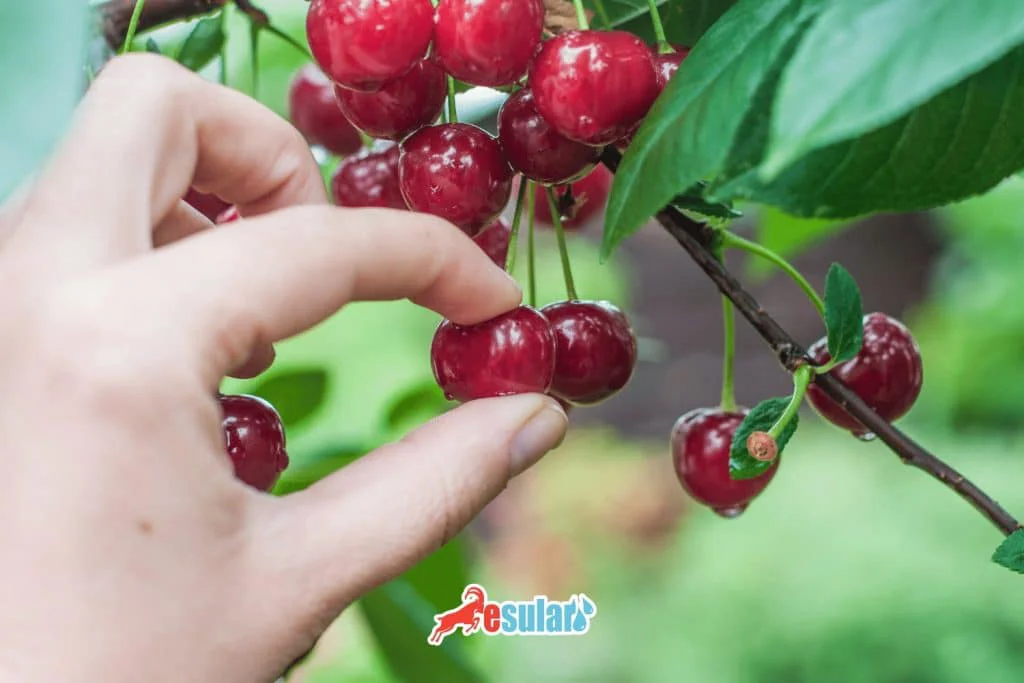
Sour cherry, one of the summer fruits, is harvested in July and August. During this period, it is possible to find fresh and delicious sour cherries on market stalls. The harvest time of sour cherry depends on the ripeness and size of the fruit. As they ripen, the color and taste of sour cherries change significantly, which indicates they are suitable for harvest. Sour cherries are usually harvested all at once and collected with their stems. During the collection process, care is taken not to break the fruiting spurs, because this can affect the durability of the fruits. Harvested sour cherries are generally placed in baskets or buckets for packaging and delivered to marketing points. In this process, it is important to preserve the freshness and quality of the sour cherries, because when fresh and healthy fruits are presented to consumers, demand and satisfaction increase. Therefore, correctly determining the harvest time and carefully performing the collection processes in sour cherry cultivation is of great importance.
How Many Years After Does a Sour Cherry Tree Bear Fruit?
Sour cherry cultivation is quite common in various regions of our country. Sour cherry trees generally start yielding at 4 to 5 years of age. However, it can usually take 8 to 10 years for them to reach full and economic yield. The economic life of sour cherry trees is generally between 20 and 25 years. During this period, sour cherry cultivation usually continues steadily and provides a regular source of income for farmers. Therefore, sour cherry cultivation is a frequently preferred agricultural activity and is widely carried out throughout the country.
Kategoriler