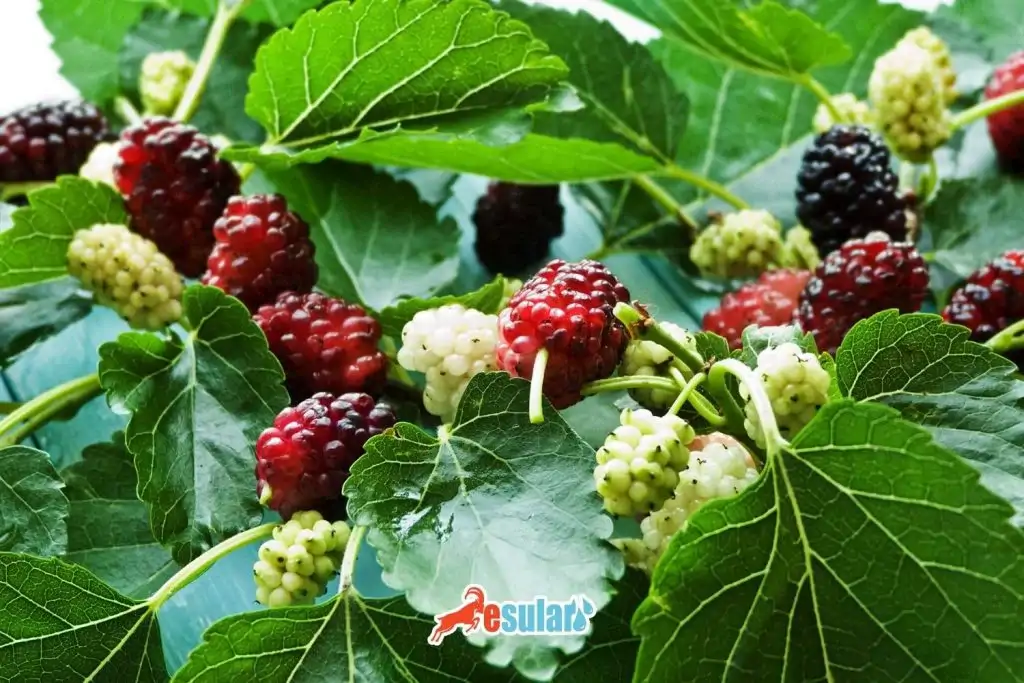
Mulberry cultivation is the process of growing the mulberry tree, known for both its delicious fruits and health-beneficial properties. Mulberry trees are of Asian origin, widely grown worldwide, and are also quite popular in our country. These trees are known for their ease of care and ability to adapt to various climate conditions. Mulberry cultivation is an attractive agricultural activity for both amateur gardeners and commercial producers. Mulberry trees grow successfully in warm and temperate climates. They are not soil-selective, but they develop better in well-drained and fertile soils. An important point to consider in mulberry cultivation is that the trees should be supported with regular irrigation and fertilization. Mulberry fruits ripen in the summer months and are hand-picked. Mulberry harvesting is usually done in the early morning or in the cool of the evening. Harvested mulberries can be consumed fresh, as well as utilized by drying or processing. Mulberry fruits are also used in making jam, molasses, vinegar, and wine.
Climate and Soil Structure in Mulberry Cultivation
Mulberry grows successfully in subtropical, tropical, temperate, and continental climate conditions from sea level up to an altitude of 1500 meters. The optimum temperature for the mulberry plant is between 24-28 °C, and the air temperature needs to be in the range of 5-36 °C. Mulberry, which is grown economically in regions with an annual rainfall of 600-2500 mm, needs a relative humidity of 65-80%. The mulberry plant, which has a lighting requirement of 9-13 hours in tropical conditions, enters dormancy when the air temperature falls below 12 °C. One-year-old shoots and buds are resistant down to -20 °C. Mulberry, which is grown economically in provinces such as Malatya, Adıyaman, Diyarbakır, Elazığ, Erzincan, Kahramanmaraş, Ankara, and Erzurum, is also not very selective in terms of soil requirements. However, shallow and loose soils are not highly recommended. For ideal mulberry cultivation, a soil pH between 5-7 is desired.
Sapling Planting in Mulberry Cultivation
Since mulberry trees form high and wide crowns, row spacing and on-row distances are generally preferred at intervals such as 7×8, 10×8, and 12×10 meters. When establishing an orchard, the soil, depth, and water-holding capacity of the selected area should be taken into consideration. Mulberry trees do not like shallow and loose soils; ideally, they grow in soils with a pH value between 5-7. The planting of mulberry saplings can be done in the period starting from leaf fall in autumn until the buds wake up in spring. For planting, locations where saplings will be planted are first marked according to row spacing and on-row distances. Holes with a width and depth of 40-50 centimeters are opened at the marked spots, and these holes are filled with fertilized soil. The roots of the sapling are pruned and placed in the hole, and a basin is made around the sapling to give life water. It is recommended to use a planting board to ensure proper planting. After planting, shape pruning is performed when the mulberry saplings begin to develop, and yield pruning is carried out when they start to bear fruit.
Irrigation in Mulberry Cultivation
Irrigation in mulberry cultivation is an important factor for the healthy development of trees and for obtaining high yields. Mulberry trees need regular irrigation, especially during dry periods. When irrigating, it should be ensured that the water spreads over the soil surface and reaches the root zone. In addition to traditional irrigation methods, the use of modern technologies increases irrigation efficiency and ensures more efficient use of water resources.
Smart irrigation systems optimize irrigation management in mulberry orchards, providing both water savings and precisely adjusting the amount of water needed by the plants. These systems analyze data such as soil moisture, air temperature, and plant water needs to automatically determine irrigation timing and quantity. Thus, problems such as over-irrigation or insufficient irrigation are eliminated.
The smart irrigation systems offered by Esular allow garden owners to easily manage their irrigation processes with user-friendly interfaces and mobile applications. These systems provide remote control and monitoring of irrigation operations, thus saving both time and water. The use of smart irrigation systems supports sustainable agricultural practices while increasing the productivity of mulberry orchards.
For more detailed information and to ask your questions about smart irrigation systems, you can contact us. We would be happy to assist you in the best way possible.
Additionally, in our application, we offer an informative section to determine the water needs of plants grown in various regions and to optimize irrigation planning. Thanks to this feature, you can learn how much irrigation you should perform during which periods throughout the year by specifying in which city, on how many decares of area, and which plant you are growing.
As you can see in the sample images, you can easily access all this information through our user-friendly interface and make your irrigation planning instantly. Irrigation calendars are supported by regional and seasonal data and customized according to plant types. In this way, you can practice more efficient and sustainable agriculture by knowing in advance how much water you will need in which period. To get more detailed information about technological solutions and smart, sustainable agriculture and to digitalize your systems, you can contact us.
Fertilization in Mulberry Cultivation
For the good development of mulberry trees and to increase product yield, nitrogenous, phosphatic, and potassic chemical composite fertilizers should be given. The fertilization program should be determined according to leaf and soil analyses to be conducted in the orchard. It is recommended to apply fertilizers in three periods: spring, summer, and autumn. In orchards where irrigation is not possible, it would be more appropriate to apply phosphatic and potassic fertilizers in autumn and nitrogenous fertilizers in spring. Fertilization carried out in this manner ensures the healthy growth and high productivity of mulberry trees.
How Many Years After Does a Mulberry Tree Bear Fruit?
A mulberry tree begins to bear fruit within 1-2 years after planting. However, full yield is generally obtained from the 5th year onwards. During this period, care and irrigation of mulberry trees should be done regularly, and appropriate fertilization and pruning operations should be applied.