
The Importance of Using Soil Moisture Sensors in Agricultural Irrigation
Irrigation in agriculture is the application of water, which is needed by the plant and cannot be met by precipitation, to the root zone of the plant in the soil in the required amount and at the required time. Many regions of our country are located in arid and semi-arid climate zones, and in these arid agricultural areas, if natural precipitation is insufficient during the growth period of plants, agricultural irrigation must be performed using the most appropriate method for high yield and quality.
Agricultural irrigation ensures the germination of plants and the vitality of organs such as cells, stems, branches, and leaves; it also ensures that the plant nutrients required by the plant are dissolved by the roots and transported to other parts of the plant.
Besides irrigation being so important for the plant, what is truly important is the critical irrigation period and the amount of water needed, which is different for every plant. If the amount of moisture needed by plants for development and critical irrigation periods are not taken into account, serious yield losses and a decrease in product quality are observed. Soil moisture sensors should be used to eliminate such problems in agriculture and to use our increasingly scarce water resources effectively.
Soil Moisture Sensor
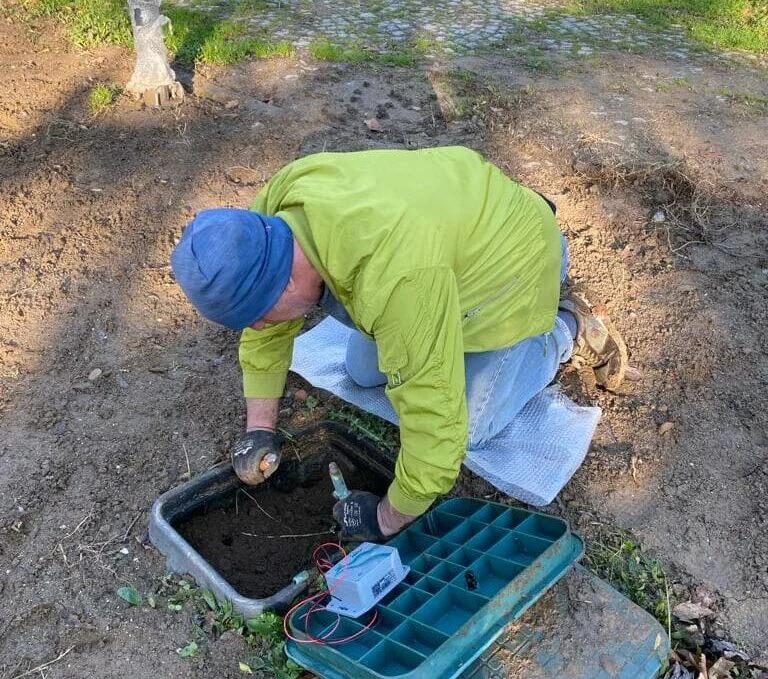
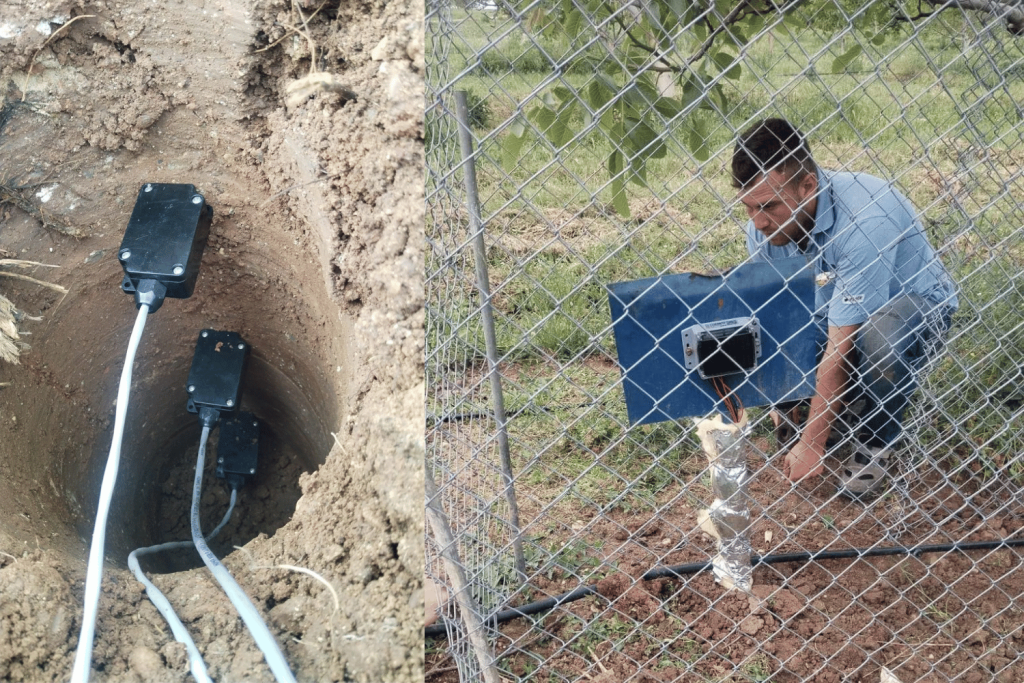
A soil moisture sensor is a sensor we can use to measure the amount of moisture inside the soil. Measurements are made by inserting moisture-measuring probes into the soil to be measured. Moisture values of different types of soils are measured incrementally and from multiple points.
Types of Soil Moisture Sensors
Thanks to developing technology, the measurement of soil moisture has started to be done more using soil moisture sensors rather than a gravimetric approach. There are numerous soil moisture sensors developed for this purpose. We can group these sensors into 3 categories in terms of their working principle. These are; tensiometers, dielectric (electromagnetic reflection) sensors, and the neutron scattering method.
Tensiometers
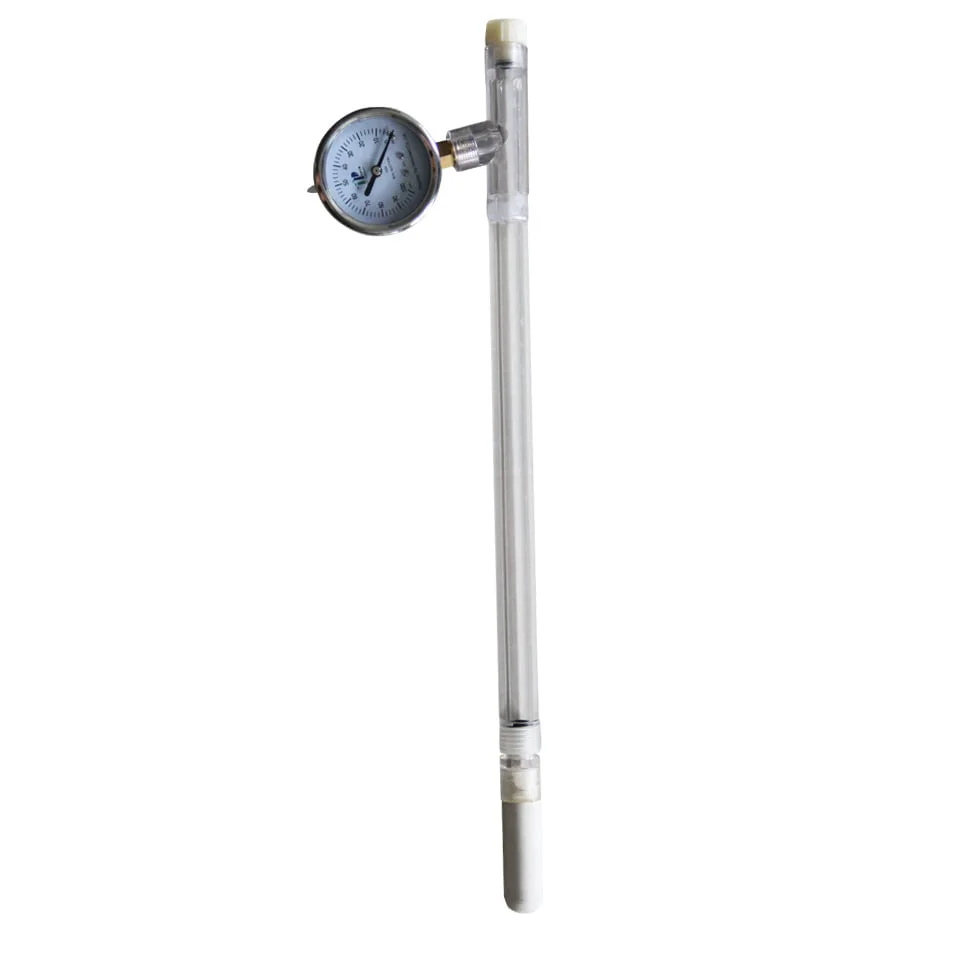
Tensiometers are soil moisture sensors that measure this tension between soil particles and water molecules. Tensiometers are tools consisting of a plastic body filled with water, a permeable ceramic tip, and a vacuum gauge (manometer). As the amount of moisture in the soil decreases, the soil begins to dry, and the water held around the soil particles is held more strongly. After the tensiometer is placed in the soil, depending on the amount of moisture in the soil, water transition from the ceramic tip to the soil begins. As the soil around the ceramic tip absorbs water, a vacuum is created inside the tensiometer. This created vacuum is monitored from the manometer gauge.
Dielectric (Electromagnetic Reflection) Sensors
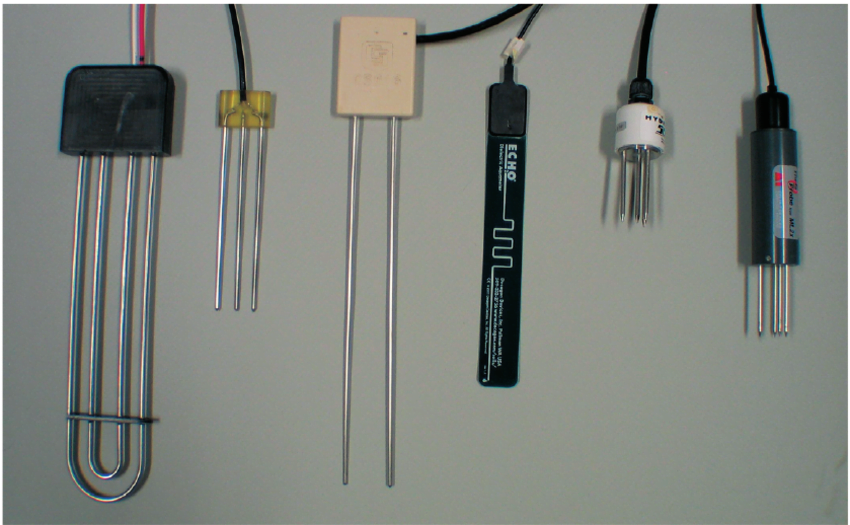
Dielectric sensors measure the dielectric constant of the soil, which is an electrical property dependent on the moisture content of the soil. The use of methods based on the dielectric property of the soil to measure soil moisture content has increased in recent years. The dielectric technique is based on the large difference between the dielectric constant of dry soil and the dielectric constant of pure water. Sensors such as TDR (Time Domain Reflectometry), FDR (Frequency Domain Reflectometry), and TDT (Time Domain Transmissometry) are used in measuring soil moisture based on the dielectric constant.
- TDR (Time Domain Reflectometry) Sensor This is based on the principle of sending electromagnetic signals from a source along two or three probes placed in the soil. The signal is in the form of a single pulse. These electromagnetic waves travel along the probes, hit the soil with the probes, and return to the source as a reflection. The path taken by this electromagnetic wave along the probe length and its return time to the source are measured. The presence of more water in the soil leads to higher dielectric forces (further slowing of the transition speed).
- FDR (Frequency Domain Reflectometry) Sensor Soil moisture sensors based on the FDR method work very similarly to sensors based on the TDR method. However, while TDR measures the travel time of electromagnetic waves, FDR measures the frequencies of electromagnetic waves. Two different types of FDR sensors are available: those with two parallel probes and those with a circular metal ring. The one with two parallel probes is buried in the soil, while the one with a circular metal ring is used inside a tube.
- TDT (Time Domain Transmissometry) Sensor Soil moisture sensors based on TDT measure the one-way propagation time of an electromagnetic pulse along a transmission line. Therefore, it is similar to TDR but requires electrical connections at the beginning and end of the transmission line.
Neutron Scattering Method
This method is based on the detection of hydrogen atoms in the water in the soil by slowing down the neutrons scattered from the radioactive source of the device by hydrogen atoms, which have a high slowing capacity. Since the source of hydrogen in the soil is mostly water, the slowed neutrons counted around the fast neutron source are used to measure the soil water content. Additionally, the requirement for special training and care for the use of these devices, along with their being expensive, appears as a disadvantage of use.
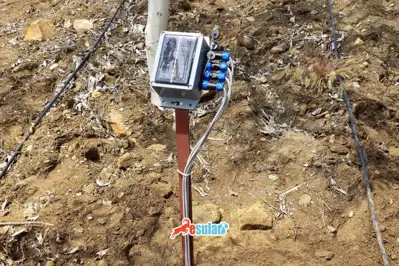
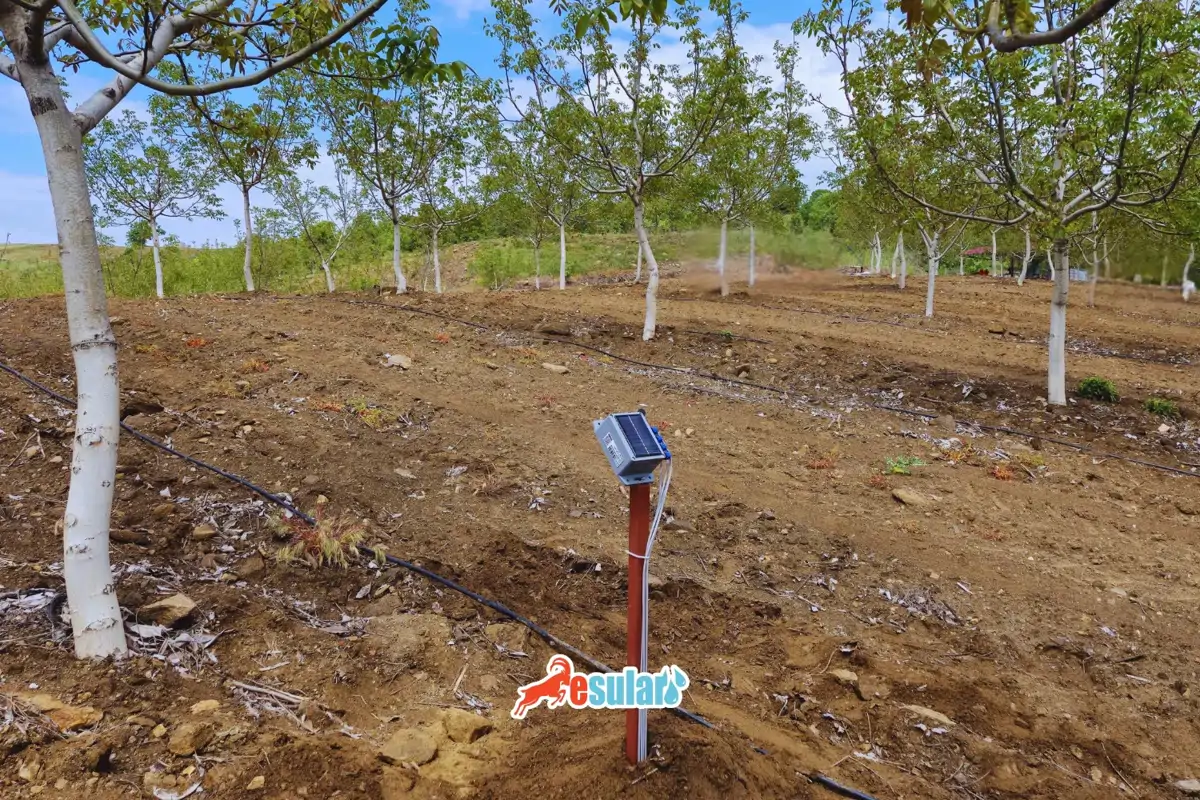
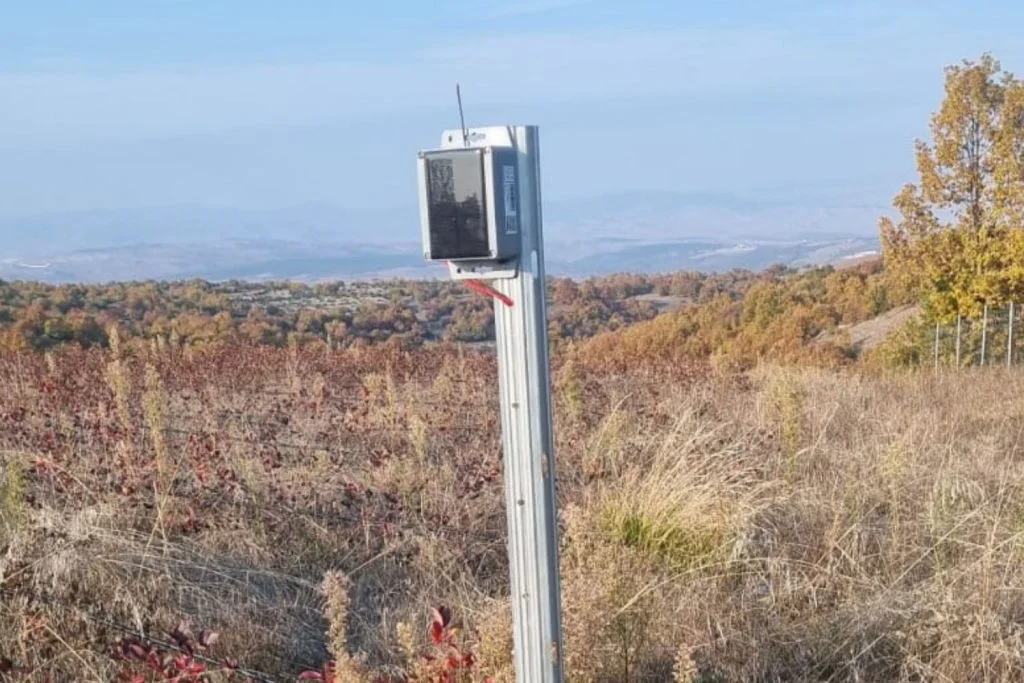
Esular Wireless Solar-Powered Soil Moisture Sensor
The wireless solar-powered moisture sensor works with a rechargeable battery. It has 1 soil moisture sensor input. There is no need for any external energy to power the sensor. Moisture measurements are made and transmitted at certain intervals, and moisture values can be monitored remotely.
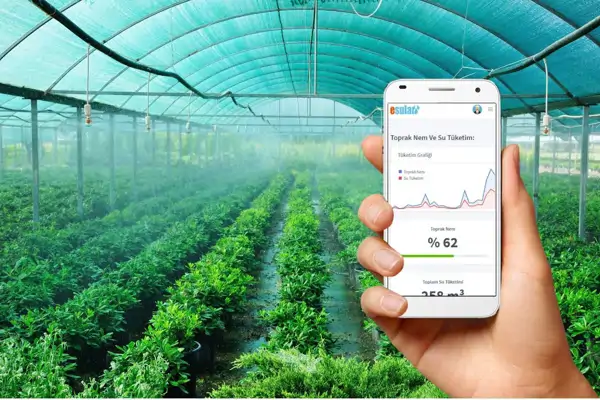
It works wirelessly. Measurement values are transmitted to the server at certain intervals. At the same time, these values are transmitted to the server as soon as certain intervals are exceeded, and alarms can be created. Limit values can be adjusted remotely and wirelessly. Thanks to its wireless and battery-powered structure, monitoring and control from multiple points is possible.
Irrigation System with Soil Moisture Sensor
Irrigation for agricultural and landscape purposes are the application areas where fresh water resources are consumed the most. Smart management of water contributes to increasing irrigation efficiency, reducing costs, and environmental sustainability. To optimize water use, reduce energy consumption, and increase the quality of crops, sensors such as moisture sensors should be added to the irrigation system.
The soil moisture sensor determines the appropriate irrigation time and irrigation duration by measuring the moisture value of the soil. Moisture sensors postpone irrigation time in case of unexpected precipitation.
Together with our wireless, battery-powered smart soil moisture sensor and smart algorithms developed by Esular, the analysis of sensor data that can be recorded on the cloud system helps in determining the ideal irrigation period and irrigation duration; furthermore, we reduce water use and provide yield increases in agricultural production.
Advantages of Soil Moisture Sensors in Agricultural Irrigation
In irrigation applications, accurate measurement of moisture in the plant root zone and evaluation of moisture change in the soil are very important. The soil moisture sensor is the method that offers the most effective and definitive solution for measuring soil moisture. The advantages of soil moisture sensors in agricultural irrigation are numerous and can be summarized as follows;
- Reduces Water Use: Since soil moisture sensors can calculate the moisture needed by the plant in the soil, it prevents the use of more water than needed, thus leading to reductions in water use.
- Provides Yield Increase in Agricultural Production: Plants take water into their bodies through active or passive transport depending on the content of the growing environment. If there is insufficient water in the soil, plants take water through active transport; since active transport requires more energy use, it causes losses in every period from seed germination to the harvest stage. Conversely, the presence of more water in the environment than needed causes situations such as the non-uptake of plant nutrients, a decrease in microorganism activities, and the formation of disease factors. Maintaining the soil moisture content at the level required by the grown plants is extremely important in terms of preventing product losses and ensuring production sustainability.
- Incremental and Multi-Point Measurement: It performs incremental and multi-point measurement of the moisture values of different types of soil, ensuring effective irrigation optimization by supporting it with artificial intelligence and machine learning solutions.
- Alarms Can Be Created: Measurement values are transmitted to the server at certain intervals. At the same time, these values are transmitted to the server as soon as certain intervals are exceeded, and alarms can be created.
- Being Wireless and Battery-Powered: Thanks to its wireless, battery-powered structure, there is no need for additional energy to power the sensor.
- Automatic Irrigation Postponement Based on Meteorological Data and Precipitation Status Information: Unexpected situations such as rain in the region are automatically detected and the activation of the irrigation system is postponed. The amount of moisture the soil possesses can be detected by moisture sensors, thereby providing water savings.
Daha Fazla İçerik İster misiniz?
Akıllı tarım hakkında en güncel içerikleri takip edin.
Size daha iyi bir deneyim sunmak için çerezler kullanıyoruz. Gizlilik Politikası
Çerez Tercihleri
Hangi çerezlerin kullanılacağını aşağıdan yönetebilirsiniz. Zorunlu çerezler site işlevselliği için gereklidir ve kapatılamaz.
Site'nin temel işlevleri için gereklidir. Oturum yönetimi ve güvenlik.
Site kullanımını analiz etmemize yardımcı olur. Google Analytics vb.
Kişiselleştirilmiş reklamlar göstermek için kullanılır.
Yorumlar