Strategic Importance of Pressure Monitoring and Valve Control in Modern Agriculture
Global climate change and the rapid depletion of water resources have made 'precision agriculture' (precision agriculture) applications a necessity in agricultural production. One of the biggest problems encountered in traditional irrigation methods is the inability to deliver water to every point of the field with equal and correct pressure. At this point, pressure monitoring and wireless valve opening technologies come into play, offering farmers and agricultural enterprises full control.
Pressure monitoring means tracking the hydraulic performance of the irrigation system instantaneously. While a pressure drop in a pipeline indicates a leak or blockage, excessive pressure can lead to pipe bursts and energy waste. Smart irrigation solutions developed by Esular process this data instantaneously and transmit it to the user via smart irrigation systems. In this article, we will examine the technical details of pressure monitoring and valve control, the advantages of Smart-Valve and Smart-Pressure products offered by Esular, and the contributions of these technologies to agricultural productivity in depth.
Why Should We Monitor Pressure?
- Instantly detect potential leaks and pipe bursts in the system.
- Ensure homogeneous irrigation by making drip irrigation emitters (drippers) operate at design pressure.
- Lower energy costs by optimizing pump performance.
- Track filter clogging status via differential pressure.
- Ensure the right amount of water reaches at the right time to prevent plant stress.
Esular Smart-Valve and Smart-Pressure: Technology and Hardware
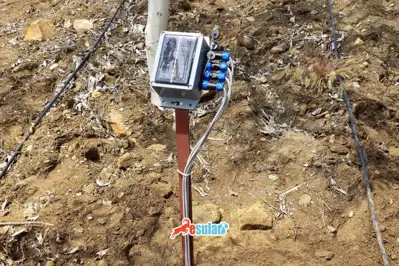
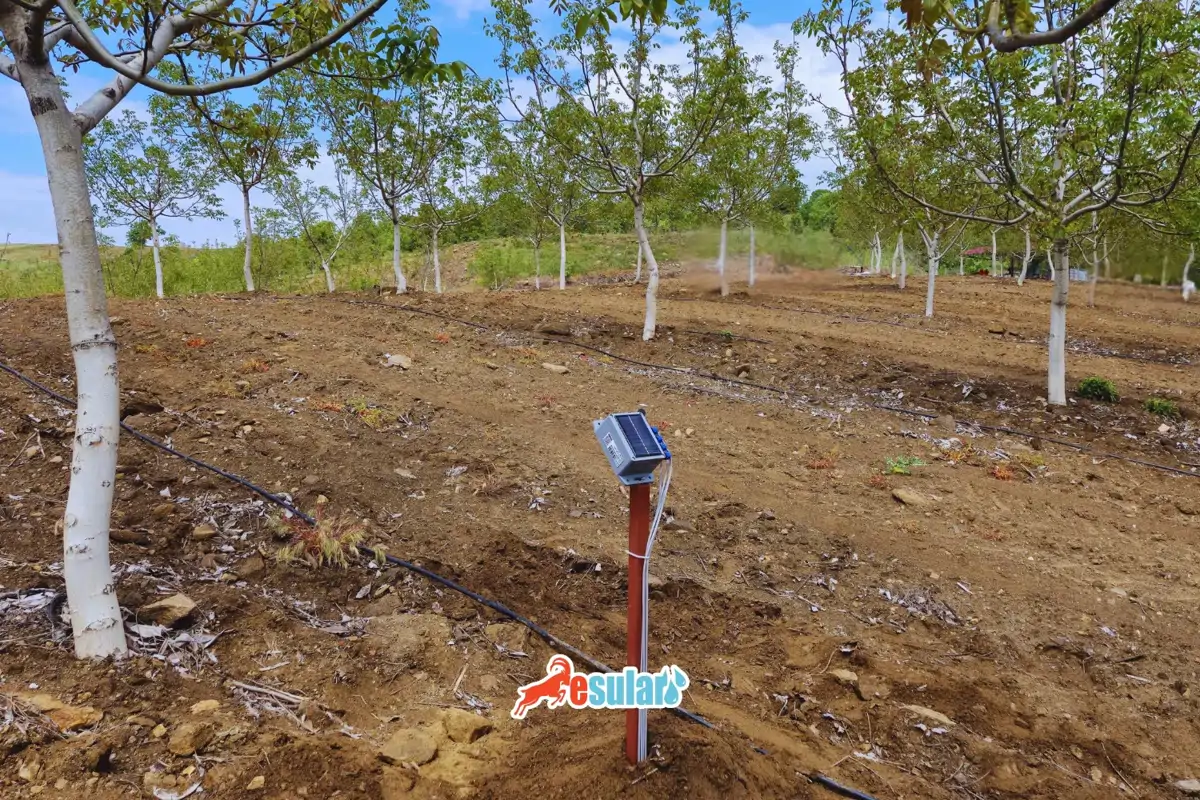
As a result of R&D studies in the field of agricultural automation, Esular has developed wireless devices that work smoothly even in the most challenging field conditions. These devices do not only open and close valves but also collect the hydraulic data of the system. In the product range offered by the company, configurations for different needs are available. Especially hybrid devices with 2 valve / 2 pressure and 4 valve / 4 pressure inputs are revolutionary in large fields.
Smart-Valve: The Peak of Wireless Valve Control
Smart-Valve series allows you to manage solenoid valve units at remote points of the field without cable clutter. Thanks to LoRa (Long Range) technology, these devices, which can communicate from miles away, can operate for years without requiring battery replacement with low power consumption.
Smart-Valve Features:
- Wireless Communication: LoRaWAN or GSM based communication options.
- Battery Operation: Operation with rechargeable lithium-ion batteries without needing an external energy line.
- Precise Control: Opening and closing of valves with millisecond accuracy.
- Feedback: Status information on whether the valve has actually opened or not.
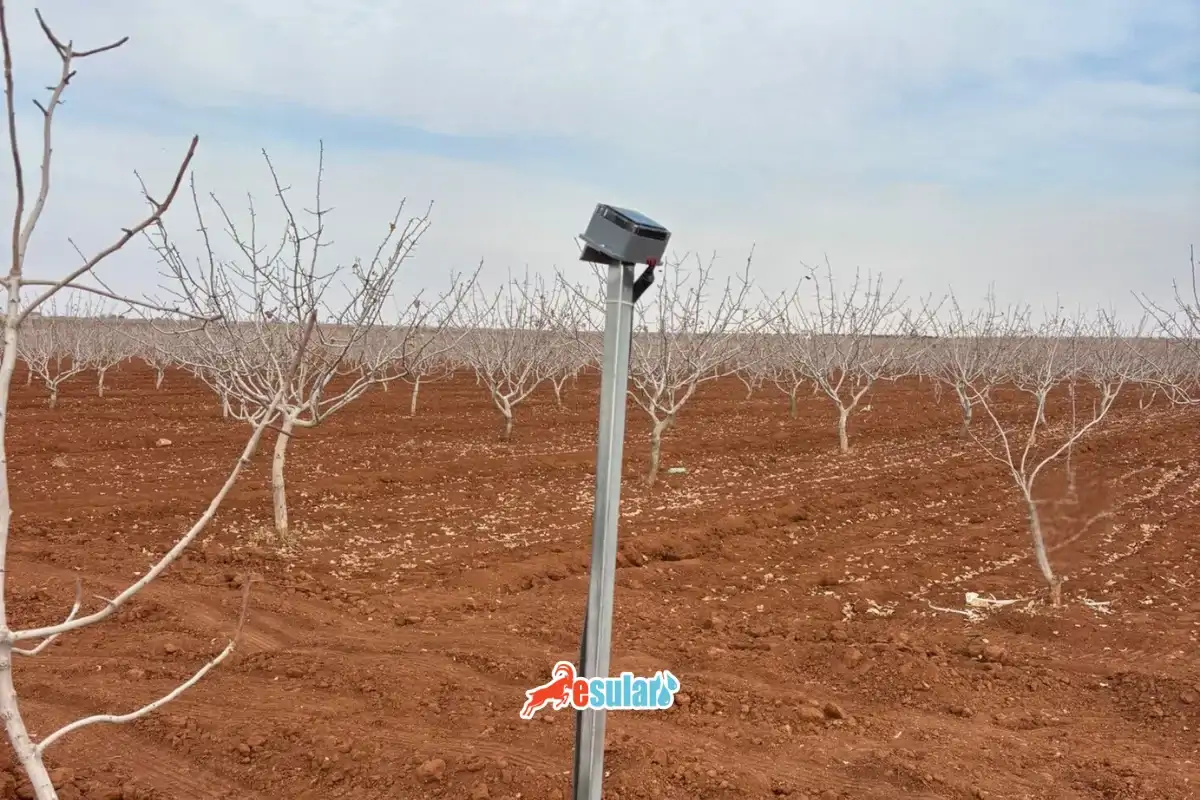
Smart-Pressure: Real-Time Hydraulic Analysis
Smart-Pressure units read pressure sensor data placed at critical points of the irrigation line. These devices carry analog pressure data to the digital world, helping us understand the dynamics of the system. For example, if the pressure should be 1.5 bar in a drip irrigation system and the system shows 0.8 bar, Smart-Pressure reports this situation immediately.
Hybrid Solutions: Multiple Valve and Pressure Management
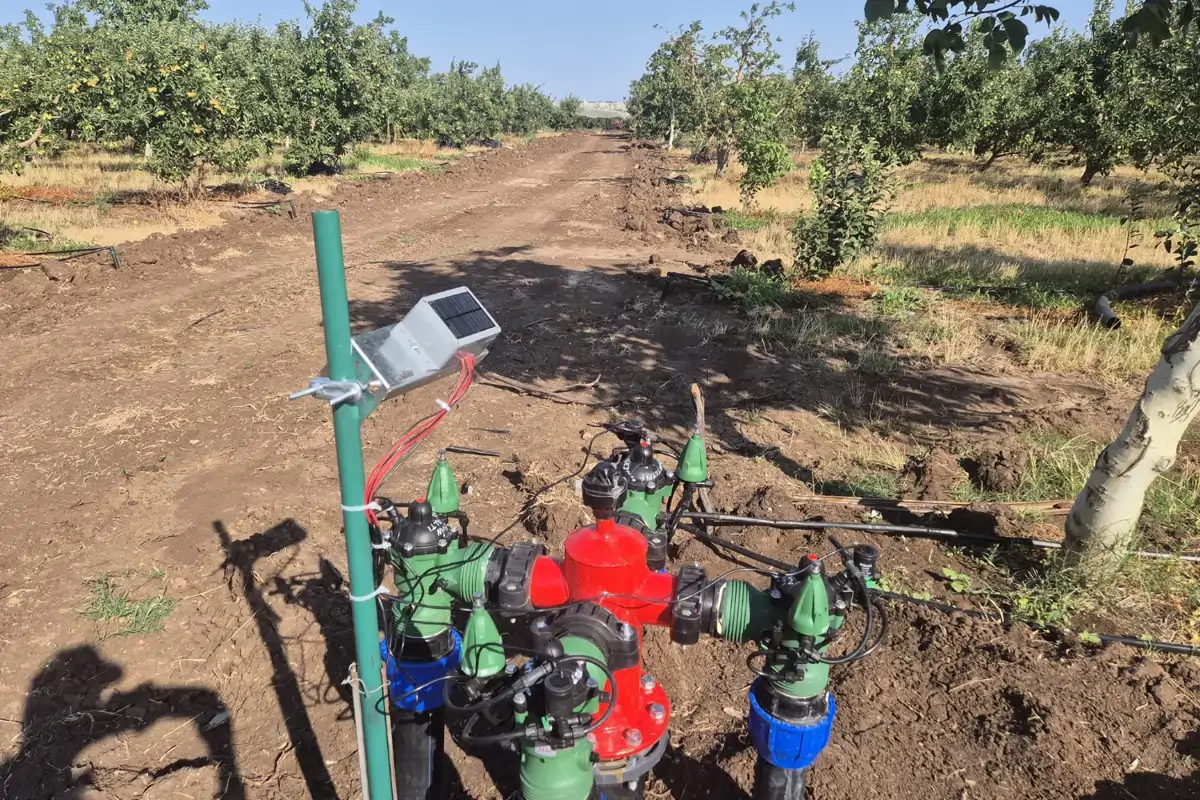
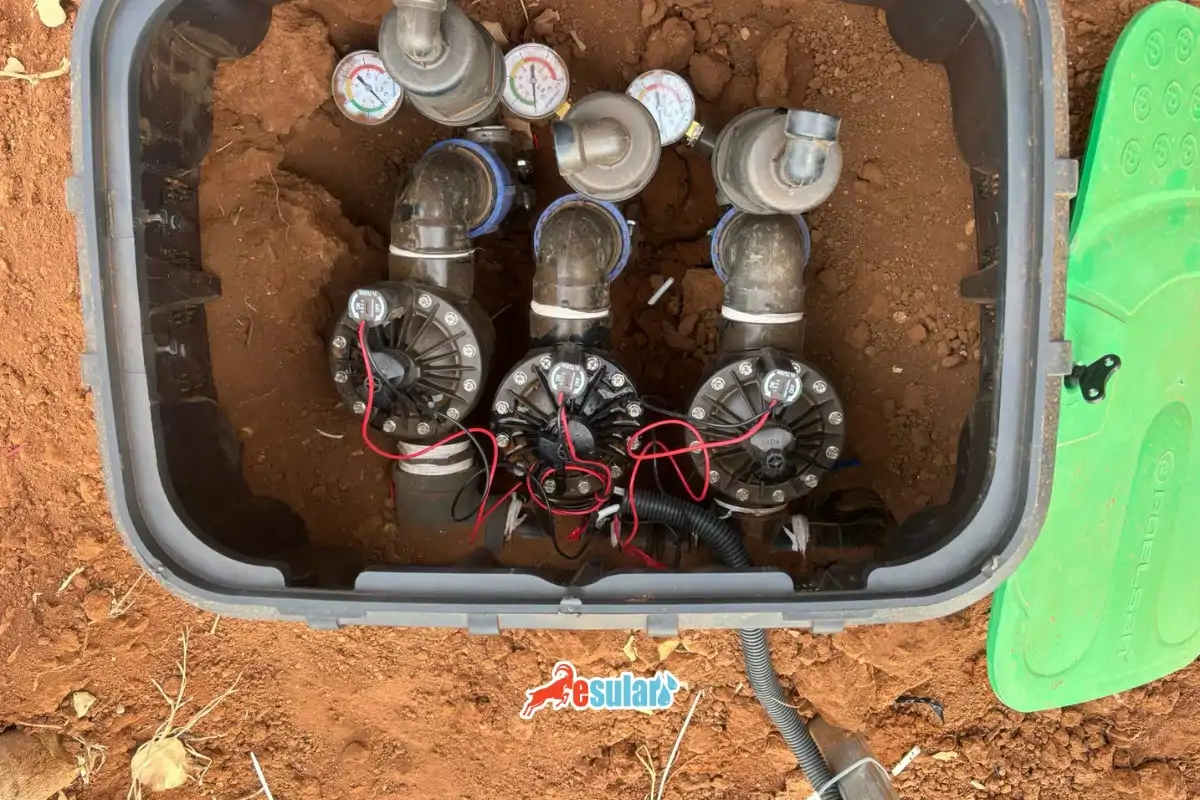
One of Esular's strongest sides is combining both valve control and pressure monitoring in a single device. 2 Valve / 2 Pressure or 4 Valve / 4 Pressure capacity allow you to both manage valves at a manifold (valve group) point and measure the inlet-outlet pressures of that group. This is critical especially for filter cleaning tracking and end-of-line pressure verification.
This hybrid structure increases data depth while reducing the farmer's costs. It is possible to manage dozens of hybrid units via a single central station. To better understand how the system works, you can take a look at the FAO Water Management Principles resources.
Technical Details: Pressure Losses and Calculations
Basic hydraulic formulas are utilized when performing pressure management in irrigation systems. Friction loss in a pipeline is directly related to the diameter, length of the pipe, and the velocity of the water passing through it. The Hazen-Williams formula is the most commonly used method in these calculations.
Esular systems make sense of the data coming from the sensor by performing these complex calculations in the background. If there is more than a 15% difference between the calculated theoretical pressure and the actual pressure coming from the Smart-Pressure sensor, the system automatically gives a 'Fault/Leak' warning. This is one of the most critical among the benefits of automation in agricultural irrigation.
Solenoid Valve Technology: Latching vs. Standard
Solenoid valves used in valve opening systems are divided into two according to how they consume energy. Esular uses Latching (Locked) Solenoid technology to maximize efficiency in its wireless and battery-powered systems.
Latching Solenoid Advantages:
- Energy Saving: It draws only a short pulse (pulse) current while the valve is opening and closing. It does not consume energy as long as the valve remains open.
- No Overheating Problem: The coils of standard valves heat up as long as they remain open; this problem is not experienced in latching valves.
- Long Battery Life: Thousands of open-close operations can be performed with lithium-ion batteries.
For more information about solenoid valve selection and winter maintenance, you can examine our solenoid valve winter maintenance guide article. Additionally, for cast iron and plastic valve comparisons, you can take a look at this article.
Application Scenarios: Pressure Tracking in Drip Irrigation
When performing drip irrigation in large areas, the pressure difference between the beginning and the end of the field determines the homogeneity of plant development. You can manage the following scenarios with Esular pressure monitoring systems:
1. End-of-Line Pressure Verification
By monitoring the pressure at the farthest point of the field with Smart-Pressure, you can check whether the water reaches there. If the end-of-line pressure falls below the critical threshold (e.g., 0.5 bar), the system can stop the pump or change the valve sequence.
2. Filter Cleaning (Backwash) Automation
The difference (Delta P) between two pressure sensors placed at the filter inlet and outlet indicates how dirty the filter is. Esular software automatically opens the backwash valves to clean the filter when this difference reaches a certain level. This process is called automatic filter cleaning.
3. Pump Protection
A sudden drop in pressure at the pump outlet is an indication of a major burst in the main pipeline. When Smart-Pressure detects this drop, it shuts down the pump within milliseconds and prevents thousands of cubic meters of water from going to waste. It might be beneficial to examine academic studies on pump control systems related to this topic.
Software and Data Analytics: Esular Management Panel
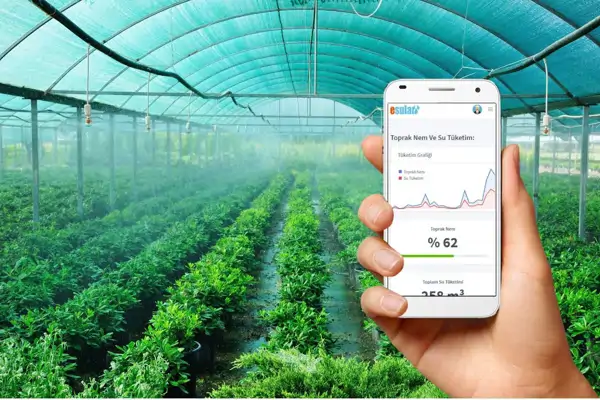
No matter how powerful the hardware is, it is the software that makes the data meaningful. Esular's cloud-based platform visualizes the pressure and valve status data coming from the field. Users can manually open and close valves via their smartphones or create complex irrigation programs.
Software Possibilities:
- Instant Graphical Monitoring: Tracking pressure changes with time-based graphs.
- Alarm Management: SMS and Mobile notification in case of low pressure, high pressure, or valve failure.
- Reporting: Analysis of how long each valve remained open and the amount of water consumed during this period.
- Map Integration: Seeing the location of every valve and sensor with the manage the enterprise from a single map feature.

Economic Return and Sustainability
Pressure monitoring and valve automation investment is a technology that amortizes itself in a very short time. The decrease in labor costs, water and energy savings, and most importantly, the increase in product yield are the main motivation sources for these systems.
Water and Energy Saving
Irrigating with the correct pressure prevents water from being lost through evaporation or deep percolation. Additionally, stopping pumps that run unnecessarily provides savings between 30% and 50% in electricity bills. You can find the details of this topic in our well pump electricity saving article.
Reduction of Labor Costs
Dozens of workers and vehicles are required to manually open and close valves in thousands of decares of land. With Esular wireless valve control systems, a single operator can manage the entire land from their office. This not only provides a cost advantage but also eliminates the 'human error' factor.
Future of Agriculture: IoT and AI Integration
Pressure monitoring data is used not only to manage today but also to plan the future. Esular creates artificial intelligence algorithms by combining this collected data with climate stations and soil moisture sensors. These algorithms automatically apply the 'most ideal irrigation prescription' by analyzing the water need of the plant, the current weather conditions, and the hydraulic capacity of the system.
For example, if heavy rain is expected tomorrow and soil moisture is sufficient, the system cancels the valve opening process. Or if the wind speed is too high, it closes the sprinkler irrigation systems to prevent the water from being blown away. This is the cornerstone of the Agriculture 4.0 vision.
Conclusion: A Strong and Efficient Future with Esular
Efficiency in agricultural production is too critical to be left to chance. Pressure monitoring and wireless valve opening systems are the strongest weapons of the modern farmer. Smart-Valve and Smart-Pressure products, developed by Esular with local and national resources, offering wireless, battery-powered, and precise control, perfect the drip irrigation and automation processes in large fields.
If you also want to prevent water waste in your agricultural enterprise, lower energy costs, and start the digital transformation, you can contact Esular's expert team. The agriculture of the future is being built today with data-driven management.
For More Information:
- Wireless Battery Powered Pressure Sensor Product Page
- Professional Irrigation Automation Packages
- Contact Us for Free Consultancy and Discovery
To stay up to date about modern agricultural technologies, continue following our Esular Blog page. Efficiency in agriculture starts with the right technology!
Sıkça Sorulan Sorular
How does wireless valve control work in agricultural irrigation and what are its advantages?
Wireless valve control allows remote management of solenoid valves in the field using LoRa or GSM technologies without the need for physical cabling. Systems like Esular Smart-Valve increase operational efficiency by opening and closing valves with millisecond precision from miles away, completely eliminating cable costs and labor errors.
What are the primary benefits of establishing a pressure monitoring system in precision agriculture for the enterprise?
Pressure monitoring prevents water waste by detecting leaks, blockages, or pipe bursts in the irrigation line in real-time. Additionally, it ensures equal water distribution (homogenous irrigation) to every point of the field by making drip irrigation systems operate at design pressure, minimizing imbalances in plant growth.
How do wireless smart valve units meet their energy needs and what is the battery life?
Wireless units developed by Esular operate with high-capacity and rechargeable lithium-ion batteries. Thanks to latching (locked) valve technology and low-power LoRaWAN communication, these devices can perform thousands of opening-closing operations without needing an external energy line and can function for years without requiring battery replacement.
What is a latching (locked) solenoid valve and why should it be preferred over standard valves?
Latching solenoid valves need only a short electrical pulse to change the valve position and do not consume energy as long as the valve remains open. This technology, which eliminates the coil heating problem experienced in standard valves, is critically important for maximizing energy savings, especially in battery-powered and wireless automation systems.
How is the automatic filter cleaning (backwash) process optimized with pressure sensors?
Smart-Pressure sensors placed at the filter inlet and outlet points instantly measure the pressure difference (Delta P) between the two points. When this difference, which increases as the filter gets dirty, reaches the specified threshold value, the system automatically triggers the backwash valves; thus, filters are cleaned only when needed, providing water and time savings.
How much savings do smart irrigation and pressure tracking systems provide on water and electricity bills?
Correct pressure management and valve automation can provide savings between 30% and 50% in electricity costs by preventing unnecessary pump operation and water losses. While water loss through evaporation or deep percolation is prevented thanks to precise control, a significant reduction in labor and vehicle costs is also achieved, and the investment amortizes itself in a short time.