The Need for Irrigation Timers in Modern Agriculture and Landscaping
Today, protecting water resources and increasing agricultural productivity is of critical importance for global food security and sustainable environmental management. In this context, the irrigation timer has become one of the most fundamental components of modern irrigation management. The uncontrolled use of water in traditional irrigation methods negatively affects both plant health and leads to the waste of valuable water resources. As Esular, the smart irrigation solutions we have developed offer the user full control by completely automating this process.
An irrigation timer is essentially a control unit that determines when the irrigation system will start, how long it will run, and when it will stop. Appealing to a wide audience from garden owners to large-scale farmers, these devices ensure that plants receive the water they need at the most accurate time. Especially thanks to the integration of smart irrigation and automatic irrigation systems, precise management is possible without the need for human intervention.
The Balance Between Water Saving and Plant Health
The biggest advantage of automatic irrigation systems is that they prevent plants from entering stress. When plants are watered during the hottest hours of the day, a large portion of the water is lost through evaporation and can cause burns on the leaves. Night or early morning irrigation performed using an irrigation timer ensures that water penetrates the soil and is absorbed by the roots at a maximum level. This situation directly increases plant yield while providing a significant decrease in water bills.
Irrigation Timer Types: Which One is Right for You?
There are various irrigation timer models on the market for different needs. To choose the device most suitable for your needs, it is important to understand the working principles of these technologies.
Irrigation Timer Types:
- Mechanical Timers: Simple devices that are set manually, usually resembling a kitchen timer. They mechanically cut off the water at the end of the set period. They do not require electricity, but their programmability is very limited.
- Digital Timers: They allow for daily or weekly programs to be made via an LCD screen. Multiple irrigation cycles can be defined.
- Smart (Smart Garden) Timers: Systems that connect to the internet via Wi-Fi or LoRa technology. Devices such as the Esular Smart Garden series can optimize irrigation by analyzing weather data.
- Battery and Solar-Powered Models: In areas where there is no power line, solar-powered control units provide great convenience.
Comparative Technical Specifications Table
Esular Smart Garden Series: Garden Management of the Future
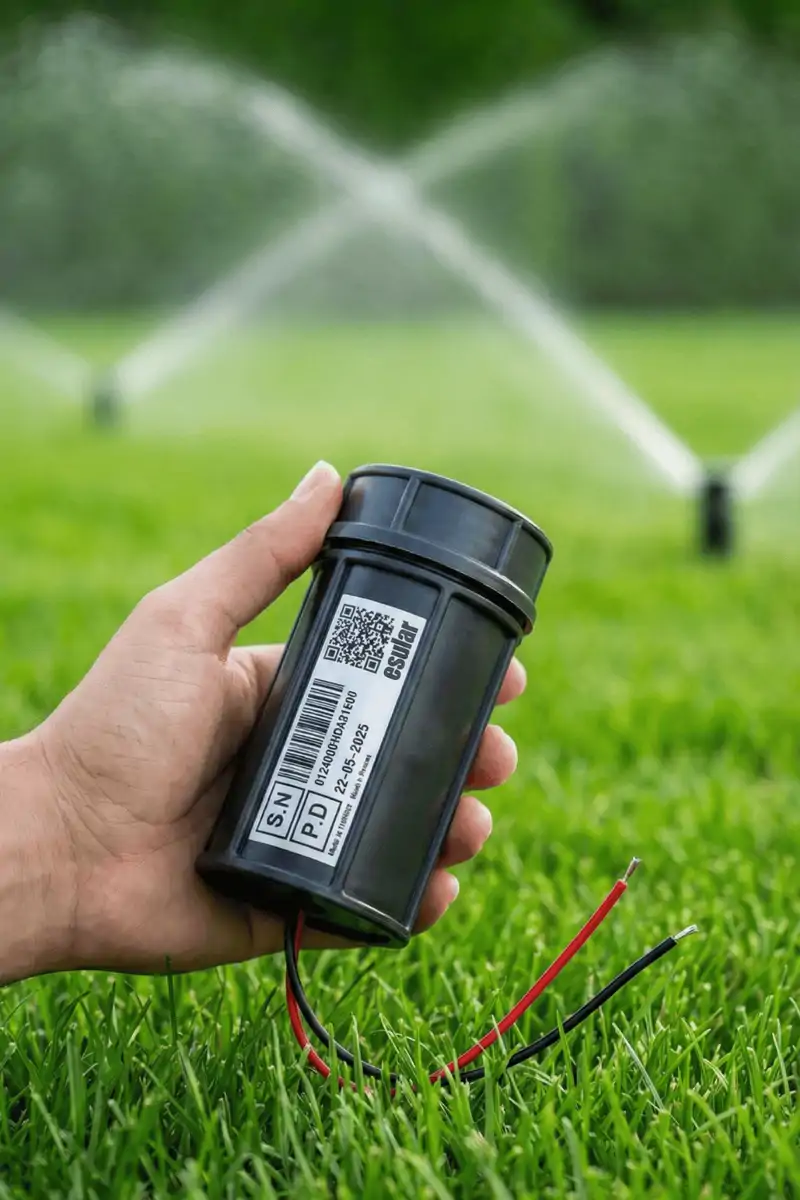
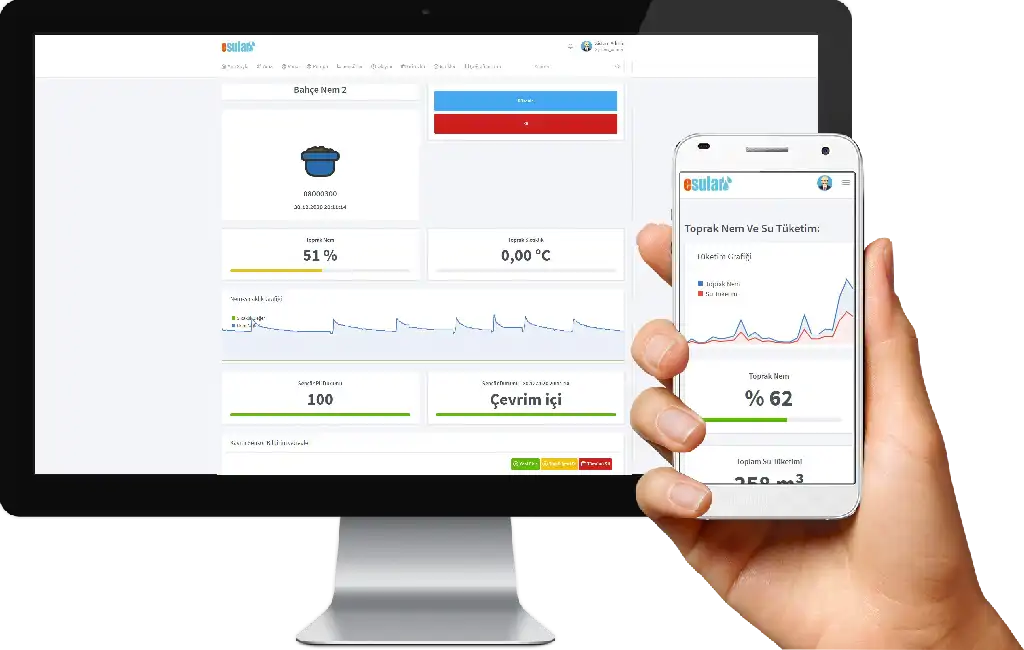
As Esular, we take irrigation management to the next level with the smart garden solutions we have developed for landscaping and small-scale agricultural areas. A smart irrigation timer is not just a clock, but also a center that processes data. The Smart Garden Series Wireless Smart Valve Control Unit allows you to manage the valves in your garden from your mobile phone.
Cloud-Based Management Software
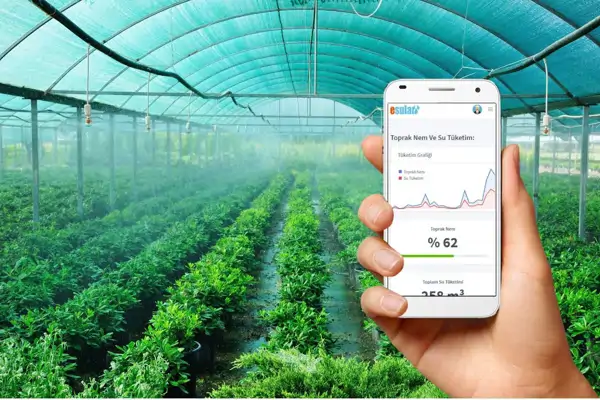
We do not only produce devices, but also offer a comprehensive software ecosystem where these devices are managed. Thanks to the cloud-based irrigation management software, you can see the status of your garden, change irrigation programs, or intervene instantly from wherever you are in the world. This system provides unique comfort, especially during holiday periods or in professional landscape management.
The Relationship Between Timer and Valve in Automatic Irrigation Systems
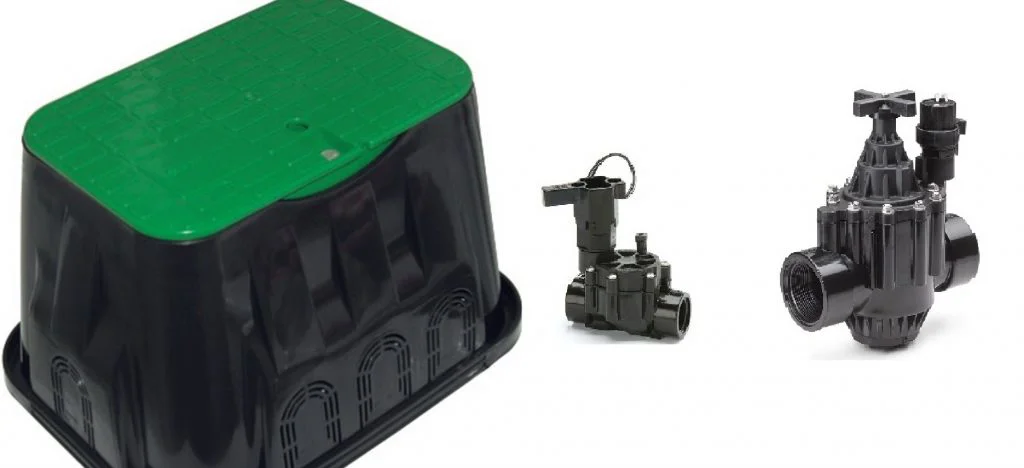
An irrigation timer needs an executor to fulfill its command. These executors are solenoid valves. The electrical signal from the timer (usually 9V DC Latching or 24V AC) starts or stops the water flow by moving the piston inside the valve.
Advantages of Valve and Timer Integration:
- Precise Timing: Irrigation duration can be set down to the level of seconds.
- Zonal Control: Lawn areas, flower beds, and trees in your garden have different water needs. With a multi-channel timer, you can water each zone according to its needs.
- Safety: In case of a systemic failure, the valves automatically switch to the closed position, thus preventing floods.
Sensor Integration: Watering Only When Necessary
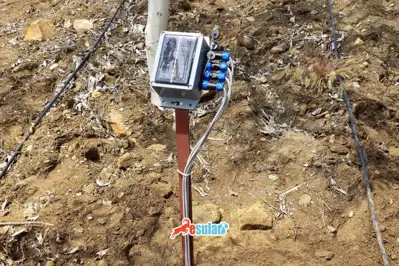
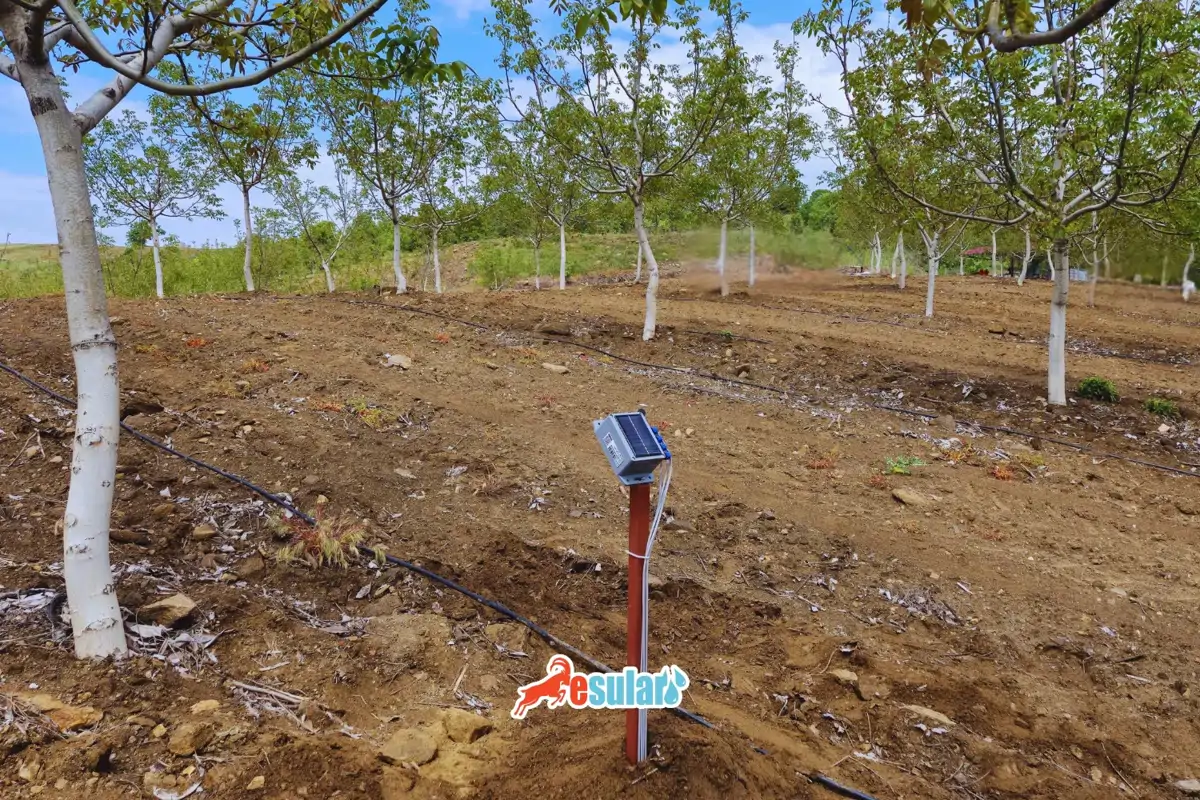
Even the most advanced irrigation timer is not considered efficient if it continues to irrigate when the soil is already wet. At this point, soil moisture sensor technology comes into play. Esular's wireless sensors measure the moisture rate deep in the soil in real-time and transmit this information to the timer.
How Does a Moisture Sensor Work?
The sensor determines the amount of water in the soil by measuring its dielectric constant. If the moisture level is above the determined threshold value, the irrigation timer skips the irrigation even if it is programmed. In this way, both the rotting of plant roots due to excessive water is prevented and unnecessary water use is reduced to zero. Our Wireless battery-powered soil moisture sensor product offers a professional solution with its easy installation and long battery life.
Irrigation Timer Installation: Step-by-Step Guide
Setting up an automatic irrigation system is quite simple with correct planning. Here are the basic steps:
- Needs Analysis: Determine the size of the area to be irrigated and the plant types. Decide how many different zones (stations) there will be.
- Control Unit Selection: Choose an Esular timer suitable for your area. If there is an internet connection, prefer smart models.
- Valve Installation: Place solenoid valves on the main water line. Pay attention to the water direction of the valves.
- Wiring or Wireless Pairing: Connect the valves to the control unit. If you are using wireless valve control units, pair the devices with the system.
- Programming: Enter the start times and durations via the mobile application or device.
- Test: Check for leaks by running each zone manually.
Water Saving and Efficiency Calculations
Calculating the economic return of using an irrigation timer allows you to see how quickly the investment pays for itself. In agricultural areas, water use is generally calculated per decare. Although the answer to the question how much water is given to 1 decare varies according to the plant type, it has been scientifically proven that this amount is optimized between 30% and 50% with automation.
Especially in large-scale enterprises, the reduction in labor costs can cover the system cost in one season. As we detailed in our article 10 benefits of automation in agricultural irrigation, energy saving is also an important part of this equation.
Greenhouse Automation and Timing Systems
Greenhouses are controlled environments where plants are most sensitive. Here, irrigation timing does not only mean giving water, but also maintaining the balance of humidity and temperature. In our greenhouse automation systems, irrigation timers work in synchronization with fogging systems and fertilization units.
Fertigation (Irrigation with Fertilizer) Timing
The application of fertilizer together with water (fertigation) in plant nutrition processes maximizes yield. Smart timers ensure that the plant receives balanced nutrients in every irrigation by activating fertilizer tanks at certain periods. The automatic liquid fertilization system is designed to manage this sensitive process.
Frequently Asked Questions (FAQ)
1. Does the irrigation timer run on batteries?
- Yes, many models run on 9V batteries. However, for large systems, professional units with 220V AC supply or solar power are available.
2. Does the timer stop irrigation when it rains?
- If a rain sensor or soil moisture sensor is integrated into the system, yes. Smart models can cancel irrigation in advance based on the weather forecast.
3. How many valves can Esular systems control?
- We have packages that can be scaled from 1 valve to hundreds of valves according to needs. Our professional packages are ideal for large lands.
4. Will the program be deleted if there is a power outage?
- No, Esular control units have internal memory and are not affected by power outages.
Conclusion: Take Smart Steps for Efficiency
An irrigation timer is not just a tool for comfort, but also a necessity to protect the limited resources of the modern world. Whether you have a small hobby garden or thousands of decares of agricultural land; with the right timing and automation technologies, you can guarantee the health of your plants while reducing your operating costs.
As Esular, we lead the digital transformation in agriculture with our domestic technology and global vision. We are always by your side with our smart irrigation systems, sensor technologies, and user-friendly software. Use the power of technology for a greener future and more efficient production.
Take Action!
To make your garden or field smart, contact us immediately. Our expert engineers are ready to design the most suitable irrigation timer and automation solution for your area. To examine our products more closely, you can visit our Smart Garden series page.
For more information, don't forget to check out our other blog posts: