Title: Precision Fertilization: Plant Nutrient Solution Dosing Techniques According to EC Value
Slug: nutrient-dosing-techniques-according-to-ec-value
Meta Description: Learn about precision fertigation and nutrient dosing techniques based on EC value. Increase yield and save with Esular smart fertilization systems.
Keywords: EC value, fertigation, nutrient dosing, smart fertilization, esular
In modern agriculture, "with what" you irrigate is as critical as "how much" you irrigate. Fertigation (fertilization through irrigation), the cornerstone of plant nutrition, can lead to waste of resources, plant stress, and degradation of soil structure when not managed correctly. While traditional fertilization methods are generally based on estimation and observation, success in professional agriculture and greenhouse cultivation depends on measurable data. The most important of these data is the EC (Electrical Conductivity) value.
So, what is the EC value and how is plant nutrient solution dosing optimized according to this value? In this article, we will examine in detail the EC management techniques that form the basis of precision fertilization and the role of esular in this process.
What is EC (Electrical Conductivity) and Why is it So Critical?
EC, or Electrical Conductivity, measures the capacity of a liquid to conduct electrical current. In the context of agriculture, EC is an indicator of the total amount of dissolved salts in the irrigation water or soil solution, in other words, the concentration of plant nutrient elements (fertilizers).
The plant takes nutrients from the water through its roots. The EC value indicates how full the "nutrient plate" presented to the plant is. This balance is of vital importance:
- Low EC Value: Indicates that the water or soil does not contain enough nutrient elements. This situation leads to nutritional deficiency in plants, slow growth, yellowing of leaves, and consequently low yield. The plant "stays hungry".
- High EC Value: Indicates that the nutrient concentration is excessively high, meaning "over-fertilization" has been done. High EC creates toxicity (nutrient burn) and salinity stress in plant roots. The plant has difficulty taking water from the soil (osmotic stress), and this situation can stop its growth by causing the plant to "stay thirsty" even if irrigation is performed.
As a result, every plant has an ideal EC range that it needs at different development stages (seedling, vegetative, flowering, fruit). Going outside this range means a direct loss of yield.
Where EC is Not Alone: The Critical Role of pH
EC management alone is not enough. The most important partner of EC in plant nutrition is the pH value. pH determines the acidity/alkalinity level of the water or soil.
We can summarize this relationship as follows: EC tells you how much food is on the plate; pH determines whether the plant can eat that food or not.
If the pH level is outside the ideal range (usually between 5.5 - 6.5 in soilless agriculture), a situation called "nutrient lockout" occurs. That is, even if you set the EC value perfectly, the plant cannot take those nutrients because of the wrong pH. Therefore, professional fertigation is a technical process that requires the precise management of EC and pH together.
The Esular Difference: Precision Fertigation with the "Monitor, Learn, Manage" Philosophy
Traditional dosing systems generally work "blind"; that is, you know how much fertilizer you give, but you don't know what the plant takes or what happens to the soil. This is exactly where esular’s digital agriculture approach comes into play. With our domestic R&D power developed at ITU Teknokent, we transform the fertigation process from an art based on guesses into a science based on data.
Esular's Smart Greenhouse Ecosystem manages this process in three basic steps:
- Monitoring (Sensors): We stop guessing and measure both the water we give and the result in the soil instantaneously.
- Learning (Platform): Collected data is analyzed on the cloud platform, compared with ideal values, and anomalies are detected.
- Managing (Automation): The platform intervenes by sending precise commands to automatic dosing systems based on the obtained data.
Stage 1 - Monitoring: Know What You Give and What Happens in the Soil
Precision dosing starts with accurate measurement. Esular performs this monitoring at two critical points with wireless sensor technology:
a) Input Control: Monitoring the Nutrient Solution
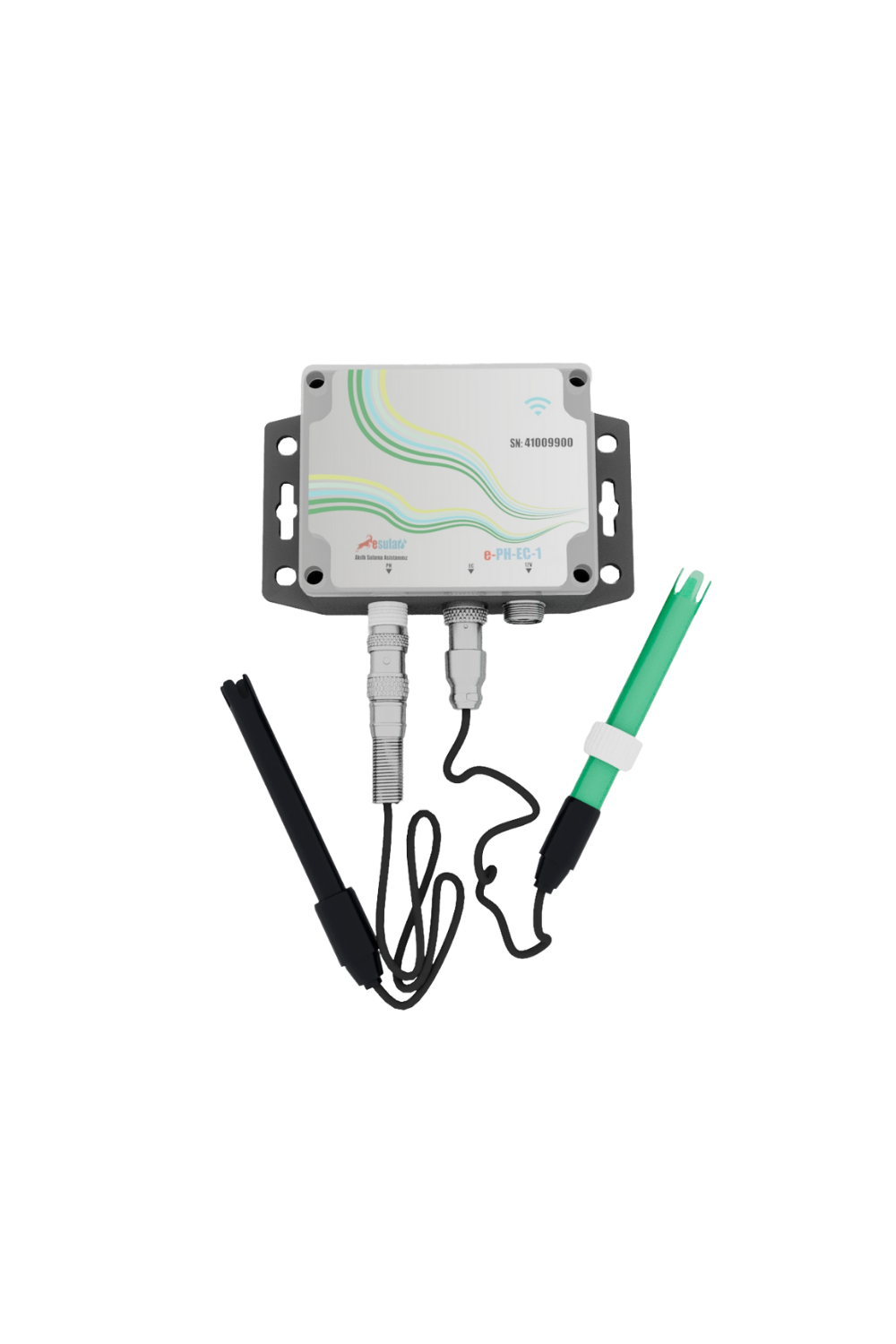
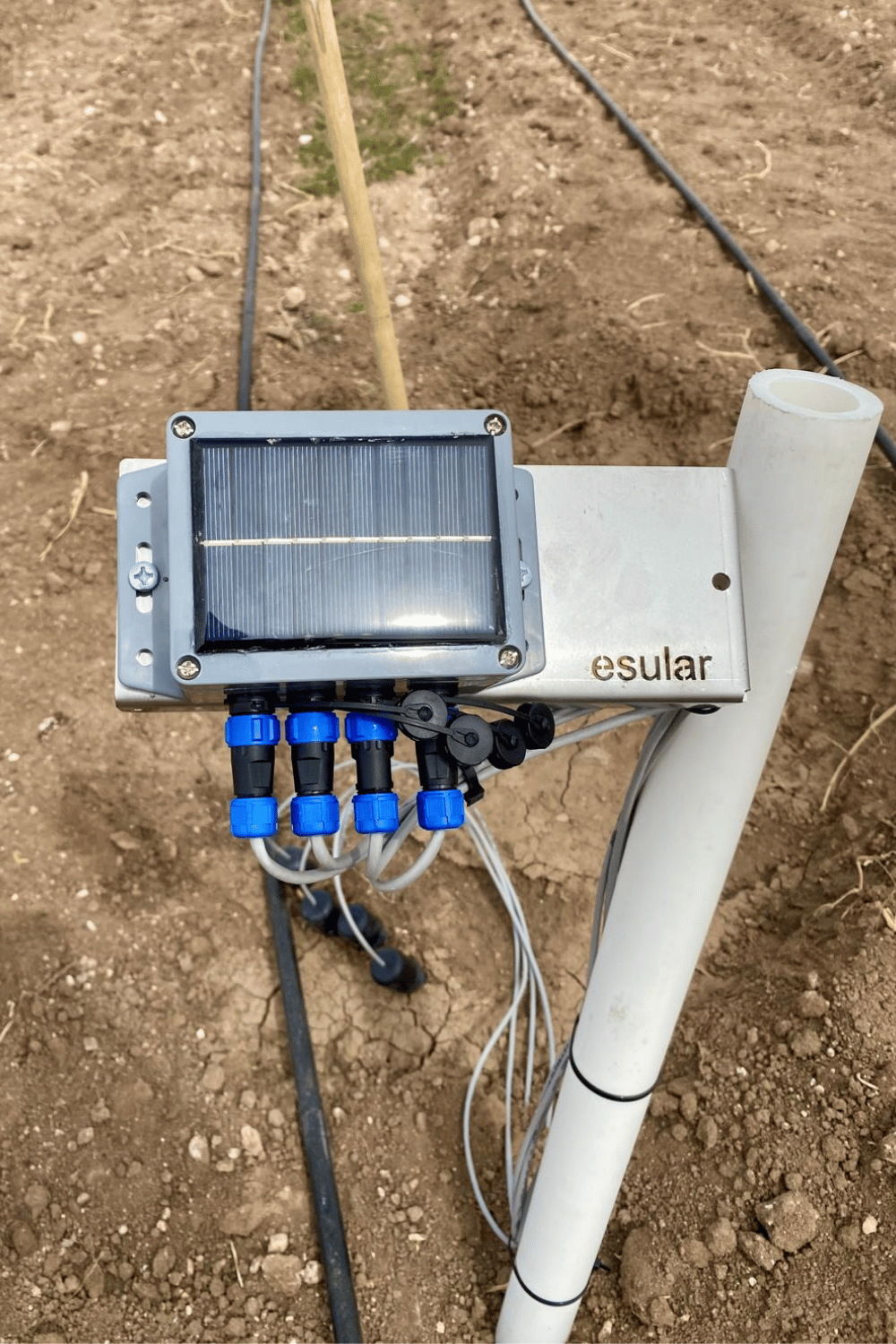
Especially in soilless agriculture and greenhouses, the EC and pH value of the water going from the irrigation tank to the plant must be measured instantaneously. The Esular Wireless Battery-Powered pH-EC-Temperature Sensor is designed exactly for this task. This sensor, integrated into the irrigation line or nutrient tank, continuously measures the nutrient concentration (EC) and acidity level (pH) in the water and transmits the data wirelessly to the central system. In this way, you are sure of the quality of the water going to the plant at all times.
b) Result Control: Monitoring the Root Zone
Knowing the status of the nutrients you provide with irrigation water in the root zone is as important as the content of the water you provide. Accumulated salts in the soil or rapid leaching of nutrients cause the EC value to change constantly. The Esular 4-Level Soil Moisture-EC-Temperature Sensor does exactly this. By being placed at different depths of the soil (e.g., 30-60-90-120 cm), it measures the moisture, temperature, and most importantly, the EC value in each layer separately. In this way, you can determine your fertilization strategy by seeing the actual salinity and nutrient status in the root zone of the plant.
Stage 2 - Managing: Automatic and Proportional Dosing
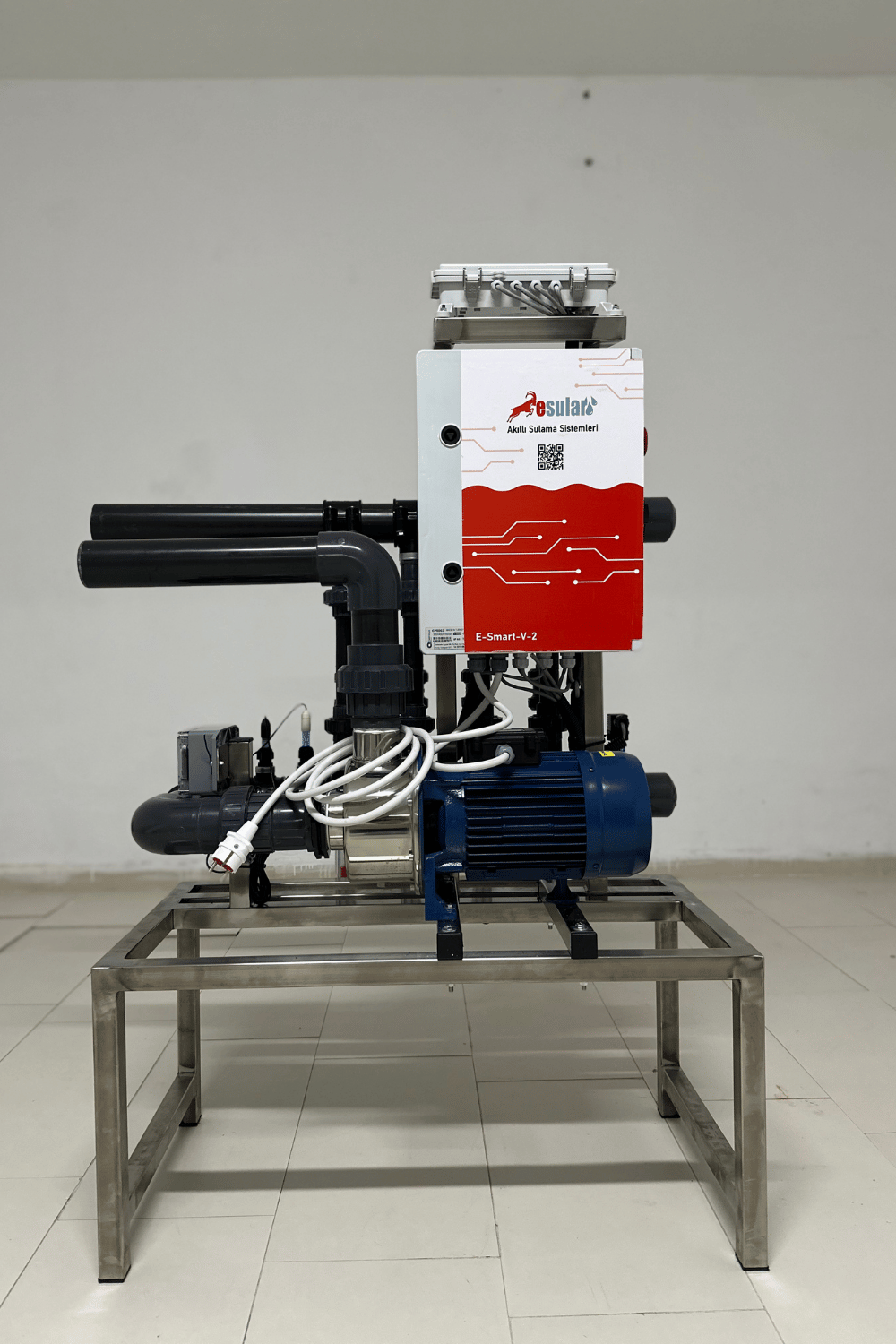
After collecting the data, there is a need for a system that can intervene instantaneously according to this data. At this point, the Esular Smart Agro Automatic Liquid Fertilization System comes into play. This system is the brain of precision dosing.
How the system works:
- Target Setting: The user enters the target EC and pH value (e.g., 2.2 mS/cm EC and 6.0 pH) suitable for the plant's phenological stage for that day's irrigation as a "recipe" into the system via the mobile application.
- Measurement: The system measures the current EC and pH values of the raw water (well or tank water) in the main irrigation line with its own integrated sensors.
- Proportional Control: Smart Agro controls 4 different fertilizer tanks (usually Nutrient A, Nutrient B, Acid/Base) proportionally.
- Dosing: It calculates with millimetric precision how much liquid it needs to draw from which tank to reach the target EC and pH values and injects the nutrients into the main line via venturi or dosing pumps.
- Continuous Cycle: The system guarantees that the water going to the plant is exactly at the set EC/pH value by continuously repeating this measurement and dosing process within seconds.
This method offers precision and efficiency far beyond manual mixing or simple time-adjusted fertilization systems. As a result, the plant always receives the ideal nutrient solution.
Sustainability and Efficiency: Strategic Gains of Automation
Precision fertigation based on EC value is not just a technology, but also the basis of a sustainable and profitable agricultural model. Businesses using the Esular ecosystem achieve very clear and measurable gains:
1. Resource Savings (Sustainability)
- Fertilizer Savings (25%): The Smart Agro system prevents unnecessary fertilizer use by dosing nutrients with millimetric precision. This provides up to 25% fertilizer savings according to Esular Smart Greenhouse Ecosystem data. This both reduces costs and decreases the chemical load of the soil.
- Water Savings (60%): Precise EC management ensures that the plant uses water more efficiently. When integrated with soil moisture sensors, over-irrigation (and nutrient leaching) is completely prevented. This means up to 60% water savings.
- Energy Savings (40%): Pumps and dosing systems only work as much as needed. This situation provides up to 40% energy savings, directly lowering the carbon footprint of the business.
2. Productivity Increase (Profitability)
- Higher Yield (20-40%): The plant never experiences nutrient or water stress throughout its entire life cycle. Growing in ideal conditions, the plant converts all its potential into product. Our field studies show between 20-40% increase in product yield.
- Higher Quality: Balanced nutrition means fruits that are tastier, heavier, brighter, and have a longer shelf life. This makes your product more valuable in the market.
- Labor Savings (60%): The time spent manually mixing fertilizer tanks, opening and closing valves by hand, or constantly checking the soil is eliminated. It allows personnel to focus on strategic tasks by providing up to 60% reduction in labor.
Conclusion: Fertigation Management is Not Guesswork, It’s a Matter of Technology
Precision nutrient dosing based on EC value is one of the pillars of modern agriculture. Giving the plant exactly the nutrient it needs, at the right time and in the right concentration, is no longer a matter of guesswork, but a measurable science. Over-fertilization with traditional methods both harms the soil and constitutes one of the largest cost items in your budget.
Thanks to esular’s smart fertigation and sensor solutions, you can take your agricultural production to the next level. Developed with entirely domestic R&D, these wireless, solar-powered, and user-friendly systems are designed so that producers of all scales can transition to precision agriculture.
To start your precision agriculture journey and get more information about EC management, contact our expert team or visit our online store to examine our solutions.
⚠️ Prices are subject to change. The prices of the products mentioned in this content are the list prices prior to the publication date. For current campaigns and prices, please visit store.esular.com.