Pepper diseases are among the diseases frequently encountered in our country where early control is important. For this reason, it is very important for us to know the diseases and make their diagnosis. In this article, we will talk to you about important pepper diseases.
Anthracnose Disease in Pepper
Symptoms
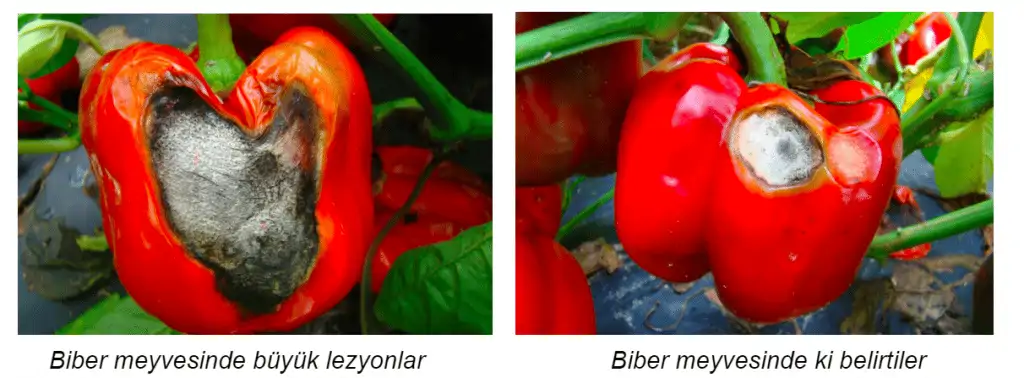
The first symptoms on the pepper fruit are wet areas turning tan or brown. Lesions merge over time into large areas. In moist conditions, they are seen as concentric rings and these spots are pink or orange in color. Lesions also occur on the leaves and stem. Lesions are dark-edged, irregular, and gray-colored.
Agent
Fungus
Development Conditions of the Disease
Anthracnose is favorable for development in hot and rainy weather. Also, moisture is necessary for infection.
Control Method
Disease seeds and seedlings should be planted. If the disease is known to occur, the field should be rotated with non-susceptible products for a period of 3 years. Diseased residues should be removed from the field and buried.
Powdery Mildew Disease in Pepper
Symptoms
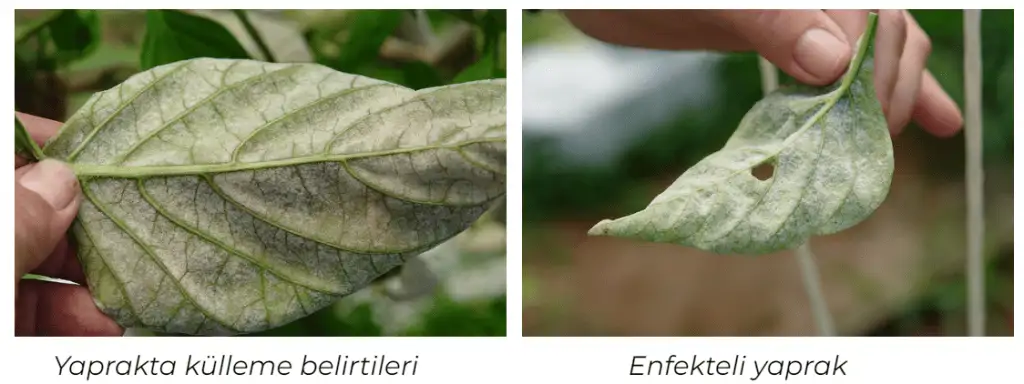
Patches of white, powdery fungal growth are seen on the underside of the leaves. Yellow to brown discoloration on the upper leaf, the edges of the leaves curl upwards, exposing the underside of the leaf. Leaves may begin to fall from the plant.
Agent
Fungus
Development Conditions of the Disease
The disease can occur in both moist and dry conditions; the disease spreads most rapidly in moist conditions; the disease usually affects older leaves.
Control Method
The most important thing to prevent this disease is weed cleaning. The field should be kept as clean as possible. Pruning, removing excess branches, reduces the spread by ensuring the leaves of the tree receive sun and air.
Southern Blight Disease in Pepper
Symptoms
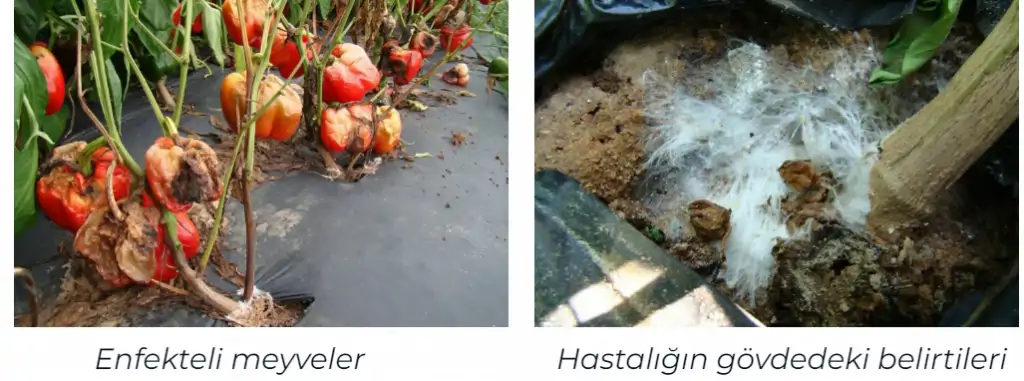
Sudden wilting of leaves is the first symptom. Yellowed leaves, brown stems above and below the soil, reddening of branches, and the stem can be covered with a fan-like mycelial mat.
Agent
Fungus
Development Conditions of the Disease
The fungus can remain alive in the soil for a long time. The disease prefers high temperature and humidity. Disease occurrence is seen more in acidic soils.
Control Method
Infected plants should be uprooted and removed from the field. Overcrowded plants should be avoided to support air circulation. Plants should be used alternately with less sensitive plants. Crop residues should be plowed towards the depths of the soil.
Damping-off Disease in Pepper
Symptoms
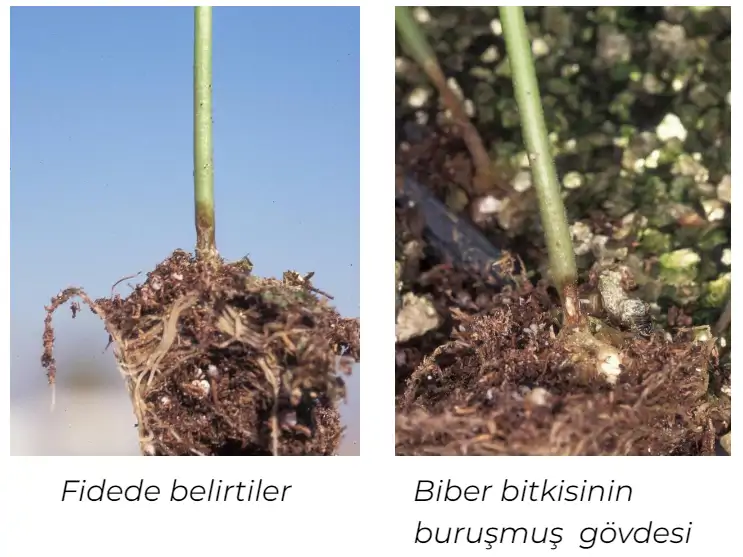
Initial symptoms begin as dark-colored watery lesions starting at the roots and expanding towards the stem. Lesions encircle the stem over time and cause the plant to wilt and die.
Agent
Fungus
Development Conditions of the Disease
The emergence of the disease favors high soil moisture content.
Control Method
Applying crop rotation is the most important control method for the disease. Excessive irrigation should be avoided. Early planting should be avoided.
Tomato Spotted Wilt Virus
Symptoms
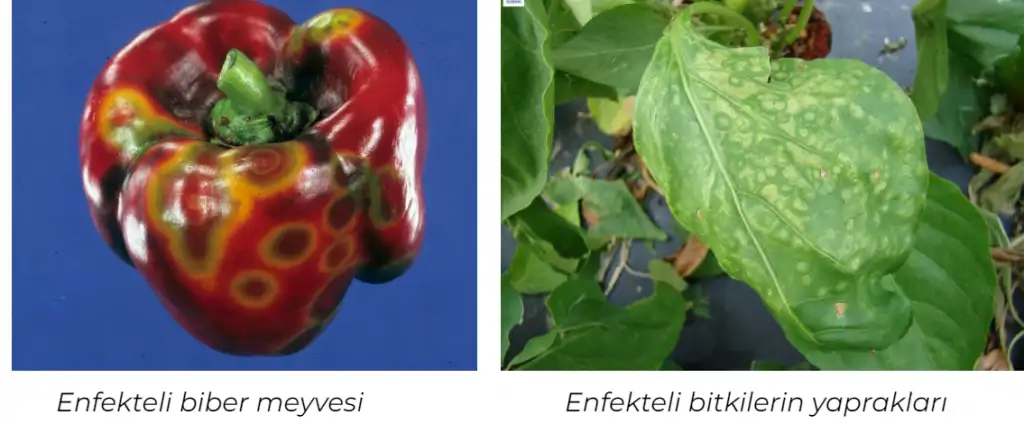
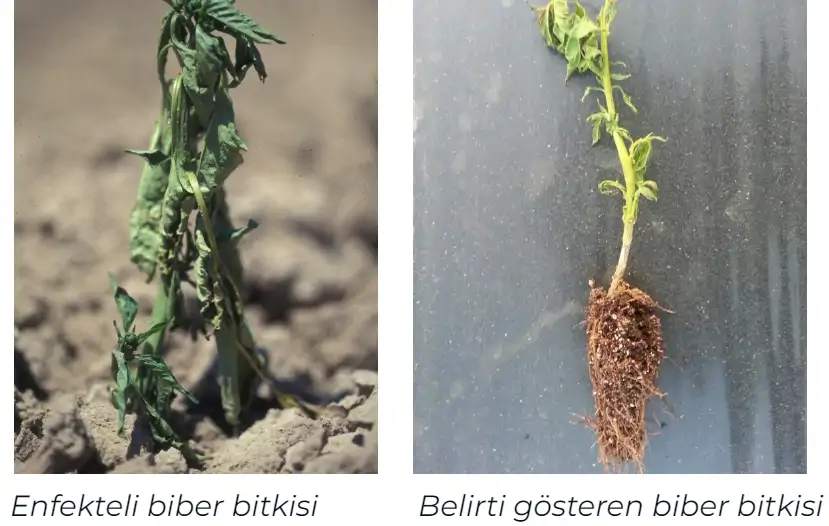
Symptoms can vary greatly depending on the variety and environmental conditions. Generally, the first symptoms are a mottled and bronzed appearance on the leaves. The plant may droop or wilt, and in the fruit, concentric rings that become light-colored and necrotic are visible to the eye.
Agent
Virus
Development Conditions of the Disease
The virus can infect a wide range of plants, including crops, ornamental plants, and weeds; after being acquired by the Thrips vector, the insect can transmit the virus for the rest of its life.
Control Method
Virus-resistant varieties should be used. Plant residues after harvest should be removed from the field immediately. Weed control should be performed.
Pepper Crown Rot Disease
Symptoms
Symptoms of the disease are seen as black lesions on the stem. The plant wilts. On the leaves circular gray-brown lesions are seen. Dark-colored lesions that can be covered with white around them are seen on the fruits.
Agent
Oomycete
Development Conditions of the Disease
The disease is highly dependent on water and spores can spread with water splashing; the disease can move from root to root to infect a range of plants.
Control Method
The most important control method is paying attention to hygiene. Used tools and equipment should be disinfected, residues should be removed from the field, and remaining roots and leaves should be collected. More resistant varieties should be used. Excessive irrigation should be avoided.