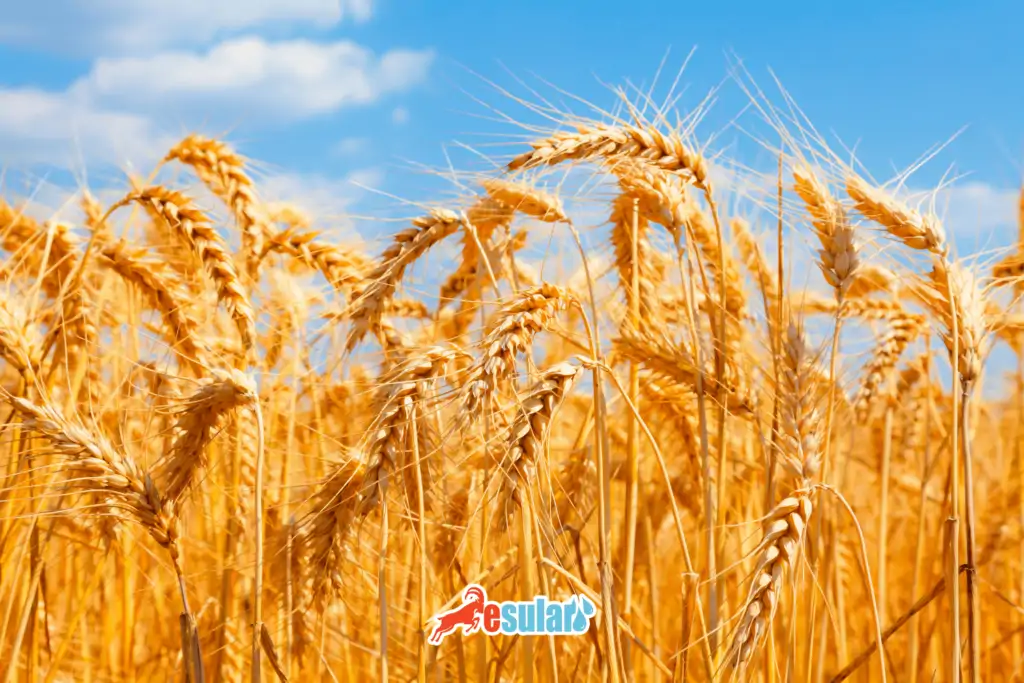
Wheat is a strategic product that is a basic food source for both our country and all countries in the world. Undoubtedly, wheat is one of the leading plants in human nutrition. Flour, bulgur, pasta, and starch obtained from the wheat product are used in human nutrition; while the stalks of the wheat plant are used in the paper-cardboard industry and in animal nutrition.
The wide adaptation capability of the wheat crop, its nutritional value, ease of processing, and the demand it receives in the market are seen as the reasons why our farmers focus on wheat farming. Furthermore, wheat is also a preference for our farmers due to its advantage in storage. The crop, which is the basic food source of 50 countries in the world, sees continuous consumer demand because it is the raw material for many foods that reach the tables.
Wheat Farming and Water Requirement
Wheat is among the cool-climate cereals. In order to obtain high-quality and abundant products, annual rainfall needs to be between 350 and 1150 mm. Wheat cultivation can be carried out in almost all barren lands. Wheat shows better development in soils that are rich in nutrients and have an adequate level of moisture. However, our farmers must be careful that waterlogging does not occur. Wheat requires loose soil and does not like excessive acidity. For wheat cultivation, the most ideal soil should be light and medium calcareous.
Critical Water Periods of Wheat
The wheat plant, which has an annual water consumption of 350 – 1150 mm, can meet less than half of its water need with an average rainfall of 350 mm. Additionally, the distribution of this rainfall significantly affects the product quantity. For this reason, yield increase is achieved when irrigation is performed with smart irrigation techniques.
During very dry periods, irrigation should be performed with smart irrigation systems during the flowering or milk-ripe stages of wheat. Wheat needs water most during the jointing and milk-ripe stages. Giving nitrogen fertilizer during the jointing stage is the most important maintenance tip.
Advantages of Smart Irrigation Systems in Wheat
With correct irrigation systems in wheat, an increase in yield of up to 50% is observed. As much as the irrigation of wheat, the amount of water to be given in each irrigation is also important. Because if a sufficient amount of water is not given in each irrigation, the expected yield increase from irrigation cannot be achieved. Excessive water decreases wheat yield.
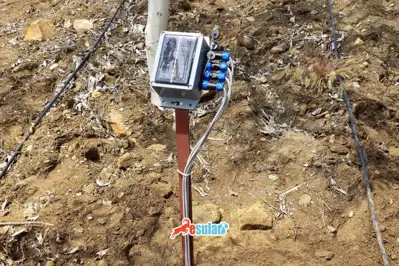
To practically understand when irrigation should be terminated, you can keep the amount of moisture at an optimum level by adding many smart control sensors such as remote-controlled, smart, ultrasonic, and layered moisture sensors to the irrigation systems, and you can provide predictive irrigation solutions according to meteorological data and rainfall status information.
With an automatic remote-controlled water meter, you can monitor the irrigation period of the plant according to need, and track leakage, water loss, bursts, and excessive irrigation. Additionally, smart irrigation systems should be used for the correct and economical use of water resources.