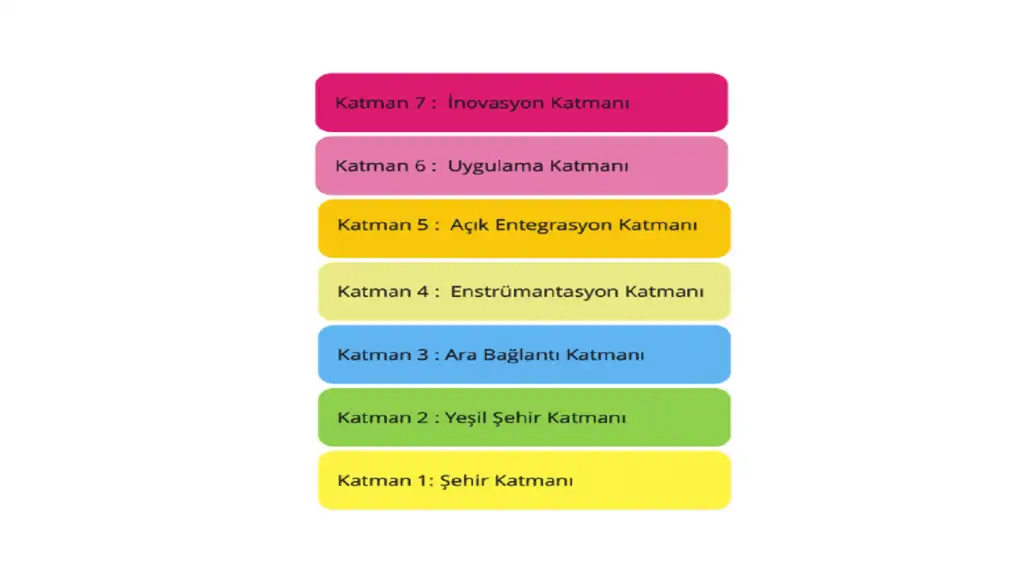
Sustainable smart cities are smart cities that use technology to promote sustainable development, reduce the operating costs of urban services, and increase service quality and the management efficiency of the city. The concept of smart city offers a wide window where the concept of smart spreads to all parameters of the city, including humans. A smart city should include characteristics of smart economy, smart people, smart management, smart mobility, smart environment, and smart living. Additionally, there are layers that a smart city should have. If we list these layers from the bottom layer to the top layer:
City Layer: The ability of cities to internalize smart features
Green City Layer: Sustainability is the focal point: What are the environmental impacts of «smart» solutions?
Interconnection Layer: The capacity of cities to support innovation through physical internet infrastructure and the ability to connect communities, sectors, and devices
Instrumentation Layer: The «hardware» layer of cities consists of real-time connectivity outputs such as various sensors and meters that provide real-time data.
Open Integration Layer: The layer providing open and processed information for all existing systems implemented with different technologies
Application Layer: Combining different layers, creating intelligence, and optimizing the use of real-time data flow assets provided by cities
Innovation Layer: Positioning a city to become an attractive innovation center for doing business, including social relations in networks and communities.
Under the subheadings of SDG 11 “Sustainable Cities and Communities” goal
Promoting inclusive and sustainable urbanization (SDG 11.3),
Minimizing the negative environmental impacts of cities per capita (SDG 11.6),
Providing universal access to safe, inclusive, and accessible green and public spaces (SDG 11.7).
There are three factors that determine the World agenda in Sustainable Development. These are:
Increasing and accumulating population
Limited resources
Developing information and communication technologies
2008 is the point where urban and rural populations equalized for the first time in the world. Following 2008, we see that the urban population continued to increase, while the rural population began to decrease. In 1960, there were two cities with a population of 10 million: New York and Tokyo. In 1980, Mexico City and São Paulo were also added among the countries with a 10 million population. What does the increase and clustering of the population at certain points tell us: it causes us to be affected more quickly by many climatic impacts such as soil and deforestation.
The use of natural resources has increased more than 3 times compared to the 1970s and continues to increase. Sustainable development goals can be achieved through organization rather than individual efforts. The more we widen the gap between environmental impact and economic activity, the more successful we can be.
Problems Awaiting Cities in the Future
Environmental threats: More frequent and extreme weather events, floods, heatwaves, and epidemics linked to global climate change.
Resources: Water, soil, forest, air. As fresh water becomes scarce and fertile land decreases, food prices negatively affect the poor the most.
Inequality: When it comes to resilience against environmental threats, the outcomes are not equal for different social groups. For example, as fresh water becomes scarce and fertile land decreases, food prices negatively affect the poor the most.
Management: The broad goals of urban governance must address issues of equality, livability, and sustainability in the cities of the future.
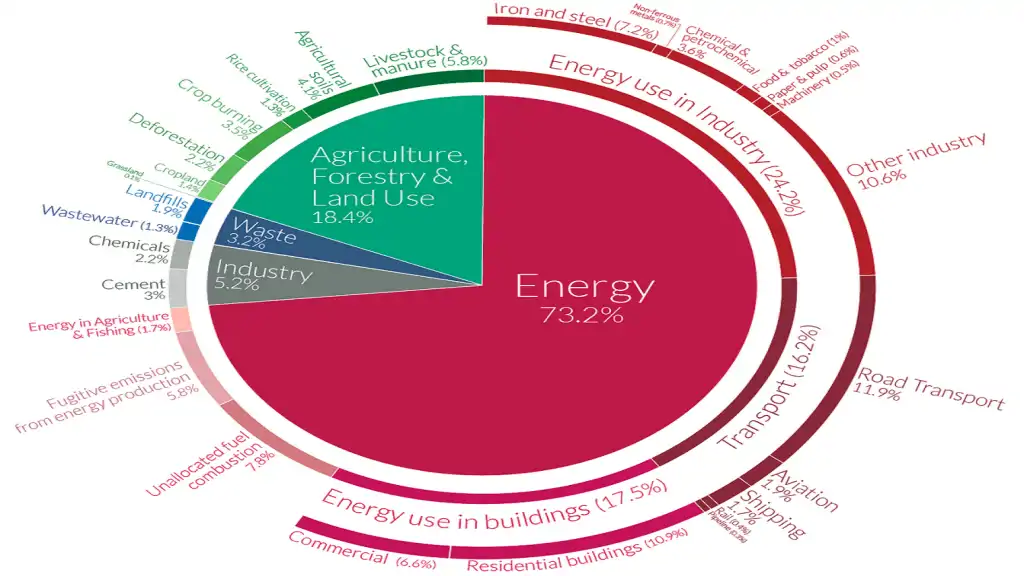
Global Greenhouse Gas Emissions by Sector
Ratio originating from energy: 73.2% (energy use originating from buildings, transportation, and industry). The ratio originating from agriculture, forest, and land use is: 18.4%.
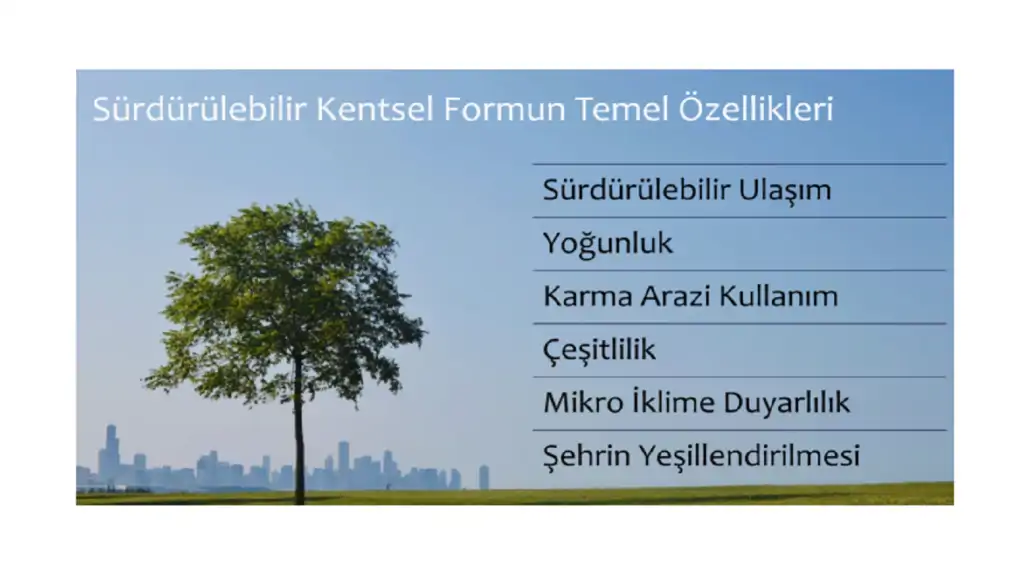
Key Characteristics of Sustainable Urban Form
Sustainable Transportation: Instead of automobile-oriented, public transport and active modes such as walking and cycling.
Density: Sufficient high densities. As density increases, both energy use decreases and the active mode (cycling, walking, etc.) increases. Density: density has various effects. These are:
Biological and psychological
Sociological
Economic.
Mixed Land Use and Diversity: Diversity should be evaluated from two perspectives: one, human (in terms of age, culture, demographic, occupation, income); two, building structure (various housing types, densities, etc.). Four conditions are necessary for diversity.
The city must serve more than one primary function; preferably more than two. The city should not only serve the housing need. Streets should frequently offer opportunities for turns.
Most blocks should be short; that is, streets should frequently offer opportunities for turns.
Retail trade, cultural facilities, and entertainment are essential functions to create vitality; especially small businesses (not large ones) should be used.
Sensitivity to Microclimate: Urban heat island, sky view factor are important. Urban geometry, namely the sizes, widths, distances from each other of the structures seen in the city center and the material used on the roof, facade, and ground of the structures in the city have a serious impact on the formation of the microclimate. Urban heat island refers to the temperature difference between the city center and rural areas that arises due to factors not originating from climatic characteristics. At this point, the importance of green areas, the material used, the height of the building and the width of the street should be in reasonable proportions to each other. The ratio between the street and the building should have a design that will not prevent sufficient ventilation and the reflection of incoming sunlight. The sky view factor indicates how much of the sky can be seen when lying on the ground anywhere in the city. If the entire sky can be seen, the sky view factor is 1. This shows that its microclimate is good. In this case, the heat island is rarely seen.
Greening of the City: Greening brings nature into the lives of city residents.
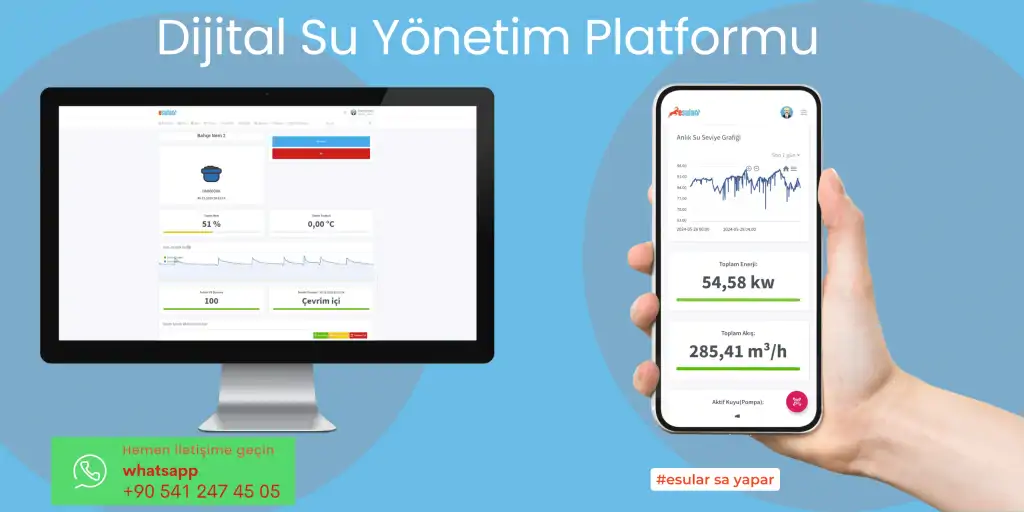
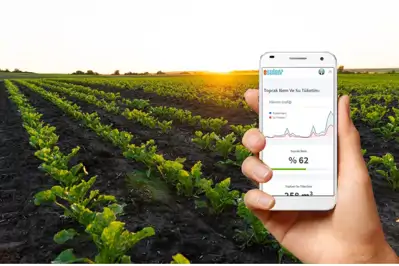
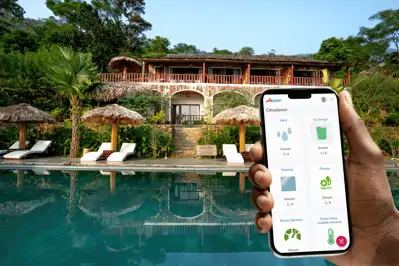
To realize the Sustainable Smart City concept, technology should be our greatest helper. The use of smart planning, renewable energy technology, smart water management technologies, smart mobility technology, and environmental technologies that can operate vehicles that are less polluting can provide solutions to certain sustainability problems.